Tres Leches Cake Recipe: Milk Soaked Dessert
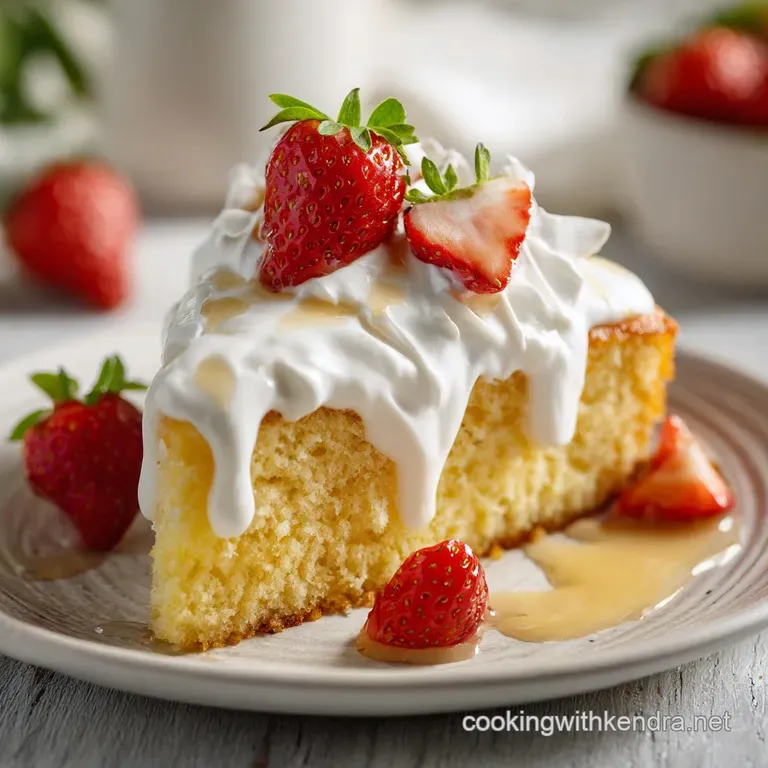
- Time: Active 25 minutes, Passive 30 minutes, Total 55 minutes
- Flavor/Texture Hook: Velvety, milk saturated crumb topped with cloud like whipped cream
- Perfect for: Family gatherings, summer celebrations, or a make-ahead weekend treat
- Crafting the Ultimate Structural Sponge for this Tres Leches Cake Recipe
- Precise Timing and Measurements for Success
- Selecting Quality Elements for Success
- Essential Kitchen Tools for Baking
- Detailed Steps for a Perfect Bake
- Troubleshooting Your Cake Results
- Creative Flavor Twists and Swaps
- Storing and Repurposing Your Dessert
- What to Serve with This Cake
- Debunking Traditional Baking Myths
- Recipe FAQs
- 📝 Recipe Card
Crafting the Ultimate Structural Sponge for this Tres Leches Cake Recipe
The first time I attempted a tres leches cake, it was a spectacular disaster. I followed a generic sponge recipe, poked a few holes, and poured the milk over it. Five minutes later, my kitchen counter was a literal lake of evaporated milk, and the cake looked like a sad, deflated sponge that had seen better days.
It was a soggy mess that lacked the structural integrity to hold the liquid, and I ended up eating it out of a bowl with a spoon. It tasted okay, but it wasn't the elegant, sliceable masterpiece I’d seen in those little bakeries in San Antonio.
That failure sent me on a mission to understand the physics of the "three milks" soak. I realized that a standard butter cake just won't cut it; you need an airy, fatless sponge that relies on whipped egg whites for its lift.
When you get it right, the sound of the milk hitting the warm cake is a soft, rhythmic hiss as the crumb pulls the liquid into its tiny air pockets. The result is a dessert that feels heavy and cool in your hand but dissolves like silk on your tongue.
We've all been searching for that balance where the cake is saturated but still holds its shape. This version is my pride and joy because it uses a specific egg separation technique to build a sturdy foundation.
Trust me on this: once you see that beautiful, clean slice come out of the pan, you'll never go back to those store-bought versions that sit in a puddle of syrup. Let's get into the mechanics of how we build these flavor layers from the bottom up.
Precise Timing and Measurements for Success
Before we even crack an egg, we need to talk about the "how" behind the "why." This isn't just a cake; it's a hydraulic system designed to hold maximum moisture. If the sponge is too dense, the milk sits on top. If it’s too weak, it collapses under the weight of the dairy.
This is why we focus so heavily on the aeration of the eggs.
The Physics of the Soak
Protein Scaffolding: Whipping egg whites creates a network of air bubbles that expand during baking, leaving behind tiny "tunnels" that act as straws for the milk mixture. These structural voids allow the cake to absorb nearly its own weight in liquid without losing its shape.
| Method | Texture Outcome | Best For |
|---|---|---|
| Fresh Sponge | Airy, light, and deeply porous | Maximum milk absorption and clean slices |
| store-bought Mix | Denser and slightly oily | Quick fixes, but may feel "wet" rather than "soaked" |
| Butter Cake Base | Tight crumb, heavy feel | Sturdier stacks, but tends to repel the milk soak |
Choosing the fresh sponge method is the only way to achieve that authentic, velvety mouthfeel. While a shortcut might save you ten minutes, the trade off in texture is massive. A fresh sponge has the capacity to hold the 12 oz of evaporated milk and 14 oz of sweetened condensed milk without weeping. If you're coming from a background of making hearty Southern desserts like my Aunt Millies Decadent recipe, you'll find the lack of butter in the sponge surprising, but it’s the secret to that thirsty crumb.
Selecting Quality Elements for Success
The magic of this leches cake recipe lies in the contrast between the dry, airy sponge and the rich, syrupy soaking liquid. Every ingredient has a specific job to do, especially when we are working with such a high volume of liquid. We want the vanilla to be prominent and the sweetness to be balanced by the sea salt.
| Component | Science Role | Pro Secret |
|---|---|---|
| Large Eggs | Structure & Lift | Use room temperature eggs; they whip to a much higher volume |
| Evaporated Milk | Concentrated Dairy | It provides a "cooked" milk flavor that fresh milk lacks |
| Vanilla Bean Paste | Aromatic Depth | Use paste instead of extract in the topping for those beautiful black specks |
For Optimal Liquid Absorption
Using the right flour is non negotiable here. We use 1.5 cups of all purpose flour because it provides just enough gluten to keep the cake from falling apart once it's soaked. If you used cake flour, the structure might be too delicate, leading to that dreaded "mush" factor.
The salt specifically 0.5 tsp of fine sea salt is what keeps the sweetened condensed milk from feeling cloying. It cuts through the sugar and brings out the floral notes of the vanilla.
You’ll notice we also use 0.33 cup of whole milk in the actual batter; this provides just a hint of fat to keep the crumb tender while it bakes.
Essential Kitchen Tools for Baking
To get that cloud like lift, you really need a stand mixer or a very powerful hand mixer. Trying to whip five egg whites to stiff peaks by hand is a workout nobody needs on a Saturday afternoon. I prefer using a 9x13 inch glass baking dish because it allows you to see exactly how far the milk has penetrated the sponge.
- Stand Mixer: Essential for achieving the volume needed in the egg whites.
- Silicone Spatula: For folding the whites into the yolks without deflating the air bubbles.
- Skewers or a Fork: To poke deep, even holes across the entire surface of the cake.
- Offset Spatula: To spread the whipped cream topping into those iconic, swirling peaks.
Having your tools ready is half the battle. When you're folding those egg whites, you want to be gentle. It’s a rhythmic motion down, under, and over. If you're too aggressive, you'll pop all those bubbles you worked so hard to create, and you'll end up with a flat pancake instead of a towering sponge.
Detailed Steps for a Perfect Bake
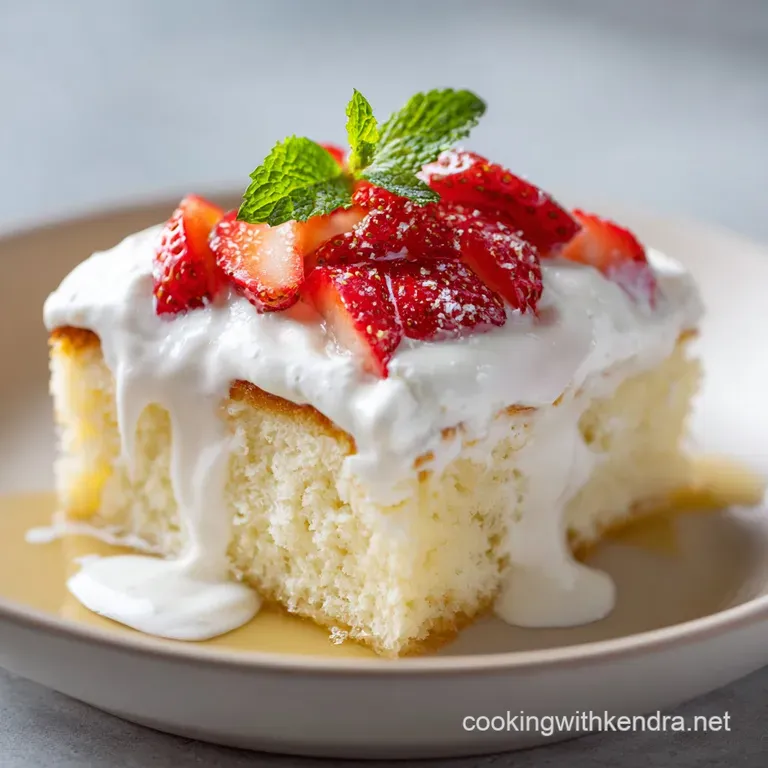
Now we get to the fun part. The process of making this cake recipe from scratch is all about patience. We are building layers: the structural sponge, the three milk infusion, and the stabilized cream topping.
- Prep the environment. Preheat your oven to 350°F (180°C) and grease a 9x13 inch pan. Note: Do not flour the pan; we want the cake to "climb" the sides for maximum height.
- Separate the eggs. Place 5 large egg yolks in one bowl and 5 whites in another.
- Cream the yolks. Beat the yolks with 0.75 cups of granulated sugar until they turn a pale, creamy yellow.
- Incorporate liquids. Stir in 0.33 cup whole milk and 1 tsp vanilla extract. Then, gently fold in the 1.5 cups all purpose flour, 1 tsp baking powder, and 0.5 tsp salt.
- Whip the whites. In a clean bowl, beat the 5 egg whites until soft peaks form. Gradually add the remaining 0.25 cup sugar and beat until peaks are stiff and glossy.
- Combine the mixtures. Fold the egg whites into the yolk batter in three batches. Fold until no white streaks remain but the batter stays voluminous.
- Bake the sponge. Pour into the pan and bake for 30 minutes until a toothpick comes out clean and the top springs back.
- Whisk the soak. While the cake cools slightly, whisk together 12 oz evaporated milk, 14 oz sweetened condensed milk, 0.5 cup heavy cream, and 1 tsp cinnamon.
- Infuse the cake. Use a fork to poke holes every half inch. Pour the milk mixture slowly until the cake has completely drunk up the liquid.
- Chill and top. Refrigerate for at least 4 hours. Before serving, whip 1.5 cups heavy cream with 3 tbsp powdered sugar and 1 tsp vanilla bean paste until stiff peaks form, then spread over the cake.
Chef's Note: Make sure the cake is still slightly warm (not hot!) when you pour the milk. This opens up the "pores" of the sponge and allows the liquid to travel all the way to the bottom. If the cake is ice cold, the milk tends to pool on top.
Troubleshooting Your Cake Results
Even with the best instructions, baking can be finicky. The most common issue people face with an authentic tres leches cake recipe is the "weeping" effect, where milk leaks out of the sides when you cut a slice. This usually means the cake didn't rest long enough or the holes weren't deep enough.
Managing Texture and Moisture
If your cake feels rubbery, you likely over mixed the batter after adding the flour. Gluten develops with motion, and for this cake, we want just enough to hold the milk, not so much that it becomes chewy.
| Problem | Root Cause | Solution |
|---|---|---|
| Rubbery Texture | Over mixing the flour | Fold flour gently by hand; stop as soon as streaks disappear |
| Milk Pooling | Cake was too cold when soaked | Pour milk while the cake is still warm to the touch |
| Flat Sponge | Deflated egg whites | Ensure bowl is grease free before whipping whites; fold gently |
Common Mistakes Checklist
- ✓ Ensure your egg white bowl is bone dry and free of any yolk bits (even a drop of fat prevents peaks).
- ✓ Don't skip the 4 hour chill; the milk needs time to stabilize within the crumb.
- ✓ Use a thin skewer for holes to ensure the milk reaches the base without tearing the top.
- ✓ Always use full fat sweetened condensed milk; low-fat versions don't have the same "cling."
- ✓ Let the heavy cream for the topping get extremely cold before whipping for the best volume.
Similar to the logic used in our Homemade Double Crumb recipe, the architecture of the cake determines how it interacts with other ingredients. In that recipe, we focus on the weight of the crumbs; here, we focus on the lightness of the sponge.
Creative Flavor Twists and Swaps
While the traditional version is a classic for a reason, there are so many tres leches cake ideas you can play with. I’ve seen people add a splash of rum to the milk mixture for a "grown up" version, or even swap out the cinnamon for nutmeg for a more autumnal vibe.
| Original Ingredient | Substitute | Why It Works |
|---|---|---|
| Whole Milk (Batter) | Coconut Milk | Adds a subtle tropical undertone. Note: Changes the aroma significantly. |
| Vanilla Bean Paste | Almond Extract | Provides a nutty, cherry like finish. Note: Very strong; use only 0.5 tsp. |
| Cinnamon | Cocoa Powder | Transforms the soak into a mocha inspired treat. |
If you are looking for a small tres leches cake recipe, you can easily halve this and bake it in an 8x8 inch square pan. The cook time will drop to about 22 minutes, but the process remains identical.
For a tres leches cake with chocolate topping, simply fold 0.25 cup of cocoa powder into your whipped cream or drizzle the finished cake with a dark chocolate ganache. It adds a beautiful bitterness that balances the sweet milk soak.
Storing and Repurposing Your Dessert
The beauty of this recipe is that it actually gets better with time. The flavor deepens as the milks meld with the vanilla and cinnamon. However, because of the high dairy content, you have to be careful with how you store it.
- Storage Guidelines
- Fridge
- Keep the cake covered with plastic wrap or a lid for up to 4 days. The topping may lose some of its fluffiness after day 2, but the cake itself remains excellent.
- Freezer
- You can freeze the baked sponge (before soaking) for up to 2 months. I do not recommend freezing the cake once it has been soaked, as the texture becomes grainy upon thawing.
Zero Waste Tip: If you find yourself with extra milk soak (though you shouldn't if the sponge is right!), don't toss it. It makes an incredible creamer for your morning coffee or a base for a decadent French toast soak the next day.
Also, if you have leftover cake scraps, layer them in a glass with fresh berries to make a quick trifle.
What to Serve with This Cake
Because this cake is so rich and creamy, it pairs best with things that offer a bit of acidity or crunch. Fresh fruit is the traditional choice think sliced strawberries, tart raspberries, or even a bit of lime zest grated over the top of the whipped cream.
If you're serving this at a party, consider a side of salted nuts to provide a textural contrast to the velvety crumb. A strong, dark roast coffee or a shot of espresso is also a fantastic companion, as the bitterness of the coffee cuts right through the sweetness of the condensed milk.
Choosing Your Toppings
- Fresh Berries: Strawberries or blueberries add a "pop" of freshness.
- Toasted Coconut: For a bit of crunch and a tropical flair.
- Maraschino Cherries: For that retro, bakery style look.
- Cinnamon Dusting: A simple, elegant way to tie the flavors together.
Debunking Traditional Baking Myths
There’s a lot of misinformation out there about what makes a "real" leches cake recipe. Some people insist that the cake should be "swimming" in milk. In reality, a perfectly executed cake absorbs the liquid.
If there's a half inch of milk at the bottom of the pan, the sponge didn't do its job, or you used a base that was too oily.
Another myth is that you need butter in the batter to keep it moist. Since we are literally soaking the cake in three types of dairy, adding butter to the sponge actually works against you. The fat in the butter coats the flour particles and prevents them from absorbing the milk soak effectively.
A fatless sponge might taste dry on its own, but it is the perfect vehicle for this specific dessert.
Finally, don't believe the idea that you can't over soak the cake. There is a limit! If you add too much liquid beyond the ratios provided, the proteins in the cake will eventually give way, and you'll end up with a pudding rather than a cake. Stick to the 12 oz and 14 oz measurements they are the "golden ratio" for a 9x13 sponge. For another take on a fast, delicious treat, you might also enjoy this White Chocolate Homemade recipe which focuses on that same creamy, indulgent profile.
Recipe FAQs
What are the ingredients in tres leches cake?
The core components are a fatless sponge base, and a soak mixture. The sponge requires eggs, sugar, flour, baking powder, and salt, relying on whipped egg whites for structure. The soak must contain evaporated milk, sweetened condensed milk, and heavy cream.
How long should tres leches soak?
Refrigerate for a minimum of four hours, ideally overnight. This extended time allows the milk to fully penetrate the porous sponge structure, resulting in a uniformly moist texture rather than a wet exterior.
What is the best cake to use for tres leches?
A light, airy sponge cake made without butter is the best choice. This specific cake relies on whipped egg whites for lift, creating tiny air pockets necessary to absorb the large volume of milk without collapsing.
How do tres leches not get soggy?
Ensure the sponge is fully baked and cooled slightly before soaking. The sponge must have a robust internal scaffolding from properly whipped egg whites to support the liquid weight; this technique is similar to creating stable air pockets in our Foolproof Warm Lemon recipe.
Can I substitute evaporated milk with regular whole milk?
No, substituting evaporated milk will yield inferior results. Evaporated milk is concentrated and lacks the water content of fresh milk, providing the necessary depth of cooked dairy flavor crucial for authentic tres leches.
When should I pour the milk mixture over the cake?
Pour the milk mixture slowly while the cake is still warm to the touch, but not hot. Pouring milk onto a warm cake encourages the internal structure to pull the liquid inward, maximizing absorption across the entire crumb.
Is it true that adding alcohol like rum ruins the texture?
No, adding a small amount of rum or brandy actually enhances moisture retention. Alcohol slightly tenderizes the structure, allowing it to hold even more liquid without weeping, much like the balancing act required when building rich desserts like the Tangy Homemade recipe.
Authentic Tres Leches Cake
Ingredients:
Instructions:
Nutrition Facts:
| Calories | 353 calories |
|---|---|
| Protein | 7.9g |
| Fat | 17.3g |
| Carbs | 42.7g |
| Fiber | 0.4g |
| Sugar | 31.7g |
| Sodium | 125mg |
