Elegant Beef Tenderloin for Christmas Eve Dinner
- Effort/Time: Moderate effort / 1 hour 45 minutes
- Flavor Hook: Rich, umami-heavy beef paired with a sharp, wine-reduced jus.
- Perfect for: A crowd-pleasing, make-ahead holiday main course.
- Master the Ultimate Beef Tenderloin for Your Christmas Eve Dinner
- The Culinary Physics of Controlled Heat and Moisture Retention
- Precision Benchmarks for the Perfect Holiday Main Course
- The Chemistry of Flavor: Selecting Your Holiday Elements
- Technical Tools for Achieving Professional Kitchen Results
- The Action-First Protocol for a Seamless Evening Flow
- Identifying Thermal Failures and Rescue Strategies for Beef
- ⚗️ The Scaling Lab: The Physics of Quantity
- Common Myths about Holiday Roasting
- Customizing Your Flavor Profile with Strategic Ingredient Swaps
- Preserving Texture and Juice Content in Holiday Leftovers
- Coordinating Your Menu with Complimentary Textures and Aromas
- Recipe FAQs
- 📝 Recipe Card
Master the Ultimate Beef Tenderloin for Your Christmas Eve Dinner
There is nothing more gut-wrenching than pulling a $160 center cut tenderloin out of the oven only to realize it has the texture of a weathered work boot. I’ve been there standing in a festive apron, heart sinking as I sliced into a grey, overcooked disaster that was supposed to be the star of our christmas eve dinner.
We often think that "more heat" or "expensive meat" equals success, but the financial and emotional cost of ignoring thermal physics is real.
I’ll admit, early in my cooking journey, I ruined a massive holiday roast because I didn't understand carryover cooking. I pulled the meat at my target temperature, only to watch it climb another 12 degrees while resting, turning a medium rare masterpiece into a dry, well done disappointment.
It was a humbling lesson in thermodynamics that taught me why the "low and slow" start followed by a over high heat finish is the only way to treat a premium cut like this.
The secret to this christmas eve dinner isn’t a mystery spice blend; it’s all about protein denaturation and moisture management. By roasting the meat at a low temperature first, we prevent the muscle fibers from contracting too violently and squeezing out their internal juices.
The result is a roast that is consistently tender from the very center to the outer edges, finished with a garlic herb butter that provides a shattering, savory crust.
The Culinary Physics of Controlled Heat and Moisture Retention
- Reverse Sear Dynamics: Starting in a low-temp oven allows for gradual protein denaturation, preventing the muscle fibers from "wringing out" moisture like a sponge.
- Maillard Enhancement: Finishing with a over high heat sear triggers the Maillard reaction, where amino acids and reducing sugars create hundreds of new flavor compounds.
- Enzymatic Tenderization: As the beef warms slowly, naturally occurring cathepsin enzymes remain active longer, breaking down connective tissues before the heat deactivates them.
- The Carryover Effect: Large thermal masses continue to cook after removal from heat; pulling the meat 5 10°F early ensures the center reaches the target temperature during the rest.
- Emulsion Stability: Finishing the red wine jus with cold butter (monter au beurre) creates a velvety suspension of fat in liquid, coating the palate rather than feeling greasy.
Precision Benchmarks for the Perfect Holiday Main Course
Achieving "masterclass" results for your christmas eve dinner requires hitting specific numeric targets. This isn't a "cook by feel" situation; it’s a game of degrees and minutes.
| Precision Metric | Target Value | Why It Matters |
|---|---|---|
| Pull Temperature | 120°F to 125°F | Allows for 10°F carryover to reach a final 130 135°F (Medium Rare). |
| Rest Duration | 20 minutes | Redistributes juices and allows the internal pressure to stabilize. |
| Sear Temperature | 450°F+ (Pan/Oven) | Necessary to achieve a mahogany crust without overcooking the interior. |
Fast vs. Classic Comparison
| Feature | The 45 Minute "Flash" Roast | This Masterclass Protocol |
|---|---|---|
| Texture | Large "grey band" around the edges | Consistent edge-to-edge pinkness |
| Juiciness | High moisture loss during carving | Superior juice retention |
| Flavor Depth | Surface level seasoning only | Deeply infused garlic herb aromatic profile |
The Chemistry of Flavor: Selecting Your Holiday Elements
For this christmas eve dinner, we are focusing on high-quality fats and aromatics that complement the lean profile of the beef tenderloin.
Ingredient Chemistry Breakdown
| Ingredient | Chemical/Physical Role (Science) | The Pro Secret (Why This Matters) |
|---|---|---|
| Beef Tenderloin | Low-collagen muscle protein | Requires gentle heat to prevent tightening; has very little intramusclar fat. |
| Kosher Salt | Osmotic pressure regulator | Draws moisture to the surface to dissolve, then reabsorbs to season deep into the muscle. |
| Red Wine (Dry) | Acidic solvent for deglazing | Dissolves the "fond" (browned bits) and balances the richness of the butter. |
| Cold Butter | Fat-in-water emulsifier | Thickens the jus by creating a stable suspension when whisked into hot liquid. |
- 5 lbs center cut beef tenderloin: Why this? The center cut (Chateaubriand) has a uniform diameter for even cooking.
- 2 tbsp extra virgin olive oil: high-quality oil helps the initial seasoning adhere.
- 1 tbsp Diamond Crystal Kosher salt: The larger grains offer better control and don't over salt compared to table salt.
- 2 tsp freshly cracked black pepper: Coarse grinds provide textural contrast and "pop" against the soft meat.
- 1/2 cup unsalted butter: Provides the fat base for our aromatic herb crust.
- 4 cloves garlic, minced: Releases sulfur compounds that sweeten as they roast.
- 1 tbsp fresh rosemary & 1 tbsp fresh thyme: Fresh herbs contain volatile oils that dried herbs simply lack.
- 1 tsp Dijon mustard: Why this? Acts as an emulsifier for the herb butter and provides a sharp counterpoint.
- 1 cup dry red wine (Cabernet Sauvignon): High tannins stand up to the beef's iron rich profile.
- 1 cup beef bone broth: Why this? Contains natural gelatin for a richer, silkier mouthfeel in the sauce.
- 1 tbsp cold unsalted butter: Reserved specifically for finishing the sauce at the very end.
Technical Tools for Achieving Professional Kitchen Results
- Lodge 12 inch Cast Iron Skillet: Essential for the final over high heat sear and heat retention.
- Wire Cooling Rack & Rimmed Baking Sheet: Allows hot air to circulate under the meat, preventing a soggy bottom.
- ThermoPro Digital Meat Thermometer: The only way to guarantee the roast isn't overcooked.
- Butcher’s Twine: Necessary to tie the tenderloin into a uniform cylinder for even heat penetration.
- Heavy bottomed Saucepan: For reducing the red wine jus without scorching the edges.
The Action First Protocol for a Seamless Evening Flow
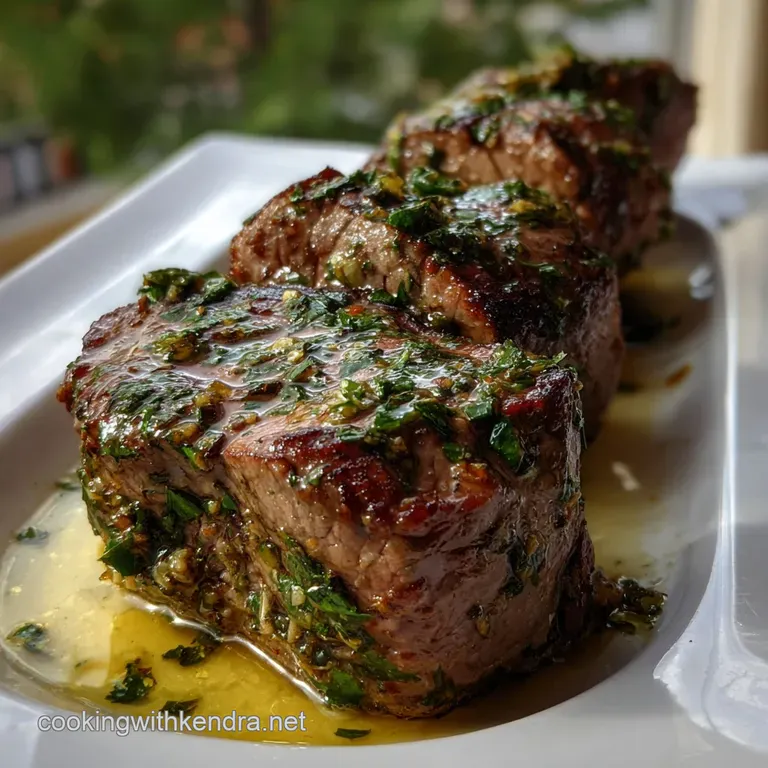
Success with this christmas eve dinner is about the prep flow. If you're looking to round out the meal, these slices of beef are incredible when paired with my Dinner Rolls Recipe to soak up every drop of that red wine jus.
- Temper the beef. Remove the 5 lbs beef tenderloin from the fridge 1 hour before cooking until the internal chill dissipates and meat reaches room temperature.
- Truss the meat. Tie the tenderloin with butcher's twine at 1.5 inch intervals until the roast forms a tight, uniform cylinder. Note: Uniformity ensures even cooking speeds.
- Season aggressively. Coat the exterior with 2 tbsp olive oil, 1 tbsp salt, and 2 tsp pepper until every square inch is visibly covered in seasoning.
- Low-roast the beef. Place on a wire rack in a 250°F oven for 45 60 minutes until the internal temperature reaches 115°F.
- Mix the compound butter. Combine 1/2 cup softened butter, 4 cloves garlic, rosemary, thyme, and 1 tsp Dijon until a smooth, fragrant paste forms.
- Apply the crust. Remove the beef and slather the herb butter over the top and sides until the meat is fully insulated by the fat.
- over High heat sear. Increase oven to 450°F and return the beef for 10 15 minutes until the butter sizzles and the crust turns a deep mahogany brown.
- Pull and rest. Remove the beef at 125°F internal temperature and move to a carving board until 20 minutes have passed and juices have redistributed.
- Deglaze the pan. Place the roasting pan (or skillet) over medium heat, add 1 cup red wine, and scrape the bottom until the wine reduces by half and smells sweet/rich.
- Simmer the jus. Add 1 cup bone broth to the wine reduction and simmer for 8 minutes until the liquid coats the back of a spoon.
- Finish the sauce. Whisk in 1 tbsp cold butter off the heat until the sauce looks glossy and velvety.
Identifying Thermal Failures and Rescue Strategies for Beef
Why Your Tenderloin Has a "Grey Band"
A thick layer of grey meat between the crust and the pink center is caused by over high heat exposure for too long. This is a classic heat transfer failure where the exterior overcooks before the center can reach the target temperature.
By using the reverse sear method for your christmas eve dinner, you minimize this temperature gradient.
| Problem | Root Cause | The Fix | Pro Protocol |
|---|---|---|---|
| Tough, Chewy Meat | Muscle fibers contracted (overcooked) | Slice against the grain, very thin | Pull at 120°F next time to account for carryover. |
| Broken/Greasy Jus | Butter added to boiling liquid | Remove from heat before whisking butter | Use "monter au beurre" (mounting with butter) only off-heat. |
| Soggy Bottom | Meat sat in its own juices | Use a wire rack during roasting | Airflow is mandatory for a crisp crust on all sides. |
⚗️ The Scaling Lab: The Physics of Quantity
When you decide to double your christmas eve dinner to feed a larger crowd, the rules of the kitchen change. You aren't just doubling ingredients; you are doubling the thermal mass in your oven.
- The Evaporation Paradox: If you double the red wine jus recipe, do not double the reduction time. Because the surface area of your pot stays the same while the volume doubles, evaporation takes significantly longer. Reduce added broth by 10% to reach the desired consistency faster.
- Pan Crowding (Maillard Killer): If you are searing two 5lb roasts in one pan, the temperature will drop instantly. The meat will steam in its own moisture rather than sear. Mandatory instruction: Sear roasts in separate pans or in batches.
- Thermal Mass & Timing: Two roasts in one oven will take about 15 20% longer than one roast because they absorb more of the oven's ambient heat energy.
- Carryover Variations: A larger mass retains more heat. If you are roasting a massive 8 10lb whole tenderloin, pull it 10°F earlier than a 5lb roast, as the carryover will be more aggressive.
Common Myths about Holiday Roasting
- Myth: "Searing meat first locks in the juices."
- Truth: Searing does nothing to "seal" moisture; in fact, high heat causes muscle fibers to contract and push moisture out. Searing is purely for flavor (Maillard reaction).
- Myth: "You must let the meat come to room temperature for 4 hours."
- Truth: Meat is a poor conductor of heat. Even after 2 hours, the center of a 5lb roast only moves a few degrees. 1 hour is sufficient to take the "chill" off without safety risks.
Customizing Your Flavor Profile with Strategic Ingredient Swaps
If you want a different vibe for your christmas eve dinner, small changes to the aromatics can shift the entire profile of the dish. For instance, if you're planning a big breakfast the next day using leftover beef in a hash, check out my Christmas Morning Breakfast recipe for the perfect holiday pairing.
| Original Ingredient | Substitute | Why It Works |
|---|---|---|
| Red Wine | Pomegranate Juice + 1 tsp Balsamic | Provides the same acidity and tannin like structure without the alcohol. |
| Rosemary/Thyme | Fresh Sage and Oregano | Creates a more "earthy" and savory profile, typical of Mediterranean roasts. |
| Beef Bone Broth | Mushroom Stock | Adds intense umami notes that mimic the "beefiness" of the meat. |
Preserving Texture and Juice Content in Holiday Leftovers
Storage: Store leftover beef in an airtight container in the fridge for up to 3 days. To keep it from drying out, store it as a whole block rather than pre-slicing.
Freezing: You can freeze cooked tenderloin for up to 2 months. Wrap tightly in plastic wrap, then foil, then place in a freezer bag. Note: The texture will be slightly softer upon thawing due to ice crystal formation breaking down cell walls.
Reheating: Never use the microwave. To reheat your christmas eve dinner leftovers, place slices in a skillet with a splash of beef broth. Cover and warm over low heat until just heated through (about 110°F).
This "steams" the meat back to life without overcooking the protein.
💡 ZERO WASTE PHILOSOPHY: Don't discard the beef fat trimmings or the red wine jus scraps. Transform: Render the fat trimmings in a pan to make "tallow" for roasting potatoes.
Science: Beef tallow has a high smoke point and provides a shattering, crisp texture to starches that oil cannot match.
Coordinating Your Menu with Complimentary Textures and Aromas
When serving this christmas eve dinner, I always suggest a "Decision Shortcut" based on what your guests crave: If you want a Classic Pub Vibe, serve with horseradish cream and mashed potatoes. If you want a French Bistro Vibe, serve with the red wine jus and a crisp green salad. If you want a Casual Family Vibe, slice the beef thin and serve it alongside my Classic Christmas Cut recipe for a sweet finish to the night.
The key to a successful christmas eve dinner is the community at the table. We get so caught up in the "masterclass" techniques that we forget why we're cooking in the first place.
This roast is designed to be low-stress during the actual party once it’s in the oven on that low-temp setting, you have a full hour to enjoy a glass of wine with your favorite people.
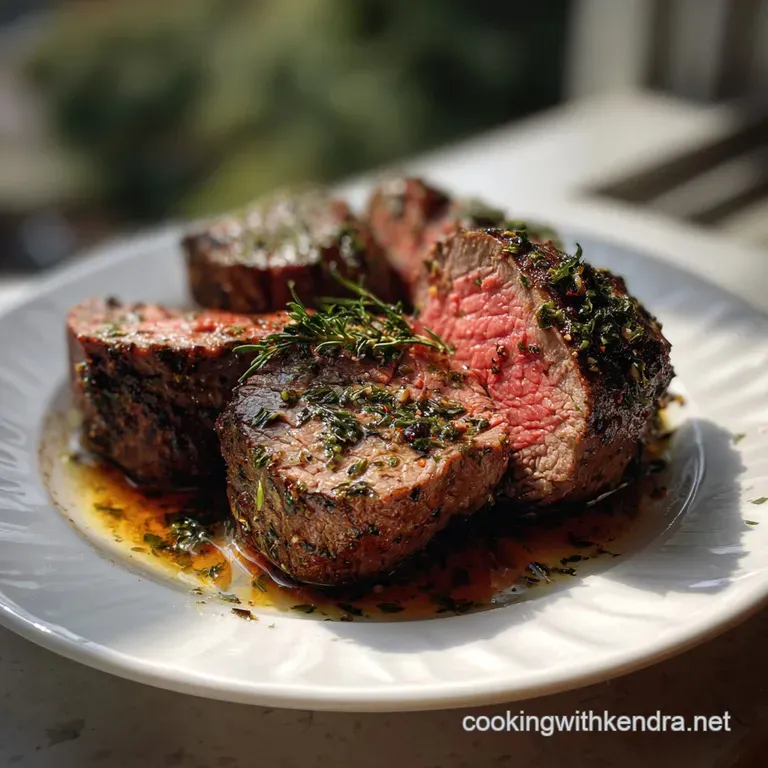
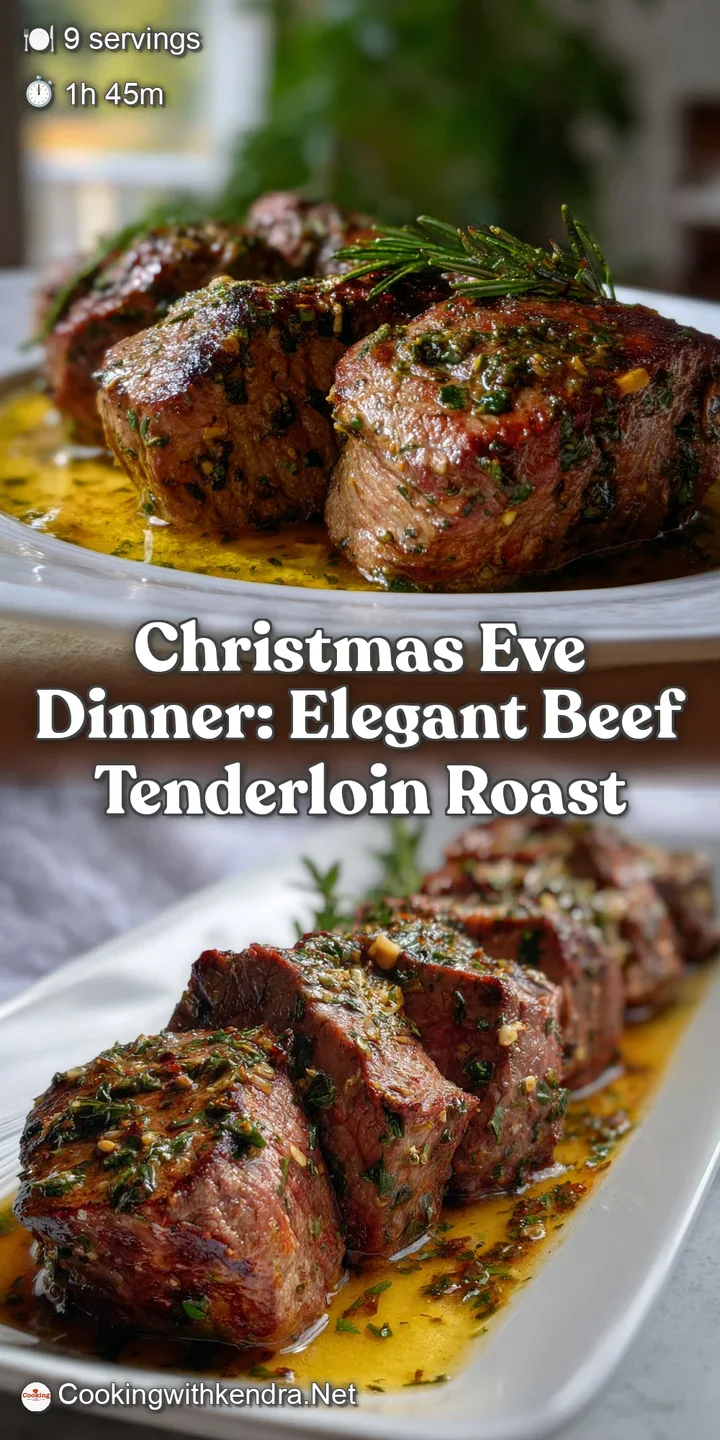
Always carve the meat at the table for that visual "wow" factor. The vibrant pink center against the dark, herb crusted exterior is the ultimate holiday sensory trigger. The aromas of roasting rosemary and garlic will fill the house, creating a sense of warmth and community before the first plate is even served.
Trust the science, watch your thermometer, and enjoy the best christmas eve dinner you've ever made.
Recipe FAQs
What is the single most critical temperature for this beef tenderloin?
Pull the roast at 120°F to 125°F. This temperature range accommodates the 10°F carryover cooking that occurs during the rest, ensuring a perfect medium rare finish. Any higher, and the protein structure tightens excessively, leading to moisture loss.
Why is my jus separating or looking greasy instead of glossy?
Cold butter must be whisked in off the heat. Adding butter above 180°F breaks the delicate fat-in-water emulsion, causing the fat globules to separate from the sauce base. If you nailed the stable emulsion here, use the same whisking method in our dairy-free Chocolate Mousse for desserts.
- Remove the sauce from the burner
- Whisk in butter one cube at a time
- Keep residual heat below simmering point
Should I use kosher salt or table salt for seasoning the exterior?
Kosher salt offers superior control for large roasts. Table salt is denser and contains sodium compounds that can aggressively draw out moisture, leading to over salting quickly. Kosher salt adheres better and dissolves more evenly across the surface area.
Is it truly necessary to rest the beef for 20 minutes after cooking?
Yes, resting is non-negotiable for juice retention. During cooking, muscle fibers contract, squeezing internal moisture toward the center; resting allows these fibers to relax and redistribute the juices throughout the meat. If you mastered the sensory doneness cues here, apply them to our Foolproof how to bake chicken breast Juicy Every Time.
- Allows internal pressure to equalize
- Prevents juices from running out when sliced
- Facilitates the final 2-3 degrees of warming
Can I substitute beef broth with standard chicken stock for the jus?
No. Chicken stock lacks the necessary gelatin and depth. Chicken stock proteins gelatinize poorly compared to beef collagen, resulting in a thinner, less velvety sauce texture. If you want to achieve that rich, gelatinous mouthfeel, stick to beef or veal stock bases.
What is the best way to prevent the herb crust from burning in the high heat finish?
Myth: High heat always equals a burned crust. Reality: The crust only burns if the butter melts too quickly before the Maillard reaction initiates properly, causing scorching.
Apply the butter paste generously and allow the oven to preheat fully to 450°F before placing the meat back in.
Should I tie the tenderloin before or after seasoning the roast?
Tie the roast first to achieve uniform diameter. Uniformity is essential for the reverse sear method to ensure consistent thermal transfer from edge to center. If you enjoyed controlling the shape here, see how the same principle of controlled surface tension applies in our Nonnas Secret Traditional Italian Christmas Cookies Recipe.
Beef Tenderloin Christmas Eve Dinner
Ingredients:
Instructions:
Nutrition Facts:
| Calories | 704 kcal |
|---|---|
| Protein | 66 g |
| Fat | 45 g |
| Carbs | 1.2 g |
| Fiber | 0.3 g |
| Sugar | 0.5 g |
| Sodium | 611 mg |
