Bakery-Style Chewy Oatmeal Cookie Recipe
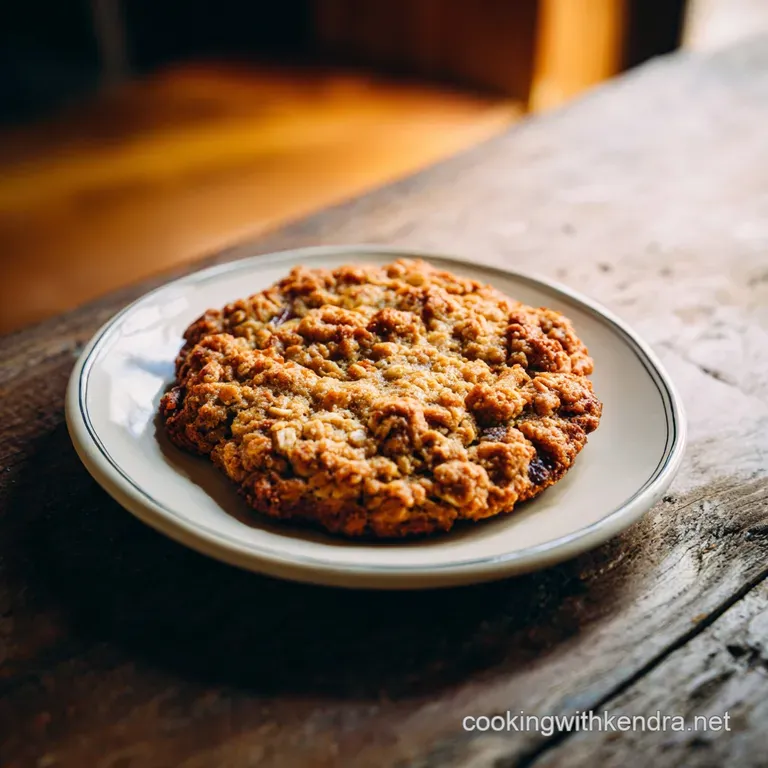
- Time: Active 10 mins, Passive 10 mins, Total 20 mins
- Flavor/Texture Hook: Buttery, cinnamon spiced, and incredibly chewy
- Perfect for: Weekend baking, holiday tins, or a cozy afternoon treat
- Master My Soft And Chewy Oatmeal Cookie Recipe
- The Secret To These Oatmeal Cookie Recipe
- Science Behind Golden Brown Perfection
- Quick Specs For Your Baking Session
- Selecting Rich And Flavorful Pantry Staples
- Simple Tools For Stress Free Baking
- Layering Flavors Through Every Single Step
- Professional Fixes For Common Baking Errors
- Tasty Swaps For Every Dietary Need
- Keeping Your Baked Goods Fresh Longer
- Plating Treats For Maximum Table Appeal
- Debunking Cookie Myths
- Recipe FAQs
- 📝 Recipe Card
Master My Soft And Chewy Oatmeal Cookie Recipe
There is a specific sound, a soft, muffled "thump" against the cooling rack, that tells you an oatmeal cookie is just right. It is the sound of a cookie that has enough weight to be substantial but enough moisture to stay bendy. I remember sitting in my grandmother's kitchen, watching her pull a tray from the oven.
The air would instantly turn heavy with the scent of toasted oats and warm cinnamon, a smell that felt like a hug for your senses.
We have all been there, biting into an oatmeal cookie only to have it shatter like dry toast. It is a heartbreak no baker should endure. I spent months tweaking this specific oatmeal cookie recipe, playing with sugar ratios and chilling times, because I wanted that elusive, pillowy center that holds its shape without becoming a hockey puck.
You want a cookie that feels like a comfort food masterpiece, not a health bar.
What makes this version stand out is how we handle the fat and the fiber. By the time you pull these out of the oven, they'll have these beautiful, craggy tops and edges that just barely crisp up while the middle remains almost fudge like.
It is a simple joy, but getting there requires a little bit of kitchen magic that I am excited to share with you. Let's get the oven preheated.
The Secret To These Oatmeal Cookie Recipe
Hygroscopic Softness: Dark brown sugar contains molasses, which actively pulls moisture from the air into the cookie to prevent drying. This ensures the crumb remains soft even three days after baking.
Oat Hydration: Rolled oats absorb moisture from the egg and butter during the short rest, softening the grain's outer shell. This transformation prevents a "birdseed" texture and creates a cohesive, chewy bite.
Leavening Lift: Baking soda reacts with the acidic molasses in the dark brown sugar to create tiny carbon dioxide bubbles. This process provides a subtle lift that keeps the dense oats from feeling too heavy.
| Method | Bake Time | Finished Texture | Best For |
|---|---|---|---|
| Room Temp Dough | 10 mins | Wider spread, crispier edges | Quick snacking |
| Chilled 30 Mins | 12 mins | Thicker, soft centers | Professional look |
| Overnight Rest | 12 mins | Deep toffee notes | Ultimate flavor |
While we often think of baking as a science, it's really about managing how ingredients interact with heat. In this oatmeal cookie recipe, the ratio of fats to sugars is calculated to ensure the edges caramelize just as the center sets. If you love a variety of textures, you might also enjoy my Homemade Peanut Butter recipe which uses similar fat stabilization techniques.
Science Behind Golden Brown Perfection
The "Maillard Reaction" is the real hero when we talk about that deep, golden color and the rich, toasted flavor. This isn't just about things getting hot; it is a chemical dance between amino acids and reducing sugars.
In our cookies, the proteins in the flour and egg join hands with the sugars under the heat of a 350°F (180°C) oven, creating hundreds of different flavor compounds that we perceive as "toasty" or "caramel like."
Component Analysis
| Ingredient | Science Role | Pro Secret |
|---|---|---|
| Dark Brown Sugar | Humectant & Acid | Use "dark" for higher molasses content and extra chewiness. |
| Unsalted Butter | Fat & Emulsion | Softened butter (65°F) traps air best during the creaming stage. |
| Old Fashioned Oats | Structural Fiber | Avoid "Quick Oats" as they turn the cookie into a cakey mess. |
| Baking Soda | Leavening | Always sift with flour to avoid bitter brown spots in dough. |
Every single ingredient in this list has a job to do. The salt isn't just there for saltiness; it is a flavor enhancer that cuts through the sugar and makes the cinnamon pop. When you use this easy oatmeal cookies recipe, you are building layers of flavor that start in the mixing bowl and finish on your tongue.
Quick Specs For Your Baking Session
Before we start cracking eggs, let's look at the blueprint for success. You will need 1 cup of unsalted butter, softened just enough that your thumb leaves an indent but doesn't sink through. We are also using 1 cup of dark brown sugar and 0.5 cup of white sugar.
This combination is the key to that "old fashioned oatmeal cookies" soul we are chasing.
- Yield: 24 cookies
- Temperature: 350°F (180°C)
- Storage: 5 days at room temperature
- Difficulty: Beginner friendly
You'll also need 1 large egg at room temperature and 1 tablespoon of pure vanilla extract. For the dry side, grab 1.5 cups of all purpose flour, 1 teaspoon of baking soda, 1 teaspoon of ground cinnamon, and 0.5 teaspoon of sea salt. The star, of course, is 3 cups of old fashioned rolled oats.
Selecting Rich And Flavorful Pantry Staples
I cannot stress this enough: your cookies are only as good as your oats. For a crispy oatmeal cookie recipe, you absolutely must use old-fashioned rolled oats. They have been steamed and pressed, meaning they keep their flat, round shape and provide that wonderful "tooth" when you bite down.
Quick cook oats are chopped into tiny pieces and will make your cookies disappear into a mushy, unrecognizable heap.
- Unsalted Butter: (1 cup) | Substitute: Salted butter (Reduce sea salt to 1/4 tsp) | Why this? Allows total control over the seasoning of the dough.
- Dark Brown Sugar: (1 cup) | Substitute: Light brown sugar | Why this? Provides the moisture and acidity needed for the perfect rise.
- All Purpose Flour: (1.5 cups) | Substitute: 1 to-1 gluten-free blend | Why this? Provides the protein structure to hold the heavy oats.
- Pure Vanilla Extract: (1 tbsp) | Substitute: Vanilla bean paste | Why this? Rounds out the spice and adds a floral sweetness.
- Old Fashioned Oats: (3 cups) | Substitute: None recommended | Why this? Essential for the classic chewy texture and nutty flavor.
| Original Ingredient | Substitute | Why It Works |
|---|---|---|
| Dark Brown Sugar | Light Brown Sugar | Same sweetness. Note: Resulting cookie will be slightly paler and less chewy. |
Choosing the right sugar is a small batch oatmeal cookie recipes secret. While granulated sugar helps with the crisp edges, the dark brown sugar is doing the heavy lifting for the flavor. If you're looking for something with a different filling vibe, our Classic Whoopie Cookies recipe shows how sugar ratios can completely change a cookie's personality.
Simple Tools For Stress Free Baking
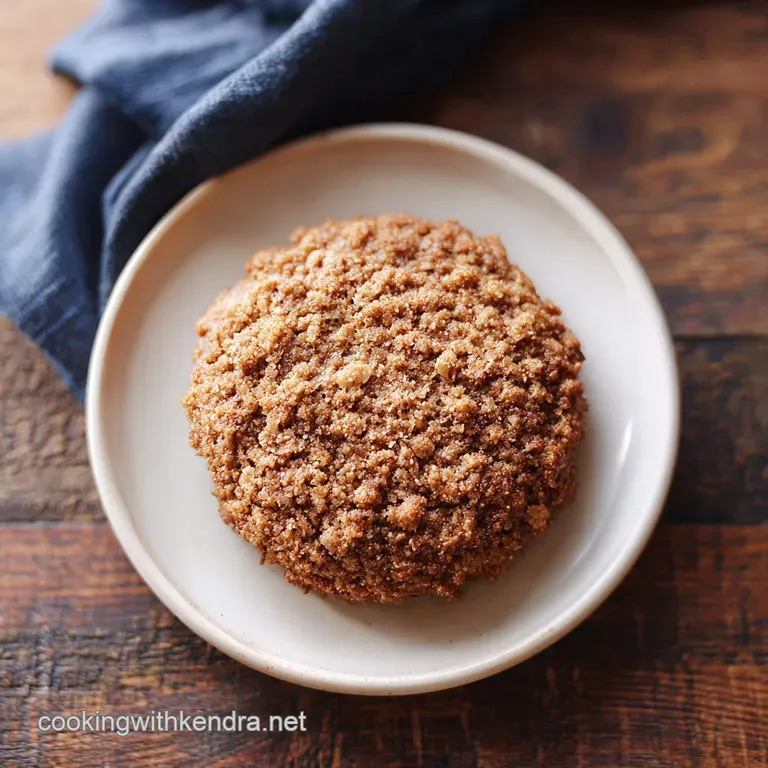
You don't need a professional kitchen to make the best oatmeal cookie recipe, but a few specific items make the process seamless. A standard stand mixer or a sturdy hand mixer is a lifesaver for the creaming stage.
If you try to do it by hand, you likely won't incorporate enough air, and your cookies will end up flat and greasy.
I also swear by a spring loaded cookie scoop. It ensures every cookie is exactly the same size, which means they all finish baking at the exact same time. No more half burnt, half raw trays!
Use parchment paper or a silicone baking mat to prevent sticking and to ensure the bottoms of your cookies brown evenly without scorching on the metal.
Layering Flavors Through Every Single Step
- Cream the fats. Beat 1 cup softened butter with 1 cup dark brown sugar and 0.5 cup white sugar for 3 minutes until pale and fluffy. Note: This creates the air pockets needed for a soft texture.
- Incorporate the liquids. Add 1 large egg and 1 tablespoon vanilla extract. Beat 1 minute until the mixture looks velvety.
- Whisk dry ingredients. In a separate bowl, stir 1.5 cups flour, 1 teaspoon baking soda, 1 teaspoon cinnamon, and 0.5 teaspoon sea salt until fully blended.
- Combine the bases. Pour the flour mixture into the butter mixture. Mix on low until just a few streaks of flour remain. Note: Overmixing at this stage makes cookies tough.
- Fold in texture. Stir in 3 cups old fashioned oats using a spatula. Mix until the oats are evenly distributed.
- Portion the dough. Scoop rounded tablespoons of dough onto a lined sheet. Space them 2 inches apart to allow for spreading.
- Bake with precision. Place in the oven for 10 minutes until edges are slightly browned. Note: The centers should still look slightly underdone.
- Rest on tray. Leave cookies on the hot baking sheet for 5 minutes. They will finish cooking via carryover heat.
- Final cooling. Move to a wire rack until completely room temperature.
Chef's Tip: Freeze your butter for 10 minutes before you begin if your kitchen is very warm. This prevents the butter from becoming oily during the creaming process, which is the main cause of excessive spreading!
| Pan Size | Batch Size | Bake Time | Result |
|---|---|---|---|
| Standard Sheet | 12 cookies | 10 mins | Perfect airflow |
| Large Sheet | 24 cookies | 12 mins | Slightly more spread |
| Small Toaster | 6 cookies | 9 mins | Crispier bottoms |
The smell during step 7 is honestly the best part of the whole day. It's that moment when the cinnamon finally hits the heat and the whole house starts to feel like a bakery. Remember, we aren't looking for a hard cookie; we want it to be just set enough to move without falling apart.
Professional Fixes For Common Baking Errors
Sometimes things don't go according to plan, and that is okay! Baking is a journey of learning. One of the most common issues people face is their cookies turning out like flat pancakes. This usually happens because the butter was too warm or you didn't measure the flour correctly.
Why Your Cookies Are Flat
If your cookies spread into one giant sheet, your dough was likely too warm. The fat melts before the flour structure has a chance to set. To fix this, simply pop your remaining dough in the fridge for 20 minutes before baking the next batch.
Why Your Cookies Are Hard
Oatmeal cookies become rocks when they are overbaked. Remember, they should look "naked" or slightly wet in the middle when you pull them out. If they look done in the oven, they will be overdone by the time they cool.
| Problem | Root Cause | Solution |
|---|---|---|
| Tough texture | Overmixing flour | Mix until flour just disappears. |
| Excessive spread | Butter too soft | Chill dough for 30 minutes before baking. |
| Burnt bottoms | Dark baking pan | Lower oven temp by 25°F or use parchment. |
Common Mistakes Checklist
- ✓ Use room temperature eggs to ensure they emulsify properly with the fat.
- ✓ Don't skip the salt; it balances the heavy sweetness of the oats.
- ✓ Always use a measuring cup to level off your flour don't scoop directly from the bag.
- ✓ Make sure your baking soda isn't expired, or your cookies will be dense and flat.
- ✓ Give your cookies space! At least 2 inches between each mound of dough.
Tasty Swaps For Every Dietary Need
If you are looking to make an oatmeal cookie recipe no flour, you can try substituting the all purpose flour with a gluten-free 1 to-1 blend or oat flour. Keep in mind that oat flour will make the cookie much more delicate and prone to crumbling.
For a healthy oatmeal cookie recipe, you can swap the butter for coconut oil, though this will give the cookies a slight tropical flavor and a much crisper edge.
Scaling For Different Batches
- Down (12 cookies): Use half of all ingredients. For the egg, whisk it in a small bowl and use exactly 1.5 tablespoons.
- Up (48 cookies): Double the ingredients but keep the spices at 1.5x (1.5 tsp cinnamon/salt) to avoid an overpowering flavor. Work in batches to keep the dough cool.
- Baking Large Batches: Rotate your pans halfway through the bake time to ensure even browning across both racks.
If you want a cookie that is more like a meal, you can add 1 cup of raisins or dark chocolate chips. Just be sure to fold them in at the very end with the oats. If you want a crunchier bite, toasted walnuts or pecans are a dream in this recipe.
Keeping Your Baked Goods Fresh Longer
The beauty of this oatmeal cookie recipe is that it actually gets better the next day as the moisture from the sugars migrates into the oats. To keep them soft, store them in an airtight container with a single slice of white bread. The cookies will pull the moisture from the bread, staying soft for up to a week.
Storage: Keep in a sealed container at room temperature for 5 days. For longer storage, they stay fresh in the fridge for 10 days, though they will lose some of their chew.
Freezing: You can freeze the baked cookies for up to 3 months. Even better, freeze the raw dough balls! When you're ready for a treat, just pop a frozen dough ball into the oven and add 2 minutes to the bake time.
Zero Waste Tip: If you have leftover broken cookie bits at the bottom of the jar, don't throw them away. Pulse them in a blender and use them as a "crust" for a cheesecake or sprinkle them over vanilla ice cream for a quick sundae.
Plating Treats For Maximum Table Appeal
Presentation is the final layer of flavor. I love serving these on a rustic wooden board or a white ceramic platter to let the golden colors shine. If you want to go the extra mile, sprinkle a tiny pinch of flaky sea salt on top right as they come out of the oven.
It makes the cookies look professional and adds a sharp contrast to the sweet molasses.
For a cozy night in, serve these warm with a cold glass of milk or a hot cup of coffee. The steam from the coffee softens the oats even further, making every bite feel like a decadent indulgence. If you're gifting them, wrap them in brown parchment paper tied with a simple piece of twine.
It’s a classic, Southern look that says "I made this with love."
Debunking Cookie Myths
"Sifting flour is unnecessary for cookies." This isn't true for oatmeal recipes. Because oats are so heavy, sifting the flour with the baking soda and cinnamon ensures the leavening is perfectly distributed, preventing "dead zones" where the cookie stays flat.
"Oatmeal cookies are always healthy." While they have more fiber than a sugar cookie, they still contain significant sugar and butter. Enjoy them for the comfort they provide, not as a replacement for your morning salad!
"You must soak oats before baking." This is a myth that leads to soggy, mushy cookies. The moisture from the egg and the steam in the oven is more than enough to soften the oats while maintaining their structural integrity. Trust the process and keep those oats dry until they hit the mixing bowl.
Recipe FAQs
What are the most common mistakes making oatmeal cookies?
Using butter that is too warm or overmixing the flour. Warm butter causes the dough to spread too thin before the structure sets, leading to flat cookies. Overmixing flour develops gluten, resulting in tough, dense cookies.
Are oat cookies actually healthy?
No, they are a treat, not a health food. While oats provide fiber, traditional recipes rely heavily on butter and sugar for texture and flavor. Treat them as an indulgence, similar to our Brownie Cupcakes with recipe.
What happens if you use regular oats instead of quick oats in cookies?
You should use regular rolled oats, not quick oats. Quick oats are too finely processed and will absorb moisture too quickly, resulting in a cakey, mushy texture instead of the desired chewy structure.
What kind of oatmeal is best for oatmeal cookies?
Old-fashioned rolled oats are the best choice. They maintain their shape during baking, providing the essential toothsome, chewy texture. Quick oats become too soft, and steel cut oats will remain too hard.
How do I ensure my oatmeal cookies stay soft for days?
Store the cooled cookies with a slice of white bread in an airtight container. The bread acts as a humectant, actively drawing moisture into the cookies to keep them soft. This principle of moisture control is also key when preventing spreading in our Deliciously Crunchy Maria Cookies recipe.
Must I chill the dough before baking oatmeal cookies?
No, chilling is optional but highly recommended for thickness. Chilling the dough for at least 30 minutes solidifies the fat, which slows spreading in the oven, resulting in thicker, chewier cookies with more pronounced edges.
Is it true that dark brown sugar is essential for chewiness?
Yes, dark brown sugar is crucial for achieving the ultimate chew. Its higher molasses content acts as a potent humectant, retaining significantly more moisture than granulated sugar alone, making the cookie soft longer.
Chewy Oatmeal Cookie Recipe
Ingredients:
Instructions:
Nutrition Facts:
| Calories | 191 kcal |
|---|---|
| Protein | 2.5 g |
| Fat | 8.6 g |
| Carbs | 26.1 g |
| Fiber | 1.3 g |
| Sugar | 12.4 g |
| Sodium | 96 mg |
