Creamy Loaded Mashed Potatoes
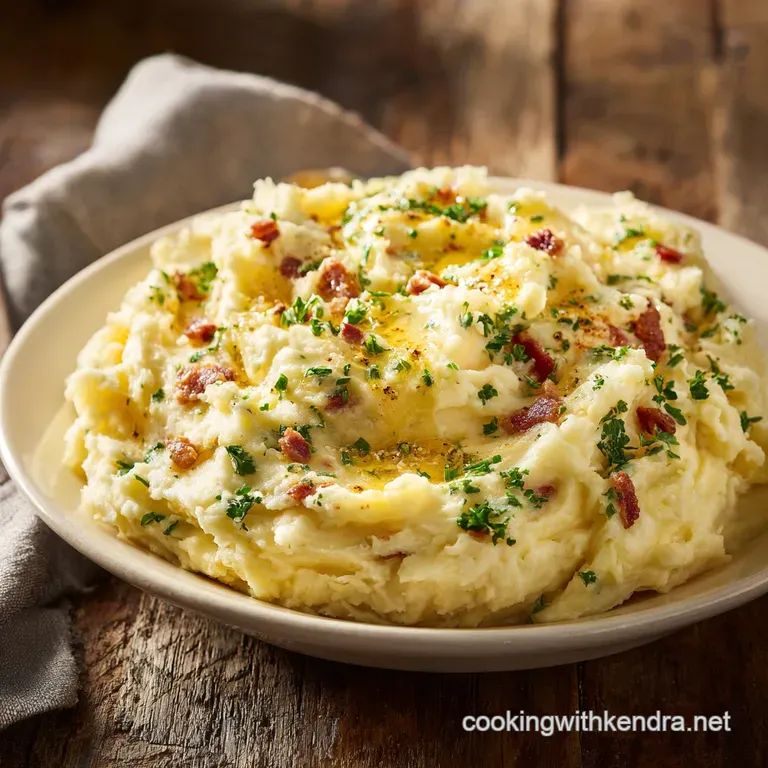
- Time: Active 15 minutes, Passive 25 minutes, Total 40 minutes
- Flavor/Texture Hook: Velvety smooth base with a crispy, salty bacon shatter
- Perfect for: Busy weeknight comfort or a high impact holiday side dish
- How to Make Loaded Mashed Potatoes
- Techniques for Fluffy Potato Texture
- Detailed Recipe Specs and Metrics
- Essential Ingredients and Easy Substitutes
- Essential Tools for Home Cooks
- The Step-By-Step Cooking Process
- Solving Common Mashing Texture Problems
- Adjusting for Large Crowds
- Busting Common Potato Myths
- Creative Ways to Mix Flavors
- Storage and Smart Reheating Tips
- Perfect Main Dishes to Serve
- Recipe FAQs
- 📝 Recipe Card
How to Make Loaded Mashed Potatoes
The first time I attempted a massive bowl of these for a family Sunday roast, I nearly ruined the entire meal. I was so worried about them being cold that I kept them over a low flame for too long, which turned my beautiful Yukon Golds into something resembling wallpaper paste.
It was a sticky, gummy mess that no amount of extra butter could save. That was the day I learned that great potatoes aren't just about what you put in them, but how you treat the starch before the first stir.
Since then, I have obsessively tested every variable, from the temperature of the milk to the exact moment the sour cream should hit the pot. I want you to imagine the aroma of thick cut bacon sizzling in the pan while the steam rises from a fresh batch of boiled potatoes.
When you fold in that sharp white cheddar and watch it create those tiny, gooey ribbons of cheese, you'll know exactly why we don't settle for the boxed stuff. We are going for a texture that is silky yet substantial, a dish that feels like a warm hug but tastes like a professional steakhouse side.
This isn't just about mashing some vegetables; it's about the chemistry of comfort. We are going to build layers of flavor, starting with a salted simmer and ending with a fresh chive finish that cuts right through the richness.
Whether you're a seasoned home cook or just trying to get a decent dinner on the table after a long workday, this guide is designed to make you the hero of the kitchen. Trust me, once you master this specific flow, you'll never go back to basic mash again.
Techniques for Fluffy Potato Texture
Starch Management: Starting potatoes in cold water ensures they cook evenly from the outside in, preventing the exterior from disintegrating before the center is soft.
Steam Evaporation: Returning the drained potatoes to the hot pot for a minute whisks away excess moisture, which allows the starch to absorb fat instead of water.
Fat First Coating: Adding softened butter to the dry potatoes before the milk creates a lipid barrier that prevents the texture from becoming gummy or glue like.
Temperature Syncing: Using room temperature dairy prevents the starch from seizing, which keeps the finished dish velvety instead of lumpy.
| Preparation Style | Total Time | Texture Outcome | Best Occasion |
|---|---|---|---|
| Fast Prep | 25 minutes | Chunky and rustic | Quick weeknight |
| Classic Method | 40 minutes | Silky and uniform | Sunday family dinner |
| Gourmet Style | 55 minutes | Ultra fine and whipped | Holiday celebrations |
Choosing the right method depends entirely on how much time you have before the family starts hovering around the stove. While the fast prep works in a pinch, I highly recommend the classic approach detailed here because it gives the bacon enough time to render properly and the flavors a chance to truly marry.
Detailed Recipe Specs and Metrics
To get this right every single time, we need to focus on a few precision checkpoints. First, the weight of your potatoes matters; 3 lbs is the sweet spot for a standard family of six. Second, don't guess on the tenderness. You want the potato chunks to literally slide off a paring knife with zero resistance.
If there is even a tiny bit of "catch," they aren't ready for the masher yet.
When it comes to scaling this recipe, it's quite forgiving as long as you keep the dairy ratios consistent. If you are feeding a massive crowd, say for a neighborhood potluck, you can easily double the 3 lbs of Yukon Golds.
Just remember to work in batches when mashing so you don't overwork the starch at the bottom of the pot. For a smaller dinner for two, cutting the recipe in half works perfectly, though I suggest using one whole egg yolk in the mix if you want to maintain that premium richness without needing a huge volume of sour cream.
Chef Tip: Freeze your butter for 10 minutes before cubing it. It sounds counterintuitive since we want it softened later, but cutting it while cold ensures perfect cubes that melt evenly when they finally hit those hot, steaming potatoes.
Essential Ingredients and Easy Substitutes
Selecting the right components is the difference between a side dish and a centerpiece. I always reach for Yukon Gold potatoes because their naturally buttery flavor and medium starch content provide the best structural integrity for "loading" with heavy toppings.
If you use russets, you'll get a fluffier result, but they can sometimes feel a bit grainy when mixed with sour cream.
| Ingredient | Science Role | Pro Secret |
|---|---|---|
| Yukon Gold Potatoes | Medium starch | Leave a few skins on for a rustic, earthy texture |
| Sharp White Cheddar | High fat/protein | Grate it yourself to avoid the powdery anti clumping agents |
| Full fat Sour Cream | Acidic tenderizer | Stir it in last to preserve the tangy "bright" notes |
| Thick cut Bacon | Umami crunch | Cook it low and slow to render every drop of flavor |
If you find yourself missing an item, don't panic. The beauty of a home cook's kitchen is adaptability. Here is how you can swap things out without losing the soul of the dish.
- 3 lbs Yukon Gold potatoes: Use Russets for a fluffier, lighter mash. Why this? Yukon Golds provide a naturally creamy, yellow fleshed base.
- 0.5 cup unsalted butter: Use salted butter but reduce the added sea salt by half. Why this? Butter provides the essential mouthfeel and fat barrier.
- 0.5 cup whole milk: Half and half makes it even more decadent. Why this? Liquid is needed to hydrate the starch cells.
- 0.5 cup full fat sour cream: Greek yogurt offers a similar tang with more protein. Why this? Provides the signature "loaded" tanginess.
- 1.5 cups sharp white cheddar: Pepper jack adds a fantastic spicy kick. Why this? Sharpness cuts through the heavy potato starch.
- 6 slices thick cut bacon: Smoked ham or pancetta works in a pinch. Why this? Adds the crucial smoky, salty crunch element.
- 0.25 cup fresh chives: Green onion tops are a perfect 1:1 substitute. Why this? Offers a fresh, oniony bite to balance the fat.
Essential Tools for Home Cooks
You don't need a high end kitchen to make world class potatoes, but a few specific tools make the process much smoother. I personally swear by a heavy bottomed Dutch oven. The thick walls hold heat consistently, which is vital when you're mashing and mixing.
If you use a thin aluminum pot, the potatoes will cool down too fast, making the cheese harder to melt and the milk difficult to incorporate.
The second "must have" is a sturdy potato masher. I prefer the wire loop style over the flat plates with holes because it allows for more air to be incorporated as you work. If you are looking for that ultra fine, restaurant style finish, you could use a potato ricer. It's an extra step, but it guarantees zero lumps.
Just whatever you do, please stay away from the electric hand mixer for this particular recipe. High speed blades shatter the starch granules, releasing too much amylose and turning your dinner into a sticky, unappealing paste.
The step-by-step Cooking Process
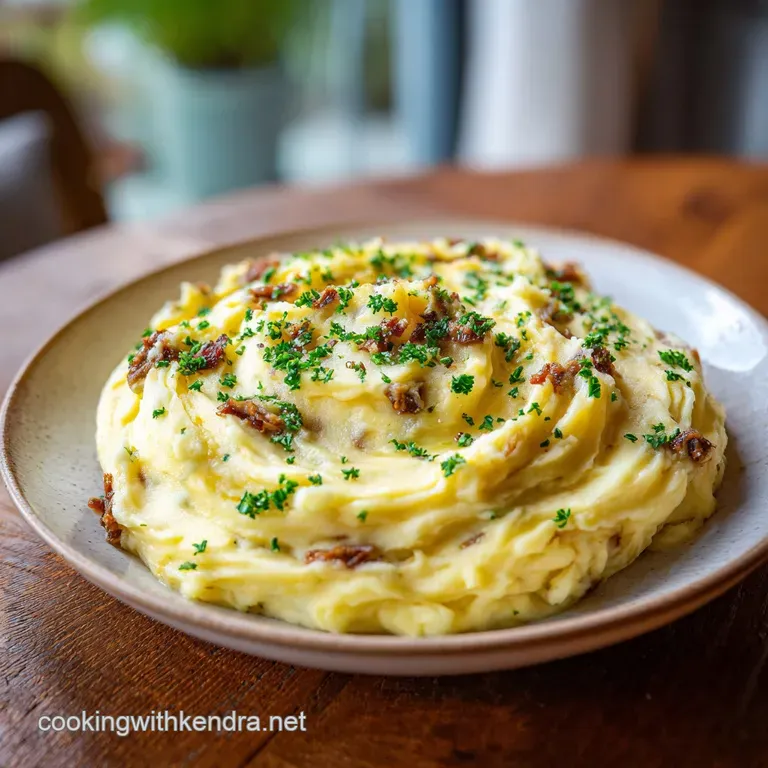
- Prep the potatoes. Peel the 3 lbs of Yukon Golds and cut them into uniform 2 inch chunks. Note: Uniformity ensures every piece finishes cooking at the exact same moment.
- Start the simmer. Place potatoes in a large pot and cover with cold water by at least an inch, then add 1 tbsp fine sea salt. Note: Salt should be in the water so it seasons the potato from the inside out.
- Boil 20 minutes until the potatoes are tender and easily pierced with a fork.
- Render the bacon. While potatoes boil, cook 6 slices of thick cut bacon in a skillet until deeply browned and crackling.
- Drain and dry. Pour off the water and return the potatoes to the hot pot for 60 seconds. Note: This "steam dry" step is the secret to a non watery mash.
- Add the fats. Toss in the 0.5 cup cubed butter and mash until mostly smooth and the butter is fully absorbed.
- Warm the dairy. Combine 0.5 cup whole milk, 0.5 tsp garlic powder, and 0.5 tsp pepper in a small bowl; microwave for 30 seconds.
- Incorporate liquids. Pour the warm milk mixture into the pot and fold gently. Note: Folding prevents over mashing and preserves texture.
- Fold in "loads". Add 0.5 cup sour cream, 1.5 cups shredded cheddar, and the crumbled bacon.
- Final garnish. Stir until the cheese just begins to melt, then top with 0.25 cup fresh chives.
Solving Common Mashing Texture Problems
If your potatoes aren't looking quite right, don't throw them out just yet. Most potato issues stem from either too much water or too much agitation. If you're looking for a more traditional, simpler base before adding all these toppings, you might want to check out the technique in my How to Make recipe for grandmother's silky mash. It covers the fundamentals of the perfect whip.
Why Your Potatoes Are Gummy
This is the most common heartbreak in the potato world. It usually happens because the potatoes were overworked (often with a food processor) or because they were mashed while they were still soaking in a bit of residual water. The starch molecules break and create a glue like consistency that is hard to reverse.
| Problem | Root Cause | Solution |
|---|---|---|
| Gummy texture | Over mashing or using a blender | Fold in a little extra butter and serve immediately; don't stir more |
| Soupy potatoes | Too much milk added at once | Stir over low heat for 2 minutes to evaporate excess liquid |
| Lumpy mash | Potatoes were undercooked | Use a ricer to force lumps out or add a splash more hot milk |
A little prevention goes a long way. If you want a different texture experience that avoids the "mash" entirely but keeps the loaded flavor, my Twice Baked Potatoes recipe offers a fantastic alternative with a crispy shell.
Common Mistakes Checklist
- ✓ Never start potatoes in boiling water; always start with cold water to ensure even cooking.
- ✓ Don't skip the "steam dry" step after draining; water is the enemy of a rich, creamy mash.
- ✓ Always grate your own cheese; pre shredded bags are coated in potato starch that prevents a smooth melt.
- ✓ Avoid the electric mixer; a manual masher or ricer is much gentler on the delicate starch cells.
- ✓ Warm your milk and butter; adding cold ingredients to hot potatoes causes the texture to tighten up.
Adjusting for Large Crowds
When you're scaling this up for a big holiday gathering, the math isn't always linear. If you double the recipe to 6 lbs of potatoes, you don't necessarily need to double the salt in the boiling water. I usually go with 1.5x the salt to prevent the water from becoming too briny.
However, the fat (butter and sour cream) should stay at a true 2x ratio to maintain that decadent mouthfeel.
For those cooking in smaller batches, like a 1.5 lb half recipe, keep a close eye on the boiling time. Smaller chunks in a smaller pot will cook significantly faster, sometimes in as little as 12 minutes. Always use the fork test rather than relying strictly on the timer. If you are looking for a totally different vibe for a smaller crowd, my Classic Irish Colcannon recipe uses similar techniques but adds greens for a wholesome twist.
Busting Common Potato Myths
One of the biggest misconceptions in home kitchens is that you have to peel potatoes to get them smooth. Actually, keeping a small amount of the skin from Yukon Golds adds a rustic charm and extra nutrients. The skin is so thin on this variety that it won't ruin the "velvety" feel; it just adds a bit of character.
Another myth is that you can't overcook a potato. People think "the softer the better," but if you boil them until they are falling apart in the water, the starch cells will have already absorbed too much liquid. This results in a bland, watery mash that can't hold onto the butter or sour cream properly.
You want tender, not disintegrated.
Creative Ways to Mix Flavors
If you want to take these Loaded Mashed Potatoes in a different direction, consider the "Copycat Outback" twist. This involves using an extra heavy hand with the black pepper and adding a touch of heavy cream instead of whole milk.
It creates a much denser, more restaurant style texture that pairs perfectly with a seared steak.
For a vegetarian version that doesn't lose that smoky depth, skip the bacon and add a teaspoon of smoked paprika or a drop of liquid smoke to the sour cream. You can also swap the chives for roasted garlic cloves. Just smash about six cloves of roasted garlic into the butter before you start mashing the potatoes.
It creates a deep, caramelized flavor that satisfies that savory craving without the meat.
Storage and Smart Reheating Tips
Potatoes are notorious for drying out in the fridge. The starch undergoes a process called retrogradation, where it firms up and loses its creaminess. You can store these in an airtight container for up to 4 days. When it's time to reheat, don't just throw them in the microwave on high power.
Add a splash of milk and a small pat of butter, then heat on 50% power, stirring every 60 seconds to re emulsify the fats.
Freezing mashed potatoes is actually possible, though the texture will change slightly. I recommend freezing them in individual portions using a large muffin tin. Once frozen, pop the "potato pucks" into a freezer bag for up to 2 months. To use them, let them thaw in the fridge overnight and reheat on the stove over low heat. If you find yourself with a lot of leftovers that you don't want to just reheat, they make a perfect base for a Loaded Baked Potato Soup recipe.
Perfect Main Dishes to Serve
These potatoes are a heavy hitter, so they usually play best with proteins that have a bit of a crust or a sharp sauce. A simple pan seared chicken breast or a thick ribeye steak is the classic choice.
The acidity in the sour cream and the sharpness of the cheddar act as a great foil to the rich, fatty flavors of red meat.
If you are looking for a lighter pairing, consider serving them alongside a roasted salmon fillet seasoned with lemon and dill. The citrus in the fish helps brighten the entire plate. For a complete comfort meal, there is nothing better than a big scoop of these next to a traditional meatloaf or some slow cooked pot roast. If you prefer a different starch altogether for your meal prep, you might enjoy my guide on Boiled Sweet Potatoes recipe for a sweeter, nutrient dense alternative.
Recipe FAQs
What goes on loaded mashed potatoes?
Butter, cheese, bacon, and sour cream. The essential toppings include softened butter, sharp white cheddar, cooked crumbled bacon, and full fat sour cream for tang. Fresh chives are the perfect final flourish.
What are good things to add to mashed potatoes?
Sharp cheeses, smoked meats, and rich dairy are excellent additions. Consider adding smoked paprika or roasted garlic for depth, or swapping sour cream for Greek yogurt for a tangier lift. If you master controlling the starch texture here, the same fat ratio logic applies to stabilizing the structure in our Aunt Millies Decadent recipe for smooth flavor integration.
What are the best toppings for mashed potatoes?
The best toppings balance richness with acidity and crunch. Bacon provides the necessary salty crunch, while sharp cheddar adds savory depth, and sour cream cuts through the richness. Avoid adding them until the potatoes are off the heat to prevent over melting the cheese.
What's in Outback loaded mashed potatoes?
They contain butter, cream, cheese, bacon, and chives. The Outback style leans toward a slightly denser, more savory profile, often achieved by using heavy cream instead of milk and incorporating a generous amount of coarse black pepper.
How to make mashed potatoes creamy without making them gluey?
Fold in warm dairy gently after drying the potatoes thoroughly. Excess moisture causes starch to bind into a gluey mass; ensuring potatoes are steam dried first is crucial. If you enjoyed mastering the gentle incorporation technique here, see how we apply that same principle of careful blending in our How to Bake recipe for uniform results.
Can I substitute Yukon Golds with Russets for loaded mash?
Yes, but the texture will be significantly fluffier. Russets have higher starch content, leading to a lighter, drier final product, whereas Yukon Golds are naturally creamier. If you need a fluffy base, the russet works, but you may need an extra tablespoon of butter to compensate.
Should I add the sour cream cold or warm?
Add the sour cream at room temperature or slightly warmed. Adding very cold dairy to hot potatoes shocks the starches, leading to lumps and a less homogenous texture. Stirring in warm liquids helps them integrate smoothly into the mash base.
Creamy Loaded Mashed Potatoes
Ingredients:
Instructions:
Nutrition Facts:
| Calories | 518 kcal |
|---|---|
| Protein | 15.4 g |
| Fat | 33.1 g |
| Carbs | 40.2 g |
| Fiber | 4.8 g |
| Sugar | 3.1 g |
| Sodium | 685 mg |
