Master Breakfast Casserole: No Soggy Bottoms
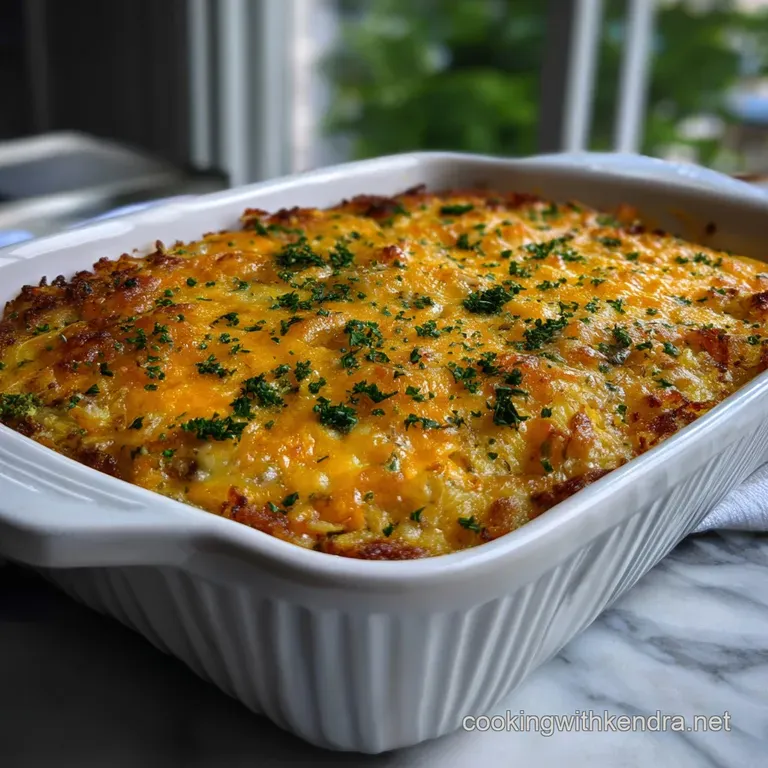
- Effort/Time: 1 hour 5 mins total.
- Flavor Hook: Maillard-seared sausage and sharp cheddar fused into a velvety, gold-crusted custard.
- Perfect for: Low-stress holiday mornings, high-protein meal prep, or a grab-and-go weekend brunch.
- The Culinary Physics of the Perfect Breakfast Casserole
- Precision Metrics and Thermal Requirements
- The Alchemy of Umami: Selecting Your Elements
- Technical Tooling for Optimal Heat Distribution
- The Atomic Execution Protocol
- Solving Texture Failures and Structural Collapse
- ⚗️ The Scaling Lab: The Physics of Quantity
- Flavor Architecture: Creative Substitutions
- Preservation Physics and Thermal Recovery
- Sensory Pairings and Final Presentation
- Recipe FAQs
- 📝 Recipe Card
The Culinary Physics of the Perfect Breakfast Casserole
There is nothing more demoralizing than investing $40 in premium ingredients only to pull a literal swamp out of your oven. I’ve seen it a hundred times: a breakfast casserole that looks beautiful on top but reveals a gray, weeping pool of liquid once sliced.
That liquid isn't just water; it’s a failure of protein structure. When eggs are shocked by high heat without enough fat to buffer the proteins, they tighten up like tiny rubber bands, squeezing out every drop of moisture they hold.
You’re left with tough, curdled eggs and mushy, water logged potatoes that ruin the entire morning.
I learned this the hard way during a chaotic Christmas brunch years ago. In my rush, I dumped frozen, ice-coated hash browns directly into the mix, thinking the oven would "fix" them. Instead, the ice melted into the custard, diluting the fat content and preventing the eggs from ever setting properly.
It was a textural nightmare that tasted like wet cardboard. I spent the next three years obsessing over the ratio of lipids to proteins to ensure that never happened again with any breakfast casserole.
The breakthrough came when I stopped viewing this as a "dump and bake" meal and started treating it as a savory custard. By balancing 10 large eggs with a specific ratio of whole milk and heavy cream, we create an emulsion that remains velvety even at high temperatures.
The starch in the frozen shredded hash browns acts as a structural scaffold, but only if they are properly hydrated and par-cooked by the surrounding fats. This breakfast casserole isn't just breakfast; it's an exercise in thermal mass management and moisture control.
Mastering this breakfast casserole sets you apart.
Precision Metrics and Thermal Requirements
Understanding the logistics of your breakfast casserole is the difference between a guess and a guarantee. We aren't just heating food; we are managing the phase change of egg proteins from liquid to semi solid.
This requires a specific time-to-temperature curve to ensure the center reaches safety without the edges becoming "glassy" or over coagulated. Preparing a perfect breakfast casserole hinges on these metrics.
- Prep Time: 20 minutes
- Cook Time: 45 minutes
- Total Time: 1 hour 5 mins
- Yield: 12 servings
- Service Temperature: 160°F (71°C) internal
The Alchemy of Umami: Selecting Your Elements
Selecting the right components for your breakfast casserole recipe is about more than just a grocery list. Each item plays a specific role in the structural integrity of the final bake.
Using a high-quality Lodge Cast Iron Skillet for the initial sear is non-negotiable for achieving the Maillard reaction on your proteins in this savory breakfast casserole.
- 1 lb (454g) Ground breakfast sausage: I prefer a spicy variety to cut through the richness of the dairy. Why this? Provides the primary fat source for sautéing the aromatics.
- 30 oz (850g) Frozen shredded hash browns: Ensure these are slightly thawed to prevent thermal shock to the custard.
- 1 tsp (5ml) Lucini Extra Virgin Olive Oil: Used for the initial vegetable sweat.
- 1/2 cup (75g) Yellow onion: Finely diced for even distribution.
- 1/2 cup (75g) Red bell pepper: Adds a necessary pop of acidity and color.
- 10 Large eggs: The structural binder of the entire dish.
- 2 cups (475ml) Whole milk: Provides the volume for the custard base.
- 1/2 cup (120ml) Heavy cream: Why this? High fat content (36%+) prevents egg proteins from over tightening.
- 1 tsp (5g) Diamond Crystal Kosher Salt: Why this? Large flakes allow for controlled seasoning without over salting.
- 1/2 tsp (2.5g) Black pepper: Freshly cracked for volatile oil release.
- 1/2 tsp (2.5g) Garlic powder: Provides a consistent savory baseline.
- 1/4 tsp (1.25g) Smoked paprika: Adds a subtle depth that mimics wood fired cooking.
- 2 cups (225g) Sharp cheddar cheese: Shredded (divided). Why this? Sharpness provides a necessary contrast to the sweet milk.
- 1 cup (115g) Monterey Jack cheese: Shredded for superior meltability.
- 2 tbsp (10g) Fresh chives: Sliced thin for a bright, allium finish.
| Ingredient | Chemical/Physical Role (Science) | The Pro Secret (Why This Matters) |
|---|---|---|
| Large Eggs | Protein denaturation/coagulation | Forms the structural matrix that holds the potatoes and meat. |
| Heavy Cream | Lipid buffering | Fat molecules coat egg proteins, slowing down their bonding to ensure a creamy texture. |
| Hash Browns | Starch gelatinization | Absorbs excess moisture from vegetables while providing a chewy, structural base. |
| Sharp Cheddar | Acidic contrast | The high acidity in aged cheddar breaks up the "flatness" of the milk heavy custard. |
Technical Tooling for Optimal Heat Distribution
To execute a breakfast casserole with hash browns properly, you need tools that manage heat without creating hot spots. This is key for any successful breakfast casserole.
- 9x13-inch Ceramic Baking Dish: Ceramic has higher thermal mass than metal, leading to a gentler, more even bake for the eggs.
- Lodge Cast Iron Skillet: Essential for browning the sausage. If you use a thin non-stick pan, you’ll steam the meat rather than sear it, losing out on critical flavor.
- Stainless Steel Balloon Whisk: You need to vigorously aerate the eggs to break down the chalazae (the white stringy bits) for a smooth custard.
- Large Glass Mixing Bowl: Non-reactive material ensures the acidity of the cheese doesn't pick up metallic off-flavors.
The Atomic Execution Protocol

The success of your breakfast casserole depends on the order of operations. We are layering flavors and managing moisture at every stage. This isn't unlike the technique used in our Chicken Broccoli Rice recipe, where moisture control determines the final mouthfeel. The finished breakfast casserole will reward your precision.
- Preheat the oven to 375°F (190°C) to ensure immediate oven spring when the dish enters.
- Brown the 1 lb ground breakfast sausage in a Lodge Cast Iron Skillet over medium high heat for 8 minutes until mahogany brown and fat has rendered out.
- Transfer the sausage to a paper towel-lined plate. Note: This prevents the casserole from becoming excessively greasy.
- Sauté the 1/2 cup onion and 1/2 cup red bell pepper in 1 tsp olive oil for 5 minutes until translucent and the raw pungent aroma vanishes.
- Whisk the 10 eggs, 2 cups milk, 1/2 cup heavy cream, and all spices in a large bowl for 2 minutes until the mixture is pale yellow and slightly frothy.
- Grease your 9x13 dish and layer the 30 oz hash browns evenly across the bottom.
- Distribute the cooked sausage and sautéed vegetables over the potatoes.
- Sprinkle 1 cup of the sharp cheddar and 1 cup of Monterey Jack over the meat layer.
- Pour the egg custard slowly over the entire assembly until the liquid reaches just below the top of the potato layer.
- Bake for 35 minutes, then add the remaining 1 cup of cheddar and bake for 10 more minutes until the center jiggles slightly like gelatin but is no longer liquid.
Solving Texture Failures and Structural Collapse
The most common issue with an Easy Brunch bake is the moisture balance. If your dish looks like a sponge, you've overcooked it. If it’s soup, you’ve undercooked it or failed to drain your components.
A common error when making an Easy Brunch is assuming all breakfast casserole recipes behave the same way.
Why Your Casserole is Weeping
When eggs are overcooked, the protein network collapses and pushes out water this is known as syneresis. It’s the same thing that happens when you over scramble eggs. A well made breakfast casserole avoids this entirely.
| Problem | Root Cause | The Fix | Pro Protocol |
|---|---|---|---|
| Liquid in bottom | Saturated hash browns or overcooked eggs | Thaw potatoes and pull at 160°F | Use a digital thermometer to check the exact center of the breakfast casserole. |
| Rubbery Texture | Too many eggs/not enough fat | Increase heavy cream ratio | The fat in the cream acts as a "lubricant" for the proteins. |
| Soggy Potatoes | Ice crystals in frozen shreds | Thaw and pat dry with towels | Removing surface moisture allows the starch to bond with the custard. |
⚗️ The Scaling Lab: The Physics of Quantity
When you decide to double this breakfast casserole recipe for a large crowd, you cannot simply multiply every number by two. Physics gets in the way of scaling this breakfast casserole perfectly.
- The Evaporation Paradox: If you double the recipe into two 9x13 pans, the surface area remains the same per pan. However, if you try to bake a double deep version in one large deep pan, the center will remain raw while the edges turn to leather. Always use two separate pans for doubling.
- Flavor Saturation: Spices like smoked paprika and black pepper scale at 1.5x. Doubling them can lead to a bitter, overpowering profile that masks the delicate egg flavor.
- Thermal Mass: Doubling the meat in one skillet will drop the pan temperature instantly, causing the meat to boil in its own juices. Brown the sausage in batches to maintain the 300°F+ required for the Maillard reaction.
- Carry Over Cooking: A larger mass of hot custard holds more energy. Pull the casserole when the center is 155°F; it will drift up to the safe 160°F during the 10 minute rest.
Flavor Architecture: Creative Substitutions
While the base recipe is a classic, you can manipulate the flavor profile by swapping elements without ruining the structural integrity of this excellent breakfast casserole.
| Original Ingredient | Substitute | Why It Works |
|---|---|---|
| Ground Sausage | Diced Thick cut Bacon | Similar fat content, but adds a smoky, salty crunch. |
| Sharp Cheddar | Gruyère Cheese | Melts into a silkier texture with nutty, earthy notes. |
| Whole Milk | Full fat Oat Milk | Same viscosity, but adds a toasted grain flavor. Note: Will be slightly sweeter. |
| Hash Browns | Tater Tots | Same starch base but provides more "crunch" on the surface. |
For a completely different texture, you might consider an Overnight Blueberry French Toast or a French Toast Bake, but those rely on gluten for structure rather than the starch gelatinization we see here with potatoes. If you're looking for another savory option, our Green Bean Casserole recipe offers a similar comfort food profile with a focus on creamy emulsions. This breakfast casserole is versatile!
Preservation Physics and Thermal Recovery
A breakfast casserole is one of the few dishes that actually tastes better the next day as the flavors have time to undergo molecular diffusion. Making a big batch means you have leftovers of this fantastic breakfast casserole.
- Fridge: Store in an airtight container for up to 4 days. The starch in the potatoes will retrogradate, making the texture slightly firmer.
- Freeze: You can freeze slices individually. Wrap in plastic wrap followed by aluminum foil to prevent freezer burn (ice sublimation). Lasts 3 months.
- Reheating: Avoid the microwave if possible, as it vibrates water molecules too violently, making the eggs rubbery. Reheat in a 350°F oven for 15 minutes to preserve the crust.
💡 ZERO WASTE PHILOSOPHY: Don't discard those chive stems or onion skins! Transform: Save all vegetable scraps and the sausage fat bits. Science: Simmer scraps with water for a quick "breakfast broth" to use in savory oatmeal.
The sausage fat contains concentrated fat-soluble flavor compounds that shouldn't be wasted in your quest for the perfect breakfast casserole.
Sensory Pairings and Final Presentation
To balance the high fat, high protein nature of this Christmas Breakfast Recipe, you need acidity and freshness on the plate.
- Acidity: Serve with a side of sliced grapefruit or a sharp arugula salad dressed in lemon vinaigrette. The acid cuts through the heavy cream and cheese in the breakfast casserole.
- Texture: A dollop of cold sour cream or Greek yogurt provides a thermal and textural contrast to the hot, dense casserole.
- Visual: Garnish with the remaining fresh chives at the very last second. The heat of the casserole will release the chives' volatile oils without wilting them into mush.
This breakfast casserole is a reliable staple because it respects the science of its ingredients. By focusing on the "Why" behind the custard and the sear, you move from just following a recipe to mastering the medium of brunch itself.
Whether you're looking for breakfast casserole ideas for a crowd or just a solid meal prep for the week, this method ensures a velvety, umami rich result every single time. You now have the knowledge to make the ultimate breakfast casserole.

Recipe FAQs
how to make breakfast casserole?
Sear sausage, sauté aromatics, whisk eggs/milk/cream, layer starches, pour custard, and bake at 375°F until 160°F internal. The process relies on creating a stabilized custard using heavy cream to buffer the egg proteins from over coagulation during baking.
This precise moisture control prevents the dreaded soggy bottom common in inexperienced bakes.
how to make breakfast casserole with biscuits?
Substitute canned biscuits torn into quarters for hash browns. Biscuits absorb less moisture than potatoes; reduce milk by 1/4 cup to compensate for lower starch absorption capacity. If you enjoyed mastering this moisture balancing, see how the same principle applies to structural integrity in our How to Bake English Muffins for a Quick Breakfast: My Kitchen Tested Recipe.
how to make breakfast casserole with crescent rolls?
No. Dough expansion during baking will result in an uneven, gummy final texture. Crescent rolls rely on yeast and butter layers for flaky lift, which is disrupted by the heavy, wet custard mix.
This structure is better suited for recipes focusing on gluten development rather than starch hydration.
how to make breakfast casserole with potatoes?
Thaw frozen shredded potatoes slightly before layering into the dish. Adding ice-cold potatoes causes thermal shock, slowing the custard set time and leading to a watery bottom layer.
This controlled thermal introduction is similar to tempering chocolate; you must introduce the cold element slowly to maintain emulsion stability.
how to make breakfast casserole with bread?
Use cubed, day-old bread, lightly toasted beforehand for structure. Bread soaks up significantly more liquid than potatoes; increase the egg/milk ratio by 15% to ensure the custard sets firmly around the gluten structure. For a firmer, individual savory bake, consider trying How to Cook Savory Sausage Muffins in 20 Minutes: A Delicious Breakfast Experience.
Should I pre-cook the sausage?
Yes, always brown sausage until deeply caramelized for flavor development. Searing the meat creates complex flavor compounds via the Maillard reaction that boiling cannot replicate. Rendered fat also lubricates the eggs, preventing them from seizing too tightly.
Can I make this ahead of time?
Assemble completely, cover tightly, and refrigerate overnight before baking. Resting allows the starch in the potatoes to fully hydrate with the custard, resulting in a richer final flavor profile. For a similar slow set technique focused purely on the egg, refer to our guide on How to Bake Eggs Oeufs en Cocotte: Creamy & Easy for Breakfast Bliss.
Crispy Breakfast Casserole Recipe

Ingredients:
Instructions:
Nutrition Facts:
| Calories | 398 kcal |
|---|---|
| Protein | 20 g |
| Fat | 27 g |
| Carbs | 16 g |
| Fiber | 1.5 g |
| Sugar | 3 g |
| Sodium | 845 mg |
