Crispy General Tsos Chicken the Ultimate Home Recipe
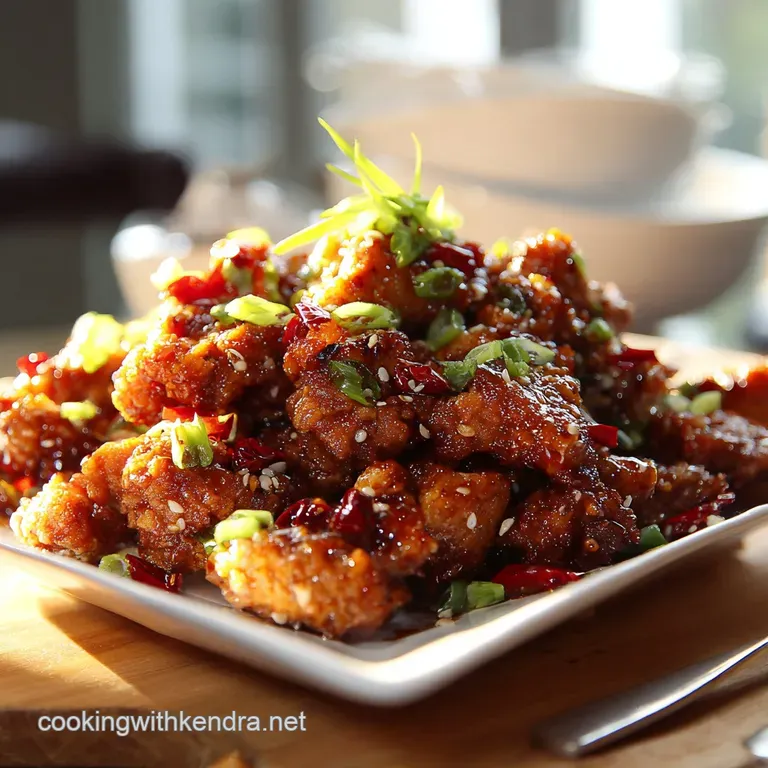
- Reclaiming a Classic: Why Homemade General Tso's Trumps Takeout
- What Exactly Is General Tsos Chicken? The Culinary Backstory
- Sourcing the Essential Elements for the Ultimate Result
- Building the Components of General Tsos Chicken
- Executing the Recipe: Step-by-Step Cooking Mastery
- The Dual Fry Method: Ensuring Long-Lasting Crispiness
- Frequently Asked Questions and Pro Tips for Success
- Serving Suggestions and Recipe Variations
- Recipe FAQs
- 📝 Recipe Card
Reclaiming a Classic: Why Homemade General Tso's Trumps Takeout
For many, the mention of General Tso's Chicken immediately conjures up images of plastic containers and late night cravings. While Takeout Food certainly has its place, the experience of crafting truly spectacular Homemade Chinese Food is leagues ahead.
The primary issue with commercial versions is often the coating thick, heavy, and quickly saturated with oil and sauce. By taking control of the process, particularly the frying technique and the quality of the ingredients, we can achieve a dish that boasts an unbelievably Crispy General Tso's Chicken exterior and a cleaner, brighter flavor profile.
This recipe elevates the standard, transforming a greasy quick fix into a truly impressive Chicken Dinner Recipes star that takes approximately 65 minutes from start to finish, including essential marinating time.
What Exactly Is General Tsos Chicken? The Culinary Backstory
General Tsos Chicken is the undisputed heavyweight champion of American Chinese cuisine. At its core, it is a magnificent collision of sweet, sour, savory, and just a hint of heat, surrounding perfectly tender, deep fried chicken pieces.
While demanding a medium difficulty level due to the precision required in frying and sauce consistency, the overall preparation is manageable, relying heavily on temperature control and careful timing to achieve that perfect takeout texture at home.
Defining the Perfect General Tso's Flavor Profile
The complexity of the ideal general tso's chicken sauce comes from layering various depths of flavor. We utilize packed brown sugar for deep sweetness, cutting that richness with the sharp acidity of rice vinegar.
Savory notes are amplified through low-sodium soy sauce and a crucial addition of Hoisin sauce, lending a rich, almost barbecue like depth. The dish achieves its signature mild spice from whole dried red chillies, which infuse the oil with heat without overwhelming the palate.
Freshly minced ginger and garlic round out the aromatic base, ensuring every bite is vibrant.
The True Secret to Achieving Maximum Crunch and Gloss
The texture is what truly separates the exceptional from the mediocre. The secret lies in two areas: the coating and the thickening agent. The coating must be light yet structural, achieved through a blend of cornflour, all-purpose flour, and a touch of baking powder, which expands slightly during frying to create a light, fluffy crust.
Meanwhile, the sauce needs to be thick and adhesive, not watery. This is managed by a cornflour slurry, which, when whisked into the simmering sauce, instantly transforms it into a shimmering, glossy glaze that clings beautifully to the crispy chicken without saturating it instantly.
A Brief History of This Iconic American Chinese Dish
Despite its profound popularity in the Western world, General Tso's Chicken did not originate in mainland China. It is widely credited to Chef Peng Chang kuei, who first created the dish in the 1950s in Taiwan, naming it after the famous 19th-century Qing dynasty general, Zuo Zongtang (Tso Tsung-t’ang).
It gained massive popularity in New York in the 1970s and quickly became the go-to order. For those wondering about the difference, general tso's chicken vs orange chicken often boils down to spice and zest: General Tso’s is traditionally tangier and spicier, relying on chillies, while Orange Chicken leans into citrus zest and is typically much sweeter.
Sourcing the Essential Elements for the Ultimate Result
Success begins with quality ingredients. While boneless, skinless chicken breasts work fine, using 1 kg (2.2 lbs) of boneless, skinless chicken thighs, cut into 1 inch cubes, is highly recommended. Thigh meat retains moisture better, guaranteeing juicy results even after the necessary double frying process.
Ensure you select low-sodium light soy sauce to keep the sodium levels in check, particularly since the recipe uses soy sauce both in the marinade and the main sauce base. For the authentic flavor complexity, do not skip the Shaoxing rice wine (or dry sherry if substituting) and a quality Hoisin sauce.
Building the Components of General Tsos Chicken
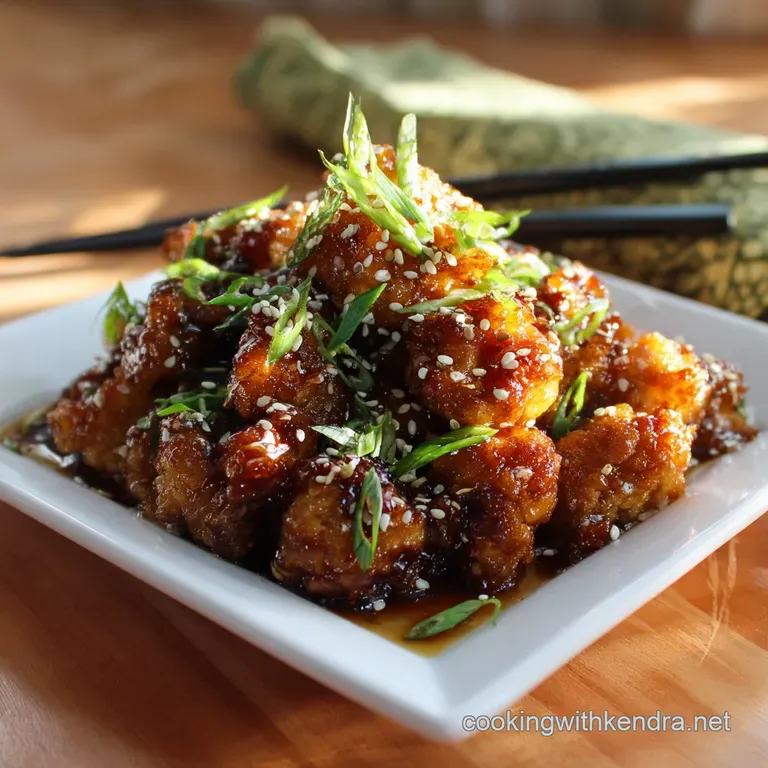
This recipe is executed in three coordinated phases: preparing the chicken, assembling the coating, and building the sauce components. Precise measurement during this stage ensures flawless execution later.
Crafting the Perfect Marinade and Sauce Base
We start the process by marinating the cubed chicken for a minimum of 30 minutes in the refrigerator. This brief soak in light soy sauce, Shaoxing rice wine, grated fresh ginger, and white pepper tenderizes the meat and adds immediate seasoning.
Simultaneously, the General Tso’s sauce mixture should be whisked together and set aside, combining the chicken stock, soy sauce, rice vinegar, brown sugar, and Hoisin. Pre-mixing this liquid base is crucial because once the chicken is fried, the sauce making must happen rapidly.
The Crispy Coating Formula: Key to Light, Fluffy Texture
The structural integrity of the Crispy General Tso's Chicken crust relies on a dry mixture of 1 cup (120 g) cornflour, ½ cup (60 g) all-purpose flour, and 1 teaspoon of baking powder. Cornflour (cornstarch) is the star here, frying up significantly crispier than flour alone.
After the chicken is dipped in whisked eggs, it must be thoroughly dredged in this dry mixture, pressing gently to create a thick, stable layer. An expert tip: allow the coated chicken pieces to rest for 5– 10 minutes before they hit the hot oil; this rest time absorbs excess moisture and stabilizes the crust, preventing it from flaking off during frying.
Non-Negotiable Kitchen Tools for Safe Deep Frying
While this is shallow frying (using about 600 ml of neutral oil), safety and accuracy are paramount. A deep sided heavy bottomed frying pan or wok is essential to contain the oil splatter. Critically, you must use a deep fry thermometer.
Guessing the temperature leads directly to either soggy chicken (oil too cool) or burned coating (oil too hot). Finally, always drain your finished product on a wire rack set over a baking sheet, never on paper towels, as the rack allows air to circulate, maintaining the crunch.
Ingredient Swaps and Adaptations for Dietary Needs
The versatility of the general tso's chicken recipe allows for easy substitutions. If you need a Air Fryer Recipes Healthy alternative, the coated chicken can be lightly sprayed with oil and air-fried at 200°C (400°F) for 12– 15 minutes, offering a guilt free crunch.
For a gluten-free adaptation, substitute regular soy sauce with Tamari and use a certified gluten-free flour blend, or simply use pure cornflour for the entire coating mix. Vegetarians can swap the chicken entirely for firm pressed tofu or large chunks of hearty portobello mushrooms, following the same coating and frying instructions.
Related Recipes Worth Trying
- Easy Family Slow Cooker Meal Ideas Budget Chicken Cacciatore — Searching for Easy Family Slow Cooker Meal Ideas This budgetfriendly Chicken Cacciatore is a dumpandgo delight Incredibly tender chicken melts into a rich...
- Chefs Perfect Roasted Chicken High Heat for Crispy Skin Juice — Our foolproof technique delivers the Perfect Roasted Chicken with mahogany crispy skin Simple to execute this Best Roast Chicken Recipe is perfect for...
- The ultimate Easy Crock Pot BBQ Chicken Sticky Shredded and StressFree — Your midweek culinary hero This truly Easy Shredded BBQ Chicken Crockpot recipe requires zero fuss Just minimal prep for unbelievably tender sticky pulled...
Executing the Recipe: step-by-step Cooking Mastery
With all components prepped the chicken marinated and coated, the sauce mixed, and the cornflour slurry ready it is time to move quickly. The total cook time is remarkably short, about 15 minutes, centered entirely around the precise frying process and rapid sauce execution.
The Dual Fry Method: Ensuring Long Lasting Crispiness
This technique is the single most important factor for achieving a takeaway level crunch that resists the sauce. It is a two-stage process using two distinct temperatures.
Preparing the Chicken for Optimal Coating Adhesion
Before frying, ensure your coated chicken pieces are separate and not clumped together. This guarantees an even cook and maximum surface area for crisping. Place them directly from the dry dredge onto a tray, ready for the oil.
Temperature Control: Frying the Morsels to Golden Perfection
Heat your frying oil (peanut or vegetable oil works well) to the initial temperature of 170°C (340° F) . Fry the chicken in manageable batches for 3 to 4 minutes. This is the "cook through" phase; the pieces should be pale golden.
Remove them to the wire rack, allowing the internal temperature of the chicken to continue stabilizing while the oil temperature is raised aggressively to 190°C (375° F) . Return all the chicken to the hotter oil for a swift second fry of just 60 90 seconds.
This flash of high heat expels any residual moisture from the crust, sealing the coating and yielding that phenomenal, long lasting crunch.
Bringing the General Tsos Sauce to a Shimmering Glaze
Once the chicken is draining, immediately turn your attention to the sauce. Drain the oil from the wok, leaving just 1 tablespoon to sauté the aromatics: the whole dried red chillies, minced garlic, and minced ginger. This should be a quick process, lasting less than a minute, until fragrant.
Pour in the pre-mixed sauce liquid and bring it to a rapid boil. Whisk the cornflour slurry one final time (as the starch tends to settle) and pour it into the boiling sauce, stirring relentlessly until the liquid thickens into a transparent, glossy syrup that perfectly coats the back of a spoon.
The Final Assembly: Tossing the Crispy Pieces and Sauce
Remove the wok from the heat immediately after the sauce has thickened. Add the ultra crispy, double fried chicken pieces and toss quickly and thoroughly using a spatula or tongs, ensuring every piece is coated in the thick glaze.
Right before serving, stir in the teaspoon of sesame oil for its distinct, fragrant finish. Serving must be immediate to ensure the crust maintains its integrity against the luxurious sauce.
Frequently Asked Questions and Pro Tips for Success
The key difference between a good dish and a spectacular one lies in mastering the small details. Always use a wire rack for draining, as setting fried items on paper towels guarantees a soggy bottom due to trapped steam.
On top of that,, always have your sauce mixed and the slurry ready before you start the frying sequence. The moment the chicken is out of the oil, your focus needs to shift entirely to the finishing process.
Finally, if you find your sauce is too thick, simply add a splash of hot water or chicken stock until you reach the desired consistency. If it’s too thin, quickly add another half teaspoon of cornflour mixed with cold water to the simmering sauce.
Serving Suggestions and Recipe Variations
The rich, complex flavor of General Tso's Chicken demands simple, fresh accompaniments to truly shine.
Best Side Dishes to Pair with General Tsos Chicken
The classic pairing remains perfectly steamed white rice, such as Jasmine or Basmati, to soak up the glorious general tso's chicken sauce . To balance the richness of the fried chicken, offer a green vegetable side dish.
Quick sautéed broccoli florets or steamed baby bok choy, finished lightly with sea salt and perhaps a few sesame seeds, provide a refreshing contrast. A crisp, cold lager is the traditional beverage pairing, or try a dry, unoaked white wine like Pinot Gris.
Storage, Reheating, and Troubleshooting Common Issues
Leftovers should be stored in an airtight container in the refrigerator for up to three days. Be aware that the crispy coating will inevitably soften once refrigerated. The best way to reheat Crispy General Tso's Chicken and restore some of the texture is by placing it in a single layer in a preheated oven or toaster oven at 180°C (350°F) for about 8– 10 minutes, or utilize an air fryer to achieve a rapid re-crisping.
Avoid microwave reheating if possible, as this will result in a completely soggy texture.
Adjusting the Heat Level: From Mild to Fiery Preference
This recipe uses 5 8 whole dried red chillies, which provide a mild warmth rather than aggressive heat. For those who prefer a spicier rendition, you can easily increase the heat level by either splitting open the dried chillies before sautéing them (which releases the seeds and capsaicin) or by stirring in a teaspoon of red pepper flakes or a dash of Sriracha directly into the sauce along with the sesame oil during the final toss.
Calorie Count and Nutritional Breakdown per Serving
As a deep fried dish, General Tso’s Chicken is calorically dense, though significantly less so than many commercial counterparts. Based on four standard servings, this preparation clocks in at an estimated 480 to 550 kcal per portion.
You can expect a robust protein contribution of around 35 g, mostly from the chicken, with fat content ranging from 20 to 25 g, depending on the oil absorption rate. Carbohydrates sit around 45 to 55 g. By insisting on low-sodium soy sauce, we manage the sodium level to an estimated 800 to 1100 mg per serving.
Utilizing the Air Fryer Recipes Healthy variation will substantially reduce the fat and calorie count.
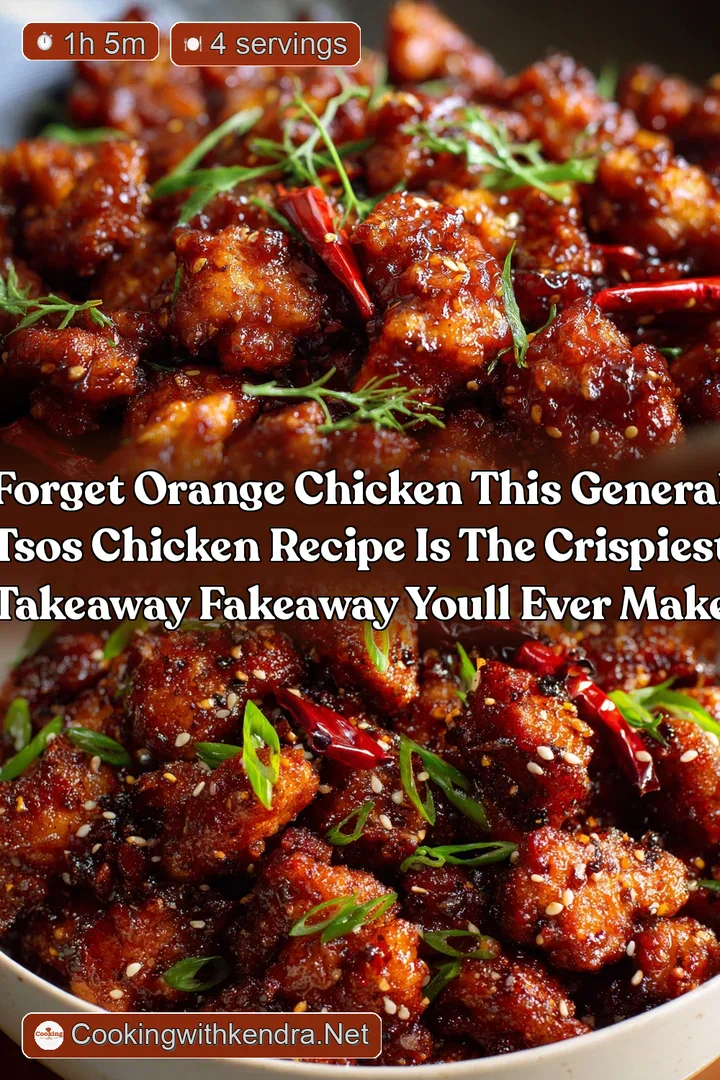
Recipe FAQs
How can I stop my chicken from going soggy once I toss it in the General Tsos Chicken sauce?
Soggy chicken is a culinary tragedy! The secret to maintaining maximum crunch lies in the non-negotiable double fry technique outlined in the recipe, which creates an ultra stable crust.
Crucially, always drain your cooked chicken on a wire rack, never on kitchen paper, as trapped steam is the absolute enemy of crispiness.
Can I prep parts of this recipe ahead of time to make dinner less of a faff?
Absolutely, prepping ahead saves a tremendous amount of stress! You can make the sauce base entirely up to two days in advance and keep it chilled in the fridge. However, only coat and fry the chicken right before serving, because even the best fried coating will lose its signature crackle if it sits waiting.
I don't have Shaoxing rice wine; is there a decent alternative for the marinade?
Don't panic if your cupboard is bare! If Shaoxing rice wine is missing, the best substitute is often dry sherry or sake, as they provide that crucial depth and acidity. For an alcohol free substitution, simply use chicken stock mixed with a tiny splash of white wine vinegar to balance the flavour profile.
My sauce isn't thickening up properly what's gone wrong with the cornflour slurry?
If your sauce is stubbornly refusing to behave, it usually means the cornflour wasn't fully activated. Make sure you re-whisk the slurry thoroughly just before pouring it into the simmering liquid, as cornflour settles quickly.
Then, ensure the sauce reaches a rapid boil for at least 30 seconds to guarantee that satisfying, glossy thickness.
Is there a way to make this General Tsos Chicken recipe healthier without deep frying?
Certainly! While deep frying gives the ultimate crunch, you can significantly reduce the fat content by using an air fryer or oven. Ensure the coated chicken is lightly sprayed with oil and cook it until golden brown and crispy (around 12-15 minutes in a 200°C air fryer).
It delivers a far lighter result that is still packed with flavour.
Crispy General Tsos Chicken Takeaway Recipe
Ingredients:
Instructions:
Nutrition Facts:
| Calories | 2794 kcal |
|---|---|
| Protein | 18.7 g |
| Fat | 33.1 g |
| Carbs | 159.5 g |
| Fiber | 18.4 g |
| Sodium | 2443 mg |
