New Year S Eve Appetizer with Garlic and Herbs
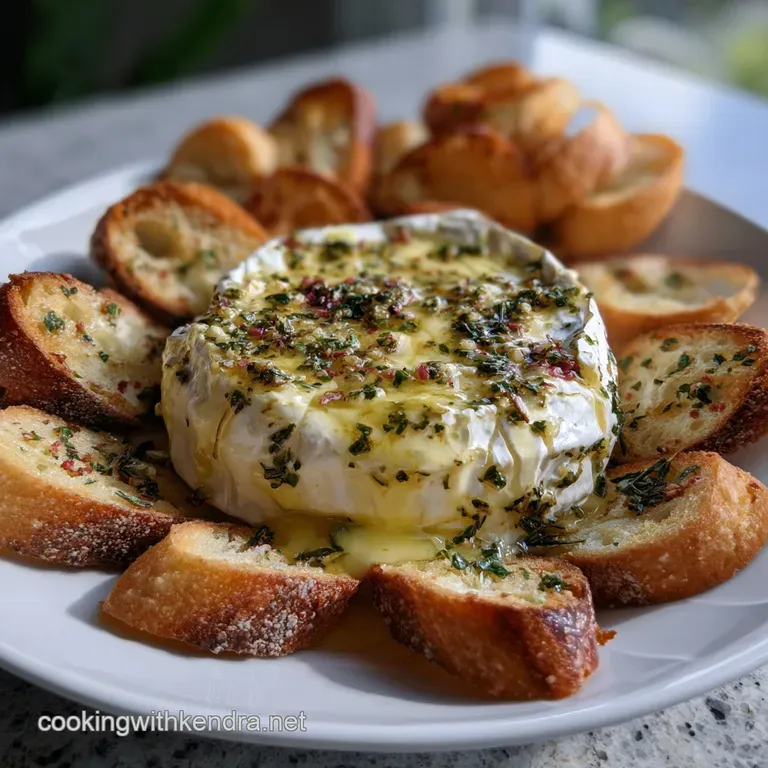
- Effort/Time: 35 minutes total with minimal-tool cleanup.
- Flavor Hook: Sharp garlic slivers mellowed by hot honey and resinous rosemary.
- Perfect for: High-energy holiday parties and intimate winter gatherings.
- Master the Ultimate New Year's Eve Appetizer with Garlic and Herbs
- The Science of Why This Recipe Works
- The Alchemy of Aroma: Selecting Your Elements
- Minimalist Kitchen Arsenal: Essential Tools for Efficiency
- Precision Execution: The Step-by-Step Infusion Protocol
- Common Pitfalls: Troubleshooting Your Garlic Herb Bites
- Flavor Architecture: Creative Variations and Swap Strategies
- ⚗️ The Scaling Lab: The Physics of Quantity
- Common Myths
- Preservation Protocol: Storage and Reheating
- The Party Layout: Serving and Community Pairing
- Recipe FAQs
- 📝 Recipe Card
Master the Ultimate New Year's Eve Appetizer with Garlic and Herbs
There is nothing more frustrating than investing in a $30 wheel of premium cheese only to have it emerge from the oven as a rubbery, tasteless puck or a greasy puddle. I’ve seen hosts present gorgeous looking boards where the center of the Brie is still cold, or worse, the garlic has burnt to a bitter char, ruining the entire profile.
It’s a waste of high-quality lipids and a disappointment for guests expecting that signature molten texture.
I’ll be the first to admit I’ve failed here too; I once tried to rush the process by using a over high heat broiler, only to have the rind split prematurely and the precious cream leak across the baking sheet like a culinary crime scene.
It took several holiday seasons and a deep dive into the physics of fat-soluble aromatics to realize that the secret isn't just "heating cheese" it's about controlled heat transfer and creating a localized infusion environment.
The success of this New Year s Eve Appetizer with Garlic and Herbs relies on the principle of lipid based flavor extraction. Because the aromatic compounds in rosemary and thyme are fat-soluble, we score the rind to allow the melting Brie to act as a solvent, pulling the essential oils from the herbs and the pungent sulfur compounds from the garlic slivers.
This results in a velvety, herb infused center that shatters the expectations of a standard cheese plate.
The Science of Why This Recipe Works
- Lipid Solubility: Essential oils in rosemary and thyme are hydrophobic, meaning they dissolve and intensify when submerged in the high fat content of 450g Triple Cream Brie.
- Aromatic Infusion: Scoring the rind creates "thermal chimneys" that allow 15g garlic slivers to steam in their own juices while protected by the cheese's moisture.
- Starch Retrogradation: Toasting the baguette slices twice (once with butter) ensures a rigid structure that can support the heavy, molten weight of the cheese without snapping.
- Sugar Carboxylation: The 21g honey undergoes slight caramelization at 175°C, providing a pH-balancing sweetness to the pungent garlic and salty rind.
The Alchemy of Aroma: Selecting Your Elements
| Ingredient | Chemical/Physical Role (Science) | The Pro Secret (Why This Matters) |
|---|---|---|
| 450g Triple Cream Brie | High butterfat content (60 75%) for low melting point | Why this? Provides the necessary lipid base for herb infusion. |
| 15g Garlic Slivers | Organosulfur compounds (allicin) for pungent depth | Why this? Thin slivers cook faster than whole cloves, preventing raw bites. |
| 56g Unsalted Butter | Saturated fat for crostini crispness | Why this? High milk solids create the Maillard reaction on the baguette. |
| 15ml EVOO | Liquid fat carrier to prevent herb scorching | Why this? Coats herbs to prevent oxidation before the cheese melts. |
For the best results, I recommend using a high-quality Isigny Sainte Mère Brie or a similar French import. The rind should be firm but the interior should yield slightly to thumb pressure even when cold.
When selecting your herbs, look for McCormick Fresh Rosemary or local organic sprigs; the needles should be vibrant green and flexible, not brittle or browning. For the baguette, a standard La Brea Bakery French Baguette provides the ideal crumb-to-crust ratio for the 250g required.
If you are looking for a more substantial meal following this starter, consider how the garlic notes here complement my Italian Pasta Sauce recipe, which also relies on slow aromatic extraction.
Minimalist Kitchen Arsenal: Essential Tools for Efficiency
- Lodge 10 inch Cast Iron Skillet: The thermal mass of cast iron ensures the Brie stays molten on the table for up to 20 minutes.
- Shun Classic Paring Knife: Essential for creating the precise 1cm deep scores in the rind without tearing the delicate surface.
- Nordic Ware Rimmed Baking Sheet: Used for the crostini to ensure even heat distribution and prevent the 56g of melted butter from dripping onto the oven floor.
- Silicone Pastry Brush: For an even application of the garlic butter mixture across all Baguette rounds.
Precision Execution: The step-by-step Infusion Protocol
- Preheat the oven to 175°C (350°F). Note: This temperature is high enough for the Maillard reaction but low enough to prevent the Brie's proteins from seizing.
- Slice 250g French Baguette into 1.25cm (1/2 inch) rounds. Continue until the entire loaf is processed into uniform discs.
- Melt 56g Unsalted Butter in a small bowl; whisk in 1.5g Garlic Powder, 0.5g Dried Parsley, and 1.5g Salt until the mixture is emulsified and fragrant.
- Brush the butter mixture onto both sides of the baguette rounds and arrange on a baking sheet. Bake for 8 minutes until the edges are pale golden and the surface feels dry.
- Score the top of the 450g Brie wheel in a crosshatch pattern, cutting roughly 1cm deep. Stop before you hit the bottom rind to prevent leaking.
- Insert 15g of garlic slivers and 5g of rosemary sprigs into the scores. Ensure they are tucked securely into the cream.
- Drizzle 15ml Extra Virgin Olive Oil over the top of the cheese and herbs until the surface is glossy and the herbs are coated.
- Place the Brie in a small ovenproof dish or skillet and bake for 12 minutes until the center jiggles like jelly and the rind looks slightly translucent.
- Remove from the oven and immediately drizzle with 21g Honey and a sprinkle of 3g Flaky Sea Salt until the honey begins to run into the warm crevices.
- Rest for 3 minutes. The internal temperature will stabilize, preventing the cheese from running too quickly when first dipped.
This New Year s Eve Appetizer with Garlic and Herbs should be served immediately while the crostini still have that satisfying shatter. If you're coordinating a larger menu, this pairs excellently with the bright acidity found in a Creamy Lemon Chicken recipe.
Common Pitfalls: Troubleshooting Your Garlic Herb Bites
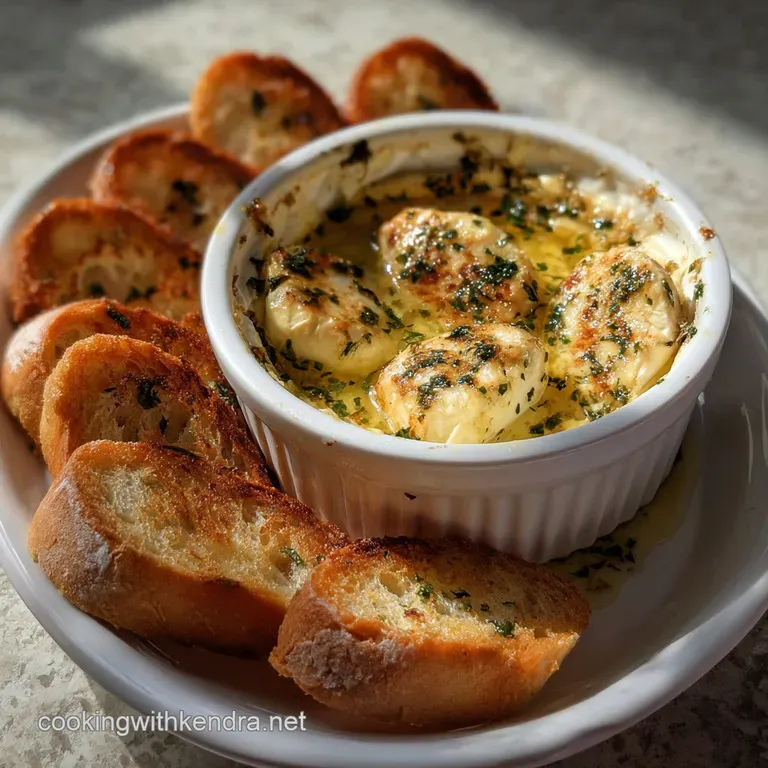
Why Your Brie Leaked Everywhere
When the rind of the Brie fails, it’s usually due to "thermal expansion stress." If you score too deeply (through the bottom or sides), the internal pressure of the melting cheese forces the liquid lipids through the breach. This results in a mess rather than a contained dip.
| Problem | Root Cause | The Fix | Pro Protocol |
|---|---|---|---|
| Leaking Cheese | Scoring through the bottom rind | Keep cuts to 1cm depth only | Use a ruler or finger guard to stay consistent |
| Rubbery Texture | Overcooking past 20 minutes | Pull at 12 15 minutes max | The "jiggle test": the center must move like pudding |
| Bitter Garlic | Slivers were too thick | Slice garlic to 1mm thickness | Use a mandoline or very sharp paring knife |
Why Your Crostini Are Soggy
Soggy bread is the result of "moisture migration" from the air or the butter. If you don't bake the bread until it is fully dehydrated (crouton like), the steam from the warm Brie will immediately soften the crumb, losing that essential crunch.
Flavor Architecture: Creative Variations and Swap Strategies
| Original Ingredient | Substitute | Why It Works |
|---|---|---|
| Triple Cream Brie | Camembert | Higher mushroom notes, slightly firmer rind. Note: Stronger aroma profile. |
| Hot Honey | Maple Syrup | Provides a woody sweetness. Note: Thinner consistency, use 15% less. |
| Fresh Rosemary | Fresh Sage | Offers a peppery, savory note. Note: Use half the volume as it's more potent. |
| French Baguette | Sourdough Loaf | Adds a lactic tang to cut through the fat. Note: Harder crust requires more butter. |
If you find yourself with extra baguette and garlic, you can easily pivot those ingredients into the topping for a Baked Ziti recipe, which benefits from that same buttery crunch.
⚗️ The Scaling Lab: The Physics of Quantity
When doubling this New Year s Eve Appetizer with Garlic and Herbs for a larger party, do not simply double all factors.
- The Evaporation Paradox: If baking two wheels of Brie in the same pan, the humidity in the oven increases. This can lead to the crostini taking 3 5 minutes longer to reach a "shattering" crispness.
- Flavor Saturation: Scale the garlic and salt to 1.5x rather than 2x. The aromatic compounds in 30g of garlic slivers are much more overwhelming in a closed oven environment than 15g.
- Thermal Mass: Two wheels of Brie side-by-side will retain heat significantly longer than one. Pull them from the oven 2 minutes earlier (at the 10 minute mark) to account for the increased carry over cooking.
- Batch Baking: Never crowd the crostini sheet. If the bread slices overlap, they will steam instead of crisp, resulting in a "chewy" rather than "crunchy" texture. Bake in two separate batches if necessary.
Common Myths
- Myth: You must remove the rind before baking.
- Truth: The rind is structural. Without it, the Brie becomes a puddle. It is also 100% edible and provides the necessary umami counterpoint to the creamy interior.
- Myth: Fresh herbs will burn in a 175°C oven.
- Truth: When coated in 15ml of EVOO and partially submerged in cheese, the herbs undergo "confit" cooking rather than roasting, preserving their vibrant color and oils.
Preservation Protocol: Storage and Reheating
Fridge: Store leftover Eve Appetizer with Garlic and Herbs in an airtight container for up to 3 days. The cheese will solidify into a firm, spreadable fudge like consistency.
Reheating: Avoid the microwave, which will cause the fat to separate and the cheese to become oily. Instead, place the Brie in a small oven safe dish at 150°C for 10 minutes until the center is soft again.
- Leftover Crostini? Transform
- Crush into coarse breadcrumbs. Science: The garlic butter infusion makes these the perfect savory topping for mac and cheese or salads.
- Herb Stems? Transform
- Toss into a freezer bag for future stocks. Science: Even the woody stems contain high concentrations of resinous oils that release during long simmering.
- Cheese Rinds? Transform
- If you have small bits of leftover rind, drop them into a simmering tomato sauce. Science: The Penicillium candidum in the rind adds a deep, savory umami punch similar to Parmesan rinds.
The Party Layout: Serving and Community Pairing
When presenting your Year s Eve Appetizer with Garlic and Herbs, the visual appeal is just as important as the flavor. Place the warm skillet in the center of a large wooden board. Arrange the crostini in a radiating sunburst pattern around the cheese.
This encourages "community style" eating, where guests interact over the shared dip.
For a balanced board, add high acid elements like cornichons or pickled red onions. The acidity cuts through the 22.6g of fat per serving, cleansing the palate between bites. A crisp sparkling wine or a dry cider provides the carbonation necessary to lift the heavy creaminess of the Brie from the tongue.
Whether you're celebrating with a large group or a small circle of friends, this New Year s Eve Appetizer with Garlic and Herbs serves as the perfect centerpiece. It’s a testament to how simple ingredients when treated with a bit of scientific respect can transform into something truly memorable.
Enjoy the sizzle of the oven, the nutty aromas of toasted garlic, and the joy of sharing good food with your community.

Recipe FAQs
How do I ensure the garlic infuses the cheese instead of burning?
Insert slivers shallowly, avoiding direct heat contact with the rind. Shallow insertion protects the organosulfur compounds from rapid scorching, allowing them to slowly release into the melting fat matrix instead.
- Keep garlic slivers under 1mm thick
- Coat garlic in olive oil before insertion
- Monitor oven temperature closely
Can I use a softer, cream cheese instead of Brie?
No. Cream cheese has too high a water content to hold structure. Triple cream Brie's high butterfat content (over 60%) is crucial; it melts into a viscous liquid capable of suspending the herb oils efficiently. If you need a smoother texture, you could perhaps adapt the technique for a very firm goat cheese, similar to the emulsion principles used in our Chicken Salad The Creamiest Crunchiest Classic Recipe with Pecans.
What herb substitutes work best with garlic and hot honey?
Sage works well; substitute thyme for a milder profile. Rosemary is dominant, so if replacing it, ensure the substitute matches the flavor intensity; sage provides a peppery, earthy contrast that complements the garlic's pungency. If you enjoy mastering flavor balancing, see how similar principles of balancing strong flavors are applied when making our Skillet Chicken with Garlic Herb Butter Sauce: Easy 30-Minute Recipe.
Why are two different fats (butter and olive oil) used?
Butter crisps the bread; oil prevents herb scorching on the cheese. Butter, due to its milk solids, promotes the Maillard reaction on the crostini for texture; EVOO acts as a heat buffer around the herbs sitting atop the Brie.
Can I make the crostini ahead of time?
Yes, but reheat them immediately before serving for best results. Fully baked crostini stale quickly as moisture migrates from the ambient air back into the starches; reheating drives off any absorbed moisture.
Is baking this on cast iron necessary for the texture?
Cast iron provides superior, consistent thermal mass. Its heavy structure absorbs and radiates heat evenly, ensuring the center melts thoroughly before the rind overcooks or dries out, a key factor in achieving that molten interior.
Myth: You must use room temperature cheese.
Myth: You must use room temperature cheese. Reality: Serving cold cheese prevents the proper infusion, resulting in an uneven melt. The high heat cooks the outside before the center softens.
Garlic Herb Nye Appetizer
Ingredients:
Instructions:
Nutrition Facts:
| Calories | 311 kcal |
|---|---|
| Protein | 9.5 g |
| Fat | 22.6 g |
| Carbs | 16.5 g |
| Fiber | 0.8 g |
| Sugar | 2.4 g |
| Sodium | 320 mg |
