Chicken and Vegetable Soup: the Ultimate Homemade Hearty Comfort

- The Soul-Soothing Art of Traditional Chicken and Vegetable Soup
- Essential Ingredients for the Best Hearty Chicken and Vegetable Soup
- Step-by-Step: Crafting Your Ultimate Chicken and Vegetable Soup
- The Science of Flavour: Why Scratch-Made Stock Elevates This Soup
- Mastering the Method: Chef’s Secrets and Troubleshooting Your Soup
- Preparation and Preservation: Meal Prepping Your Comfort Soup
- Perfect Pairings: What to Serve Alongside Your Hearty Soup
- Recipe FAQs
- 📝 Recipe Card
The Soul Soothing Art of Traditional Chicken and Vegetable Soup
The smell of homemade chicken and vegetable soup simmering on the stove is pure magic. That deep, savory aroma of thyme, slow cooked aromatics, and rich broth instantly makes the world feel cozy and right, promising warmth with every spoonful.
Forget those thin, watery store-bought versions; this soup is hearty, chunky, and the perfect texture.
We all need a culinary lifesaver sometimes, right? This recipe is mine. It’s the ultimate sick day comfort, ridiculously affordable, and honestly so much easier than you think to make from scratch. While I love a complex dish like my creamy Sausage and Tortellini Soup: Easy Creamy Tuscan Comfort Meal sometimes, this classic is pure simplicity.
So, ditch the bouillon cube this time, my friend. We are committing to making a proper, rich stock base it’s the step that separates "okay" soup from "oh-my-gosh-I-feel better" soup. Let's crack on with the real deal.
Defining 'Edible Comfort': What Makes This Soup Special?
It’s the layers of flavour, plain and simple. We aren't just boiling stuff. We build a stock first using bone-in pieces, which extracts maximum collagen and depth. Then, we use that liquid to properly cook our aromatic vegetables, ensuring they are sweet and translucent before the roots go in.
This recipe uses a "low and slow" method for the vegetables, preventing them from turning to mush. Patience is a key ingredient here. We want tender, distinct pieces, not baby food!
The final touch of acid that tiny splash of lemon juice wakes up all the heavy, savoury flavours, making them truly shine.
A Brief History of the Quintessential Recovery Dish
Chicken soup has been the universal cure all for centuries, showing up in traditions across the globe. It’s often called "Jewish penicillin" because of its powerful reputation for healing and comfort.
It’s surprisingly effective due to the steam helping clear sinuses and the high fluid content aiding hydration.
More than the science, though, this soup is about nostalgia. It tastes like being taken care of, and that’s a powerful memory you get to recreate in your own kitchen today. It truly feeds the soul.
Getting Started: Equipment Checklist for Soup Success
You don't need fancy tools for this, which is great. A massive pot is non-negotiable, however. Make sure you have a quality stock pot or Dutch oven that can hold at least six quarts.
A fine mesh sieve is incredibly helpful for straining the stock; nobody wants rogue peppercorns in their broth. Trust me, it’s worth the clean-up! A sharp knife and a steady cutting board are crucial for prepping all those beautiful vegetables quickly and safely.
Essential Ingredients for the Best Hearty Chicken and Vegetable Soup
Building the Flavour Base: Aromatics (Soffritto) Breakdown
The aromatic trio onion, carrot, and celery is the backbone of almost every great soup, stew, or sauce globally. In French cooking, they call it mirepoix ; in Italian, it’s soffritto . We sauté these slowly in butter to release their sugars and sweetness.
If you rush this stage, your soup will taste flat and unbalanced. We want that deep, golden brown colour (but not burned!) that comes from gentle caramelization.
Optimal Cuts of Chicken for Maximum Stock Depth
I am a thigh enthusiast, full stop. Bone-in, skinless chicken thighs give you the best flavour and texture for the stock base. They have more fat and connective tissue than breast meat.
If you use boneless, skinless breast meat , you will get less flavour in your stock, so you must compensate by adding extra quality boxed stock. The bones are where the real richness lives. If you have extra time, save the bones for a second batch of stock!
Winter Root Vegetable Selection and Preparation
I prefer waxy potatoes (like Yukon Gold or Maris Piper) because they hold their shape better during long simmering. Starchy potatoes (like Russet) tend to break down, which can cloud your broth. We’re also using leeks, which add a subtle, sophisticated onion flavour without being overpowering.
Make sure you wash your leeks thoroughly! They trap dirt between their layers like tiny muddy sandwiches. Slice them first, then put them in a bowl of cold water and swish them around vigorously until all the grit sinks to the bottom.
Ingredient Swaps and Dietary Adjustments
Don't let missing one ingredient stop you from making this soup! Home cooking is about improvisation.
| If you don't have... | Use this instead... |
|---|---|
| Bone-in Chicken | high-quality pre-made chicken stock + use leftover rotisserie meat. |
| Waxy Potatoes | Parsnips or turnips. Reduce the cooking time slightly, as they tend to soften faster than potatoes. |
| Butter | Use a quality olive oil or rendered animal fat (like schmaltz) for the soffritto step. |
| Thyme | A bay leaf (in addition to the others) or a pinch of dried marjoram. |
step-by-step: Crafting Your Ultimate Chicken and Vegetable Soup
Phase 1: Poaching the Chicken and Creating the Rich Stock
- Start Cold: Place your chicken pieces, cold water, bay leaves, and peppercorns into your large pot. Always start in cold water! This encourages the impurities to rise slowly, which makes skimming easier.
- Gentle Heat: Turn the heat up to medium high until you see the first bubbles, then immediately reduce it to a low, patient simmer.
- The Skim Rule: Use a slotted spoon to regularly skim off the greyish foam that rises to the surface. This foam is protein and impurities that will cloud your stock if left alone. Simmer like this for 45 minutes.
- Strain and Shred: Remove the cooked chicken. Strain the liquid through a sieve, discarding the herbs and peppercorns. Shred the chicken once it’s cool enough to handle. I often poach extra chicken just so I have enough leftover for my incredible Chicken Salad Recipe: The Ultimate Creamy Lemon Tarragon Deli Style the next day!
Phase 2: Sautéing the Aromatics (The Flavour Foundation)
- Soffritto Time: Return the stock pot to the burner. Melt the butter (or oil) over medium heat. Add the diced onion, carrots, and celery.
- Cook Slow: Cook these vegetables gently for 8– 10 minutes. Stir occasionally, allowing the onions to become totally translucent and soft. You are looking for fragrance, not colour.
Phase 3: The Gentle Simmer and Vegetable Tenderization
- Add the Broth: Pour that glorious, strained chicken stock back into the pot with the sautéed aromatics. Add the cubed potatoes, the washed leeks, and the fresh thyme sprigs.
- The Simmer: Bring the soup back to a steady simmer. Cook uncovered for 15– 20 minutes. Check the potatoes with a fork to ensure they are tender but still hold their shape.
- Finish Strong: Add the shredded chicken and the frozen peas. Cook for 3– 5 minutes, just long enough to heat the meat and turn the peas bright green.
Finishing and Adjusting Seasoning with Lemon
- Seasoning Check: Remove the thyme sprigs. Now is the time to really taste and season. Add salt and pepper gradually until the flavour sings; you'll likely need more salt than you think.
- The Secret Weapon: Stir in that one teaspoon of fresh lemon juice right at the end. This is a crucial step! It cuts the fatty richness of the broth and adds incredible brightness.
The Science of Flavour: Why Scratch Made Stock Elevates This Soup
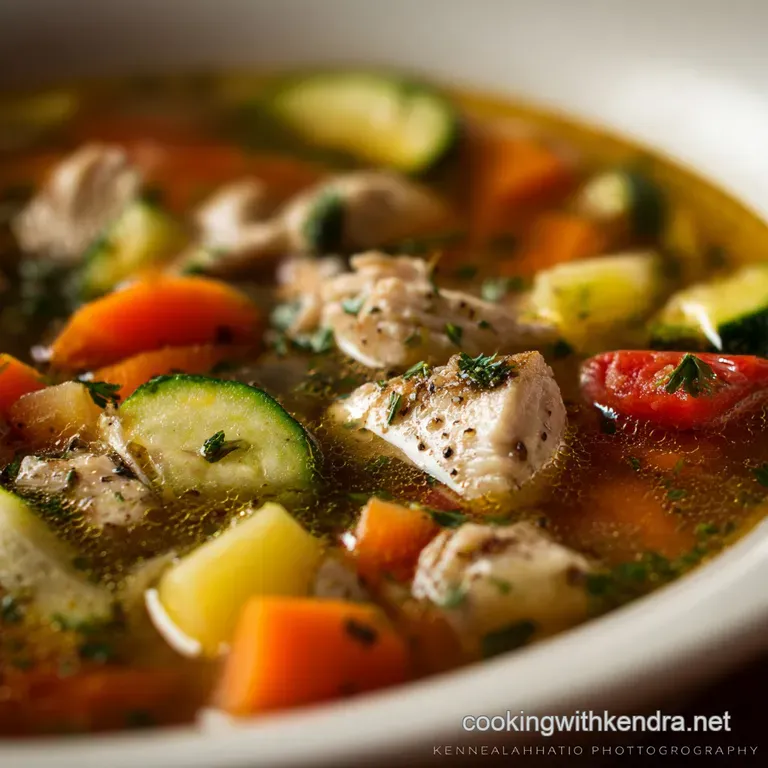
Good soup starts with good liquid. store-bought cartons often taste tinny or too salty right out of the gate. By poaching the bone-in chicken in cold water, you slowly extract gelatin from the bones and collagen from the connective tissues.
This process gives your homemade stock a superior body it feels rich and silky in your mouth. This viscosity is impossible to replicate with water and bouillon powder. That slight sheen on your finished soup? That's pure, homemade flavour depth.
Mastering the Method: Chef’s Secrets and Troubleshooting Your Soup
Mastering Broth Clarity and Texture
Chef’s Note: Never let the stock boil violently. A rolling boil will emulsify the fat and proteins that you are trying to skim off, resulting in a permanently cloudy, greasy broth. Keep it below a bare simmer.
The Acid Finish: Balancing Richness with Freshness (The Lemon Trick)
If your soup tastes heavy or a bit dull, it almost always needs acid or salt. The fat and richness of the chicken can weigh down the palate. A tiny squeeze of lemon juice acts like a reset button, brightening the vegetables and making the savoury notes more pronounced. It's a simple, high impact trick.
Preventing Cloudy Stock: Skimming the Impurities
Remember that initial skimming step in Phase 1? That is your primary defense against cloudy stock. You must be diligent. Once those impurities (the "scum") are incorporated into the liquid, they are impossible to remove and will permanently dull the appearance of your broth.
The Salt Dilemma: When to Season for Optimal Taste
Never season the stock fully at the start. As the liquid simmers and reduces, the salt flavour concentrates. If you salt too early, your finished soup will be horribly oversalted. Wait until Phase 3, after all the vegetables are tender, to adjust the seasoning to its final concentration.
Fixing Overcooked or Mushy Root Vegetables
This happens! If your potatoes or carrots are threatening to turn to mash, immediately remove the pot from the heat. Carefully fish out the mushiest pieces and discard them. You can add a new batch of firm vegetables, but reduce the cooking time significantly.
Next time, always check the potatoes at 15 minutes instead of waiting for 20.
Preparation and Preservation: Meal Prepping Your Comfort Soup
Safe Cooling and Refrigeration Guidelines
This soup is fantastic for meal prep! First, you must cool it properly. Do not put a giant, steaming pot into your fridge; it raises the temperature dangerously high. Divide the soup into smaller containers and leave them on the counter for no more than two hours to cool.
It keeps beautifully in the fridge for up to 4 5 days.
Storage & Freezing
Chicken and Vegetable Soup freezes like a dream. Ladle the cooled soup into freezer safe containers, leaving about an inch of headspace to allow for expansion. It will last safely for 3 4 months.
To reheat, simply thaw overnight in the fridge and warm gently on the stove. Warning: If you used starchy potatoes, they might become slightly grainy upon freezing and thawing, but the flavour will still be excellent.
Perfect Pairings: What to Serve Alongside Your Hearty Soup
This soup is rich enough to be a full meal, but sometimes you just need something crispy on the side for contrast.
- Crusty Bread: A thick slice of fresh sourdough or a warm baguette is mandatory for dunking into the savory broth.
- A Simple Side Salad: Something bright and crunchy works wonders against the warm, soft texture of the soup. Think mixed greens with a sharp vinaigrette.
- Savoury Sandwiches: If I’m making this for a weekend lunch, I often serve mini savoury buns, like my easy Turkey Cranberry Sliders: Easy Baked Appetizer Sandwiches . They are quick and fun!

Recipe FAQs
Why is my homemade stock bland, even though I used bone-in chicken?
A bland stock usually means it wasn't simmered long enough or it lacks proper seasoning balance. Ensure you are simmering the stock gently, not boiling, for at least 90 minutes to fully extract the gelatin and flavor from the bones, and season aggressively with salt and pepper during the last 30 minutes.
Always add a touch of acid, like the required lemon juice, at the end to brighten the overall savory notes.
How do I prevent the chicken from becoming dry and stringy?
The key is to poach the chicken gently and remove it from the stock immediately once it reaches 165°F (74°C), which is usually long before the vegetables are tender. Shred or dice the cooled meat and only add it back to the pot during the final five minutes of simmering, allowing it to heat through without overcooking.
Can I freeze this soup, and what is the best way to reheat it?
Yes, this chicken and vegetable soup freezes exceptionally well for up to three months. Ensure the soup is fully cooled before transferring it to airtight containers, leaving about an inch of headspace if the container is glass, as liquids expand when frozen.
Reheat the soup slowly on the stovetop over medium low heat, adding a splash of fresh broth or water if the consistency is too thick upon thawing.
My vegetables (especially the carrots and potatoes) ended up mushy. What went wrong?
Mushy vegetables are usually a result of overcooking, which happens when they are added too early to the simmering liquid. Make sure you chop your root vegetables into uniform, medium sized pieces, and add them according to density harder roots like potatoes and parsnips go in first, while softer items like peas or celery should be added toward the end of the cook time.
I need a thicker consistency. How can I achieve a heartier soup without adding heavy cream?
For a natural thickening method, ladle out about one cup of the cooked soup, ensuring you get a good mix of broth and root vegetables, and purée it until smooth. Stir this puréed mixture back into the pot; the starch from the potatoes and carrots will provide a luxurious, creamy texture without adding fat.
You may also use a cornstarch slurry added during the last 10 minutes of cooking.
What are the best substitutions if I don't have all the specified root vegetables?
This soup is highly versatile, and you can substitute almost any hearty root vegetable using similar quantities. Good replacements for carrots and parsnips include sweet potatoes, butternut squash, turnips, or celeriac. Always keep the balance of starchy versus aromatic vegetables similar for the best results.
Can I use dried herbs instead of fresh, and how should I adjust the quantity?
Yes, you can use dried herbs, but they are significantly more potent than fresh ones. Use the general rule of 1 teaspoon of dried herbs for every 1 tablespoon of fresh herbs specified in the recipe. Add dried herbs during the initial simmering stage so their flavors have time to bloom fully in the hot broth.
Hearty Chicken And Veg Soup Recipe
Ingredients:
Instructions:
Nutrition Facts:
| Calories | 108 kcal |
|---|---|
| Protein | 4.5 g |
| Fat | 0.6 g |
| Carbs | 21.4 g |
