Yorkshire Pudding: the Great British Lift-Off

- The Great British Lift-Off: Proper Puffed-Up Yorkshire Puddings
- The Anatomy of a Perfect Golden Puff: Why Size Matters
- Essential Components for the Classic Yorkshire Pudding Batter
- Step-by-Step: From Silky Batter to Golden Tower
- The Science of the 'Lift': Achieving Maximum Volumetric Expansion
- Troubleshooting Flat Puddings: Expert Tips for Consistent Success
- Maximizing Longevity: Storing and Reheating Perfect Puddings
- Traditional Pairings and Modern Twists for Yorkshire Puddings
- Recipe FAQs
- 📝 Recipe Card
The Great British Lift Off: Proper Puffed-Up Yorkshire Puddings
That glorious smell of baking flour and hot fat is the undeniable scent of success. The sound of a fork hitting that impossibly tall, crispy wall of a perfect Yorkshire pudding ? Nothing beats it.
Forget everything you thought you knew about these golden puffs; we are aiming for dramatic, fluffy, crispy perfection right here.
Seriously, this is a weeknight lifesaver masquerading as Sunday excellence. Three basic ingredients, ridiculously fast active prep time, and boom you have the fluffiest, cheapest, most satisfying accompaniment to any meal.
The traditional Yorkshire pudding is not just a side; it’s the foundation of a great plate.
I’ve had my share of flat, sad discs over the years, the kind that deflate before they even reach the table. But I cracked the code! This foolproof method focuses entirely on temperature and resting time, ensuring you get maximum rise and a perfect crispy shell every time.
Let's make some proper Yorkshire pudding magic.
The Anatomy of a Perfect Golden Puff: Why Size Matters
The History of the Humble Pouch: A Traditional Starter
Historically, Yorkshire pudding was designed to be economical. They used to cook the batter under the roasting meat to catch the delicious, flavorful drippings. Smart cooks knew this savory starter would fill hungry bellies, meaning guests ate less of the expensive main meat course.
This was the true original Yorkshire pudding recipe for 6 people on a budget.
Dispelling Myths: The Simplicity of Minimal Ingredients
You don't need baking powder or fancy raising agents to achieve this architectural feat. The lift in a proper Yorkshire pudding comes purely from rapid steam expansion and high temperature contrast.
It really is an incredibly easy Yorkshire pudding recipe easy to master, relying on technique, not complexity.
Achieving the Ideal Crispy Chewy Contrast
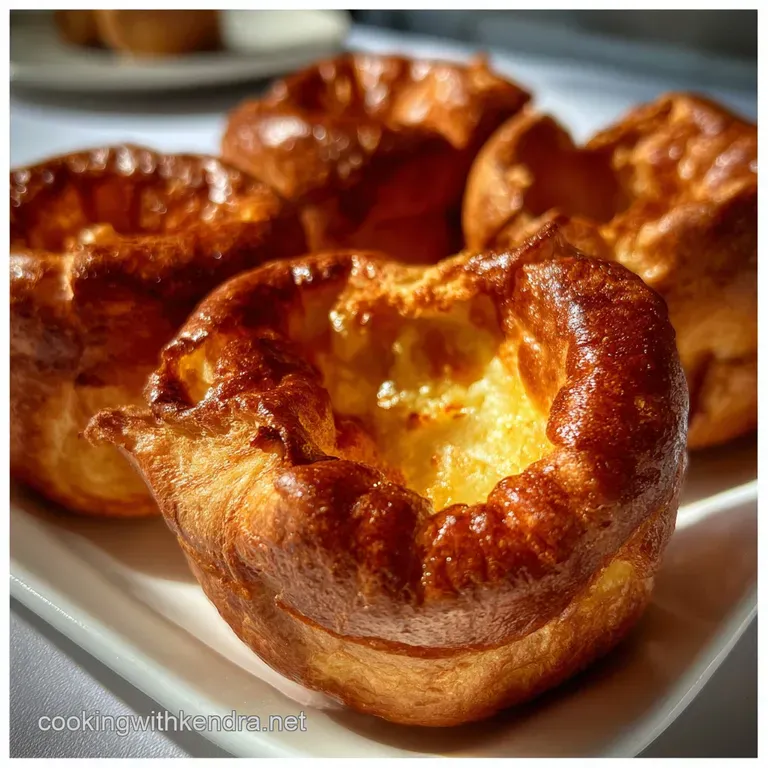
The ultimate goal is a brittle, shattery, almost caramelized exterior, combined with a soft, slightly chewy base where the fat collects. The best way to achieve this textural wonder in your Yorkshire pudding is by using aggressive heat and maintaining the thermal shock.
Kendra's Golden Rule: A great Yorkshire pudding should have a deep cavity ready to cradle gravy, not be dense like a doughnut.
Essential Components for the Classic Yorkshire Pudding Batter
Choosing the Right Flour (Plain vs. Self Raising Debate)
Plain (All-Purpose) flour is your champion here, no question. Self raising flour contains leavening that messes with the structural integrity of a truly crisp Yorkshire pudding . Stick to simple, high-quality AP flour, and make sure you sift it well to break up any clumps and introduce air.
Liquid Options: Milk, Water, or a Combination?
I am firmly in the milk camp. Whole milk gives a richer, softer interior crumb, which I prefer. While water creates a slightly crisper but sometimes thinner crust, the richness of milk is worth the trade off.
Use cold whole milk for my perfect Yorkshire pudding recipe for 4 , aiming for a thin, single cream consistency.
The Ultimate Fat Choice: Why Dripping Triumphs
Beef dripping is non-negotiable for authentic, traditional flavor. It has a significantly higher smoke point than butter and imparts an unparalleled savory depth. If you absolutely can't get dripping, a neutral oil specifically labeled for high heat (like sunflower or canola) is the best stand-in for cooking your Yorkshire pudding in the pan.
Preparation Notes: Achieving Room Temperature Eggs
This is a small but important detail. While the final batter needs to be chilled, start by using room temperature eggs. They combine with the flour much easier than cold eggs, preventing those annoying little lumps before you introduce the cold milk.
step-by-step: From Silky Batter to Golden Tower
The Critical Resting Time (Allowing the Gluten to Relax)
Do not skip the chilling stage. This rest time at least 30 minutes, or up to 2 hours is absolutely critical. It allows the starch in the flour to swell and ensures the gluten is relaxed, which is essential for that light, airy texture when you cook the Yorkshire pudding .
Oven Setup and Fat Temperature Check
Crank that oven to the maximum setting your appliance allows (ideally 450°F/230°C). Pour your fat into the Yorkshire pudding pan , ensuring about half a centimeter depth in each well.
Put the empty tin in the oven and wait until the fat is shimmering, whispering "hot," and just beginning to smoke lightly.
The Pouring Technique: Quick and Clean Delivery
Speed is your friend right now. Wear oven mitts, remove the pan, and immediately pour the chilled batter from the jug into the scalding hot fat. The sound you want to hear is an aggressive, immediate hiss! Get the pan back into the oven immediately, before the temperature of the fat drops.
The 20 Minute Golden Rule: Avoiding Door Opening
This is non-negotiable: DO NOT open the oven door during the first 20 minutes. That initial, rapid lift is powered entirely by trapped steam.
Once the oven temperature drops suddenly, your lovely rising Yorkshire puddings will sigh, collapse dramatically, and never recover. My very first batch of Yorkshire pudding many years ago taught me that painful lesson patience is mandatory.
The Science of the 'Lift': Achieving Maximum Volumetric Expansion
The Role of High Heat in Rapid Steam Generation
The cold batter hitting the screaming hot fat and the 450°F oven air creates a massive energy conversion. The water content in the milk instantly turns into steam. That steam is what forcefully pushes the gluten structure upward, creating the huge, beautiful internal cavity of the Yorkshire pudding .
Gluten Development vs. Lightness: Finding the Balance
We need a structure that is strong enough to hold the rapid steam but light enough to allow for maximum puff. That's why minimal, quick whisking followed by a long, cold rest is the optimal method for preparing a Yorkshire pudding mix that promises height.
Why Preheating the Fat is Non-Negotiable
If the fat isn't smoking hot, the batter sinks to the bottom and starts frying slowly, resulting in a dense, greasy base. The fat must be at the point where it instantly sears the exterior, creating a crisp shield that locks in the steam and forces the Yorkshire pudding to rise vertically.
Should I Use a Muffin Tin or a Dedicated Yorkshire Tray?
A standard 12 hole muffin tin works brilliantly for standard Yorkshire puddings . If you're aiming for those enormous plate sized versions, you will need a dedicated Yorkshire pudding pan or shallow pie dish.
Remember, fill each section about two-thirds full, regardless of the size.
Adjusting the Recipe for Popovers (A Cousin to the Yorkshire)
This fantastic batter also works perfectly as a popover base. Popovers are essentially a slightly milkier American cousin to the traditional British Yorkshire pudding , often baked in deeper, narrower popover trays.
Troubleshooting Flat Puddings: Expert Tips for Consistent Success
| Mistake | Cause | Solution |
|---|---|---|
| Puddings are Flat and Dense | Fat was not hot enough or oven temperature too low. | Ensure oven is 450°F and fat is shimmering/smoking for 5 min before pouring. |
| Puddings Collapse | Oven door opened too early, or they weren't fully cooked through. | Cook for the full 20 minutes minimum. Do not open the door. |
| Puddings are Greasy | Fat was cold, or batter was too warm/thin. | Chill batter completely and ensure the fat is scalding hot. |
Maximizing Longevity: Storing and Reheating Perfect Puddings
You simply must reheat your Yorkshire pudding to bring it back to its original glory a cold, soft Yorkie is a sad thing indeed.
Storage: If you somehow have leftovers, let them cool completely, then place them in an airtight container. They will last safely in the fridge for up to 3 days.
Freezing Puddings for Future Feasts: This is my secret weapon. Once baked and completely cool, flash freeze the individual Yorkshire puddings on a tray. Transfer them to a freezer bag afterward. They will keep for up to 3 months.
Reheating: Do not microwave! The microwave turns them into chewy sponges. Preheat the oven to 390°F (200°C) and bake the frozen or refrigerated Yorkshire pudding directly on a tray for 5– 8 minutes until piping hot and crisp again.
They taste just as good as the first time.
Traditional Pairings and Modern Twists for Yorkshire Puddings
Traditionally, the Yorkshire pudding is served alongside a roast dinner, saturated with rich gravy. They are meant to soak up all those beautiful juices!
For a fantastic modern twist, try filling a giant Yorkie with slow cooked pulled pork and rich onion gravy for a hearty family meal. Sometimes, if I am short on time, I even serve a smaller version of this Yorkshire pudding recipe for 2 as a savory little starter, perhaps with a touch of smoked paprika in the batter.
The effort is minimal, the ingredients are humble, and the result is truly spectacular. Master this technique, and you will never buy a ready-made Yorkshire pudding again. It really is the best Yorkshire pudding recipe you will ever make.

Recipe FAQs
Why didn't my Yorkshire puddings rise?
The rise is highly dependent on extreme heat. Ensure your oven is fully preheated and that the fat (dripping or oil) is screaming hot it should be lightly smoking before you pour the cold batter into the tins.
Also, letting the batter rest for 30 minutes in the fridge helps develop the necessary gluten structure for a dramatic lift.
Should I use milk, water, or a combination in the batter?
A mixture of half milk and half water is generally recommended, as the water provides essential steam for the initial rise, creating a lighter, crispier result. Using only milk can sometimes result in a richer but slightly heavier pudding that doesn't reach maximum height. Always ensure the liquid is cold when mixing.
Can I prepare the batter ahead of time?
Yes, preparing the batter in advance is highly beneficial. You can store the finished, smooth batter in an airtight container in the refrigerator for up to 12 hours. Just give it a quick, vigorous whisk just before pouring it into the hot fat to reintroduce some air.
What is the best alternative to beef dripping for achieving a good puff?
If you prefer not to use beef dripping, the best alternative is a high smoke-point vegetable oil, such as rapeseed (canola) or sunflower oil. Avoid using olive oil or butter, as they have a low smoke point and will burn and smoke excessively before the puddings have time to cook properly.
My puddings are crispy on the outside but soggy on the bottom. What went wrong?
Sogginess often occurs if the puddings are removed from the oven too early, before the base has fully dried out. They need high heat for the full cooking time to ensure the inside is fully set; avoid opening the oven door, especially in the first 20 minutes, as the drop in temperature can halt the cooking process.
Can I freeze cooked Yorkshire puddings?
Absolutely, Yorkshire puddings freeze exceptionally well. Allow them to cool completely, then place them in an airtight freezer bag or container. To reheat, place them directly onto a hot baking tray from frozen and bake at 400°F (200°C) for about 5 to 8 minutes until crisp and piping hot.
Is it possible to make this recipe gluten-free?
It is certainly possible, provided you use a high-quality gluten-free plain flour blend that preferably contains Xanthan gum to aid structure. The high heat and extremely hot fat are still essential components, as the rapid steam expansion is key to the puff, regardless of the flour type.
Puffed Yorkshire Puddings Recipe
Ingredients:
Instructions:
Nutrition Facts:
| Calories | 169 kcal |
|---|---|
| Protein | 11.0 g |
| Fat | 12.4 g |
| Carbs | 3.6 g |
