Quick Steak and Salad with Arugula
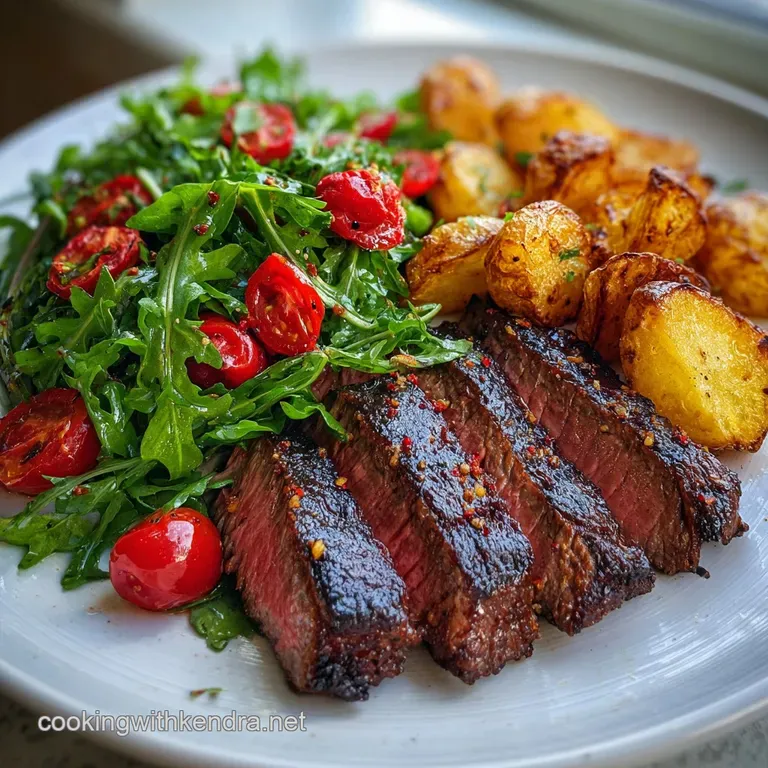
- Time: Active 10 minutes, Passive 10 minutes, Total 20 minutes
- Flavor/Texture Hook: Peppery, zesty greens meets a buttery, garlic crusted sear
- Perfect for: High protein weeknight dinner or a quick date night meal
- Critical Benchmarks for a 20 Minute Meal
- Everything You Need for the Ultimate Feast
- Essential Kitchen Tools for Professional Results
- Step by Step Guide to a Flawless Dinner
- Simple Fixes for Common Home Cooking Errors
- Quick Flavor Swaps for Every Cravings
- Smart Ways to Handle Leftover Steak Portions
- Plating Tips for a High End Experience
- Debunking Kitchen Myths
- High in Sodium
- Recipe FAQs
- 📝 Recipe Card
| Cooking Method | Active Time | Resulting Texture | Best For |
|---|---|---|---|
| Cast Iron Sear | 10 minutes | Deep, dark crust with juicy center | Maximum flavor and speed |
| Reverse Sear | 45 minutes | Uniform pink edge to edge | Thick cut steaks (>2 inches) |
| Indoor Grill Pan | 12 minutes | Distinct charred lines | low-fat cooking with smoke flavor |
This table shows that while there are many ways to cook beef, the cast iron method is our winner today because it creates the most intense surface flavor in the shortest amount of time.
If you find yourself with a much thicker cut of meat than the 1.5 inches we’re using, you might want to look into the reverse sear technique to ensure the middle cooks through without burning the outside.
Critical Benchmarks for a 20 Minute Meal
To get this Steak and Salad on the table without breaking a sweat, you need to hit three specific numeric checkpoints. First, your pan needs to preheat for at least 3 full minutes on medium high. If the oil isn't shimmering and just starting to wisps of smoke, the steak will stick and steam instead of searing.
Second, we are aiming for an internal temperature of 135°F for a medium rare finish. Finally,, you must let the meat rest for 5 minutes before slicing; this allows the internal pressure to stabilize so the juices don't flood the cutting board.
| Ingredient | Science Role | Pro Secret |
|---|---|---|
| Top Sirloin | Protein Structure | Choose "Choice" or "Prime" for better intramuscular fat distribution. |
| Dijon Mustard | Emulsifier | The mucilage in mustard seeds prevents the oil and vinegar from separating. |
| Avocado Oil | High Smoke Point | Unlike olive oil, it won't break down or turn bitter at searing temperatures. |
| Kosher Salt | Moisture Draw | Large grains dissolve slowly, creating a more even, crunchy crust. |
Understanding the "why" behind these ingredients helps you troubleshoot on the fly. For instance, if you notice your dressing is separating into layers, it usually means you didn't whisk in enough Dijon or you added the oil too quickly.
The mustard acts as the "glue" that holds the vinegar and oil together in a smooth, velvety suspension.
Everything You Need for the Ultimate Feast
When it comes to the components, quality is king. Since there are so few ingredients, there's nowhere for poor flavors to hide.
For the Steak & Potatoes
- 1 lb top sirloin steak: Look for one that is 1.5 inches thick for the best crust to interior ratio. Why this? It's leaner than ribeye but stays tender when cooked fast.
- 0.5 lb baby Yukon Gold potatoes: Their buttery texture is superior to waxy reds. Why this? They have a thin skin that crisps up beautifully without peeling.
- 2 tbsp avocado oil: For the over high heat sear.
- 1 tbsp unsalted butter: Added at the end for flavor and browning.
- 2 cloves garlic: Smashed to release oils without burning.
- 1 sprig fresh rosemary: Provides a woody, piney aroma.
- 1 tsp kosher salt: Use a coarse grain like Diamond Crystal for better control.
- 0.5 tsp coarse black pepper: Freshly cracked is a must.
For the Bistro Salad
- 4 cups fresh arugula: Its peppery bite stands up to the rich beef.
- 0.5 cup cherry tomatoes: Halved to release their sweet juices.
- 0.25 cup red onion: Thinly sliced to provide a sharp crunch.
- 2 tbsp shaved Parmesan cheese: Adds a salty, umami finish.
For the Zesty Vinaigrette
- 3 tbsp extra virgin olive oil: The base of our dressing.
- 1 tbsp red wine vinegar: For that classic French bistro tang.
- 1 tsp Dijon mustard: For spice and emulsification.
- 0.5 tsp honey: Just enough to balance the acidity.
| Original Ingredient | Substitute | Why It Works |
|---|---|---|
| Top Sirloin | Flank Steak | Leaner and more fibrous. Note: Must be sliced very thin against the grain. |
| Arugula | Baby Spinach | Milder flavor. Note: Lacks the peppery bite but holds up well to warm steak. |
| Red Wine Vinegar | Lemon Juice | Provides a bright, citrusy acidity instead of fermented tang. |
| Honey | Maple Syrup | Adds a deeper, woodier sweetness that pairs well with rosemary. |
If you're looking for a slightly different flavor profile, you could also try a Flap Meat Steak Recipe which uses a similar over high heat technique but works better with a citrus based marinade.
Essential Kitchen Tools for Professional Results
You don't need a kitchen full of gadgets, but two things are non negotiable: a heavy bottomed skillet and an instant read thermometer. I prefer a cast iron skillet because it has high thermal mass, meaning it won't drop in temperature the second you drop a cold piece of meat into it.
If you use a thin non stick pan, the steak will likely boil in its own juices rather than sear.
You'll also need a small glass jar or a whisk and bowl for the dressing. Making the vinaigrette in a jar is a great trick you just toss everything in and shake it like a cocktail. It's much faster than whisking and ensures the honey is fully incorporated.
For the potatoes, a simple pot for a 5 minute par boil is all you need before they hit the skillet to get that golden shatter on the skin.
step-by-step Guide to a Flawless Dinner
- Prep the meat. Remove the 1 lb top sirloin from the fridge 20 minutes before cooking. Pat it completely dry with paper towels. Note: Dry surface equals a better crust.
- Season heavily. Rub 1 tsp kosher salt and 0.5 tsp pepper onto all sides of the steak, including the edges.
- Par boil potatoes. Place 0.5 lb baby Yukon Gold potatoes in boiling water for 8 minutes until just fork tender but not falling apart.
- Heat the pan. Add 2 tbsp avocado oil to a cast iron skillet over medium high heat until the oil shimmers and smokes slightly.
- Sear the steak. Lay the steak into the pan away from you. Sear for 4 minutes without moving it until a deep brown crust forms.
- Flip and baste. Turn the steak over. Add 1 tbsp butter, 2 cloves smashed garlic, and 1 sprig rosemary. Tilt the pan and spoon the foaming butter over the meat for 3 minutes until it reaches 135°F.
- Rest the meat. Remove the steak to a board. Let it sit for 5 minutes. Note: This prevents the juices from leaking out.
- Crisp the potatoes. While the steak rests, smash the potatoes flat with a fork and toss them into the remaining steak fat in the pan. Fry for 4 minutes until edges are golden and crackling.
- Whisk the dressing. Combine 3 tbsp olive oil, 1 tbsp red wine vinegar, 1 tsp Dijon, and 0.5 tsp honey in a jar. Shake vigorously until the mixture is thick and velvety.
- Assemble the salad. Toss 4 cups arugula, 0.5 cup cherry tomatoes, and 0.25 cup red onion with half the dressing. Slice the steak against the grain, place over the greens, add potatoes, and finish with 2 tbsp shaved Parmesan and remaining dressing.
Simple Fixes for Common Home Cooking Errors
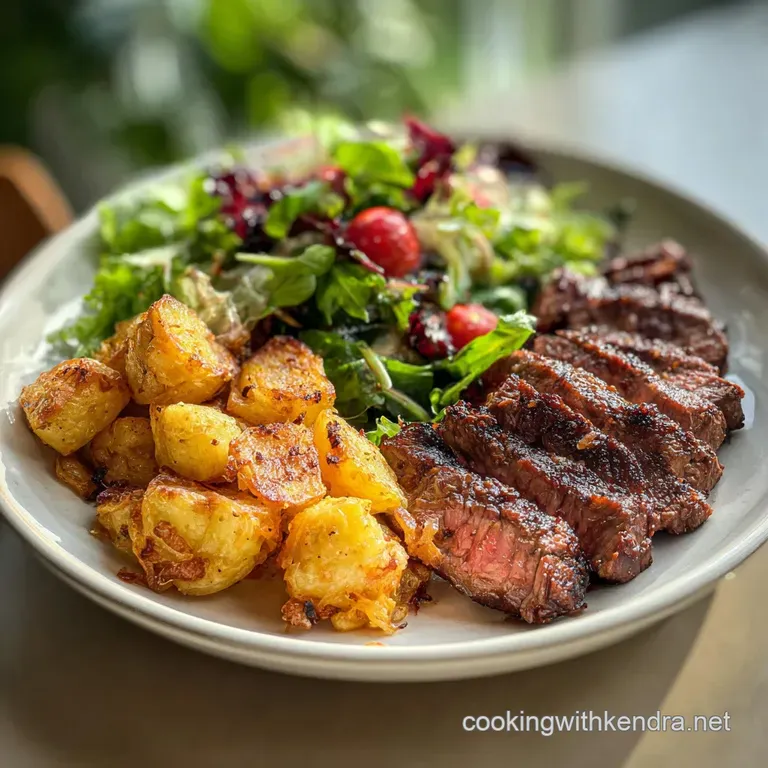
One of the biggest heartbreaks is cutting into your steak and seeing a wide "gray ring" around the edges with only a tiny bit of pink in the middle. This usually happens because the heat was too low, so the steak had to stay in the pan too long to get a crust.
It's a classic mistake I once made every single time I cooked.
Why Your Steak Is Gray
The gray ring is a sign of overcooking the outer layers of the muscle. To avoid this, make sure your pan is screaming hot before the meat touches it. Also, don't be afraid to flip the steak more than once if you’re using a thinner cut; this helps the heat distribute more evenly.
Solving the Soggy Arugula Problem
If your greens look like they've given up on life, it's usually because you dressed them too early or the steak was too hot when you put it on top. Always dress the salad at the very last second, and make sure the steak has rested properly so the hot steam has dissipated.
| Problem | Root Cause | Solution |
|---|---|---|
| Steak is tough | Slicing with the grain | Look for the lines in the meat and cut across them at a 90 degree angle. |
| Dressing is too sour | Not enough honey/oil | Add an extra teaspoon of honey or a splash more olive oil to balance. |
| Potatoes are mushy | Over boiling | Only boil until a knife goes in with a bit of resistance; the pan will do the rest. |
Common Mistakes Checklist:
- ✓ Never cook a steak straight from the fridge; let it sit for 20 minutes to ensure even cooking.
- ✓ Don't use extra virgin olive oil for the sear it will smoke and turn the meat bitter.
- ✓ Avoid crowding the pan with too many potatoes at once; work in batches if your skillet is small.
- ✓ Let the meat rest! I know you're hungry, but those 5 minutes are the difference between juicy and dry.
- ✓ Use a sharp knife for the salad onions; dull blades crush the onion cells, making them taste "sweaty" and overly pungent.
Quick Flavor Swaps for Every Cravings
If you're looking for a bit more "stick to your ribs" comfort, you might enjoy something like a Salisbury Steak is recipe, which focuses more on a rich gravy. But if you want to stay in the world of fresh Steak and Salad, here are a few ways to pivot the flavor.
1. The Low Carb Swap
If you're watching your starch intake, swap the Yukon Gold potatoes for roasted radishes or cauliflower florets. Radishes lose their sharp "bite" when roasted and take on a texture surprisingly similar to potatoes. Just toss them in the pan with the steak fat exactly as you would with the spuds.
2. The Umami Booster
To take the savory levels through the roof, add a teaspoon of soy sauce or Worcestershire sauce to your vinaigrette. This bridges the gap between the fresh salad and the heavy meat. You can also toss some sautéed mushrooms into the greens for an extra layer of earthiness.
Smart Ways to Handle Leftover Steak Portions
- Storage: Keep the sliced steak and the salad components in separate airtight containers. The steak will stay good in the fridge for up to 3 days. Do not store dressed salad; it will turn into a puddle by morning.
- Freezing: You can freeze the cooked steak (unsliced is better) for up to 2 months. Wrap it tightly in plastic wrap and then foil to prevent freezer burn. I don't recommend freezing the potatoes as the texture becomes mealy.
- Reheating: To avoid the "microwave rubber" effect, reheat the steak in a pan over low heat with a splash of water and a lid. This steams it gently back to temperature without cooking it further.
- Zero Waste: Don't throw away that rosemary garlic butter left in the pan! Pour it into a small ramekin and let it solidify in the fridge. It’s incredible spread on toast the next morning or used to fry eggs. The stems of the arugula can be finely chopped and added to a pesto or a soup.
Plating Tips for a High End Experience
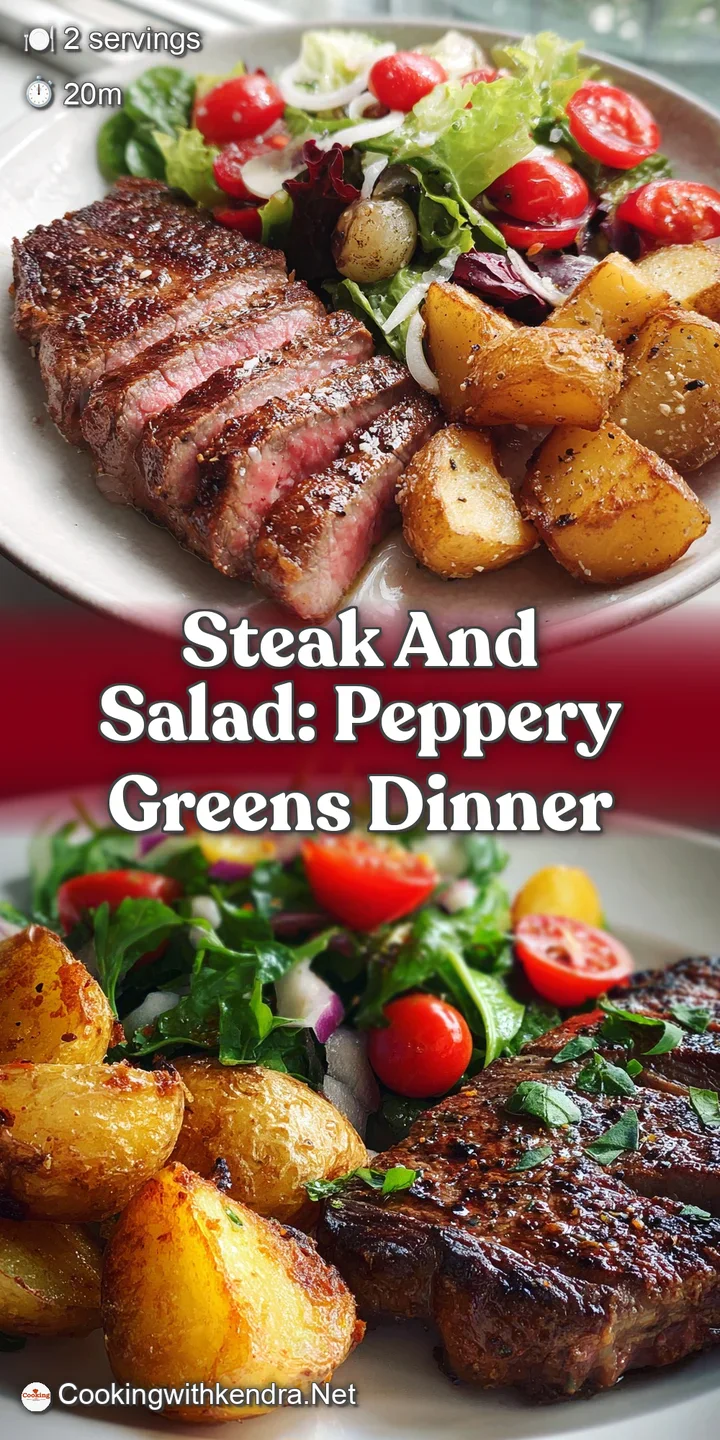
Presentation is 80% of the battle when you're serving a simple dish. Instead of just piling everything in a bowl, try a "deconstructed" look on a large platter. Lay the dressed arugula down first as a green bed. Fan the steak slices out across the center so you can see that beautiful medium rare interior.
Tuck the crispy potatoes around the edges like little golden nuggets. This keeps them from getting soggy from the salad dressing. Finish with the shaved Parmesan and a final crack of black pepper from a height. It looks deliberate, rustic, and expensive. If you really want to go all out, a drizzle of Bordelaise Sauce recipe over just the meat side of the plate adds a professional glossy finish.
Debunking Kitchen Myths
A common misconception is that you need to bring meat to room temperature for an hour before cooking. In reality, a steak sitting out for an hour only rises a few degrees in internal temp, which doesn't actually affect the cook time much.
The real secret is the dryness of the surface, not the temperature of the core.
Another myth is that salt draws out moisture and makes the steak dry if you salt it too early. While salt does draw out moisture initially through osmosis, if you wait at least 40 minutes (or salt right before the pan), that moisture is reabsorbed into the meat, bringing the salt with it and actually seasoning the steak more deeply.
For this 20 minute version, we salt right before the sear to keep things simple and ensure a dry surface.
Finally, some people think searing "seals in the juices." Science tells us this is false. Searing creates flavor through the Maillard reaction, but moisture loss happens regardless of the crust. The reason a steak stays juicy is proper resting, which allows the muscle fibers to relax and hold onto their liquid.
High in Sodium
1085 mg mg of sodium per serving (47% % of daily value)
The American Heart Association recommends limiting sodium intake to about 2,300mg per day for overall health.
Tips to Reduce Sodium in This Recipe
-
Reduce Added Salt-25%
Cut back on the kosher salt used for seasoning. Try using only 1/2 tsp instead of 1 tsp, and taste as you go to avoid over salting.
-
Limit Parmesan Cheese-15%
Parmesan cheese contributes significantly to the sodium content. Reduce the amount from 1/4 cup (2 tbsp) to 1/8 cup (1 tbsp) per serving or replace with a lower sodium cheese like fresh mozzarella.
-
Unsalted Butter Switch-10%
Ensure the butter used is unsalted. This simple swap eliminates a hidden source of sodium.
-
Fresh Herb Power
Enhance the flavor of your dish with fresh herbs like rosemary and pepper instead of relying solely on salt. This adds complexity without adding sodium.
-
Fresh vs. Canned-5%
Make sure that the cherry tomatoes and red onion are fresh. Canned or otherwise prepared tomatoes or onions may contain added sodium.
Recipe FAQs
What kind of salad goes with steak?
A peppery green salad with a bright vinaigrette. Arugula is ideal because its sharp flavor cuts through the richness of the beef perfectly. Avoid heavy, creamy dressings that will clash with the savory steak flavor.
Can you eat steak with salad?
Yes, it is a classic pairing. The combination balances fat, protein, and fresh acidity, making for a complete meal. This works best when the salad dressing uses a sharp acid, similar to how we balance the acidity in the Keto Garlic Butter recipe.
What is a good side dish with steak?
Crispy roasted potatoes or charred asparagus are excellent choices. You want something that contrasts the tender meat texture, providing a little crunch or bite. For a starchy option that crisps well, focus on small, high starch potatoes.
What is in a cowboy salad?
Cowboy salad usually features hearty greens, beans, corn, cheese, and a creamy or ranch style dressing. It is significantly heavier than a bistro salad meant to accompany a steak. If you prefer the lighter side, stick to ingredients that won't weigh down the palate.
How long should steak rest before slicing for salad?
Allow the steak to rest for 5 to 10 minutes after removing it from the heat. This resting period is critical because it allows the muscle fibers to relax and reabsorb the juices, preventing all the liquid from bleeding onto your fresh salad greens.
Is it true that leaner cuts like Sirloin dry out easily next to cold salad?
Yes, leaner cuts need careful handling regarding temperature shock. Placing hot steak directly onto cold greens wilts them immediately and the rapid cooling can tighten the sirloin muscle fibers. Slice the meat and let it sit for two minutes before laying slices over the salad base.
How do I ensure my steak slices aren't tough, even if it's a leaner cut?
Slice the steak thinly against the grain at a 45-degree angle. The grain refers to the direction the muscle fibers run; cutting across them shortens these fibers, maximizing tenderness regardless of the cut used. If you master this slicing technique here, you'll see similar tenderness gains when applying it to tougher cuts, like in our Hanger Steak vs Skirt Steak guide.
Quick Steak And Salad
Ingredients:
Instructions:
Nutrition Facts:
| Calories | 869 kcal |
|---|---|
| Protein | 51.8 g |
| Fat | 62.4 g |
| Carbs | 25.2 g |
| Fiber | 3.8 g |
| Sugar | 4.1 g |
| Sodium | 1085 mg |
