The Perfect Oven Roasted Prime Rib
- Effort/Time: Low-active effort; 4 hour 30 mins total.
- Flavor Hook: Herb-infused garlic butter meets salt-aged beef, perfect for this prime rib.
- Perfect for: High-stakes holiday gatherings and indulgent Sunday dinner featuring prime rib.
- The Culinary Physics Behind a Succulent prime rib
- Precision Engineering for the Ultimate Sunday Dinner Roast
- The Alchemy of Umami: Selecting Your Elements
- Essential Thermal Tools for Consistent Internal Precision
- The Two-Stage Heat Protocol for Edge-to-Edge Pink
- Why Your Prime Rib Roast Oven Results Vary
- ⚗️ The Scaling Lab: The Physics of Quantity
- Flavor Architecture and Adaptations for Every Palate
- Preserving Texture and Safety: Storage Protocols
- Common Myths
- Carving and Presentation for Maximum Sensory Impact
- Recipe FAQs
- 📝 Recipe Card
There is nothing more gut-wrenching than pulling a $150, 7.5 lb roast from the oven only to find a dry, gray ring of overcooked protein surrounding a tiny patch of pink. I’ve lived that nightmare serving a "premium" cut that had the texture of a weathered shoe because I trusted a over high heat start method that scorched the exterior long before the center reached 120°F.
The financial sting of a ruined prime rib is only surpassed by the emotional toll of a failed centerpiece meal when cooking this prime rib.
Years ago, I destroyed a gorgeous 3 bone roast by rushing the tempering process and pulling it straight from the fridge into a 450°F oven. The thermal shock caused the muscle fibers to contract violently, squeezing out every ounce of moisture before the fat had a chance to render.
I spent the rest of the evening watching my guests struggle with chewy, flavorless slices while I swore to master the thermodynamics of beef preparation, especially for a large prime rib.
The revelation came when I stopped treating the oven like a furnace and started treating it like a precision dehydration and heating chamber. This method relies on enzymatic tenderization and the Maillard reaction occurring at two distinct stages.
By roasting low and slow, we allow the natural enzymes (cathepsins) to break down connective tissue while the exterior dries out, setting the stage for a final over high heat blast that creates a shattering, umami rich crust on your prime rib.
The Culinary Physics Behind a Succulent prime rib
- Thermal Diffusion Control: Roasting at 225°F-250°F allows heat to migrate slowly toward the center, preventing the outer layers from exceeding 135°F while the core is still cold, ensuring a perfect prime rib.
- Enzymatic Activity: Between 100°F and 120°F, naturally occurring enzymes accelerate the breakdown of collagen, tenderizing the meat far more effectively than over high heat methods for an exceptional prime rib.
- Surface Dehydration: The over low heat phase evaporates surface moisture, concentrating proteins and sugars for a more rapid Maillard reaction during the final sear on this cut of beef.
- Protein Denaturation Zone: Gradual heating prevents myosin and actin fibers from tightening too quickly, which preserves the velvety, moisture rich cell structure of the prime rib.
Precision Engineering for the Ultimate Sunday Dinner Roast
This 7.5 lb roast is designed to serve 9 people with generous portions, providing a high density protein experience. The cook time is non-negotiable; you are essentially managing a massive thermal mass that requires 4 hours to reach the target equilibrium for the prime rib.
| Specification | Value |
|---|---|
| Yield | 9 servings |
| Prep Time | 30 minutes |
| Cook Time | 4 hours |
| Total Time | 4 hours 30 mins |
| Target Internal Temp (Pull) | 115°F - 120°F (Rare to Med-Rare) |
The Alchemy of Umami: Selecting Your Elements
Selecting the right ingredients for your prime rib dictates the final texture and aromatic profile. high-quality fats and specific salt grains are the difference between a flat flavor and a multi dimensional crust.
- 1 (3 bone) Standing Prime Rib Roast (approx. 7.5 lbs): Why this? Bones act as thermal insulators, protecting the bottom of the meat from direct heat when cooking the prime rib.
- 2 tbsp Diamond Crystal Kosher Salt: Why this? Large, hollow flakes provide even coverage and better osmotic control than table salt.
- 1 tbsp Coarse Black Pepper: Provides tactile crunch and spicy contrast to the rich intramuscular fat.
- 1/2 cup Kerrygold Unsalted Butter, softened: Why this? Higher butterfat content (82%+) creates a richer emulsion for the herb rub on the prime rib.
- 6 cloves Garlic, minced: Releases sulfurous compounds that deepen during the long roasting period.
- 2 tbsp Fresh Rosemary, finely chopped: Adds piney, resinous notes that survive the over high heat finish.
- 2 tbsp Fresh Thyme, finely chopped: Provides earthy, floral undertones to balance the heavy beef flavor.
- 1 tbsp Maille Dijon Mustard: Why this? Vinegar acts as a surfactant, helping the butter rub adhere to the fat cap.
Ingredient Chemistry Breakdown
| Ingredient | Chemical/Physical Role (Science) | The Pro Secret (Why This Matters) |
|---|---|---|
| Diamond Crystal Kosher Salt | Osmotic pressure draw and protein solubilization | Dry-brining for 24 hours alters protein structure to retain 10% more moisture in your prime rib. |
| Maille Dijon Mustard | Emulsification and surfactant action | The mucilage in mustard seeds acts as a "glue" for the herb crust. |
| Kerrygold Unsalted Butter | Lipid mediated heat transfer | Fat carries fat-soluble aromatics (rosemary/thyme) deep into the surface crevices. |
| Standing Rib Roast | Collagen hydrolysis and marrow infusion | Bone marrow contains lipids that leach into the surrounding meat, adding "beefiness." |
Essential Thermal Tools for Consistent Internal Precision
You cannot cook a prime rib by "feel." Because the cut is so thick, the exterior will always feel firm while the center remains raw. Precision tools are mandatory for this specific roast.
- Lodge Cast Iron Roasting Pan: Provides high thermal mass to stabilize oven temperature fluctuations.
- Thermoworks Thermapen One: An instant read thermometer is the only way to verify the 115°F pull temperature accurately.
- Heavy Duty Wire Rack: Elevates the roast to allow 360 degree airflow, preventing the bottom from steaming in its own juices.
- Chef’s Knife (8 10 inch): A sharp blade is required to slice through the crust without tearing the tender interior fibers.
The Two-Stage Heat Protocol for Edge-to-Edge Pink
This method focuses on achieving a uniform internal temperature before introducing the over high heat needed for the crust. This is very similar to the technique used in my Slow Roast Prime recipe, which prioritizes the elimination of the gray band on your prime rib.
- Tempering the meat: Remove the 7.5 lb roast from the fridge 2 hours before cooking until the surface feels room temperature.Note: Reduces the temperature gradient between the core and the oven.
- Dry-brining: Pat the roast completely dry with paper towels until the skin feels tacky.
- Seasoning: Rub 2 tbsp Diamond Crystal Kosher Salt and 1 tbsp Coarse Black Pepper over every inch of the roast.
- Compound Butter Assembly: Mix 1/2 cup softened Kerrygold butter, 6 cloves minced garlic, 2 tbsp rosemary, 2 tbsp thyme, and 1 tbsp Maille Dijon Mustard until a thick, green paste forms.
- Applying the rub: Slather the butter mixture over the fat cap and sides until the meat is fully obscured by herbs.
- Positioning: Place the roast bone side down on a wire rack in a Lodge roasting pan.
- over Low heat Roasting: Place in a 250°F oven for approximately 4 hours until the internal temperature hits 118°F on a Thermapen.
- The Rest: Remove the roast, tent loosely with foil, and let it sit for 30 minutes until the internal temperature stabilizes.Note: Critical for carryover cooking and juice redistribution for the prime rib.
- The Flash Sear: Crank the oven to 500°F and return the roast for 6 10 minutes until the crust is bubbling and deep mahogany brown.
- Carving: Slice against the grain into 1/2 inch thick portions until the velvety pink center is revealed.
Why Your Prime Rib Roast Oven Results Vary
If your roast isn't behaving as expected, it's usually a matter of thermodynamics or surface chemistry when dealing with a prime rib.
Why Your Crust is Soggy
If the exterior lacks a "shatter" and feels soft, it's likely due to excess moisture. If the roast isn't patted dry or if the oven isn't vented properly, the meat steams rather than roasts.
This prevents the Maillard reaction from occurring, as water boils at 212°F while browning requires 300°F+.
| Problem | Root Cause | The Fix | Pro Protocol |
|---|---|---|---|
| Gray Band Around Edges | Oven temperature too high | Lower oven to 225°F-250°F | Use a secondary oven thermometer to verify calibration. |
| Tough/Chewy Texture | Insufficient resting time | Rest for minimum 30 mins | Cover with a towel over the foil to insulate further. |
| Uneven Browning | Roast sitting in its own rendered fat | Use a wire rack | Ensure the roast is elevated at least 1 inch off the pan floor. |
⚗️ The Scaling Lab: The Physics of Quantity
When you decide to cook two roasts or a massive 15 lb cut, the rules of the kitchen change for a larger prime rib.
- The Square Cube Law: If you double the weight of the roast, the volume increases cubically while the surface area only increases squared. This means a larger roast has less surface area to absorb heat relative to its mass. Expect the cook time to increase by 50 70%, but not double.
- Thermal Mass Recovery: Placing two 7.5 lb roasts in the oven will cause the ambient temperature to drop significantly. The oven has to work harder to heat 15 lbs of cold beef. Check your internal temp 1 hour earlier than expected, as the roasts may shield each other from airflow.
- Carry Over Cooking: A larger mass retains more energy. A 7.5 lb roast will rise about 5 7°F after removal. A 15 lb roast can rise 10 12°F. Pull the larger roast at 110°F-112°F to avoid overshooting Medium Rare.
- Flavor Saturation: Do not double the salt linearly if you are making a larger rub. Scale salt to 1.5x for a 2x weight increase. Excessive salt on a larger surface area can pull too much moisture from the center, leading to a dry interior despite the size of the prime rib.
Flavor Architecture and Adaptations for Every Palate
While the herb butter crust is classic, you can modify the aromatics to suit different themes. For a smoky, char focused alternative, you might enjoy the flavor profile found in My Guide to recipe, which explores the synergy between beef and bright acid, much like a perfectly seared prime rib.
- Horseradish and Peppercorn Crust: Replace rosemary with 3 tbsp prepared horseradish and increase pepper to 2 tbsp.
- dairy-free Garlic Oil Rub: Swap the butter for 1/3 cup high-quality extra virgin olive oil.
- Keto Friendly Red Wine Jus: Use the pan drippings whisked with 1/2 cup beef bone broth and a splash of Cabernet Sauvignon.
| Original Ingredient | Substitute | Why It Works |
|---|---|---|
| Unsalted Butter | Ghee (Clarified Butter) | Higher smoke point (450°F+) prevents the rub from burning during the flash sear. |
| Dijon Mustard | Whole Grain Mustard | Adds more textural "pop" and a rustic aesthetic. |
| Fresh Rosemary | Dried Herbs (1/3 amount) | More concentrated oils, but can become bitter if scorched. |
Preserving Texture and Safety: Storage Protocols
Prime rib is a high fat, high moisture meat, making it susceptible to rapid degradation if not handled correctly.
- Fridge: Store in an airtight container for up to 4 days. The fat will solidify, creating a protective seal over the meat.
- Freeze: Wrap tightly in plastic wrap, then foil, and place in a freezer bag for up to 3 months. Note: Freezing will slightly compromise the velvety texture due to ice crystal formation.
- Reheating: The best way to preserve the pink center is a "low and slow" reheat. Place slices in a baking dish with a splash of beef broth, cover with foil, and heat at 250°F until just warmed through.
Chef's Note: For the best second day meal, use your leftovers in a Leftover Prime Rib recipe where the thin shaved meat can be briefly dipped in hot au jus to reach temperature without overcooking.
💡 ZERO WASTE PHILOSOPHY
Don't discard the Beef bones or fat trimmings. Transform: Render the fat trimmings in a small pan to create Beef Tallow. Science: Tallow has a high smoke point and incredible umami. Use it to roast potatoes or sear steaks later.
Use the bones to simmer a 24 hour beef stock rich in collagen for a silky mouthfeel.
Common Myths
- Myth: Searing the meat first "locks in the juices."
Truth: Searing creates flavor via the Maillard reaction but actually causes the meat to lose more moisture because the high heat constricts fibers early.
Myth: You must bring the roast to room temperature for 4 hours.
- Truth: Beef is a poor conductor of heat. Even after 2 hours, the center will likely only rise a few degrees. The real benefit is drying the surface for a better sear on the prime rib.
Carving and Presentation for Maximum Sensory Impact
Carving is the final technical hurdle. If you've left the bones on, you'll need to run your knife along the contour of the ribs to detach the "eye" of the roast. Once the meat is removed from the bone, slice it into 1/2 inch to 1 inch thick slabs.
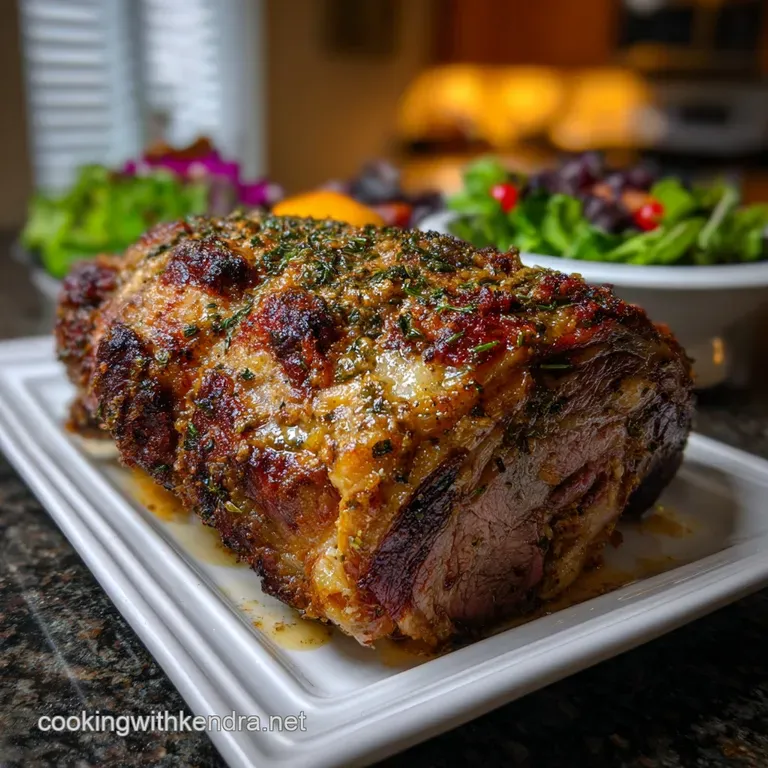
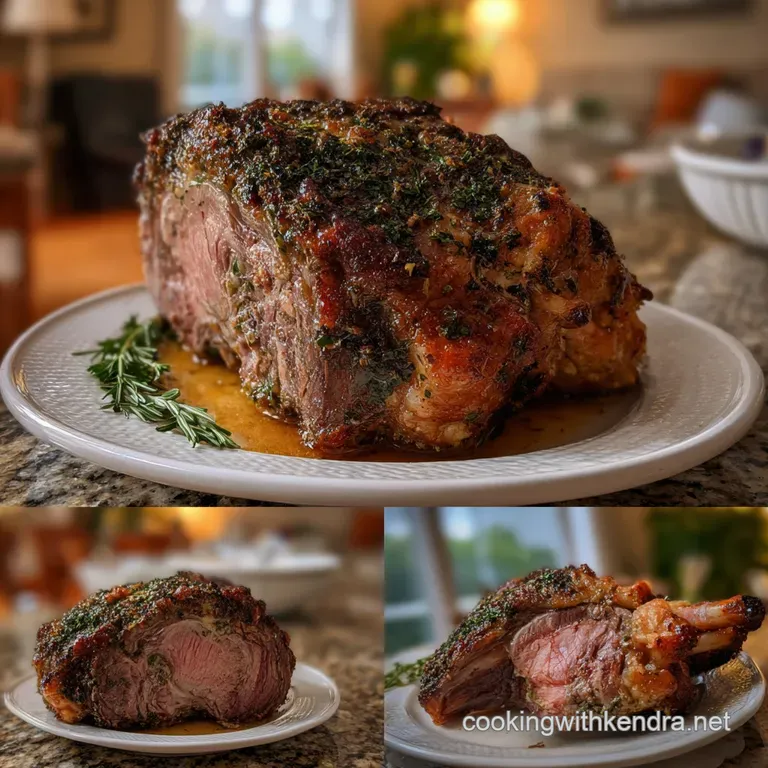
The visual contrast between the mahogany colored, herb flecked crust and the uniform, edge-to-edge pink interior is what defines a successful prime rib. Serve on a warmed platter to prevent the rendered fats from congealing before the meat hits the guests' plates.
The aroma should be a complex mix of roasted garlic, charred rosemary, and the deep, buttery scent of aged beef. This is the ultimate expression of Sunday dinner mastery with your prime rib.

Recipe FAQs
how to make prime rib?
Reverse sear using low heat then a high heat blast. This decouples internal cooking from external browning to achieve edge-to-edge pinkness without the gray band. If you mastered controlling the thermal gradient here, apply that same precision to our The Ultimate Garlic Butter Prime Rib Roast Reverse Sear Method.
how to make prime rib roast?
Pat dry, season heavily, roast low (250°F) until 118°F internal, then sear high (500°F). The initial low temperature allows enzymatic tenderization while surface dehydration sets up the Maillard reaction for the final crust.
how to make prime rib at home?
Use a heavy mass roasting pan with a wire rack underneath. Elevating the roast ensures 360-degree airflow, preventing the bottom from steaming in rendered juices and promoting uniform cooking.
how to make prime rib au jus?
Reduce pan drippings with beef stock and wine reduction. Simmer the drippings (fat skimmed) until slightly concentrated, then deglaze with liquid to extract flavorful fond particles.
how to make prime rib gravy?
Create a roux using rendered beef tallow and flour before adding au jus. The initial fat-to-flour mixture must cook out the raw starch flavor before liquid is introduced for a stable thickening agent.
What internal temperature should prime rib be when pulled?
Pull roast at 115°F-118°F for a perfect medium rare finish. Carryover cooking will raise the internal temperature 5-7 degrees while resting, hitting the ideal 125°F target. The goal is gradual thermal diffusion, not rapid coagulation of muscle proteins.
Should I rest prime rib covered or uncovered?
Rest it tented loosely with foil and then covered with a towel. Covering traps heat, allowing juices to redistribute, but tenting prevents condensation from softening the hard earned crust. This layered approach ensures moisture remains internal while the exterior stays crisp.
Reverse Sear Prime Rib
Ingredients:
Instructions:
Nutrition Facts:
| Calories | 985 kcal |
|---|---|
| Protein | 66g |
| Fat | 78g |
| Carbs | 1.5g |
| Fiber | 0.3g |
| Sugar | 0.1g |
| Sodium | 2840mg |
