Reverse-Sear Rib Roast for New Years Dinner
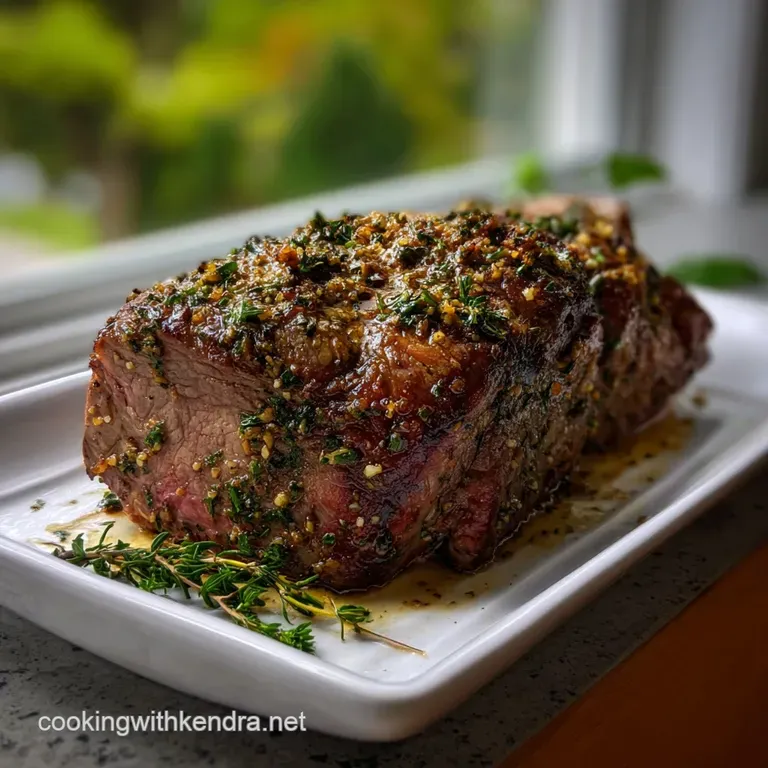
- Effort/Time: Low-active effort / 2 hours 45 mins total
- Flavor Hook: Herb-crusted mahogany exterior meets a buttery, melt-in-your-mouth interior.
- Perfect for: An elegant-yet-manageable New Year's Eve celebration.
- Master the Ultimate new years dinner
- Precision Metrics for Your Holiday Roast
- The Alchemy of Umami: Selecting Your Elements
- Minimal Tools for a Professional Finish
- The Reverse Sear Protocol for Edge-to-Edge Pink
- Why Your Prime Rib Misses the Mark
- ⚗️ The Scaling Lab: The Physics of Quantity
- Flavor Architecture and Dietary Adaptations
- Common Myths
- The Physics of Preserving Tenderness
- Vibrant Pairings and the Perfect Pour
- Recipe FAQs
- 📝 Recipe Card
Master the Ultimate new years dinner
There is nothing more gut-wrenching than pulling a $120 bone-in rib roast out of the oven only to find it gray, dry, and overcooked. I remember my first attempt at a major holiday meal; I followed a "over high heat start" recipe that filled my apartment with smoke and left the outside of the meat charred while the inside was practically blue.
It was a stressful, expensive lesson in how high intensity heat can be the enemy of precision when dealing with large muscle proteins, especially when planning the main course for your new years dinner.
I spent years obsessing over meat science to ensure I never repeated that mistake, eventually realizing that professional results come from patience, not power. I once ruined a dinner party by rushing the rest period, cutting into the roast too early and watching all that precious juice the literal lifeblood of the flavor flood the cutting board instead of staying in the fibers.
It’s a humbling moment when your "masterpiece" turns into a dry heap of fibers because you didn't respect the thermodynamics of carryover cooking for your new years dinner.
The secret to a world class new years dinner isn't a fancy oven or secret spices; it's the science of protein denaturation and moisture retention. By roasting at a low temperature, we allow the enzymes in the meat to act as a natural tenderizer before the heat sets the proteins.
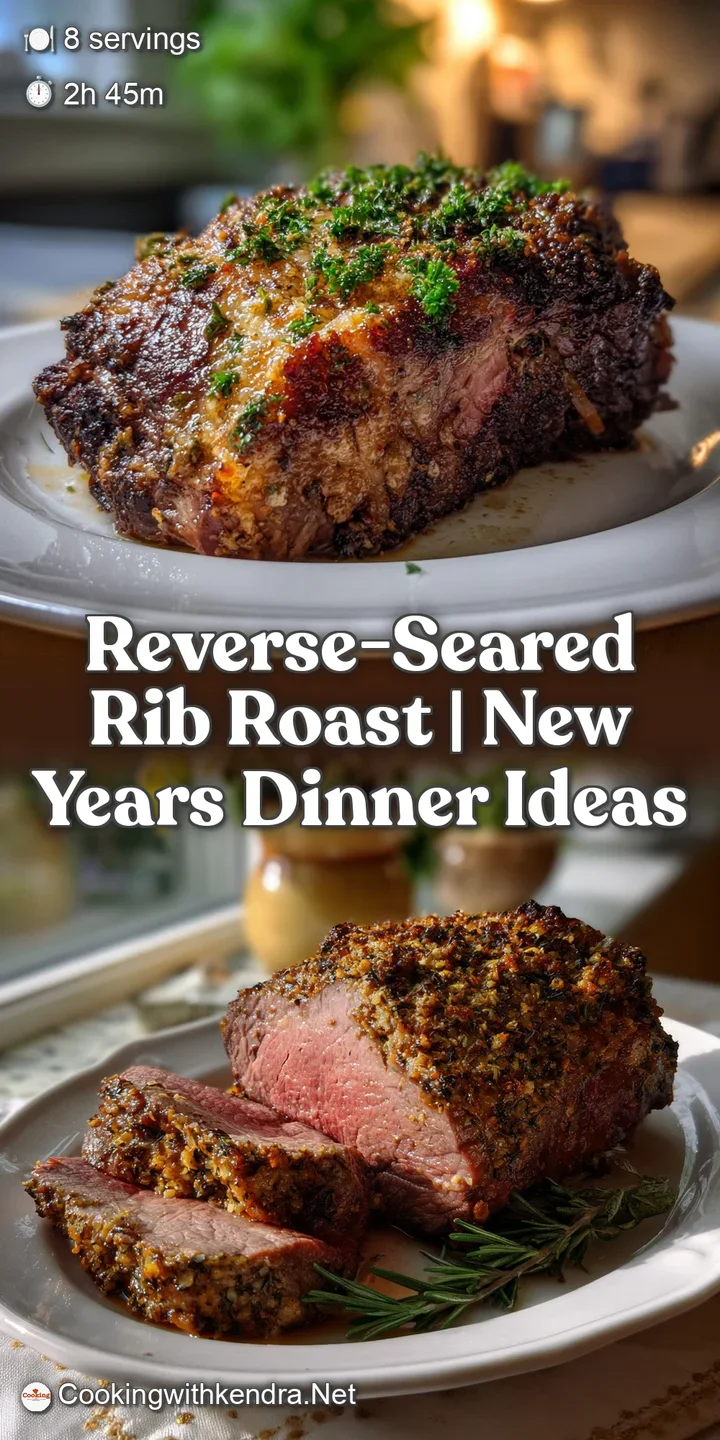
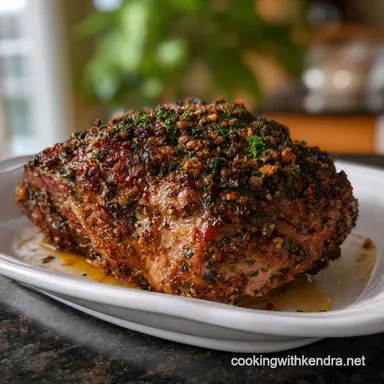
This creates a velvety, uniform texture that shatters into a savory crust once we hit it with that final blast of heat. The result is a mahogany colored crust that crackles under the knife, revealing a succulent, rose hued center that smells of toasted rosemary and rich beef tallow, making it the star of any new years dinner.
Precision Metrics for Your Holiday Roast
Achieving the "Masterclass" label requires moving beyond guesswork and relying on exact physical checkpoints. For this new years dinner, we are targeting specific thermal windows that dictate the final texture and juiciness of the beef.
- Target Weight: 5 lb Bone-in Rib Roast (Prime Rib) serves exactly 8 people with generous portions.
- Pull Temperature:120°F (49°C) for a final medium rare finish after carryover cooking.
- Resting Period:30 minutes minimum to allow the internal pressure to equalize.
| Method | Internal Evenness | Crust Quality | Best For |
|---|---|---|---|
| Reverse Sear (Oven) | 95% edge-to-edge pink | Superior, dry-heat bark | Thick roasts over 4 lbs |
| Traditional Sear (Stovetop) | Significant "gray ring" | Deep, localized Maillard | Steaks under 2 inches |
| Hybrid Approach | Moderate evenness | Good but requires basting | Small roasts (2 3 lbs) |
The Alchemy of Umami: Selecting Your Elements
Choosing ingredients for a high stakes new years dinner requires looking at the chemical potential of every item on your counter. We aren't just adding flavor; we are building a structural crust and a complex chemical sauce.
Ingredient Chemistry Breakdown
| Ingredient | Chemical/Physical Role (Science) | The Pro Secret (Why This Matters) |
|---|---|---|
| Bone-in Rib Roast | Bone acts as thermal insulator | Protects the "eye" from overcooking; adds marrow deep flavor |
| Diamond Crystal Kosher Salt | Osmotic pressure regulator | Denatures proteins to trap moisture; creates the "dry-brine" effect |
| Unsalted Butter | Lipid based flavor carrier | Suspends herb volatiles; provides fat for the Maillard reaction |
| Dry Red Wine | Acidic deglazing agent | Dissolves browned bits (fond); balances rich beef fats with tannins |
- 5 lb Bone-in Rib Roast (Prime Rib):Why this? Bones slow heat transfer, ensuring the center stays tender while the exterior develops flavor.
- 2 tbsp Diamond Crystal Kosher Salt: The coarse grains provide better coverage and controlled salinity compared to fine table salt.
- 1 tbsp Coarse black pepper: Provides "bite" and textural contrast to the soft fat.
- 1/2 cup Unsalted butter, softened:Why this? Controlling salt levels separately ensures the herb rub isn't over salted.
- 6 cloves Garlic, minced: Use fresh cloves, never jarred, to avoid the metallic aftertaste of citric acid preservatives.
- 2 tbsp Fresh rosemary, finely chopped: Essential for that piney, festive aroma that defines a new years dinner.
- 2 tbsp Fresh thyme, finely chopped: Adds earthy, floral notes that bridge the gap between meat and wine.
- 1 cup Dry red wine (Cabernet or Merlot):Why this? High tannins cut through the 66g of fat per serving.
- 2 cups Beef bone broth: Look for a brand like Kettle & Fire for high gelatin content, which yields a silky mouthfeel.
- 2 Shallots, minced: Provides a sweeter, more nuanced allium base for the jus than standard onions.
- 1 tbsp Cold butter: For "mounting" the sauce (Monter au Beurre) to create a glossy, emulsified finish.
Minimal Tools for a Professional Finish
You don't need a kitchen full of gadgets to pull off an elegant New Years Eve meal. In fact, fewer tools often mean better focus on the meat itself.
- Lodge 12 inch Cast Iron Skillet or Heavy Roasting Pan: You need high thermal mass to maintain temperatures.
- Chef's Knife (e.g., Wüsthof Classic): For precision mincing of herbs to release essential oils.
- Digital Meat Thermometer (e.g., Thermapen): The most critical tool in your arsenal; 5 degrees is the difference between perfection and disappointment.
- Small Mixing Bowl: For the compound butter.
- Wire Cooling Rack: To allow air circulation around the entire roast during the low-temp phase.
The Reverse Sear Protocol for Edge-to-Edge Pink
This method flips traditional roasting on its head to maximize tenderness and minimize the "gray ring" of overcooked meat. Successfully executing this is the key to a successful new years dinner.
- Dry-brine the roast. Rub 2 tbsp Kosher salt over the 5 lb Bone-in Rib Roast. Note: Salt draws moisture out, dissolves into a brine, and is reabsorbed, seasoning the interior via osmosis.
- Temper the meat. Let the roast sit at room temperature for 1 hour until the chill vanishes and the surface feels slightly tacky.
- Prepare the herb compound. Mix 1/2 cup unsalted butter with 6 minced garlic cloves, rosemary, and thyme in a small bowl. Note: Fat is a superior solvent for the aromatic compounds in herbs.
- Apply the coat. Slather the herb butter over the entire roast until a thick, green flecked pale yellow layer covers the fat cap.
- Low-roast at 250°F (120°C). Place the roast on a wire rack in the oven for approximately 2 hours until the internal temperature hits a precise 115°F (46°C).
- Rest the meat. Remove from the oven and tent loosely with foil for 30 minutes until juices redistribute and internal temp rises to 120°F (49°C).
- Sauté shallots. While the meat rests, sauté 2 minced shallots in the roasting pan over medium heat until translucent and fragrant.
- Deglaze with wine. Pour in 1 cup dry red wine, scraping the pan bottom until the liquid reduces by half and the sharp alcohol scent disappears.
- Simmer broth. Add 2 cups beef bone broth and simmer for 10 minutes until the sauce coats the back of a spoon.
- Blast the heat. Crank the oven to 500°F (260°C). Return the meat to the oven for 6–10 minutes until the exterior is mahogany brown and the fat sizzles loudly.
- Finish the jus. Whisk 1 tbsp cold butter into the sauce until it looks glossy and velvety.
Why Your Prime Rib Misses the Mark

Why Your Meat is Gray and Dry
When meat is exposed to high heat (above 350°F) for the entire duration, the outer layers reach 160°F+ while the center is still 100°F. This creates a massive "gray ring" of denatured, squeezed proteins that have lost all moisture.
The science here is simple: muscle fibers are like tubes filled with water; heat makes them contract and squeeze the water out. This is the single biggest pitfall for a prized new years dinner roast.
| Problem | Root Cause | The Fix | Pro Protocol |
|---|---|---|---|
| Uneven Cooking | Meat was too cold when it entered the oven | Temper for 1 2 hours | Use an ambient probe to monitor the oven's true temp |
| Soggy Crust | Surface moisture wasn't removed | Pat dry before buttering | Dry-brine uncovered in the fridge for 24 hours |
| Thin, Watery Jus | Not enough gelatin or reduction | Use bone broth + cold butter finish | Add a teaspoon of balsamic for depth and color |
⚗️ The Scaling Lab: The Physics of Quantity
When you decide to scale this recipe for a larger new years dinner, the physics change significantly. Doubling a roast isn't just about doubling the time.
- The Surface Area Trap: A 10 lb roast has much more volume than surface area compared to a 5 lb roast. You only need 1.5x the salt and herbs, not 2x, or the exterior will be inedibly salty.
- Thermal Mass Lag: A larger piece of meat takes longer to "recover" the oven temperature after the door closes. Do not open the door frequently.
- Carry Over Alert: A 10 lb roast has significantly more thermal energy. Pull it at 110°F (43°C) instead of 115°F, as it will rise closer to 12 15 degrees while resting.
- Pan Crowding: If cooking two separate 5 lb roasts, ensure at least 3 inches of space between them. If they touch, they will steam rather than roast, ruining that crisp exterior.
Flavor Architecture and Dietary Adaptations
While the classic herb butter crust is king for a traditional new years dinner, you can tweak the profile to suit your crowd.
- Peppercorn Steakhouse Style: Replace rosemary/thyme with 3 tbsp of cracked peppercorns and 1 tsp of smoked paprika for a bolder, spicy bark.
- dairy-free Adaptation: Substitute the 1/2 cup butter with high-quality beef tallow or Avocado oil. It won't have the same lactic sweetness, but the Maillard reaction will be even more intense due to the higher smoke point.
- Horseradish Kick: Fold 2 tbsp of prepared horseradish into the compound butter for a sharp, nasal clearing finish that highlights the beef's richness.
If you are looking for more Easy New Years Dinner Ideas, pairing this roast with a seafood starter can create a stunning surf and turf menu.
Common Myths
Myth: Searing the meat first "locks in the juices." Truth: This is physically impossible. Searing creates flavor via the Maillard reaction, but it actually causes more moisture loss on the surface.
Searing at the end (the reverse sear) preserves more internal moisture, which is crucial for any successful new years dinner.
Myth: You should cut the bones off before cooking for an easier carve. Truth: Keep them on! The bones protect the most delicate part of the meat from direct heat, acting as a thermal shield that ensures the "eye" of the rib stays velvety.
The Physics of Preserving Tenderness
Storage: Store leftovers in an airtight container for up to 4 days. The fat will solidify, creating a protective seal around the protein fibers.
Reheating: Never use a microwave. The high frequency waves vibrate water molecules so violently they steam the meat from the inside out, turning medium rare to medium well in seconds.
Instead, place slices in a pan with a splash of beef broth, cover with foil, and warm at 250°F until just heated through.
💡 ZERO WASTE PHILOSOPHY: Don't discard the rib bones! Transform: Simmer them with water, peppercorns, and an onion for 6 hours to create a "Remouillage" (second wetting) stock.
Science: The remaining collagen and marrow provide deep umami and minerals that are perfect for a New Year's Day soup.
Vibrant Pairings and the Perfect Pour
This impressive new years dinner deserves a supporting cast that cuts through the richness. Since the roast is very high in fat (66g), look for sides with high acidity or bitterness. A crisp arugula salad with lemon vinaigrette or roasted balsamic Brussels sprouts works wonders.
For the beverage, the tannins in the red wine used for the jus are your best friend. A bold Cabernet Sauvignon or a Syrah provides the structural "grip" needed to cleanse the palate after each buttery bite of beef. If you're feeling festive, start the evening with a Sazerac Recipe to prime the palate with anise and rye spice before moving to the main feast.
Decision Shortcut: If you want a crunchy bark, dry-brine the meat uncovered in the fridge for 24 hours. If you want maximum tenderness, ensure you don't skip the 1 hour room temp tempering.
If you want a glossy sauce, use cold, cubed butter and whisk it in only after the heat is turned off.
Let's crack on this new years dinner is the kind of meal that turns a simple evening into a community event. Gather your favorite people, open a bottle of that red, and enjoy the aromas of a masterfully roasted prime rib. Happy New Year!
Recipe FAQs
What is the absolute minimum rest time required before carving the roast?
30 minutes minimum to allow juice redistribution. Heat forces moisture to the center; resting allows the pressurized fibers to relax and reabsorb the liquid. If you skip this step, all the rendered jus floods the cutting board instead of staying in the meat.
Can I use fine table salt instead of Diamond Crystal Kosher Salt?
No. Table salt has twice the density and over salts quickly. Fine salt crystals pack tighter, leading to inconsistent surface coverage and excessively salty spots. Table salt also dissolves faster, causing premature surface moisture loss before the slow roast begins.
Is it better to start the roast hot and finish low, or start low and finish hot?
Reverse sear (low start) yields superior evenness. Starting low cooks the interior uniformly by slowly denaturing proteins before coagulation sets in. A high start blasts the exterior, creating an irreversible temperature gradient known as the gray ring.
Myth: Brushing the roast with oil instead of butter yields a crispier crust.
Myth: Brushing the roast with oil instead of butter yields a crispier crust. Truth: Butter solids (milk proteins) brown beautifully via the Maillard reaction, whereas pure oil only fries the surface. For maximum browning potential, use butter as the primary lipid carrier.
What temperature should I pull the roast from the oven for a medium rare finish?
115°F (46°C) before the final blast. Carryover cooking will increase the temperature by 5 10 degrees during the rest period. If you master controlling the initial heat transfer here, you can apply the same thermal precision when cooking cuts like the Christmas Eve Dinner: Tenderloin Reverse Sear.
What is the role of the wine used to deglaze the pan for the jus?
The wine’s acid balances the richness of the beef fat. The alcohol content allows for the dissolution of the fond (browned bits), and its acidity cuts through the 66g of fat per serving. This technique is similar to balancing flavors in appetizers, like our New Year s Eve Appetizer with Garlic and Herbs Baked.
Myth: Using frozen beef ensures it cooks slower and more evenly.
Myth: Using frozen beef ensures it cooks slower and more evenly. Truth: Thawing is required; frozen meat cooks unevenly, creating massive moisture pooling spots as ice crystals thaw into liquid before the cooking begins.
Reverse Sear Rib Roast
Ingredients:
Instructions:
Nutrition Facts:
| Calories | 845 kcal |
|---|---|
| Protein | 48g |
| Fat | 66g |
| Carbs | 4g |
| Fiber | 0.6g |
| Sugar | 1.2g |
| Sodium | 1420mg |
