Soup Recipe with Roasted Tomato and Basil

- Time: Active 15 minutes, Passive 45 minutes, Total 1 hour
- Flavor/Texture Hook: Charred, smoky, and incredibly silky
- Perfect for: Sunday meal prep or a cozy rainy day family dinner
- Perfect Soup Recipe with Roasted Tomato and Basil
- Key Timing and Serving Facts
- Choosing the Best Fresh Ingredients
- The Simple Tools I Use
- Steps for a Silky Finish
- Fixing Common Tomato Soup Problems
- Easy Swaps for Busy Cooks
- Storing and Reheating Your Leftovers
- Best Sides for Comfort Meals
- Answering Your Common Cooking Questions
- Roasted Tomato and Basil Soup FAQs
- 📝 Recipe Card
Hey friend, I just pulled a tray of roasted tomatoes out of the oven, and the smell is currently taking over my entire kitchen. There is something almost magical about the way garlic and onions soften into sweet, golden versions of themselves when they hit that 400°F heat.
This comforting soup recipe with roasted tomato and basil will become a new family favorite because it feels like a big hug in a bowl, without needing you to stand over a stove for hours.
I used to be the person who just grabbed a carton of tomato soup from the store and called it a night. But honestly, once I realized that roasting the veg does all the heavy lifting for you, I never looked back. It is the ultimate hands off way to get that "cooked all day" flavor on a busy Tuesday night.
We are going for those slightly charred edges on the tomatoes because that is where the real soul of the dish lives.
Today, I'm sharing the exact process I use to get that perfect balance of tangy and sweet. We have all had those watery or overly acidic soups that just don't hit the mark, right? This recipe fixes all of that by focusing on concentration and a little bit of science.
Let's get into why this works so well and how you can make it tonight with minimal fuss.
Perfect Soup Recipe with Roasted Tomato and Basil
When we roast vegetables, we are doing more than just cooking them through. We are physically changing their chemical makeup to create better flavor profiles. It's a trick I learned after too many batches of "meh" soup, and it makes all the difference for a busy home cook who wants high-quality results without complex techniques.
Caramelization: High oven heat breaks down the complex carbohydrates in the tomatoes and onions into simple sugars, creating a rich sweetness.
Maillard Reaction: The browning on the edges of the garlic and onions creates hundreds of new flavor compounds that add a savory, nutty depth.
Emulsification: When we blend the olive oil and heavy cream into the vegetable base, we are creating a stable, silky suspension of fat in water for a luxurious mouthfeel.
I've found that these scientific processes do the seasoning for you. By the time you add your broth, the foundation is already so strong that you don't need a cabinet full of spices. If you are looking for more cozy dinner ideas, this technique is actually very similar to how I build the base for my Onion Soup Meatloaf recipe, where slow cooked flavors make a simple dish feel fancy.
Concentrating Natural Sugars
The roasting process acts as a dehydrator, removing excess water from the Roma tomatoes. As the water evaporates, the "tomato ness" becomes much more intense. This prevents that thin, tinny taste you often find in store-bought versions.
Infusing Fresh Herb Oils
Adding the fresh basil at the very end of the blending process ensures the volatile oils don't cook off. This keeps the soup tasting bright and fresh, rather than dull and muddled.
| Ingredient | Science Role | Pro Secret |
|---|---|---|
| Roma Tomatoes | Acid and Base | Use the ripest ones for the most natural pectin and body |
| Garlic Cloves | Aromatic Depth | Roast them whole in their skins to prevent bitterness |
| Heavy Cream | Fat Emulsifier | Adds "mouth coating" richness that balances the tomato acid |
| Balsamic Vinegar | Acid Balance | A tiny splash acts as a flavor brightener, like a highlighter |
Building a great meal is often about understanding how fresh ingredients compare to the convenience of shortcuts. While I love a good kitchen hack, some things are worth the extra few minutes of prep.
| Method | Flavor Profile | Texture |
|---|---|---|
| Fresh Roasting | Deep, sweet, complex | Velvety with natural body |
| Canned Shortcut | Bright, acidic, simple | Thinner, requires more thickener |
Key Timing and Serving Facts
Before you start chopping, let's look at the numbers. I've tested this a dozen ways, and these specific checkpoints ensure you don't end up with burnt garlic or watery broth.
- Roasting Temperature:400°F (200°C) is the sweet spot for char without burning.
- Roasting Duration:45 minutes until the tomato skins are shriveled and slightly blackened.
- Final Yield: 5 servings (about 1.5 cups per person).
Chef's Tip: To keep your garlic from turning bitter, tuck the cloves underneath the tomato halves on the baking sheet. This "steams" them in the tomato juices while they roast, keeping them sweet and soft rather than crispy and acrid.
Choosing the Best Fresh Ingredients
You don't need a massive grocery list for this. Since there are so few elements, each one needs to pull its weight. Here is what I keep in my pantry for a batch of roasted tomato and basil soup.
- 3 lbs Roma tomatoes, halved: These have less water and more "meat" than beefsteak tomatoes. Why this? Romas provide the thickest consistency naturally.
- Sub: 3 lbs Vine ripened tomatoes. Trade off: Slightly more watery.
- 1 large yellow onion, quartered: Provides a savory, sweet backbone. Why this? Yellow onions caramelize better than white ones.
- Sub: 2 large shallots. Trade off: More subtle, delicate flavor.
- 6 cloves garlic, peeled and whole: Don't be shy with the garlic. Why this? Roasting mellows the pungency into sweetness.
- Sub: 1 tsp garlic powder. Trade off: Lacks the creamy roasted texture.
- 3 tbsp extra virgin olive oil: For roasting and flavor.
- 1 tsp sea salt & 0.5 tsp cracked black pepper: Essential for drawing out moisture.
- 2 cups vegetable broth: This is your liquid base.
- Sub: Chicken broth. Trade off: Richer, more savory, but not vegetarian.
- 0.5 cup heavy cream: For that signature silkiness.
- Sub: Full fat coconut milk. Trade off: Adds a slight tropical, nutty note.
- 1 tbsp balsamic vinegar: The secret weapon for balance.
- 1 tsp dried oregano: Adds an earthy, herbaceous layer.
- 1 cup fresh basil leaves, packed: Added at the very end for maximum impact.
| Original Ingredient | Substitute | Why It Works |
|---|---|---|
| Heavy Cream (0.5 cup) | Full fat Coconut Milk | Similar fat content. Note: Adds a subtle coconut aroma. |
| Vegetable Broth | Chicken Bone Broth | Higher protein and more collagen for a thicker mouthfeel. |
| Roma Tomatoes | Canned Whole Peeled | If out of season. Note: Drain well and roast anyway. |
If you are a fan of hearty, vegetable forward meals that use simple pantry staples, you might also want to check out my Cabbage Soup Hearty recipe. It is another one of those dishes that proves you don't need fancy ingredients to make something spectacular.
The Simple Tools I Use
I am a big believer in using what you have. You don't need a $500 blender to make this work, though a good one certainly makes life easier. Here is the minimal kit I use to get this soup from the oven to the table.
- Large Rimmed Baking Sheet: Essential for containing all those delicious tomato juices that leak out during roasting. Don't use a flat cookie sheet!
- Parchment Paper or Silicone Mat: This makes cleanup a breeze and prevents the onion sugars from sticking to the pan.
- High Speed Blender or Immersion Blender: I prefer a stand blender for the smoothest results, but an immersion blender works if you like a little more texture.
- Large Pot or Dutch Oven: For simmering the blended soup with the broth and cream.
Steps for a Silky Finish
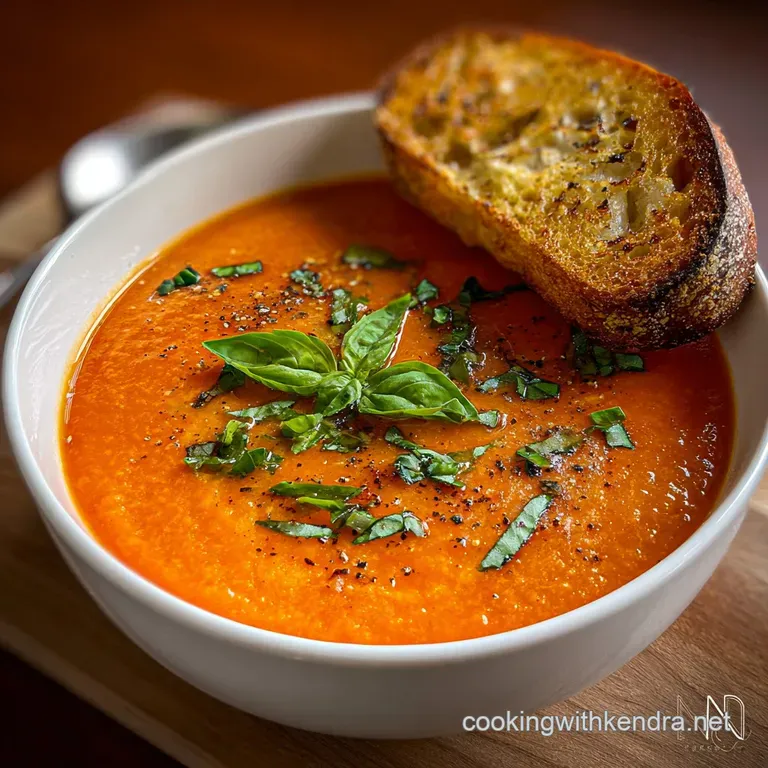
Ready to cook? Let's get these vegetables in the oven. Follow these steps closely, especially the roasting part, because that is where we build all our flavor.
Roasting the Base Ingredients
- Prep the oven. Preheat your oven to 400°F and line a large baking sheet with parchment paper.
- Arrange the vegetables. Place the 3 lbs halved Roma tomatoes, quartered yellow onion, and 6 garlic cloves on the tray. Note: Keep them in a single layer so they roast instead of steam.
- Season well. Drizzle with 3 tbsp olive oil and sprinkle with 1 tsp sea salt, 0.5 tsp black pepper, and 1 tsp dried oregano. Roast 45 minutes until charred and soft.
Building the Soup Foundation
- Transfer to blender. Carefully pour all the roasted vegetables AND the juices from the pan into your blender.
- Add the liquids. Pour in 2 cups of vegetable broth and 1 tbsp balsamic vinegar.
- Add the basil. Toss in the 1 cup of fresh basil leaves last. Blend on high until completely smooth.
Simmering for Deep Flavor
- Heat it up. Pour the mixture into a large pot over medium heat.
- Incorporate the cream. Stir in 0.5 cup heavy cream and simmer for 5-10 minutes. Cook until simmering and fragrant.
- Taste and adjust. Give it a final taste. Does it need more salt? Another splash of vinegar? Adjust now.
- Serve immediately. Ladle into bowls and top with a few extra basil leaves or a drizzle of oil.
Fixing Common Tomato Soup Problems
Sometimes things don't go exactly to plan. Maybe your tomatoes were a bit too tart, or you accidentally added too much broth. Don't panic! Most soup issues are easily fixed with a little kitchen chemistry.
Correcting a Thin Texture
If your soup feels a bit like tomato water, it's usually because the tomatoes had a higher water content than expected. You can simmer it uncovered for an extra 15 minutes to reduce the liquid.
Alternatively, you can blend in a piece of toasted sourdough bread or a cooked potato; the starches will act as a natural thickener without changing the flavor too much.
Too Much Acidity Fix
Tomatoes can be finicky. If the finished product makes you pucker, it's likely the acid is too high. A tiny pinch of granulated sugar (about 1/2 teaspoon) can balance it out. Another trick is a tiny pinch of baking soda, which physically neutralizes the acid, but go very light so you don't affect the flavor.
| Problem | Root Cause | Solution |
|---|---|---|
| Soup is too sour | Tomatoes were underripe or high acid | Add 1/2 tsp sugar or a splash more cream |
| Soup is grainy | Blender didn't break down skins | Pass the soup through a fine mesh sieve |
| Bitter aftertaste | Garlic was burnt during roasting | Next time, hide garlic under the tomatoes |
Easy Swaps for Busy Cooks
I know how it is. You start a recipe and realize you're missing one thing. Don't sweat it. This recipe is very forgiving as long as you keep the ratios roughly the same.
Scaling for Big Families
If you're cooking for a crowd, you can easily double this recipe. However, don't just double everything blindly. Up (2x): Use two baking sheets to avoid crowding. If the vegetables are piled on top of each other, they will steam instead of roast.
Use 1.5x the salt and spices at first, then adjust at the end. Down (1/2): Use a smaller pan and check the roasting progress at 35 minutes. Since there is less mass in the oven, things might brown faster.
Making it Vegan
This is a request I get a lot from friends. To make this 100% plant based, simply swap the heavy cream for full fat coconut milk or a cashew cream. I've found that cashew cream (soaked cashews blended with a little water) actually provides a more neutral flavor than coconut milk, which can sometimes overpower the basil.
If you are looking for another meatless wonder, my Comforting Beef Barley recipe can easily be adapted with mushrooms for a similarly rich, filling experience.
Storing and Reheating Your Leftovers
Tomato soup is one of those rare things that actually tastes better the next day. The flavors have time to mingle and the basil infuses more deeply into the cream.
- Storage
- Store leftovers in an airtight container in the fridge for up to 4 days.
- Freezing
- This soup freezes beautifully! However, if you know you are going to freeze a batch, I recommend leaving the cream out. Freeze the blended vegetable and broth base for up to 3 months. When you're ready to eat, thaw it and add the fresh cream while reheating.
- Reheating
- Use a saucepan over low heat. If you use a microwave, cover the bowl with a paper towel tomato soup loves to "pop" and make a mess of your microwave walls!
Zero Waste Tip: Don't throw away those basil stems! If you have extra, toss them into a bottle of olive oil to make a quick infused oil for drizzling over the soup later.
Best Sides for Comfort Meals
A bowl of soup is great, but it's even better with a partner. We all know the classic grilled cheese is the gold standard here. Use a sharp cheddar and maybe a smear of Dijon mustard on the inside of the bread to complement the sweetness of the roasted tomatoes.
If you want something a little lighter, a simple arugula salad with lemon vinaigrette and shaved parmesan provides a nice peppery contrast. Or, if you have a bit more time, some homemade garlic focaccia is perfect for dipping and soaking up every last drop from the bottom of the bowl.
Answering Your Common Cooking Questions
Let's clear up some of the things people often ask me when I'm making this.
Concentrating Flavor Without Peeling
Do I need to peel the tomatoes before roasting? Honestly, don't even bother with peeling. It's a huge time sink that isn't necessary for this recipe. A high speed blender will pulverize the skins completely, adding extra fiber and color to the soup.
If you are using an older blender and find the skins are leaving little bits behind, just pour the finished soup through a fine mesh strainer.
Using Canned Tomatoes Effectively
Can I use canned tomatoes if I'm in a hurry? You can, but the flavor won't be quite as complex. If you go this route, buy whole peeled tomatoes (like San Marzano style), drain them well, and roast them on the baking sheet just like you would fresh ones.
It still helps develop those caramelized notes that you won't get straight from the can.
Preventing Cream from Curdling
How do I keep the soup from curdling when adding cream? The main culprit for curdling is high heat and high acid. To prevent this, make sure your soup is not at a rolling boil when you add the cream.
Lower the heat to a simmer, and "temper" the cream by stirring a spoonful of hot soup into the cream container first to warm it up before pouring the whole thing into the pot.
Debunking Tomato Soup Myths
Myth: You must use sugar to cut the acidity. While sugar helps, it's not the only way. Roasting actually naturally reduces the perception of acidity by developing sweetness.
Often, just adding a bit more fat (like another splash of olive oil or cream) will mellow out the bite without making the soup taste like dessert.
Myth: Fresh basil should be cooked in the soup. Actually, basil is very delicate. If you simmer it for a long time, it turns brown and loses its characteristic peppery sweet punch. Always add it at the very last second of blending for that vibrant green color and fresh aroma.
I hope you love this as much as my family does. It's a staple in our house, especially during the transition from summer to fall when the tomatoes are perfectly ripe. Let me know how yours turns out!
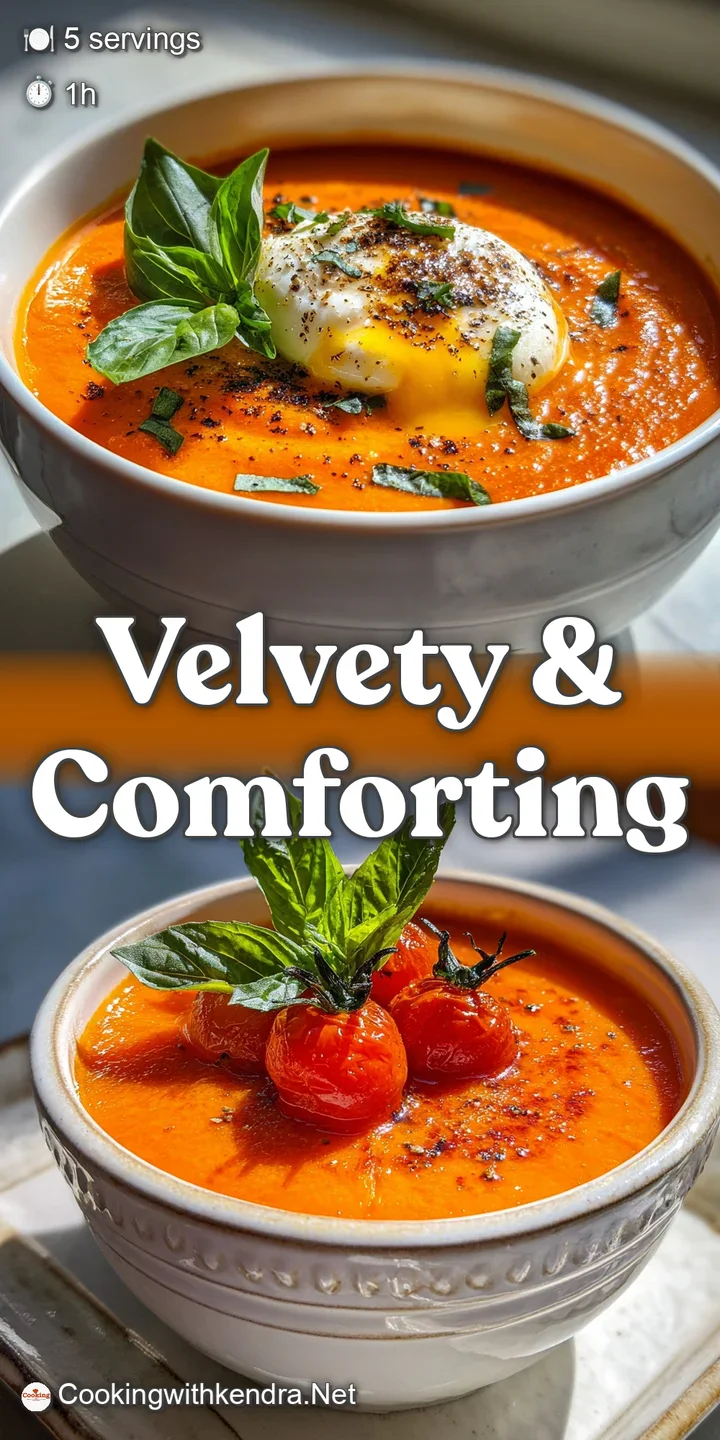
Roasted Tomato and Basil Soup FAQs
Do I need to peel the tomatoes before roasting?
No, skip the peeling. High speed blenders will pulverize the skins, adding fiber and color. If your blender struggles, you can strain the soup afterward.
Can I use canned tomatoes instead of fresh?
Yes, but roast them first. Use whole peeled tomatoes, drain them well, and roast them on the baking sheet to develop caramelized flavors.
No, it’s not necessary for this recipe. Roasting mellows the garlic's pungency into sweetness and the skins act as a protective barrier to prevent burning.
How do I prevent the soup from curdling when adding cream?
Temper the cream before adding it. Ensure the soup isn't boiling rapidly when you add the cream; slowly stir a spoonful of hot soup into the cream container to warm it first.
Is it true that fresh basil should not be cooked in the soup?
Yes, add basil at the end. Cooking basil for extended periods causes it to lose its vibrant flavor and color. Add it during the final blending stage for the freshest taste and aroma.
What's the best way to thicken thin tomato soup?
Simmer uncovered or blend in a thickener. Reducing the liquid by simmering without a lid for an extra 15 minutes works well. Alternatively, blend in a piece of toasted bread or a cooked potato for natural thickening.
How can I make this soup vegan?
Substitute the cream. Use full fat coconut milk or a homemade cashew cream for a similar richness and texture. If you enjoyed mastering the emulsification technique here, you might also like how we use similar principles in our Fresh and Flavorful Tomato Juice Recipe.
Roasted Tomato Basil Soup
Ingredients:
Instructions:
Nutrition Facts:
| Calories | 229 kcal |
|---|---|
| Protein | 4.1 g |
| Fat | 17.3 g |
| Carbs | 17.1 g |
| Fiber | 3.9 g |
| Sugar | 10.2 g |
| Sodium | 640 mg |
