Chinese Chicken Salad Dressing: the Maestros Signature Mandarin Vinaigrette
- Defining the Perfect Chinese Chicken Salad Dressing
- Achieving Emulsion Excellence: The Science of the Mandarin Vinaigrette
- Essential Components for Authentic Chinese Chicken Salad Dressing
- Whisking to Perfection: Step-by-Step Vinaigrette Assembly
- Troubleshooting the Dressing: Chef’s Tips for Optimal Flavor
- Maximizing Shelf Life: Storage Guide for Your Vinaigrette
- Pairing Perfection: Creative Ways to Use This Mandarin Vinaigrette
- Recipe FAQs
- 📝 Recipe Card
Defining the Perfect Chinese Chicken Salad Dressing
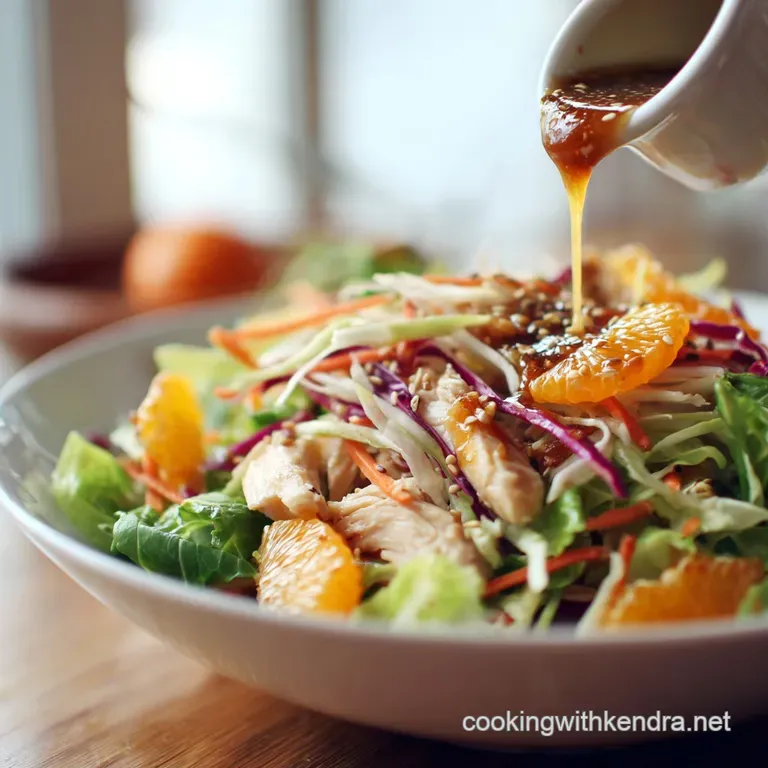
You know that scent. That incredible, bright aroma of toasted sesame oil mixed with the sharp punch of quality rice vinegar that hits you before the bowl even lands on the table. This signature chinese chicken salad dressing isn't some thin, watery afterthought; it's a beautifully rich, creamy emulsion that dictates the entire experience.
It needs to be robust enough to cling to crunchy cabbage and sharp enough to make your taste buds sing.
Forget the overly sweet, chemical tasting bottled versions that cost a fortune and disappoint every single time. Making this best chinese chicken salad dressing recipe takes maybe ten active minutes, and you probably already have most of the ingredients hiding in your pantry.
It is incredibly affordable, keeps well, and is absolutely essential if you want that true deli style flavor profile. Seriously, this dressing is a total game changer for quick lunches and big picnic spreads.
I’ve wasted years fiddling with the wrong ratios, ending up with gloopy messes or separated oil slicks. After enough trial and error (and a few embarrassing salads), I finally landed on the absolute perfect signature dressing formula.
Let’s stop messing around and dive straight into the secrets of creating a flawless mandarin vinaigrette recipe that will be your new house staple.
Achieving Emulsion Excellence: The Science of the Mandarin Vinaigrette
Beyond the Bottle: What Makes This Vinaigrette Superior
store-bought dressings often rely on cheap sugars and gums to create thickness, masking the lack of real flavor. Our version uses high-quality ingredients and relies on physical technique the magic of emulsification to create a naturally thick, velvety texture.
This results in a cleaner taste that actually complements the crunch of the salad, instead of smothering it.
The Core Flavor Pillars: Sweet, Sour, Umami, Nutty
A truly spectacular chinese chicken salad dressing must hit all four flavor notes simultaneously. We use honey for balanced sweetness, rice vinegar for clean sourness, soy sauce for deep umami, and that essential toasted sesame oil for the required nutty warmth.
Adjusting these four pillars is how you customize the dressing for your palate.
Difficulty Level Check: Why This is an Easy Shake and Whisk Dressing
Don't let the term "emulsion" scare you; this is a genuinely easy recipe. Unlike making a classic French vinaigrette, the sugar and soy sauce help stabilize this dressing right away, making it very forgiving.
You can achieve perfection with just a simple whisk or, even better, a well sealed mason jar and some serious arm strength.
Balancing Acidity: The Role of Quality Rice Vinegar
Always use unseasoned rice vinegar for this dressing. Seasoned rice vinegar has added sugar and salt, which throws off the careful balance of the recipe. We need that pure, mild acidity to cut through the oil without being overly aggressive.
If you only have white wine vinegar, use half the amount and taste carefully.
Creating the Velvety Texture: Emulsifying the Oils
Emulsion just means forcing oil and water (or vinegar) to combine when they really don't want to. The key here is the slow, steady stream of neutral oil into the acid base while whisking constantly.
This breaks the oil into tiny droplets, which are suspended by the stabilizers (like honey and soy), creating that beautiful, velvety thickness.
Umami Depth: Maximizing Soy Sauce Flavor in Dressings
We use low-sodium soy sauce not just for the salt, but for that irreplaceable layer of fermented, savory umami. This depth prevents the dressing from tasting flat or overly sweet, which is a common failing of weak vinaigrettes. If you are going gluten-free, Tamari works perfectly and gives the exact same depth.
Essential Components for Authentic Chinese Chicken Salad Dressing
Ingredient Deep Dive: Why Fresh Ginger and Garlic Matter
Do not, I repeat, do not use powdered ginger or jarred minced garlic here. The fresh aromatics are the vibrant heart of this chinese chicken salad dressing recipe with sesame oil.
Freshly grated ginger provides a necessary spicy lift, and fresh garlic adds a pungent sweetness that powder simply can't replicate.
Mastering the Sesame Oil Profile: Toasted vs. Untoasted Varieties
Always reach for the toasted sesame oil; it is deep reddish brown and intensely fragrant. Untoasted (light) sesame oil is flavorless and often used for over high heat cooking. We use the toasted variety strictly as a finishing flavor agent because its flavor is so incredibly potent.
Accurate Measurements: Vinaigrette Ingredients (US Customary & Metric)
| Ingredient | Why We Use It |
|---|---|
| Fresh Ginger & Garlic | Aromatic base, spicy warmth, essential flavor lift. |
| Honey (or Maple Syrup) | Sweetener and emulsifier; helps bind the oil and vinegar. |
| Unseasoned Rice Vinegar | Mild, clean acid; crucial for balance. |
| Low-Sodium Soy Sauce | Umami depth and salinity. |
| Neutral Oil (Grapeseed/Canola) | The bulk of the dressing; light and flavorless. |
| Toasted Sesame Oil | Signature nutty, smoky finish. |
Smart Swaps: Adapting for gluten-free or Low-Sodium Diets
This recipe is incredibly versatile for adaptations. Here are my favorite smart swaps:
| If You Don't Have... | You Can Use... | Resulting Flavor Change |
|---|---|---|
| Honey | Maple Syrup | Slightly earthier; great for vegan preparation. |
| Low-Sodium Soy Sauce | Tamari or Coconut Aminos | Tamari is gluten-free; Aminos are sweeter, reduce honey slightly. |
| Rice Vinegar | Apple Cider Vinegar (use 3/4 the amount) | Sharper and fruitier; adjust the honey up a little to compensate. |
Whisking to Perfection: step-by-step Vinaigrette Assembly
Prepping the Aromatics: Mincing Ginger and Garlic Effectively
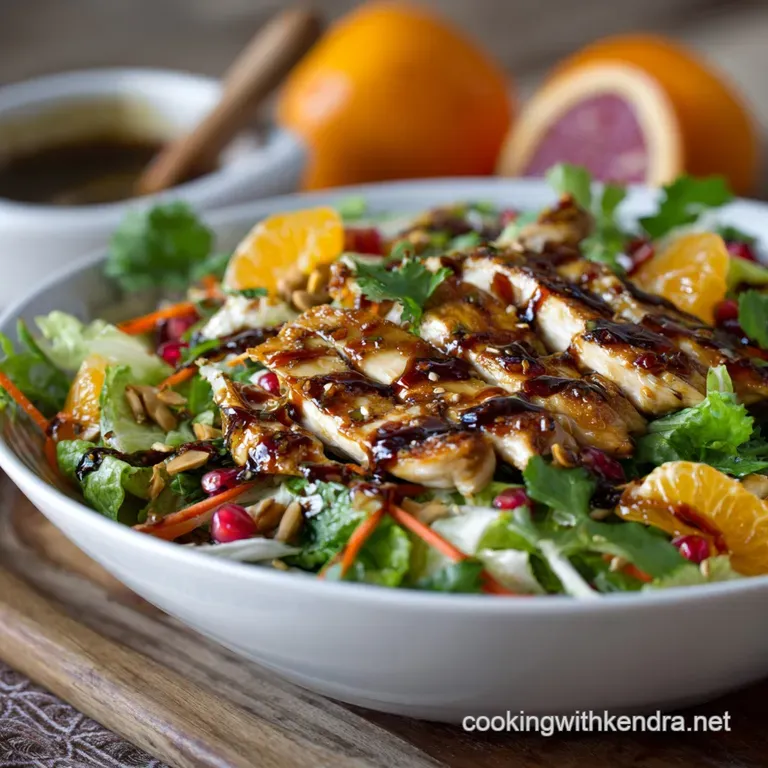
This step is non-negotiable for a silky dressing. Use a microplane grater for both the ginger and the garlic. This turns them into a paste rather than chunky pieces. A chunky dressing is not a silky dressing, and large raw pieces of ginger are unpleasant to bite into.
The Correct Order for Layering Liquids and Acids
Start with the flavor base first. In your mason jar or mixing bowl, combine the grated ginger, garlic, honey, rice vinegar, soy sauce, salt, and pepper. Give this mixture a good, aggressive whisk (or shake) until the honey and salt are fully dissolved. This acidic base is ready to receive the oil.
Technique Focus: Achieving a Stable Emulsion Without a Blender
If using a bowl, position your whisk and start moving it rapidly. Now, stream the neutral oil in a very slow, thin drizzle into the bowl while whisking continuously. If the oil goes in too fast, the mixture will break, and you’ll get separation.
If you are using a jar (my favorite method), pour in the oil, seal the lid tightly, and shake like you mean it for a full minute until it looks creamy and opaque.
Chef’s Note: Do not add the potent toasted sesame oil until the very end. Its flavor is so strong that you only want it blended in once the main emulsion has stabilized. Adding it too early can sometimes interfere with the oil binding process.
The Critical Importance of Resting Time Before Serving
Once fully emulsified, transfer the dressing to the fridge. You can use it right away, sure, but I strongly recommend chilling it for at least 30 minutes. This critical resting phase allows those distinct sharp flavors from the ginger and vinegar to calm down and integrate.
It yields a far smoother, more sophisticated final product.
Troubleshooting the Dressing: Chef’s Tips for Optimal Flavor
Fixing a Separated Vinaigrette (Breaking the Emulsion)
If your dressing looks oily and watery it broke! Usually, this happens if the oil was added too quickly or the ingredients were too cold. Don't throw it out. Simply put 1 teaspoon of hot water or a fresh splash of vinegar into a separate small, clean bowl.
Now, slowly whisk the broken dressing into the hot liquid, one drop at a time, until the emulsion reforms. It works almost every time!
Seasoning Adjustment: Balancing Sweetness and Acidity
If the dressing tastes sharp and spicy, add a tiny bit more honey or maple syrup to mellow the ginger. If it tastes heavy or too sweet, introduce a splash more rice vinegar or even a squeeze of fresh lime juice to lift the flavors. Always adjust seasoning after the dressing has chilled.
Common Mistake: Overpowering the Dressing with Too Much Sesame Oil
I made this mistake once, pouring in a glug because I love the smell. Bad idea. Toasted sesame oil is a powerful finishing flavor, not a primary oil. If you accidentally added too much and the dressing tastes bitter or too smoky, you need to dilute the flavor.
Double the recipe using all ingredients except the sesame oil, and then blend the two batches together.
Maximizing Shelf Life: Storage Guide for Your Vinaigrette
Refrigeration Best Practices (Containers and Time Limits)
Because this dressing contains fresh garlic and ginger, it must be refrigerated immediately after mixing. Store it in a tightly sealed, airtight container, ideally a glass jar. Stored properly, this signature chinese chicken salad dressing will last easily for 7 to 10 days.
Revitalizing the Dressing After Cold Storage
When you pull it out of the fridge, it will look thick, maybe even a little solid, due to the oil chilling. That's totally fine. Let it sit on the counter for 5 to 10 minutes, and then give it a serious, vigorous shake or whisk. It will quickly return to its smooth, pourable consistency.
Pairing Perfection: Creative Ways to Use This Mandarin Vinaigrette
Beyond the Salad Bowl: Marinades and Drizzles
This incredible mandarin vinaigrette recipe is far too good to be restricted just to lettuce.
- Marinating: Use it as a killer 30 minute marinade for chicken or firm tofu before grilling or baking. If you’re planning a big meal, you could totally use this to prep the protein before serving it alongside our Chicken and Vegetable Soup: Easy, Hearty Homemade Recipe .
- Drizzles: It's absolutely stunning drizzled over roasted Brussels sprouts or steamed green beans for an Asian inspired side dish.
- Noodle Bowls: Toss warm or cold soba noodles with this dressing, adding fresh cilantro and peanuts for a simple weeknight noodle bowl. If you like quick Asian dinners, try using this dressing to coat your chicken before baking it for a richer version of my Teriyaki Chicken Casserole: The Ultimate Sticky Chicken and Rice Bake . It adds a beautiful brightness!
Recipe FAQs
How long will this Mandarin Vinaigrette stay fresh, and how should I store it?
Store the dressing in an airtight container or sealed jar in the refrigerator for up to 5 days. Because it contains fresh ingredients like minced garlic and ginger, its vibrant flavour profile is best enjoyed within the first three days.
Always give the jar a vigorous shake immediately before serving, as natural separation of the vinaigrette components is expected.
My dressing tastes too sharp or acidic. How can I balance the flavour profile?
The best way to mitigate excessive sharpness is by adding sweetness or fat. Try whisking in half a teaspoon of honey or maple syrup at a time until the acidity mellows to your liking.
Alternatively, increasing the amount of high-quality oil, such as a little extra toasted sesame oil, can also soften the high vinegar notes.
Can I make this Chinese Chicken Salad dressing gluten-free or lower sodium?
Yes, absolutely. The sodium and gluten content come primarily from standard soy sauce in this recipe. To address this, substitute the soy sauce with Tamari for a gluten-free version, or use Coconut Aminos for a dressing that is both gluten-free and significantly lower in sodium without sacrificing the required umami depth.
I don’t have fresh ginger or garlic available. Are powdered substitutions acceptable?
While fresh ingredients provide unmatched aroma and brightness, you can substitute them in a pinch with dried spices. Use about 1/4 teaspoon of dried ground ginger and 1/8 teaspoon of garlic powder.
Ensure you thoroughly mix the powders into the wet ingredients and allow them to hydrate for at least 10 minutes before shaking the final emulsion.
Why does my dressing look thick or congealed after refrigeration?
This thickening is entirely normal, especially if the dressing uses a high proportion of sesame oil or any added olive oil, as these fats solidify when cold. Simply remove the dressing from the refrigerator about 15 minutes before use, allowing it to warm slightly.
Give it a powerful shake until it returns to the desired liquid consistency.
How do I achieve a perfectly smooth emulsion without the oil and acid separating immediately?
The most stable emulsions require the oil to be drizzled in very slowly while you whisk continuously and vigorously. For vinaigrettes, adding a tiny spoonful of Dijon mustard or a small amount of liquid lecithin can help bind the ingredients, acting as an effective natural emulsifier to keep the dressing homogenized longer.
Can I use this vinaigrette as a marinade for chicken or tofu instead of just a dressing?
This recipe works wonderfully as a marinade because the rice vinegar acts as a tenderizer and the sesame oil helps carry flavour. Marinate chicken pieces for 30 minutes up to 4 hours before grilling or baking for intense flavour.
Be mindful of the honey/sugar content, as it may cause quicker caramelization (browning) during high heat cooking.
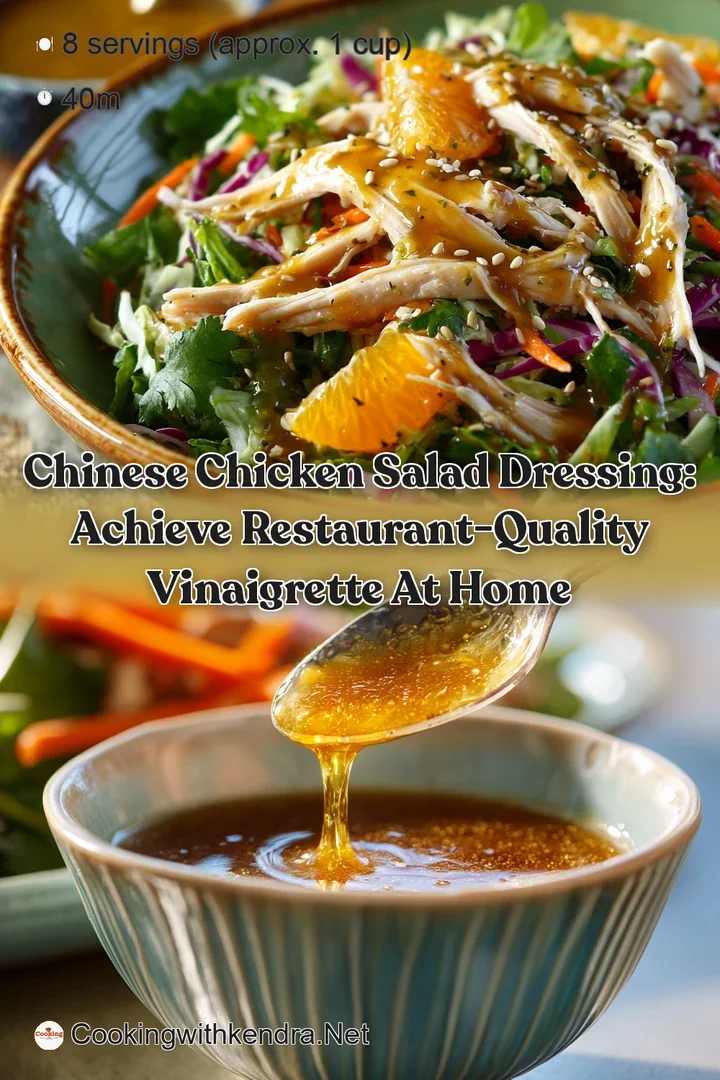
Signature Chinese Chicken Salad Dressing Recipe
Ingredients:
Instructions:
Nutrition Facts:
| Calories | 370 kcal |
|---|---|
| Protein | 3.1 g |
| Fat | 26.8 g |
| Carbs | 22.0 g |
