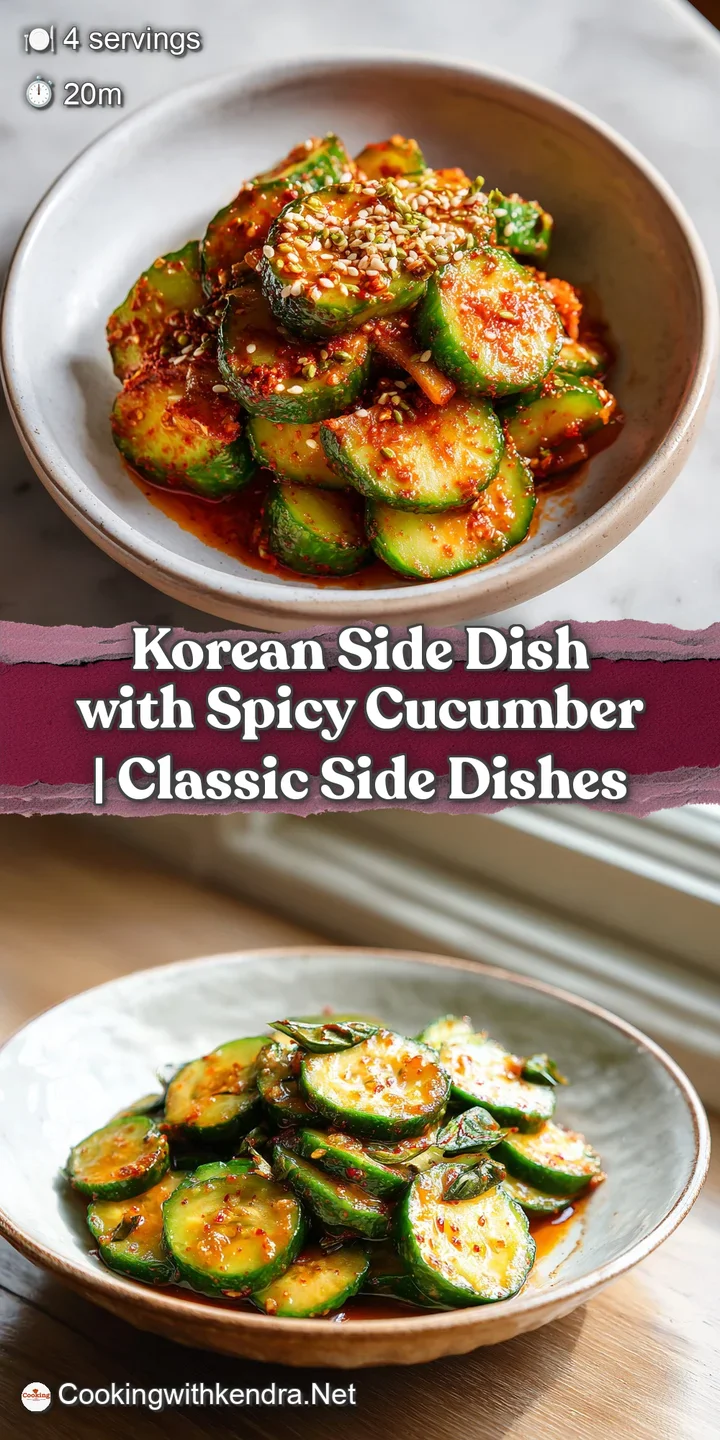
Korean Side Dish with Spicy Cucumber: Shatteringly Crisp
- Time: Active 10 minutes, Passive 10 minutes, Total 20 minutes
- Flavor/Texture Hook: A vibrant, shatteringly crisp bite with a slow building neon red heat.
- Perfect for: A dynamic addition to Asian Fusion dinner parties or a high impact meal prep side.
- Modern Korean Side Dish with Spicy Cucumber
- The Secret Behind Shatteringly Crisp Textures
- Essential Timing for Your Cucumber Prep
- Curating the Finest Asian Fusion Ingredients
- Minimalist Tools for Maximum Visual Impact
- Executing the Precise Triple Action Process
- Avoiding Common Pitfalls for Better Results
- Dynamic Variations for Any Occasion
- Maintaining Integrity During Short-Term Storage
- Stunning Presentation for Modern Dinner Tables
- Recipe FAQs
- 📝 Recipe Card
Modern Korean Side Dish with Spicy Cucumber
Did you know that the secret to a high end Korean restaurant’s cucumber salad isn't actually the spice level, but the moisture management? Most home cooks toss raw vegetables into a dressing and wonder why they're swimming in a puddle of flavorless water five minutes later.
The difference between a soggy mess and a professional grade side dish lies entirely in how you manipulate the cellular structure of the vegetable before it ever touches the chili paste.
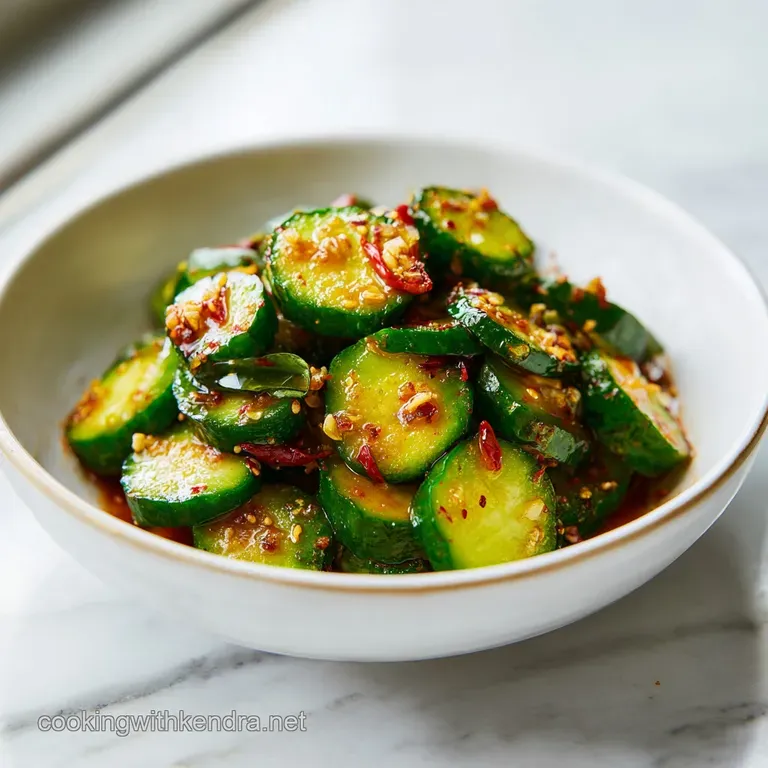
This Korean Side Dish with Spicy Cucumber is designed to be the vibrant centerpiece of a modern table. We are going for a look that is neon red, glossy, and architecturally sound on the plate. When you bite into these 1/4 inch rounds, you shouldn't just taste the heat; you should hear a distinct snap.
That sound is the hallmark of a cook who understands the physics of salt and the chemistry of fermentation based pastes.
We are moving away from the heavy, oil laden sides of the past and leaning into something punchy and sharp. By using a specific ratio of Gochugaru to Gochujang, we achieve a depth of flavor that hits different parts of the palate at different times.
The vinegar provides an immediate brightness, while the fermented chili paste lingers with an earthy, savory umami. Trust me, once you master the "tacky dry" technique, your salads will never be the same.
The Secret Behind Shatteringly Crisp Textures
Osmotic Draw: Applying 1 tsp of sea salt to the cucumber rounds creates a high solute environment outside the cell walls. This forces the vegetable to purge its internal water, which prevents the final dressing from becoming diluted and runny.
Capsaicin Suspension: The thick paste created by whisking Gochujang and Gochugaru together acts as a protective barrier. This concentrated medium ensures the spices cling to the surface of the cucumber rather than sliding off into the bottom of the bowl.
Acidic Brightness: Rice vinegar doesn't just add tang; it physically tightens the pectin in the cucumber skins. This chemical reaction helps maintain that snappy, "fresh picked" mouthfeel even after the vegetable has been sliced and marinated.
Umami Layering: By combining fermented soy sauce with toasted sesame oil, we create a complex fat and salt profile. This rounds out the sharp edges of the vinegar and sugar, giving the dish a professional, balanced finish.
| Method | Prep Time | Resulting Texture | Visual Appeal |
|---|---|---|---|
| Fast Method | 5 minutes | Soft and slightly watery | Dull, translucent edges |
| Classic Method | 20 minutes | Shatteringly crisp and firm | Vibrant, glossy, neon red |
| This Recipe | 20 minutes | Snap fresh and tacky | Dynamic, restaurant quality |
The table above illustrates why we don't skip the salting phase. While the fast method might save you fifteen minutes, the loss in texture is significant. If you are serving this for a special occasion, the visual difference alone is worth the extra effort. For another high impact vegetable dish that benefits from proper moisture control, you might enjoy my Traditional Halupki recipe which uses similar principles to balance hearty flavors.
Essential Timing for Your Cucumber Prep
| Ingredient | Science Role | Pro Secret |
|---|---|---|
| Gochugaru | Provides textural heat and vibrant red color | Toast lightly in a dry pan for 30 seconds for a smokier profile |
| Rice Vinegar | Softens the harshness of the garlic | Use a brand like Marukan for the most consistent acidity levels |
| Toasted Sesame Oil | Acts as the flavor carrier for fat soluble vitamins | Always add this last to keep the aromatics from being muted by other liquids |
| Sea Salt | Initiates the osmosis process | Use fine sea salt for faster, more even moisture extraction |
Curating the Finest Asian Fusion Ingredients
To create a stunning visual experience, every component must be chosen with intention. We aren't just looking for "cucumbers"; we are looking for specific varieties that offer the least amount of seeds and the highest skin to flesh ratio.
- 2 Large Kirby or Persian Cucumbers (approx. 350g): Sliced into 1/4 inch rounds. Why this? These varieties have thinner skins and smaller seeds, ensuring a better crunch.
- 1 tsp Sea Salt: Fine grain preferred. Why this? It dissolves quickly to start pulling moisture out immediately.
- 1/2 Small White Onion (approx. 40g): Thinly sliced. Why this? Provides a sharp, crunchy contrast to the cooling cucumber.
- 2 Green Onions: Chopped into 1 inch lengths. Why this? Long segments look more professional and dynamic than tiny rings.
- 2 tbsp Gochugaru (Korean red chili flakes): Authentic sun dried flakes. Why this? Essential for the signature smoky heat and "bright red" aesthetic.
- 1 tbsp Gochujang (Korean red chili paste): Fermented chili paste. Why this? Adds the necessary body and fermented umami to the dressing paste.
- 1.5 tbsp Rice Vinegar: Unseasoned. Why this? Controls the acidity without adding hidden sugars found in "seasoned" versions.
- 1 tbsp Soy Sauce: Regular or light soy. Why this? Provides the salt depth that raw salt cannot achieve alone.
- 1 tsp Granulated Sugar: White sugar. Why this? Balances the fermentation funk of the Gochujang perfectly.
- 1 clove Garlic: Finely minced. Why this? Fresh garlic is non negotiable for that sharp, aromatic punch.
- 1 tsp Toasted Sesame Oil: high-quality. Why this? Adds a velvety mouthfeel and nutty aroma.
- 1 tsp Toasted Sesame Seeds: For garnish. Why this? Adds a final textural pop and visual "finished" look.
Minimalist Tools for Maximum Visual Impact
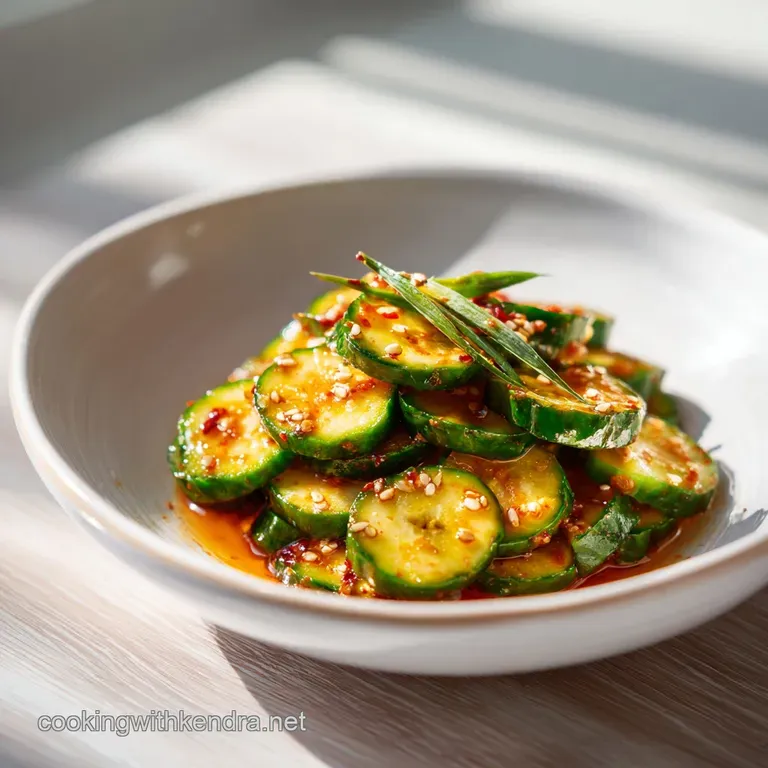
When preparing this Korean Side Dish with Spicy Cucumber, your choice of tools is just as important as the ingredients. A mandoline such as the Benriner is ideal for ensuring every single slice of cucumber is exactly 1/4 inch thick.
If your slices are uneven, they will salt unevenly, resulting in some pieces being too salty and others remaining soggy.
You will also need a stainless steel colander and a large glass mixing bowl. I prefer glass because it allows you to see if the dressing is fully emulsified and coated on every piece. A silicone spatula is better than a spoon for folding the vegetables into the paste, as it won't bruise the delicate cucumber flesh.
Finally, keep a stack of high-quality paper towels or a dedicated lint free kitchen towel nearby. You need to get those cucumbers "tacky dry," and that requires a firm hand and a dry surface.
Executing the Precise Triple Action Process
- Slice the 350g of cucumbers into consistent 1/4 inch rounds using a sharp knife or mandoline.
- Place the slices in a colander and toss thoroughly with 1 tsp sea salt. Let them sit for exactly 10 minutes until the surface looks beaded with sweat. Note: This step is the difference between a crisp salad and a watery one.
- After the 10 minutes are up, dump the cucumbers onto several layers of paper towels. Pat them firmly and repeatedly until they feel tacky and dry to the touch.
- In your large glass mixing bowl, combine 2 tbsp Gochugaru, 1 tbsp Gochujang, 1.5 tbsp rice vinegar, 1 tbsp soy sauce, 1 tsp sugar, and 1 finely minced garlic clove.
- Whisk these dressing components vigorously until they form a smooth, thick, and glossy paste. Note: If the paste is too thick, a tiny splash of water can help, but avoid thinning it too much.
- Add the dried cucumber slices, 40g of sliced white onions, and the 1 inch lengths of green onions into the bowl.
- Use a silicone spatula to fold the vegetables into the paste gently until every surface is vibrantly coated in red.
- Drizzle the 1 tsp of toasted sesame oil over the top and give it one final, gentle toss.
- Transfer the salad to a clean white plate to let the colors pop, and sprinkle with 1 tsp toasted sesame seeds.
- Serve immediately for the best crunch, or let it chill for 15 minutes until the flavors have melded into the cucumber skins.
Avoiding Common Pitfalls for Better Results
Why is my salad sitting in a pool of water?
This usually happens if the 10 minute salting phase was rushed or if the cucumbers weren't dried properly. If the moisture isn't removed beforehand, the salt in the dressing will continue to pull water out of the cells while it sits on the table.
To fix this, always ensure the cucumbers feel "tacky" rather than slippery before adding the dressing.
Why does the heat feel overwhelming and flat?
If you only taste heat without the complexity, you might be missing the sugar or vinegar balance. The sugar is there to round out the sharp fermented edges of the Gochujang. If it’s too spicy, increase the rice vinegar slightly. For a different flavor profile that still uses these bold Asian elements, you might enjoy pairing this with Crispy Yucca Fries for a unique fusion snack.
| Problem | Root Cause | Solution |
|---|---|---|
| Dressing is too runny | Cucumbers weren't patted dry | Use a cloth towel to squeeze out more moisture next time |
| Too salty | Salt from the first step wasn't absorbed correctly | Rinse the cucumbers quickly after the 10 mins, then pat dry |
| Dull color | Gochugaru is old or oxidized | Store chili flakes in the freezer to maintain vibrant red pigments |
Common Mistakes Checklist
- ✓ Skipping the salting phase (results in a watery dressing).
- ✓ Using "Seasoned" rice vinegar (messes up the sugar to acid ratio).
- ✓ Slicing the cucumbers too thin (they lose their structural integrity).
- ✓ Adding the sesame oil at the beginning (it can prevent the dressing from sticking).
- ✓ Forgetting to mince the garlic finely (nobody wants a big chunk of raw garlic).
Dynamic Variations for Any Occasion
If you want to scale this recipe down for a solo lunch, simply halve the ingredients. For a half batch (175g cucumbers), use a small bowl and reduce the resting time to 7 minutes as the smaller volume loses moisture faster.
If you are scaling up for a party (4x the recipe), do not quadruple the salt for the first step. Use 3 tsp instead of 4 tsp to prevent it from becoming overly seasoned, and work in batches when drying the cucumbers to ensure every round gets direct contact with the towel.
For a "Sweet & Sour" version, double the sugar and rice vinegar, then omit the Gochujang. This results in a much lighter, translucent salad that looks beautiful next to grilled fish. If you want to turn this into a full meal, add 200g of cooked shrimp or shredded chicken.
The spicy paste acts as an incredible marinade for proteins.
| Servings | Cucumber Weight | Pan/Bowl Size | Prep Adjustment |
|---|---|---|---|
| 2 People | 175g | Small glass bowl | Reduce salt time to 7 mins |
| 4 People | 350g | Medium mixing bowl | Follow standard recipe |
| 8 People | 700g | Large catering bowl | Use 3 tsp salt; dry in batches |
Maintaining Integrity During Short Term Storage
This Korean Side Dish with Spicy Cucumber is best enjoyed within 2 hours of making it to experience the maximum crunch. However, you can store it in an airtight container in the fridge for up to 2 days.
Be aware that it will release more liquid the longer it sits, so you may want to give it a quick stir before serving. I don't recommend freezing this dish, as the cellular structure of the cucumber collapses when frozen, leaving you with a mushy texture once thawed.
For zero waste cooking, don't throw away the cucumber ends or the liquid purged during the salting phase. The salty cucumber water can be used as a base for a quick pickling liquid for other scraps, like radish ends or cabbage cores.
The sliced white onion stems can be tossed into a freezer bag for your next batch of vegetable stock.
Stunning Presentation for Modern Dinner Tables
Presentation is everything in modern Asian Fusion. Instead of just dumping the salad into a bowl, try stacking the rounds in a neat, overlapping circular pattern on a flat white plate. The contrast between the neon red dressing and the clean white ceramic creates a high end feel.
Drizzle the sesame oil in a thin, continuous stream right before the plate hits the table so the aroma is fresh.
- State the misconception: "You must peel the cucumbers for a better salad."
- Explain the truth: Actually, the skin provides the necessary structural support for the spicy paste to cling to. Without the skin, the rounds become floppy almost instantly.
- State the misconception: "Gochugaru and Gochujang are interchangeable."
- Explain the truth: They are completely different products. Gochugaru adds textural heat and color, while Gochujang adds fermented body and depth. Using only one will result in a one dimensional flavor.
When serving, ensure the dish is at room temperature or slightly chilled. If it’s too cold, the flavors of the sesame oil and garlic are muted. If it’s too warm, the cucumbers lose that refreshing quality that makes them so addictive.
This dish is designed to be a "dynamic" side it should wake up the palate and prepare it for the next course. Enjoy the crunch!
Recipe FAQs
Is it true I can skip the salting step to save time?
No, this is a common misconception. Skipping the 10-minute salting phase will result in a watery dressing because the cucumber will release its liquid into the bowl after you have already seasoned it.
How to ensure the dressing clings to the cucumbers?
Pat the cucumber slices firmly with paper towels until they feel tacky. Removing surface moisture is critical for the Gochujang and Gochugaru paste to coat the vegetables evenly rather than sliding off.
Can I use seasoned rice vinegar instead of regular?
No, use plain rice vinegar. Seasoned varieties contain added salt and sugar that will throw off the flavor balance of the sauce, which relies on the precise interaction of Gochujang and soy sauce.
How to achieve the perfect texture for the cucumbers?
Slice the rounds exactly 1/4 inch thick. Cutting them too thin causes the vegetable to lose its structural integrity and turn mushy during the salting process.
When should I add the sesame oil?
Drizzle the sesame oil only at the very end. Adding it too early creates a barrier on the cucumber surface that prevents the chili paste from adhering properly. If you enjoyed mastering this specific layering of ingredients, you can see how we apply similar flavor balancing techniques in our other recipes.
How to store leftovers?
Keep in an airtight container in the refrigerator for up to two days. Note that the cucumbers will continue to soften as they marinate, so they are best enjoyed within the first 24 hours.
How to handle the garlic for the best result?
Mince the garlic clove as finely as possible. Since the garlic is served raw, large chunks will provide an unpleasantly sharp bite rather than a subtle, savory base for the dressing.
Spicy Korean Cucumber Salad 2
Ingredients:
Instructions:
Nutrition Facts:
| Calories | 62 kcal |
|---|---|
| Protein | 1.9 g |
| Fat | 2.2 g |
| Carbs | 10.1 g |
| Fiber | 1.2 g |
| Sugar | 3.4 g |
| Sodium | 445 mg |
