The Best Egg Casserole Recipes: Flawless Texture
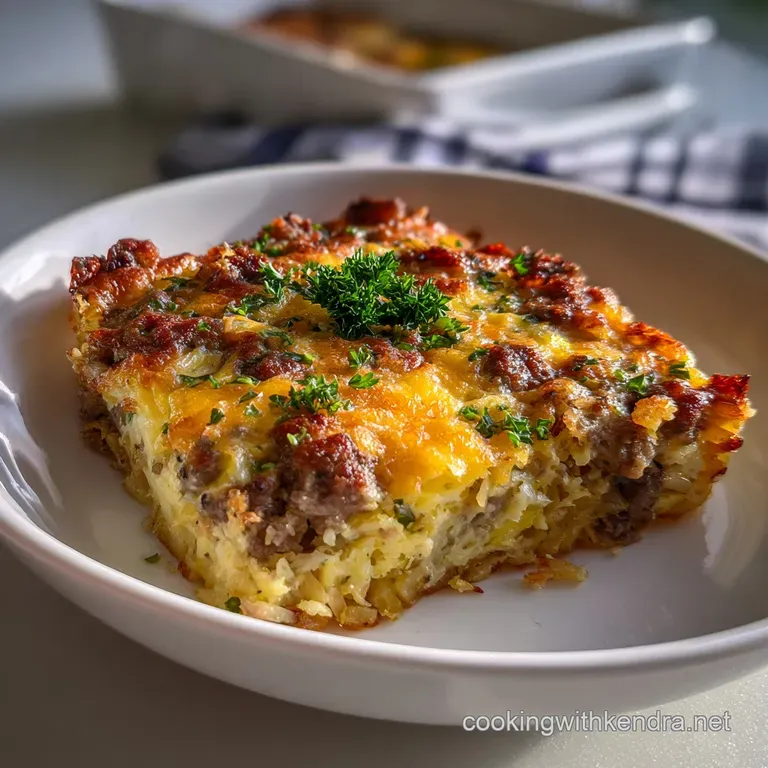
- Effort/Time: 1 hour total (15 minutes active)
- Flavor Hook: Smoked paprika and sharp cheddar create a savory, mahogany-crusted profile.
- Perfect for: Weekend brunch crowds or high-protein, grab-and-go weekday meal prep.
- Engineering the Ultimate Morning Feast: Master the Ultimate egg casserole recipes
- The Structural Mechanics of a Flawless Breakfast Bake
- Precision Thermal Protocol and Temporal Metrics
- The Alchemy of Breakfast: Ingredient Chemistry Breakdown
- Culinary Hardware: Essential Precision Tools
- The Atomic Sequence: Phase-by-Phase Assembly
- Troubleshooting the "Soggy Middle" and Other Failures
- ⚗️ The Scaling Lab: The Physics of Quantity
- Flavor Architecture: Creative Variations and Substitutions
- Preservation and Thermal Recovery: Storage & Reheating
- The Final Presentation: Serving Suggestions
- Recipe FAQs
- 📝 Recipe Card
Engineering the Ultimate Morning Feast: Master the Ultimate egg casserole recipes
There is nothing quite like the financial and emotional sting of hosting a brunch, spending $40 on quality local eggs and sharp cheddar, only to pull a watery, gray, and rubbery mess out of the oven.
I've been there standing in my kitchen while friends waited, staring at a dish where the vegetables had leaked their internal moisture, turning the beautiful hashbrown base into a pale, sodden sponge. It’s an expensive nightmare that ruins both your budget and your reputation as the "cook" of the group.
I destroyed at least four batches of these egg casserole recipes before I realized I was fighting against basic thermodynamics and plant biology. My biggest mistake was rushing the potato preparation; I assumed the oven would evaporate the moisture from frozen hashbrowns. It won't.
I ended up with a layer of potato soup at the bottom of a 9x13 Pyrex dish. It took me three separate attempts to realize that the physics of moisture migration requires a "dry-first" approach to every solid component before the custard ever touches the pan.
The scientific revelation that changed everything for my egg casserole recipes was understanding protein syneresis the process where egg proteins over cook, tighten, and squeeze out water like a wrung out sponge.
By controlling the fat-to-protein ratio with whole milk and sharp cheddar, we create a velvety matrix that suspends the pork sausage and peppers rather than drowning in their juices.
The result isn't just "food"; it's a structural masterpiece with a shattering golden crust and a tender, custard like interior that holds its shape even after reheating.
The Structural Mechanics of a Flawless Breakfast Bake
The success of these egg casserole recipes relies on three specific scientific pillars that prevent the common pitfalls of home baking.
- Starch Retrogradation Control: Thawing and drying the 20 oz shredded hashbrowns prevents excess water from turning the starch into a gummy paste during the baking cycle.
- Protein Matrix Stabilization: Using 12 large eggs creates a dense enough network to support the heavy 1 lb ground pork sausage without the structure collapsing or weeping.
- Maillard Reaction Optimization: Pre-searing the yellow onion and red bell pepper in a Lodge Cast Iron Skillet removes cellular water and develops complex sugars that provide a savory depth.
Precision Thermal Protocol and Temporal Metrics
These egg casserole recipes require strict adherence to temperature and timing to ensure the center reaches the safe coagulation point without the edges becoming rubbery.
- Prep Time: 15 minutes
- Cook Time: 45 minutes
- Total Time: 1 hour
- Yield: 10 servings
The Alchemy of Breakfast: Ingredient Chemistry Breakdown
Every component in these egg casserole recipes serves a functional purpose beyond flavor, contributing to the final structural integrity of the bake.
| Ingredient | Chemical/Physical Role (Science) | The Pro Secret (Why This Matters) |
|---|---|---|
| 12 Large Eggs | Protein coagulation and binding | Provides the structural "glue" that prevents the casserole from crumbling when sliced. |
| 1 lb Ground Pork Sausage | Fat emulsification and umami | The rendered fat lubricates the egg proteins, preventing a dry, rubbery mouthfeel. |
| 20 oz Shredded Hashbrowns | Starch foundation | Acts as a thermal buffer, absorbing excess moisture and providing a base for the custard. |
| 2 cups Sharp Cheddar | Casein protein and lipid density | Adds fat for a velvety texture and creates a Maillard rich crust on the top layer. |
The Protein and Starch Base
- - 1 lb Ground Pork Sausage (Jimmy Dean)
- Why this? High fat-to-lean ratio ensures meat remains tender during the 45 minute bake.
- - 20 oz Shredded Hashbrowns (Ore-Ida)
- Why this? Consistent surface area allows for uniform starch gelatinization and moisture evaporation.
- - 12 Large Eggs (Eggland's Best)
- The lecithin in the yolks acts as a natural emulsifier, binding the whole milk and pork fats.
- - 2 cups Sharp Cheddar (Tillamook)
- Why this? Aged cheddar has lower moisture, preventing the "greasy puddle" effect common with mild cheeses.
The Custard and Aromatics
- - 2 cups Whole Milk
- The 3.25% milkfat is necessary to cushion the egg proteins against the dry heat of the oven.
- - 1 cup Red Bell Pepper
- Finely diced to ensure even distribution and rapid moisture release during the sauté phase.
- - 1/2 cup Yellow Onion
- Minced to provide aromatic sulfur compounds without creating large, slippery textures in the custard.
- - 1/2 tsp Smoked Paprika
- Why this? Oil-soluble compounds in paprika bloom in the sausage fat, coloring the entire bake.
Culinary Hardware: Essential Precision Tools
Using the right equipment prevents uneven heat distribution, which is the primary cause of overcooked edges in egg casserole recipes.
- Lodge 12 inch Cast Iron Skillet: Necessary for searing the sausage and vegetables to achieve over high heat caramelization.
- 9x13-inch Pyrex Glass Baking Dish: Glass conducts heat more slowly than metal, providing a gentler bake for the delicate egg custard.
- Stainless Steel Balloon Whisk: Essential for aerating the 12 large eggs, ensuring the custard is light rather than leaden.
- KitchenAid Digital Thermometer: The only way to guarantee the center has reached the 160°F (71°C) safety mark without over baking.
The Atomic Sequence: Phase-by-Phase Assembly
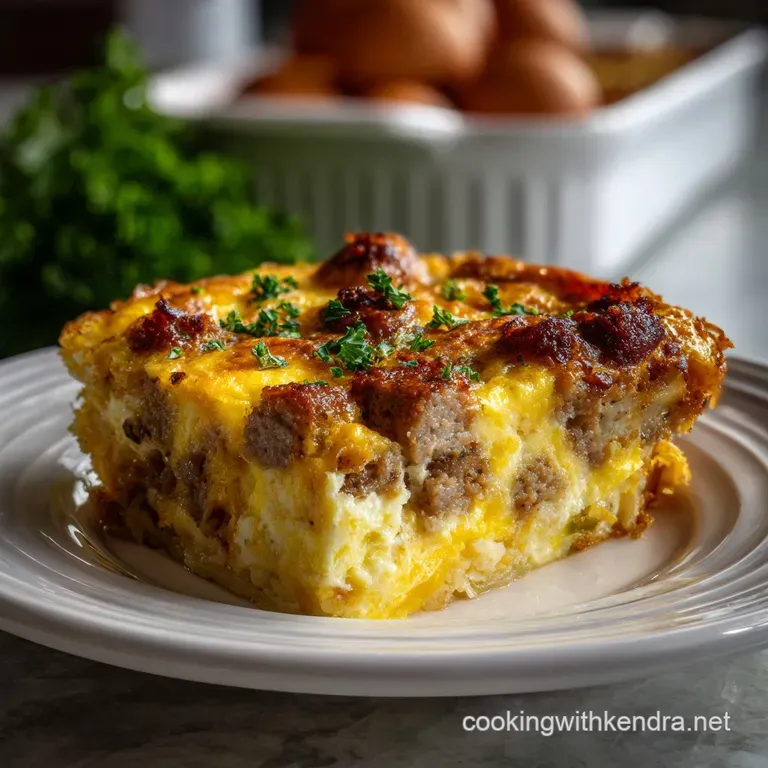
Follow these steps exactly to ensure your egg casserole recipes achieve the perfect balance of a set center and golden edges.
- Preheat the oven to 375°F (190°C) until the internal sensor signals stable heat.
- Brown 1 lb ground pork sausage in a Lodge skillet for 8 minutes until no pink remains and a mahogany crust forms.
- Sauté 1/2 cup minced onion and 1 cup diced red pepper in the sausage fat for 5 minutes until edges are translucent and the raw pungent scent vanishes.
- Pat dry the 20 oz thawed hashbrowns with paper towels until no moisture transfers to the paper. Note: Excess water causes starch gelatinization to fail, leading to sogginess.
- Layer the dried hashbrowns into the bottom of a greased 9x13 dish until the surface is level and even.
- Top the potatoes with the cooked sausage and vegetable mixture until the fat begins to soak into the potato layer.
- Whisk 12 large eggs, 2 cups whole milk, 1 tsp sea salt, 1/2 tsp black pepper, 1/2 tsp smoked paprika, and 1/4 tsp garlic powder for 2 minutes until the liquid is pale yellow and slightly frothy.
- Stir 1 cup of the shredded sharp cheddar into the egg mixture until evenly dispersed.
- Pour the egg mixture over the sausage and potatoes until all crevices are filled and the liquid reaches the top of the solids.
- Bake for 35 minutes until the edges are puffed and a pale golden color.
- Sprinkle the remaining 1 cup of cheddar over the top and bake for 10 more minutes until the cheese bubbles and develops small mahogany spots.
- Rest the casserole for 10 minutes until the center "jiggle" subsides and the structure sets.
Troubleshooting the "Soggy Middle" and Other Failures
The most frustrating part of making egg casserole recipes for brunch is the lack of consistency. If your bake looks perfect on the outside but collapses when sliced, you're likely dealing with a moisture or temperature imbalance.
Why Your Casserole Weeps (Syneresis)
Syneresis occurs when the egg proteins are heated too quickly or for too long. They tighten into a firm mesh, squeezing out the 2 cups of whole milk like a sponge. This results in a pool of water at the bottom and a rubbery texture on top.
To prevent this, ensure your oven is accurately calibrated and never skip the resting period.
| Problem | Root Cause | The Fix | Pro Protocol |
|---|---|---|---|
| Watery base | Wet hashbrowns or raw peppers | Thaw and squeeze potatoes dry; sauté peppers | Use a clean kitchen towel to wring out hashbrowns |
| Rubbery eggs | Over baking/High heat | Pull at 160°F (71°C) internal temp | The "Carryover Effect": Pull when the center still slightly jiggles |
| Bland flavor | Inadequate seasoning of potatoes | Increase salt or use smoked salts | Salt the potatoes separately before layering |
Overcooked, Rubbery Edges
This is a classic thermodynamics problem. The edges of the 9x13 dish are in direct contact with the hot air and the glass, while the center relies on slower conductive heat. If the edges are brown before the center sets, your oven temperature is likely too high. Just as when making a Chicken Broccoli Rice recipe, the density of the ingredients dictates how heat moves through the dish.
⚗️ The Scaling Lab: The Physics of Quantity
When you need to double egg casserole recipes for a large crowd, you cannot simply double everything and expect the same results. Physics changes with volume.
- The Evaporation Paradox: If you double the recipe into a deeper pan rather than two separate pans, the surface area-to-volume ratio drops. This prevents moisture from escaping, leading to a "soupy" center. Protocol: Always use two 9x13 pans rather than one deep catering pan.
- Flavor Saturation: Spices like smoked paprika and garlic powder become more potent in larger batches. Scale these to 1.5x rather than 2x to avoid an overpowering, bitter profile.
- Thermal Mass Delay: Doubling the mass in one oven will drop the oven temperature significantly when the cold dishes are inserted. Fix: Increase the initial oven temperature by 15°F for the first 10 minutes, then return to 375°F.
- Carry Over Cooking: A larger mass retains more heat. Pull the casserole at 155°F (68°C) if doubling, as the internal temp will climb more aggressively during the rest.
Flavor Architecture: Creative Variations and Substitutions
These egg casserole recipes are a canvas for various flavor profiles, provided you maintain the liquid-to-solid ratio.
| Original Ingredient | Substitute | Why It Works |
|---|---|---|
| 1 lb Pork Sausage | 1 lb Ground Turkey | Leaner, but needs 1 tbsp olive oil to maintain fat levels. |
| 2 cups Whole Milk | 2 cups Heavy Cream | Note: Creates a much richer, souffle like texture; higher calorie count. |
| Sharp Cheddar | Pepper Jack | Same melting point but adds capsaicin heat. |
| Red Bell Pepper | Sautéed Spinach | Note: Must be squeezed bone dry to avoid green liquid bleeding. |
The Southwestern Zest
To pivot the flavor profile, swap the smoked paprika for 1 tbsp of chili powder and add a 4 oz can of diced green chiles (drained). This version of healthy egg casserole recipes pairs well with fresh avocado and cilantro.
Vegetarian Egg Casserole Twist
Replace the pork sausage with 1 lb of sautéed mushrooms (cremini or shiitake). Mushrooms provide the necessary umami through glutamate. However, mushrooms contain 90% water; you must sauté them until they are deeply browned and "hissing" stops before adding them to the bake. If you enjoy this savory depth, you might also appreciate the complexity of a well made Eggnog recipe during the holidays.
Preservation and Thermal Recovery: Storage & Reheating
Properly storing egg casserole recipes is the difference between a delicious Tuesday lunch and a soggy disappointment.
- Fridge: Store in an airtight container for up to 4 days. The starch in the potatoes will undergo "retrogradation," becoming firmer over time.
- Freeze: You can freeze these egg casserole recipes for up to 2 months. Slice into individual portions first. Wrap each slice tightly in plastic wrap to prevent ice crystals from damaging the protein structure.
- Reheat: Avoid the microwave if possible, as it vibrates water molecules, making the eggs rubbery. Reheat in a 350°F (175°C) oven for 10 15 minutes to crisp the potato base.
💡 ZERO WASTE PHILOSOPHY
Don't discard the fat rendered from the 1 lb ground pork sausage. Transform: Use 1 tbsp of it to grease the 9x13 baking dish instead of butter. Science: The sausage fat has a higher smoke point and contains fat-soluble flavor compounds that season the bottom layer of hashbrowns as they bake.
The Final Presentation: Serving Suggestions
To balance the high fat and protein content of these egg casserole recipes, serve with an acidic or fresh component.
- Acidity: A side of fresh fruit or a simple arugula salad with lemon vinaigrette cuts through the richness of the 2 cups of sharp cheddar.
- Texture: Top with sliced scallions or chives immediately before serving for a hit of raw, sharp allium crunch.
- Sauce: A streak of hot sauce or a dollop of Greek yogurt (as a sour cream sub) provides the moisture needed if the edges got a bit too crisp.
Whether you are preparing these egg casserole recipes for brunch or as a part of a meal prep routine, focusing on the science of moisture and heat will ensure a velvety, mahogany crusted result every single time.
Trust the process, dry those potatoes, and let the Maillard reaction do the heavy lifting for your flavor profile.

Recipe FAQs
What is the ideal internal temperature for a fully cooked egg casserole?
160°F (71°C). This point ensures all Salmonella pathogens are destroyed through thermal deactivation. Cooking past this temperature causes proteins to tighten excessively, leading to a rubbery texture.
Can I use skim milk instead of whole milk in the custard?
No. Fat content is crucial for texture. Whole milk provides necessary lipid cushioning around egg proteins to prevent them from seizing up and becoming dry during the 45-minute bake time.
Why is the bottom of my casserole soggy even though I used frozen hashbrowns?
Excess liquid must be removed before baking solids. Frozen potato moisture converts to steam, which is trapped by the surrounding egg matrix, causing starch gelatinization failure.
- Squeeze thawed potatoes thoroughly
- Pre-sear vegetables to release initial water
- Ensure oven is fully preheated to 375°F
Is it better to use fresh grated cheese or pre-shredded cheese?
Fresh grated cheese melts smoother. Pre-shredded varieties contain cellulose or potato starch coatings which inhibit proper fat emulsification, leading to a slightly greasy surface rather than a uniform melt.
Can I substitute turkey sausage for the pork sausage?
Yes, but compensate for lost fat content. Turkey sausage is significantly leaner; adding 1 tablespoon of olive oil during the browning phase ensures you maintain enough lubricant for the egg proteins.
Myth: Egg casseroles are best baked low and slow for a creamier result.
Myth: Baking low and slow risks undercooking the center mass while drying out the edges excessively. Reality: A medium high bake (375°F) balanced with proper resting achieves optimal coagulation without structural compromise.
What technique prevents the heavy sausage from sinking to the bottom?
Stirring the meat into the final custard layer. If you are attempting a single layer bake, ensuring you stir the cooked sausage into the egg mixture (not just sprinkling it on top) helps suspend the particles. If you master this suspension technique, the same principle helps create stable batters in recipes like our Sausage Egg Muffins My Easy Homemade Egg McMuffin.
Structurally Sound Egg Casserole
Ingredients:
Instructions:
Nutrition Facts:
| Calories | 357 kcal |
|---|---|
| Protein | 21.4 g |
| Fat | 22.6 g |
| Carbs | 13.8 g |
| Fiber | 1.2 g |
| Sugar | 3.1 g |
| Sodium | 685 mg |
