Chicken Dumpling Filling: the Velvety, Restaurant-Quality Jiaozi Secret
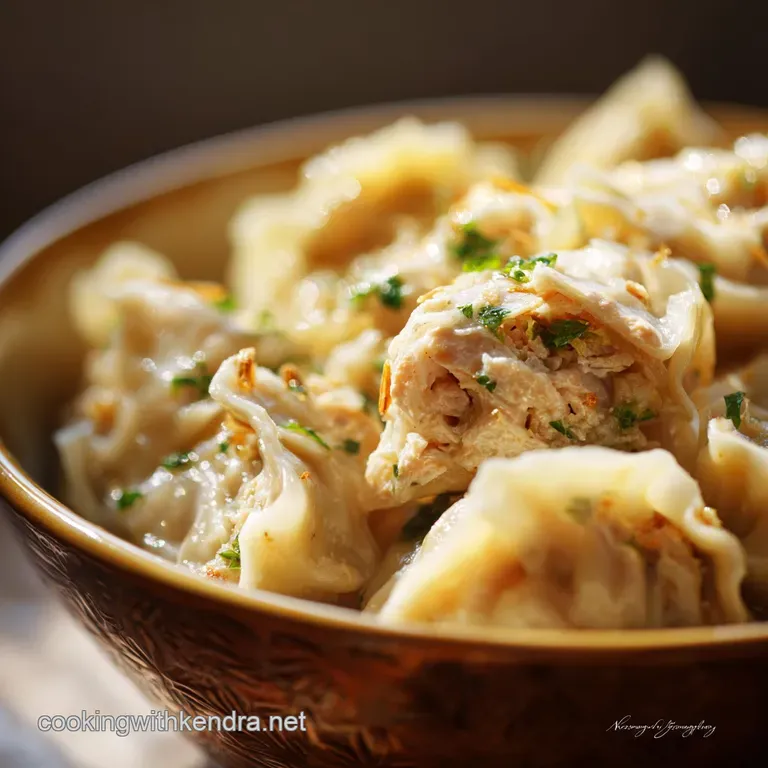
- Welcome to the Secret of Velvety Chicken Dumpling Filling
- The Science of Succulence: Why This Filling Stays Moist
- Essential Ingredients for the Perfect Chicken Dumpling Filling
- Mastering the Velvety Texture: Step-by-Step Mixing Guide
- Expert Chef’s Tips for Troubleshooting Your Filling
- Storing and Freezing Prepared Chicken Dumpling Filling
- Perfect Pairings: Serving Suggestions for Your Jiaozi
- Recipe FAQs
- 📝 Recipe Card
Welcome to the Secret of Velvety Chicken Dumpling Filling
Have you ever bitten into a homemade dumpling only to find the inside dry, crumbly, and totally flavorless? Ugh, me too! That moment ruins all the effort you put into wrapping, folding, and steaming.
The perfect chicken dumpling filling should be moist, slightly bouncy, and burst with aromatic ginger and juicy flavor, not sigh sadly when you bite it.
I spent years making average chicken gyoza filling before I finally nailed the technique, realizing the secret wasn't the seasoning; it was the science.
This method uses a specific, ancient Chinese technique to bind the chicken meat with liquid, creating an emulsified, velvety texture that stays juicy no matter how you cook the wrapper. This recipe for chicken dumpling filling is the single best kitchen cheat I’ve ever learned.
Seriously, trust me when I say this is the ultimate chicken wonton filling base. It’s surprisingly simple to master, and once you get that silky texture right, you’ll never look back. Let's crack on and get this perfect, savory filling mixed up.
The Science of Succulence: Why This Filling Stays Moist
The Magic of Jiaozi: Texture vs. Flavour Balance
We aren't just dumping ingredients into a bowl here; we are engineering texture. The traditional Chinese chicken dumpling filling emphasizes a springy, almost bouncy interior (often called Q or kou gan ).
Achieving this is all about proper emulsification, ensuring the fat, protein, and liquid are completely bonded before cooking.
What Makes a Professional Grade Filling?
It’s all about moisture retention, plain and simple. We want the filling to release flavor upon biting, not release a sad puff of dry steam. When you use ground chicken, especially the leaner cuts, you risk having the moisture drain away.
This recipe fixes that by forcing the chicken to absorb liquid before it gets wrapped.
A Quick Look at the Recipe Timeline
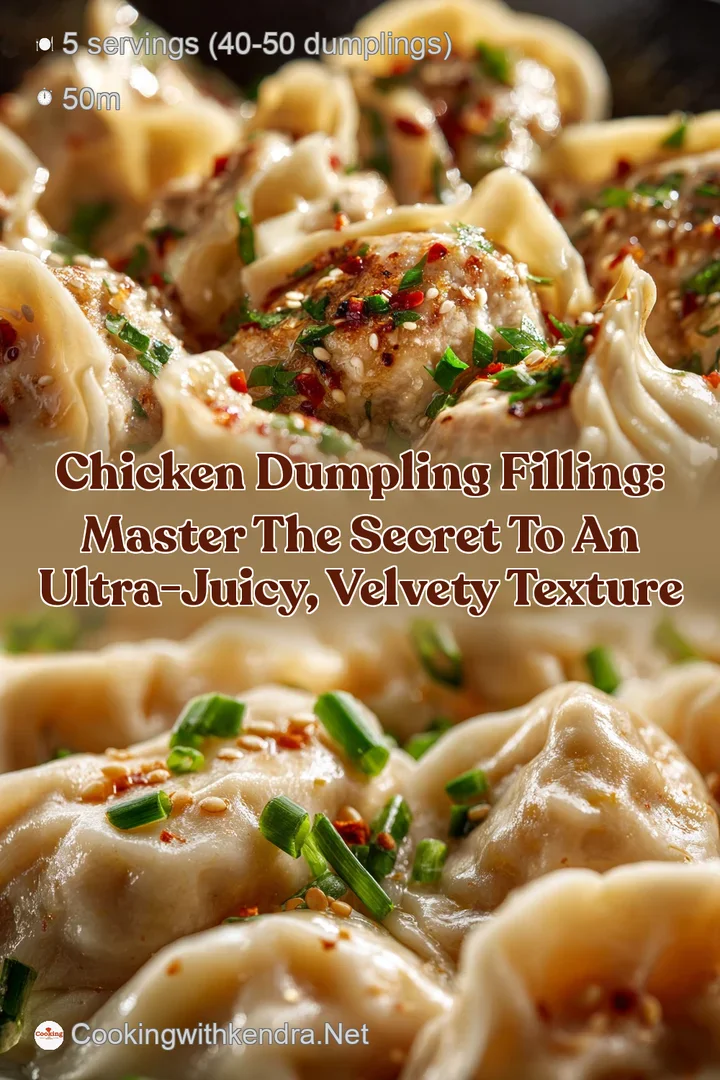
Yes, it takes 50 minutes total, but most of that time is mandatory chilling that’s time you can spend binge watching a show or prepping your wrappers. The active mixing part is super fast.
This delicious, juicy chicken dumpling filling is worth the tiny bit of patience required for chilling.
Binding the Mixture: The Water Absorption Technique
This is the non-negotiable step: adding cold liquid (broth or water) slowly while whipping the mixture in one direction. Why? You are activating the proteins, allowing them to stretch and bind the liquid like a sponge.
This emulsification prevents the filling from shrinking or drying out when it hits the heat, guaranteeing that velvety, professional texture every single time.
Optimizing the Fat-to-Lean Ratio for Juiciness
We use ground chicken thigh because it has enough fat to provide flavor and mouthfeel. If you use overly lean breast meat, the final product will always be dry, even with the water binding technique. Sometimes, you just need a little fat for a truly amazing meal, but if you’re concerned about overall calorie counts, remember you can always make a comforting bowl of Keto White Chicken Chili: Creamy, Cozy Carb Conscious Comfort another day.
The Role of Ginger and Spring Onion in Brightening Flavour
Ginger is non-negotiable in an authentic chicken dumpling filling recipe Chinese style. It provides a sharp, warm contrast to the richness of the chicken and the savory soy sauce. The fresh spring onion adds a crucial punch of green onion sharpness right before cooking.
Essential Ingredients for the Perfect Chicken Dumpling Filling
Choosing the Best Cut for Optimal Velvety Texture
I know people love ground breast meat, but for this specific application, we need flavor and fat. Ground chicken thigh is truly the gold standard for this chicken gyoza filling . The little bit of extra fat melts perfectly into the mixture during cooking, keeping everything incredibly moist.
Aromatics: Preparing the Fresh Ginger and Scallions
Do not skimp on the fresh ginger. You need that sharp, fragrant kick to cut through the richness. Grating the ginger is far better than finely chopping it, as grating releases more juice and ensures the pieces disappear smoothly into the filling.
For the scallions, use only the green parts; the white part tends to be a bit harsh.
Key Pantry Seasonings and Umami Boosters
The core of our flavor comes from soy sauce, toasted sesame oil, and white pepper. White pepper provides that classic, slightly subtle heat you find in Chinese cuisine it is essential and cannot be substituted with black pepper.
The optional oyster sauce adds a beautiful, rich depth and sweetness (it’s pure umami!).
Necessary Substitutions for Dietary Needs
I’m a big believer in making recipes work for you . Don't have one thing? No problem, swap it out!
| Ingredient | Role | Viable Substitute |
|---|---|---|
| Ground Chicken Thigh | Main Protein/Fat | Ground pork shoulder (20% fat) or ground turkey (add 1 Tbsp extra oil). |
| Napa Cabbage | Texture/Moisture | Finely grated zucchini (must squeeze moisture out!) or finely shredded bok choy. |
| Oyster Sauce | Umami/Sweetness | Hoisin sauce (use half the amount) or a vegetarian "oyster" sauce made from mushrooms. |
| Cornstarch | Binder/Emulsifier | Potato starch or tapioca starch work perfectly; use the same amount. |
| Soy Sauce | Salinity/Umami | Tamari (for gluten-free) or Coconut Aminos (note: may require extra salt). |
Mastering the Velvety Texture: step-by-step Mixing Guide
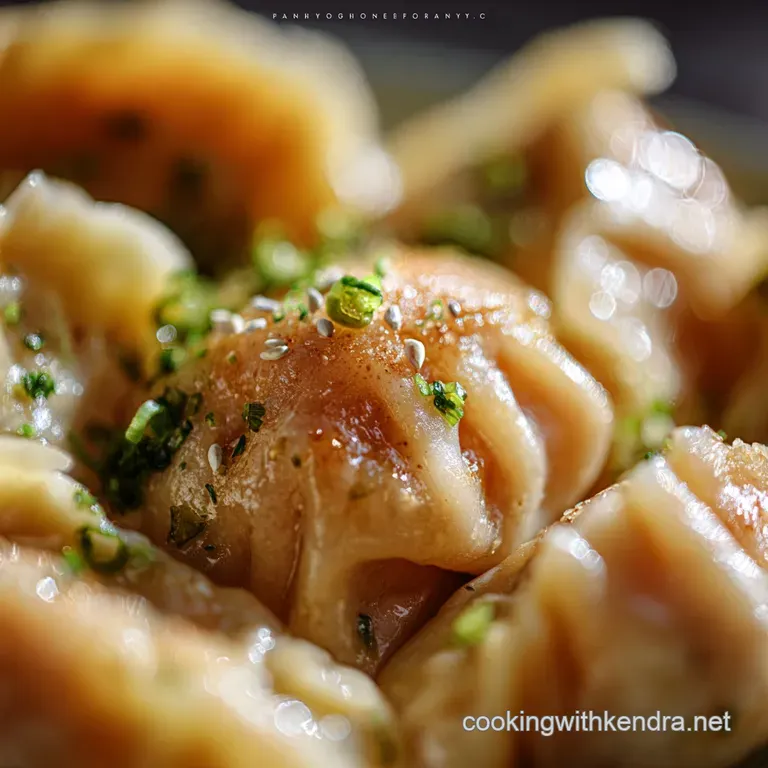
Listen up, this is where most people mess up their chicken dumpling filling . We need muscle, patience, and consistency.
Preparing the Base Ingredients and Aromatics
First, take the time to properly prep your Napa cabbage. Sprinkle it with a pinch of salt, let it weep for five minutes, and then squeeze every single drop of moisture out of it. Mix the bone dry cabbage with the ground chicken, grated ginger, minced garlic, and scallions in a large bowl.
The Critical Step: Incorporating Water (The Binding Process)
In a separate cup, whisk your cornstarch into the broth/water until completely dissolved. Pour the liquid mixture over the seasoned meat base. Now, put some effort into this! Start mixing the filling vigorously, using a strong wooden spoon or a gloved hand.
Chef's Note: You must stir the filling only in one direction (e.g., clockwise) throughout this entire binding process. This helps the chicken proteins absorb the liquid and prevents the filling from becoming grainy or wet.
Mixing Technique: Whipping the Filling Clockwise
Keep stirring in that single direction for about three to five minutes. The mixture will initially look sloppy, but keep going! You are whipping air and liquid into the meat. It should eventually look homogenous, sticky, and glossy, clinging tightly to the sides of the bowl. This is what we call the "velvet" texture.
The Resting Period: Essential for Flavour Integration
Once you’ve achieved the sticky, velvety texture, stir in the toasted sesame oil always at the very end to preserve its fragrance. Cover the bowl and let the chicken dumpling filling chill in the fridge for at least 30 minutes.
This rest period firms up the mixture, making it much easier to handle and wrap without tears.
Expert Chef’s Tips for Troubleshooting Your Filling
Mistake 1: Why Your Filling Tastes Dry (Lack of Binding)
If you mixed your chicken dumpling filling like you were making meatloaf, stirring back and forth, you likely broke the emulsification. If the filling feels wet instead of sticky after chilling, you didn't stir long enough in one direction to bind the liquid. The fix?
Put the filling back in the bowl and continue whipping vigorously until it transforms into that dense, sticky paste. If your mixture ends up dry and crumbly, remember that feeling of disappointment; it's similar to when you accidentally overcook the base for your Super Bowl Foods: Easy Ultimate BBQ Pulled Chicken Totchos .
How to Test the Consistency Before Wrapping
The chilling process is critical. When you remove the bowl, the mixture should feel firm enough that you can easily roll a spoonful of it between your palms without it sticking excessively. If it’s still too sloppy, you’ll struggle wrapping, and the wrappers will tear.
Adjusting Seasoning for Maximum Umami Punch
You absolutely, positively must perform a seasoning test. Take a teaspoon of the filling, flatten it into a small patty, and pan-fry it in a tiny bit of oil until cooked through. Taste it! Does it need more salt? More ginger? Adjust the main batch immediately before chilling.
Don't skip this, or you risk wrapping 50 bland dumplings.
Storing and Freezing Prepared Chicken Dumpling Filling
Refrigerating Unused Mixture Safely
This chicken wonton filling holds up beautifully in the fridge. Place it in an airtight container, and it will stay fresh and ready to use for 2 to 3 days. If you're planning a massive dumpling assembly line, you can prepare the filling up to a day in advance.
Best Practices for Freezing the Raw Filling
Yes, you can freeze the prepared, uncooked chicken dumpling filling ! Place the mixture into a heavy duty freezer bag, press out all the air, and flatten it into a thin, uniform layer. This maximizes surface area for quick thawing. Label it with the date. It lasts wonderfully for up to 3 months.
Thawing and Preparing Frozen Filling for Use
Thaw frozen filling slowly overnight in the refrigerator. Never thaw it at room temperature. Once thawed, give it one final, quick clockwise mix with a spoon before using it to ensure the texture hasn't separated during the process.
Perfect Pairings: Serving Suggestions for Your Jiaozi
Once your beautiful dumplings are wrapped and cooked (steamed or pan-fried works great!), all they need is a vibrant dipping sauce. My go-to is 3 parts black vinegar, 1 part soy sauce, a tiny splash of toasted sesame oil, and a generous teaspoon of chili oil with crunchy sediment.
That classic tangy, spicy balance is everything.
You can also steam your dumplings alongside something fresh and green, like blanched bok choy tossed with garlic. For a truly hearty meal, serve these alongside a massive batch of Smashed Cucumber Salad to cut through the richness. These little pockets of flavor make an excellent appetizer before a main event, perhaps following up with a big family style dish like our Football Party Foods: The Ultra Cheesy Chicken Chorizo Cob Loaf if you're hosting a crowd.
Recipe FAQs
Why is my dumpling filling dry and crumbly after cooking?
Dryness is usually caused by insufficient hydration or using overly lean meat. To achieve the "velvety" texture, ensure you slowly incorporate the liquid (water or broth) into the meat until it looks emulsified and sticky, which traps moisture effectively during steaming or frying.
Additionally, always use fattier chicken thigh meat over lean chicken breast for the best results.
Can I prepare the chicken filling mixture ahead of time?
Yes, preparing the filling in advance is highly recommended as the flavors benefit significantly from resting. You can mix the filling and store it tightly covered in the refrigerator for up to 24 hours before you plan to wrap the dumplings. If you rest it for more than 4 hours, give it a quick stir before using.
My filling mixture seems too loose or watery. What should I do to bind it?
The key to proper binding is adding liquid slowly while mixing vigorously in only one direction until the meat absorbs the liquid and becomes sticky. If the mixture remains too loose, stir in one to two teaspoons of cornstarch or potato starch.
This addition will help absorb excess moisture and ensure the filling holds its shape when cooked.
I want a spicier filling. How can I increase the heat without compromising the texture?
You can easily increase the heat by incorporating finely minced fresh chili, such as bird's eye chili, directly into the meat mixture during the initial preparation phase. Alternatively, adding a half teaspoon of high-quality chili oil, which contains flavorful solids, provides depth and heat while contributing a small amount of necessary fat.
Can I use a different type of ground meat, like pork or turkey, instead of chicken?
Yes, this flavor profile works beautifully with ground pork, particularly a mix of 70% lean and 30% fat for maximum juiciness. If substituting turkey, ensure you use ground turkey thigh, as ground turkey breast is too lean and will require additional oil to prevent the dumpling filling from drying out.
Is it safe to freeze the dumplings after I have wrapped them?
Absolutely, freezing is the standard method for preparing dumplings in large batches. Arrange the uncooked, finished dumplings on a baking sheet lined with parchment paper, ensuring they do not touch, and freeze them until rock solid.
Once frozen, transfer them to an airtight container or freezer bag for long term storage of up to three months.
How can I adapt this chicken dumpling filling recipe to be gluten-free?
The majority of this recipe is naturally gluten-free; the only ingredient of concern is typically the soy sauce. Simply substitute standard soy sauce with Tamari or a certified gluten-free soy sauce alternative to maintain the essential salty and savory umami profile.
Ensure any added starches for binding are also certified gluten-free.
Velvety Chicken Dumpling Filling Secret
Ingredients:
Instructions:
Nutrition Facts:
| Calories | 64 kcal |
|---|---|
| Protein | 3.1 g |
| Fat | 1.6 g |
| Carbs | 9.4 g |
