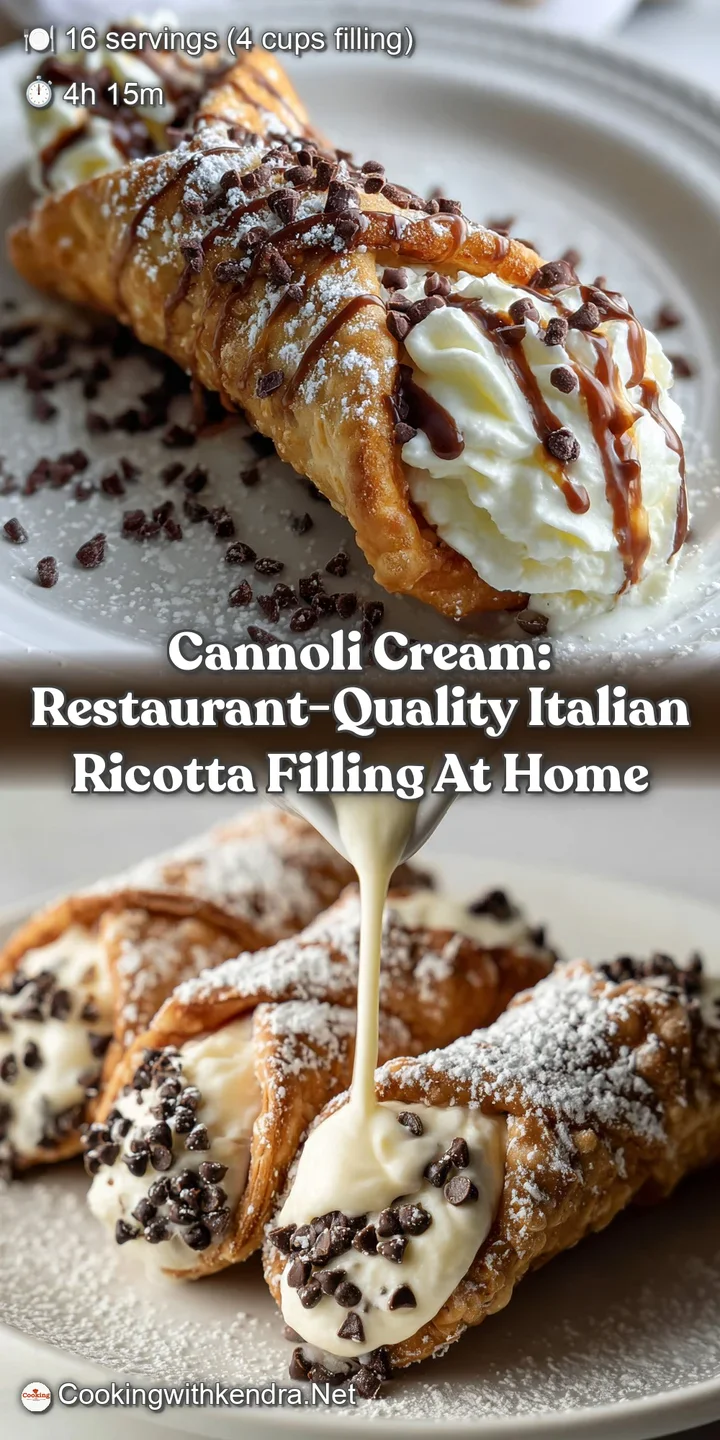
Cannoli Cream: the Perfect Italian Ricotta Filling

- The Art of Sicilian Sweets: Mastering Ricotta Filling
- The Science of Smoothness: Achieving the Velvety Texture
- Essential Components for Authentic Cannoli Filling
- Methodical Prep: Creating Your Cream Base
- Troubleshooting and Professional Cannoli Cream Secrets
- Maximizing Freshness: Preparation and Storage of Ricotta Filling
- Beyond the Shell: Creative Ways to Serve Your Ricotta Cream
- Recipe FAQs
- 📝 Recipe Card
The Art of Sicilian Sweets: Mastering Ricotta Filling
That rich, tangy aroma of fresh ricotta mixed with sweet vanilla? That’s the smell of true Italian dessert comfort, and it’s exactly what you get when you make this classic Cannoli Cream . It should be silken, never gritty, and absolutely addictive.
Making homemade Cannoli Cream might sound intimidating, but I promise you, this filling is a weeknight miracle once you master one simple prep step. It uses surprisingly inexpensive ingredients and instantly transports your tastebuds straight to a tiny Sicilian bakery.
I used to fail miserably at this, ending up with a sweet, grainy soup because I was impatient. But I cracked the code, and I'm sharing my non-negotiable secrets for the absolute best authentic Cannoli Cream filling recipe you will ever need.
The Science of Smoothness: Achieving the Velvety Texture
This simple Cannoli Cream recipe works because we handle the ricotta like the delicate cheese it is. The secret to stability isn't complicated; it's just about ditching the excess water.
If you skip draining, you’ll end up with a filling that leaks out of the shells and makes everything soggy. We want solid cream, not watery mush.
By combining whole milk ricotta, a tiny bit of granulated sugar for structure, and then whipping it high and fast, we create an emulsification that traps air. This prevents separation and gives the final Cannoli Cream that gorgeous, velvety mouthfeel you crave.
More Than a Dessert: The Legacy of Cannoli
It’s easy to think of cannoli as just another pastry, but the cream filling is the actual star. Historically, this sweet ricotta was a symbol of spring and fertility, served during Carnival celebrations before Lent. The cream itself should reflect those ancient traditions: rich, fresh, and slightly spiced.
It’s a treat that demands respect, and making your own ensures you respect the ingredients.
Why Homemade Filling Triumphs Over store-bought
Have you ever bought pre-made cannoli cream? It often tastes faintly metallic or waxy, right? store-bought versions usually use stabilizers and cheap fillers to simulate texture, often sacrificing flavor.
Making your Cannoli Cream at home guarantees you are using fresh whole milk ricotta, pure vanilla, and just the right amount of spice. The richness of homemade ricotta filling truly cannot be replicated.
A Quick Look at the Prep and Chill Time
This is not a quick, throw together recipe. Your active prep time is only about 15 minutes, which is super fast. However, the passive time the time the ricotta spends chilling and draining is essential.
You need a minimum of 4 hours, and ideally, you should let it go overnight. Plan ahead, trust me.
The Critical Importance of Draining the Ricotta
This step is truly non-negotiable for stable Cannoli Cream . Ricotta is packed with whey, which is basically liquid, and we need to get rid of it. If you try to mix watery ricotta, the resulting cream will be thin, gritty, and will refuse to set up properly.
Using a fine mesh sieve lined with cheesecloth allows gravity to do the work, leaving you with dry, concentrated cheese.
Balancing Sweetness and Tang: The Perfect Ratio
The key to an incredible Cannoli Cream is balance. We aren't just dumping sugar in; we are using a specific blend of powdered sugar and granulated sugar. The powdered sugar helps achieve that ultra smooth texture, dissolving easily into the cream.
The granulated sugar adds necessary stability and cuts through the richness of the ricotta tang perfectly.
Why Sifting the Powdered Sugar Matters
If you’ve ever opened a bag of powdered sugar, you know it clumps like crazy, especially in humid kitchens. If you add those little lumps directly into your ricotta, they will refuse to break down, leaving you with pockets of pure, intensely sweet starch.
Sifting takes 30 seconds and guarantees a silky smooth Cannoli Cream texture. Don't skip it!
Essential Components for Authentic Cannoli Filling
Choosing the Right Ricotta: Whole Milk vs. Part Skim
Always, always, always opt for whole milk ricotta cheese. The fat content is critical for flavor and structure. Part skim ricotta has less fat and more water, making it harder to drain properly, leading to a thinner cream.
If you absolutely must substitute , use high-quality mascarpone cheese, but be warned, your Cannoli Cream will be much denser and richer.
| Ingredient | My Recommendation | Viable Substitute | Notes |
|---|---|---|---|
| Whole Milk Ricotta | Full fat, tub-style | high-quality Mascarpone | Mascarpone needs less sugar. |
| Powdered Sugar | Sifted Icing Sugar | Granulated Sugar (Whip Longer!) | Must whip until zero grit remains. |
| Vanilla Extract | Pure, high-quality | Vanilla Bean Paste or Almond Extract | Adjust almond extract amount; it’s strong. |
| Mini Chocolate Chips | Semi sweet morsels | Candied Orange Peel or Pistachios | Use tiny pieces for better texture. |
Navigating Sweeteners: Granulated Sugar vs. Powdered Sugar
We use both here for different reasons. Powdered sugar dissolves fast and contributes to the creamy texture. Granulated sugar, though requiring more whipping time, ensures the sweetness doesn't completely overwhelm the cheese flavor.
My mistake early on was only using powdered sugar; the cream was too fragile!
Flavor Boosters: Zest, Extracts, and Spices
Vanilla and cinnamon are the backbone of authentic Cannoli Cream . The cinnamon should be subtle, providing warmth rather than dominating the flavor profile. You can play with extracts, but pure vanilla is essential.
Substitute tip: If you are out of vanilla extract, vanilla bean paste is an excellent, if slightly more expensive, alternative that adds beautiful visual flecks.
The Optional Mix-ins: Mini Chocolate Chips and Candied Citrus
I am firmly in the mini chip camp. Using standard chips looks clumsy and ruins the smooth texture of the Cannoli Cream . If you are serving this for Christmas, swap the chips out for finely diced candied orange or lemon peel.
The citrus provides a wonderful, slightly bitter contrast to the sweetness, which is a very old-school Sicilian touch.
Methodical Prep: Creating Your Cream Base

Phase I: The Overnight Ricotta Drainage Protocol
You must start here. Line a fine mesh sieve with two layers of cheesecloth and place it over a deep bowl. Scoop all 2 pounds of whole milk ricotta into the lined sieve. Cover the whole setup loosely and transfer it to the fridge.
Let it drain for a bare minimum of 4 hours, but overnight is the true sweet spot. You should discard the liquid (whey) that collects in the bowl below.
Chef's Note: When the ricotta is properly drained, it should look dense, almost like a block of cream cheese, and significantly reduced in volume. If it still looks glossy and wet, let it drain longer. This makes or breaks your final Cannoli Cream .
Phase II: Whipping and Combining All Wet Ingredients
Once the ricotta is perfectly dry, scrape it into the bowl of your stand mixer. Start whipping the ricotta on medium low speed for about one minute. This step is just about breaking up the heavy mass and aerating it slightly before you add the sugar. Add your vanilla extract and tiny pinch of salt now.
Phase III: Incorporating Sugars and Flavorings (Mixing Speed Matters)
Reduce the mixer speed to low. Gradually incorporate the pre-sifted powdered sugar and the granulated sugar. Once the sugars are mostly incorporated, bump the speed up to medium high. You need to whip this mixture hard for 3 to 4 minutes. Stop and scrape down the sides frequently.
You will see the Cannoli Cream transform from dull, heavy cheese into a pale, unbelievably smooth, luxurious volume.
Phase IV: Essential Chilling for Optimal Consistency
Remove the bowl from the mixer and gently fold in the mini chocolate chips with a rubber spatula. Don’t use the mixer here; we don't want to crush the chips or overwork the cream. Transfer the finished Cannoli Cream to an airtight container and refrigerate for at least one hour.
This chilling time lets the flavors meld and the cream firm up, making it perfect for piping into shells.
Troubleshooting and Professional Cannoli Cream Secrets
Fixing a Gritty Texture (When Blending is Necessary)
If you followed the steps exactly and still taste graininess, it means your granulated sugar didn't dissolve completely. Don't panic! Transfer the mixture to a food processor and pulse it aggressively for 30 seconds, or beat it with your stand mixer on high for another full minute.
This extra whipping time is critical for dissolving those last sugar crystals, ensuring that velvet mouthfeel. The result will be the smoothest homemade Cannoli Cream you’ve ever tasted.
My Cream Is Too Runny: Emergency Thickeners
If, despite your best efforts at draining, your cream is too loose, you need to thicken it without adding flavor complexity. The best fixes are adding 1 2 tablespoons of heavy cream stabilizer (found in specialty baking stores) or slowly incorporating 2 tablespoons of extra powdered sugar until the consistency tightens.
A cold blast in the freezer for 20 minutes can also help stabilize a slightly thin Cannoli Cream .
Maximizing Flavor Depth: A Touch of Liquor or Citrus Oil
For a truly authentic, complex flavor, try folding in a splash (about 1 tablespoon) of Marsala wine or dark rum along with your chocolate chips. The alcohol evaporates, leaving behind a deep, mysterious richness that elevates the whole dessert.
Alternatively, a few drops of pure lemon or orange essential oil (food grade only!) can give you that intense citrus burst traditionally found in authentic Cannoli Cream .
Maximizing Freshness: Preparation and Storage of Ricotta Filling
How Long Does Fresh Filling Last in the Fridge?
Since this Cannoli Cream is made with fresh dairy, its shelf life is limited. Stored correctly in an airtight container, it will last comfortably for 3 to 4 days in the refrigerator. Crucial warning: Only fill the cannoli shells immediately before serving.
Shells filled even an hour ahead of time will absorb the moisture from the cream and become unpleasantly soft.
Best Practices for Making the Cream Ahead of Time
The Cannoli Cream is the perfect make-ahead component! Because it requires extensive chilling anyway, you can easily prepare it fully two days before you need it. Just make sure to press a piece of plastic wrap directly onto the surface of the cream inside the container before sealing the lid.
This prevents a skin from forming and preserves the vibrant flavors.
Can You Freeze Cannoli Cream? (A Definitive Answer)
You might be tempted to freeze excess Cannoli Cream , but please resist! Dairy, especially ricotta, changes texture dramatically when frozen and thawed. The ice crystals pierce the protein structures, and when it defrosts, it becomes grainy and weeps liquid.
The texture of your beautiful, silken Cannoli Cream will be completely ruined. Instead of freezing it, make a second dessert, like layering it with crushed cookies in a glass for a simple parfait.
Beyond the Shell: Creative Ways to Serve Your Ricotta Cream
While the primary use is clearly stuffing crispy shells, this delicious Cannoli Cream is versatile enough to be a component in several other desserts.
For a super quick fix, serve the cream as a dip surrounded by broken waffle cones, graham crackers, or shortbread. It’s perfect for a party because it requires zero piping skills. If you are feeling fancy, you can layer the cream with pieces of sponge cake and fresh fruit, creating elegant trifles or parfaits. And seriously, you can even use this same concept but swap the chocolate chips for raspberries, and layer it into a flaky pastry like my method for Cream Cheese Raspberry Pinwheels: Easy Yeast Dough Delight .
This gorgeous, simple, and satisfying Cannoli Cream is proof that the most incredible desserts often require patience, not complexity. Take your time, drain that ricotta, and enjoy the velvet texture that results. You've just mastered an Italian classic!
Recipe FAQs
Why is my cannoli cream gritty or grainy?
Grittiness is almost always caused by using ricotta that has not been adequately strained, leaving excess whey and large curds. For the smoothest texture, ensure you only use whole milk ricotta and let it drain in a cheesecloth lined sieve overnight, or even up to 24 hours.
My filling is too runny or soupy. How can I fix the consistency?
A runny filling is a direct symptom of excessive moisture; the ricotta likely needed more draining time. To potentially save it, you can stir in 1 to 2 tablespoons of sifted powdered sugar, which absorbs moisture better than granulated sugar, or incorporate a small amount of heavy cream that has been whipped to stiff peaks.
Can I substitute a different type of ricotta (skim, low-fat) for the whole milk version?
Absolutely not, if you desire authentic texture. Lower fat ricottas contain significantly more water and fewer milk solids, making it nearly impossible to achieve the required density and silkiness. Always opt for full fat, high-quality Italian ricotta, ideally from the dairy counter.
How far in advance can I prepare the cannoli cream filling?
The finished, unfilled cream stores excellently in the refrigerator for 3 to 4 days when kept in an airtight container. If you are adding mix-ins like chocolate chips, wait until just before serving to stir them in to prevent color bleeding.
Can I freeze leftover cannoli cream?
While technically possible, freezing is not recommended, as the delicate structure of the ricotta will break down upon thawing. This results in significant weeping and a grainy texture that cannot be fully salvaged for professional grade results. It is best to plan quantities carefully.
How long do filled cannoli remain crisp?
Filled cannoli should ideally be consumed within 30 minutes to 1 hour after assembly for maximum shell crispness. The filling's moisture will inevitably migrate to the shell, causing them to soften and become soggy after about 4 hours, even when stored chilled.
What traditional flavor variations can I incorporate into the cream?
Classic variations often include incorporating finely diced candied fruit (like citron or orange peel) or a small splash of high-quality Marsala wine or rum. Ensure you use flavorings sparingly; the core flavor should always remain the sweet, pure ricotta.
Authentic Cannoli Cream Filling

Ingredients:
Instructions:
Nutrition Facts:
| Calories | 821 kcal |
|---|---|
| Protein | 26.6 g |
| Fat | 35.4 g |
| Carbs | 101.4 g |
