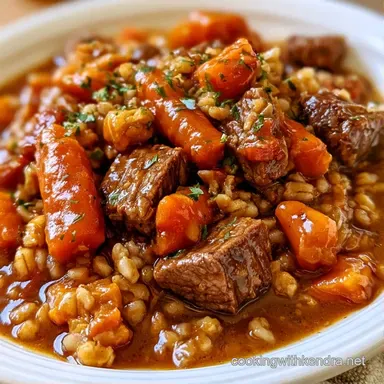
Hearty Beef and Barley Stew
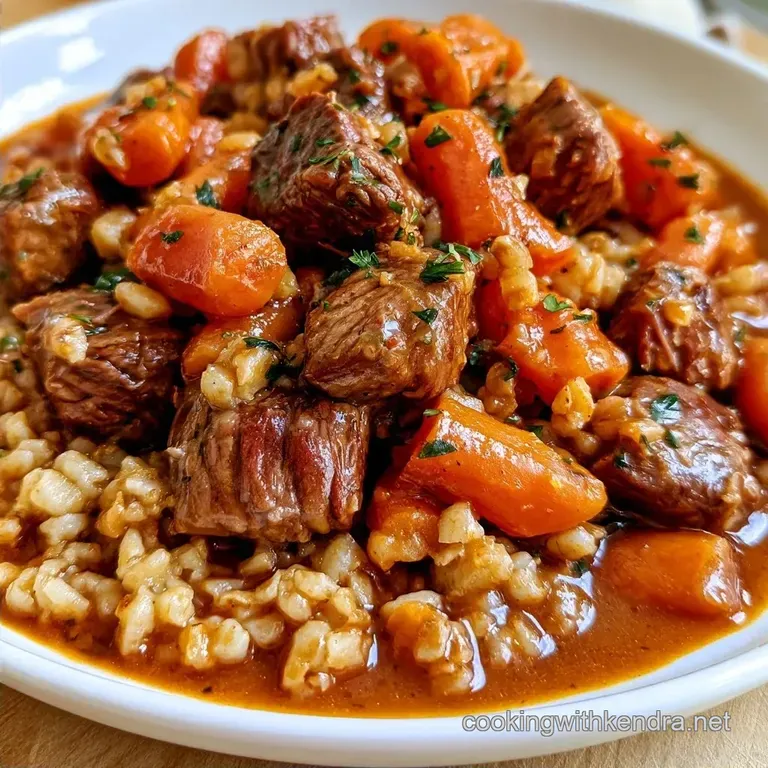
- Time: 15 min active + 150 min simmering
- Flavor/Texture Hook: Hearty, mahogany colored broth with a chewy, nutty finish
- Perfect for: Cold weeknights or meal prep for the family
Hearing beef sizzle in a hot pot is my favorite signal that stew season has arrived. The aroma of searing meat and softened onions brings a cozy, lived-in feel to any kitchen. While I once believed these recipes were all-day affairs, the actual effort is minimal once the simmering begins.
Pearled barley is the highlight of this recipe. I've experimented with potatoes or rice, but they often dissolve or make the broth too gluey. Barley retains its structure, contributing a nutty texture that complements the meat.
Here, the grain serves two purposes: it naturally thickens the sauce and ensures the dish is filling.
You'll end up with a deep, dark broth and meat so tender it shreds easily. It's one of those dishes that is even more delicious as leftovers, as the ingredients continue to meld overnight in the refrigerator.
How the Texture Works
- Barley Starches: As the grains simmer, they release natural starches that create a silky, cohesive broth.
- Chuck Beef: The connective tissue in the roast breaks down over two hours, turning tough fibers into tender bites.
- Tomato Paste: Sautéing the paste before adding liquid adds a concentrated depth that brightens the heavy beef flavor.
Since you might have different goals for dinner, here is a quick look at how the method changes the outcome.
| Method | Time | Texture | Best For |
|---|---|---|---|
| Stovetop | 165 mins | Traditional, balanced | Sunday dinner |
| Slow Cooker | 8 hours | Very tender, softer veg | Busy workdays |
| Instant Pot | 60 mins | Fast, beef is soft | Last minute meals |
The stovetop version gives you the best control over the sear, which is where the flavor lives.
The Basic Specs
This recipe makes 8 servings, which is great because this Beef and Barley Stew is a champion for leftovers. The prep takes 15 minutes, and the cook time is 150 minutes. Total time comes to 165 minutes.
The internal temperature of the beef should reach at least 165°F to ensure safety, though for tenderness, we're looking for a temperature that allows the collagen to melt completely.
USDA guidance puts the safe internal temperature for cooked beef at 145°F with a rest, but for stews, we go higher to achieve that specific "melt in-your mouth" feel.
What You'll Need
- 2 lbs beef chuck roast, cut into 1 inch cubes Why this? High collagen levels ensure the meat stays tender during a slow simmer
- 2 tbsp olive oil Why this? It can withstand high heat for searing
- 1 tsp kosher salt
- ½ tsp cracked black pepper
- 1 large yellow onion, diced
- 3 medium carrots, sliced into rounds
- 2 stalks celery, sliced
- 8 oz cremini mushrooms, quartered Why this? Contributes a rich, earthy flavor
- 4 cloves garlic, minced
- ¾ cup pearled barley, rinsed Why this? Offers a softer texture and faster cook time than hulled barley
- 6 cups low sodium beef broth
- 2 tbsp tomato paste
- 1 tsp dried thyme
- 2 bay leaves
- 1 tbsp Worcestershire sauce
Don't worry if you're missing an ingredient. Most of these can be swapped without affecting the final result.
| Original Ingredient | Substitute | Why It Works |
|---|---|---|
| Beef Chuck | Stew Meat | Already cubed, though often leaner and potentially tougher |
| Cremini Mushrooms | Button Mushrooms | Similar profile, just a bit milder |
| Pearled Barley | Farro | Similar chew. Note: Needs a bit more liquid |
| Beef Broth | Vegetable Broth | A lighter alternative. Note: Add a dash of soy sauce for color |
I prefer using low sodium broth. You can always season with more salt at the end, but you can't remove it once the barley has absorbed the liquid.
Essential Kitchen Gear
You'll want a heavy bottomed pot for this. A 6 quart Dutch oven, such as those from Le Creuset or Lodge, is the gold standard here. The heavy lid keeps the steam inside and prevents the liquid from evaporating too quickly.
You'll also need: Sharp chef's knife for the veg Tongs for flipping the beef Measuring cups and spoons Fine mesh strainer for rinsing the barley
Using a thin pot often leads to the beef scorching at the bottom during the searing phase, so stick with something thick.
The Cooking Process
Phase 1: Searing for Flavor
Use paper towels to pat the beef cubes dry. Many skip this, but damp meat steams rather than browning. Warm some olive oil in a Dutch oven on medium high heat. Sear the beef in batches until mahogany colored on all sides, ensuring you don't crowd the pot and drop the temperature.
Move the beef to a plate.
Phase 2: Building the Aromatics
In the same pot, add the diced onion, carrots, and celery. Sauté these for 5-7 minutes; continue until the onions are translucent. Stir in the garlic and mushrooms for another 3 minutes.
Now, stir in the tomato paste for 1 minute until it turns a deep brick red to remove that raw metallic taste.
Phase 3: The Slow Simmer
Add the browned beef and any juices from the plate back into the pot. Pour in the beef broth, Worcestershire sauce, thyme, and bay leaves, then stir in the rinsed barley. Bring the mixture to a boil, then quickly lower the heat to low.
Cover and simmer for 2 to 2.5 hours until the beef is fork tender.
Chef Note: If you're using a Beef and Barley Stew slow cooker method, you can skip the stovetop simmer. Simply sear the meat and aromatics first, then transfer everything to the crock pot on Low for 8 hours.
Phase 4: The Final Touch
Taste the broth. If it seems too thin, simmer without the lid for the final 15 minutes. Should it be too thick, stir in a little more broth. Discard the bay leaves before serving.
Decision Shortcut
| Goal | What to change |
|---|---|
| Thicker broth | Add 2 tbsp more barley |
| Leaner meal | Trim fat from chuck |
| More veggie forward | Double the mushrooms |
Solving Common Issues
The most frequent issue I see is the texture of the barley. If you add it too early or use too little liquid, it can turn the Beef and Barley Stew into a porridge rather than a soup.
To Fix a Too Thick Stew
Barley is a sponge. It keeps soaking up liquid even after you turn off the stove. If the stew looks like a thick mash, stir in a half cup of warm broth or water. This loosens the consistency without diluting the flavor.
To Fix Tough Beef
If the meat is still chewy after 2 hours, it just needs more time. Collagen breaks down at a specific temperature over a specific duration. Give it another 30 minutes on low. If you're in a rush and the meat is tough, you might consider a Crockpot Beef and Potatoes style approach next time for a slower breakdown.
To Prevent Mushy Barley
Avoid overcooking the grains. If you're using a pressure cooker, reduce the time significantly. For the stovetop, the 2 hour mark is usually the sweet spot where the barley is tender but still has a distinct pop.
| Problem | Fix |
|---|---|
| Stew is too thick | Stir in 1/2 cup beef broth |
| Beef is chewy | Simmer for another 30-60 mins |
| Broth is bland | Add 1 tsp Worcestershire or salt |
| Barley is mushy | Reduce simmer time by 20 mins |
Ways to Change it
Feel free to customize this recipe to suit your preferences. For a richer, more bitter profile, swap one cup of beef broth for Guinness or another dark stout, which pairs beautifully with the earthy mushrooms.
If you're craving a different flavor profile, an Italian Beef Stew can provide great inspiration try using rosemary and a splash of red wine instead of Worcestershire.
Gluten-free Substitutions
Since barley contains gluten, you'll need an alternative. Pearled sorghum or a blend of quinoa and extra carrots work well. Sorghum provides a similar chew and stays intact during long simmers.
Quick Beef and Barley Stew
If you're in a rush, an Instant Pot is a great option. Brown the meat and vegetables as usual, then pressure cook on high for 35 minutes. Allow the pressure to release naturally for 10 minutes.
The barley will be perfectly cooked, though it won't have the same depth of flavor as the 2-hour simmer.
Common Misconceptions
Searing meat doesn't "seal in the juices." That's an old myth. The meat actually loses more moisture during a over high heat sear. However, the browning creates new flavor compounds that make the Beef and Barley Stew taste rich and savory.
Another mistake is thinking you must use "stew meat" from the store. Often, pre cut stew meat is a mix of different scraps that cook at different rates. Buying a whole chuck roast and cutting it yourself ensures every piece is the same size and cooks evenly.
Keeping it Fresh
This stew keeps wonderfully in the refrigerator. Store it in an airtight container for up to 4 days. Since the barley continues to soak up the liquid as it sits, you will likely need to add a little water or stock when reheating.
In the freezer, this recipe lasts roughly 3 months. I suggest freezing it in single servings. When you're ready to enjoy it, move a portion to the fridge to thaw overnight and warm it on the stove over medium heat.
To minimize waste, collect your onion skins, carrot tops, and celery scraps in a freezer bag. Once the bag has reached capacity, simmer them in water to create a homemade vegetable stock for your next meal.
Best Side Pairings
Because the Beef and Barley Stew is so heavy, you need something to cut through the richness. A crusty sourdough baguette is the classic choice for mopping up the broth.
I also love serving this with a sharp, vinegary side. A simple arugula salad with lemon vinaigrette or some quick pickled red onions provides a bright contrast to the deep, earthy flavors of the beef and mushrooms.
If you want something heartier, a side of steamed kale or sautéed spinach adds a nice pop of color and some freshness to the plate.
High in Sodium
910 mg 910 mg of sodium per serving (40% 40% of daily value)
The American Heart Association recommends limiting sodium intake to no more than 2,300mg per day, with an ideal limit of 1,500mg for most adults.
Tips to Reduce Sodium
-
Switch to Unsalted Broth-30%
Replace the low-sodium beef broth with unsalted beef stock or a homemade unsalted version to significantly cut salt content.
-
Omit Added Salt-25%
Eliminate the kosher salt used for seasoning the beef; instead, season the dish at the very end of cooking to taste.
-
Substitute Worcestershire Sauce-20%
Swap the Worcestershire sauce for a splash of balsamic vinegar or a squeeze of lemon juice to maintain the savory, tangy depth.
-
Use No-Salt Added Paste-10%
Ensure the tomato paste used is a 'no-salt added' variety to remove hidden sodium.
-
Enhance with Herbs
Increase the amount of dried thyme, black pepper, and minced garlic to build a bolder flavor profile without adding salt.
Recipe FAQs
How to prevent the beef from steaming instead of browning?
Brown the beef in batches over medium high heat.
Tip: pat the beef cubes dry with paper towels first to ensure a mahogany crust.
Can I use farro instead of pearled barley?
Farro works well as a heartier substitute for the grain.
Tip: see how we achieve al dente perfection with farro to keep the texture from getting mushy.
Is it true that a flour roux is required to thicken the liquid?
This one's false: the pearled barley releases natural starches that create a silky body.
Tip: stir the pot occasionally to prevent grains from clumping.
What is the best way to keep leftovers?
Place the stew in a sealed container and refrigerate.
Tip: add a small amount of beef broth when reheating to loosen the thickened sauce.
Why is my beef still chewy after cooking?
Simmer the roast for at least 2 to 2.5 hours to fully break down the connective tissue.
Tip: keep the heat on low to ensure the meat stays tender.
Must the barley be soaked overnight before adding it to the pot?
Surprisingly, no. Pearled barley is processed for faster cooking and only requires rinsing.
Tip: rinse the grains under cold water until the water runs clear.
Which vegetables provide the best base for this stew?
Use the combination of diced onion, carrots, and celery for a traditional aromatic base.
Tip: sauté these for 5 to 7 minutes until the onions are translucent.
Beef And Barley Stew