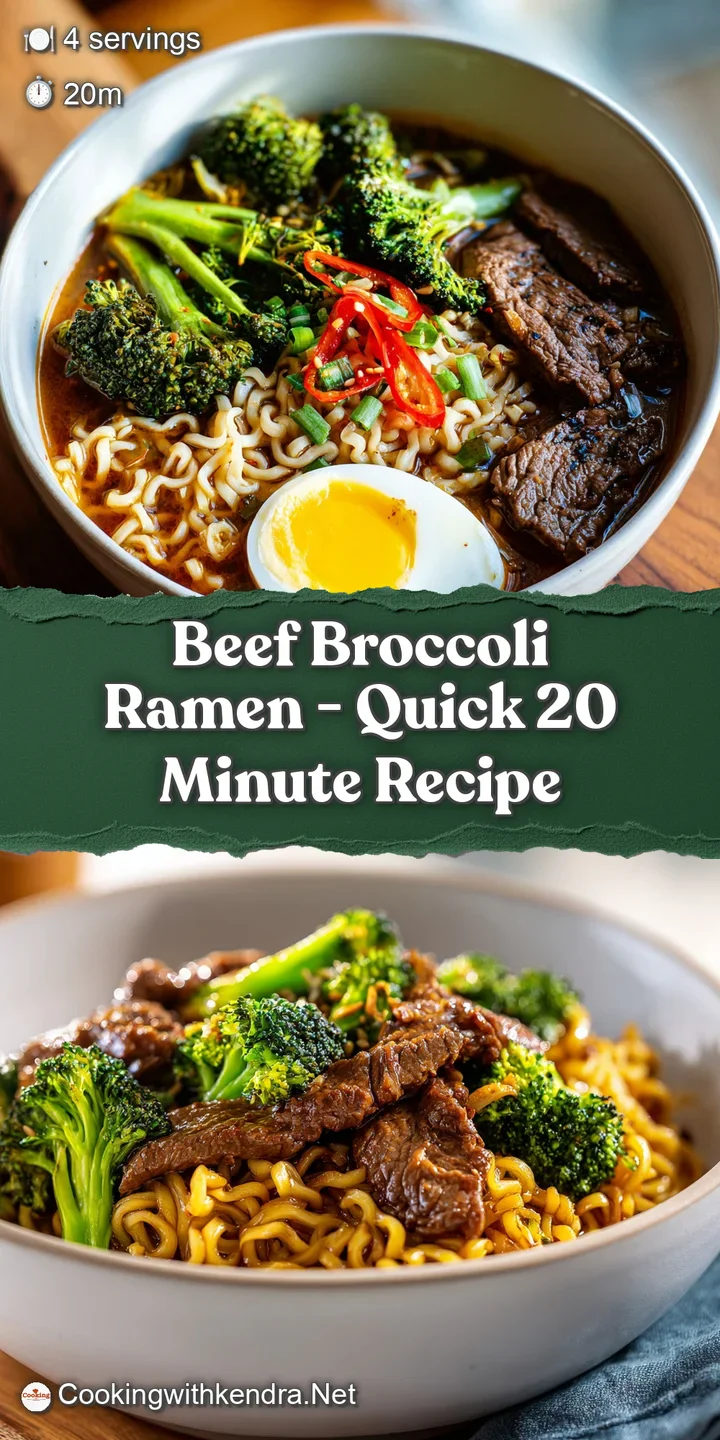
Beef Broccoli Ramen: Glossy Glaze and Tender Beef
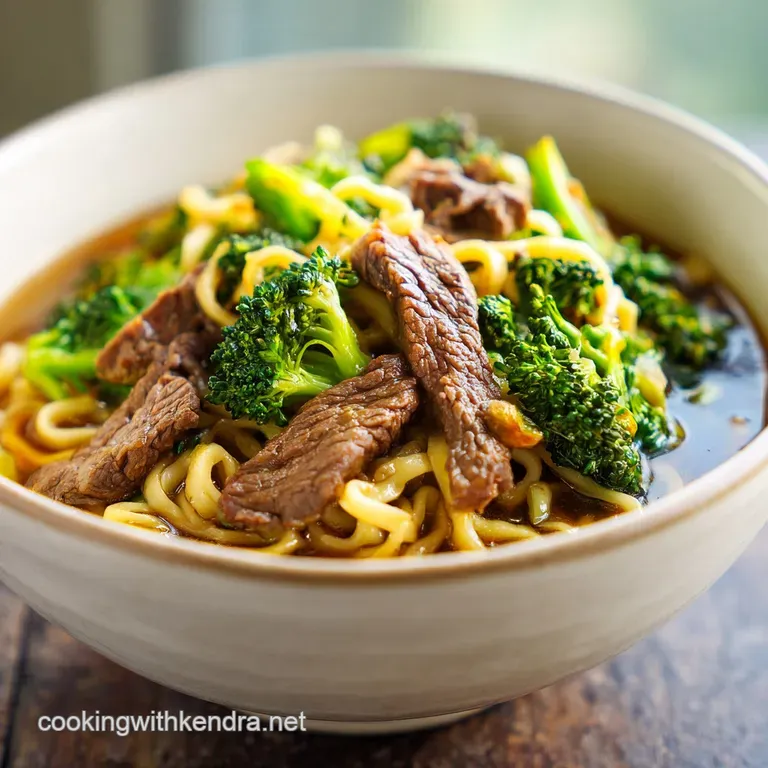
- Time: Active 10 mins, Passive 10 mins, Total 20 mins
- Flavor/Texture Hook: Glossy, umami rich glaze with charred, tenderized beef
- Perfect for: High speed weeknight dinners or showing off plating skills
- Precision Timing for a Restaurant Quality Asian Fusion Dish
- The Alchemy of Umami: Selecting Your Elements
- Essential Kitchen Gear for Achieving High Heat Sizzle
- A Step by Step Guide to Creating Professional Textures
- Avoiding Soggy Greens and Gray Meat with Professional Fixes
- Flavor Adaptations and Ingredient Swaps for Customizing Your Bowl
- Preserving Texture Through Smart Storage and Reheating Methods
- Dynamic Plating Levels and Serving Styles for Maximum Impact
- Culinary Myths Debunked
- Critical in Sodium
- Recipe FAQs
- 📝 Recipe Card
The Physics of the Velvety Sear
The cornstarch coating creates a protective physical barrier that prevents the beef proteins from over bonding and becoming tough under high heat. This starch also gelatinizes instantly upon contact with liquid, acting as a built in thickener that creates a velvety, non greasy mouthfeel for the entire dish.
Cook Method Comparison
| Method | Time | Texture | Best For |
|---|---|---|---|
| over High heat Wok | 8 minutes | Charred edges, crisp veg | Traditional smoky flavor |
| Large Cast Iron | 12 minutes | Deep browning on beef | Even heat distribution |
| Stainless Steel | 10 minutes | Maximum fond (flavor bits) | Creating a darker sauce |
Precision Timing for a Restaurant Quality Asian Fusion Dish
When we talk about Asian Fusion, we are looking for stunning visuals and a sense of movement on the plate. This isn't just a "dump and stir" situation; it is a calculated sequence of heat and timing. You want to see the steam rising off the broccoli while the beef retains its glossy, dark exterior.
If you have ever wondered why your home stir fry lacks that "pop," it usually comes down to heat management and the order of operations.
Similar to the technique I use in my Speedy Beef Broccoli recipe, we are looking for a quick sear rather than a long braise. If the meat spends too much time in the pan, it releases its juices, and you end up steaming the beef in its own liquid. That is the enemy of flavor. We want the Maillard reaction to do the heavy lifting, creating those savory, browned crusts that define a professional grade meal.
Component Analysis
| Ingredient | Science Role | Pro Secret |
|---|---|---|
| Flank Steak | Muscle Fiber density | Slice against the grain to "pre chew" the fibers |
| Cornstarch | Moisture Barrier | Pat the meat dry before coating for a better crust |
| Low Sodium Soy | Umami Base | Always use low sodium to control the final salt concentration |
| Reserved Water | Emulsifier | The starch in the water binds the oil and sauce together |
The Alchemy of Umami: Selecting Your Elements
Selecting the right components is the difference between a "fine" meal and one that people talk about for weeks. We are using flank steak because it has a bold, beefy flavor and a grain that is easy to identify, making it perfect for our tenderizing techniques.
For the noodles, skip the fancy artisanal stuff if you are in a rush; the crinkly texture of instant ramen is actually superior for holding onto thick sauces.
- 1 lb flank steak: Thinly sliced against the grain. Why this? It absorbs the marinade quickly and sears faster than thicker cuts.
- 1 tbsp cornstarch: Why this? Creates the "velvet" texture and thickens the sauce instantly.
- 5 tbsp low sodium soy sauce: Divided for marinade and sauce.
- 1 tsp toasted sesame oil: Why this? Adds a deep, nutty aroma that defines the dish.
- 2 large heads of broccoli: Cut into bite sized florets.
- 3 cloves garlic: Minced.
- 1 tbsp fresh ginger: Grated.
- 2 tbsp neutral oil: Such as avocado or grapeseed.
- 1/2 cup low sodium beef broth: Why this? Provides the volume needed for a saucy noodle coating.
- 2 tbsp brown sugar: Why this? Balances the salt and helps the beef caramelize.
- 1 tbsp oyster sauce: Why this? Adds complex sweetness and thickens the glaze.
- 1 tsp sriracha: For a subtle, controlled heat.
- 3 packs instant ramen noodles: Flavor packets discarded.
- 0.25 cup reserved noodle water: Why this? The "liquid gold" that emulsifies the sauce.
Substitution Table
| Original Ingredient | Substitute | Why It Works |
|---|---|---|
| Flank Steak | Chicken Thighs | High fat content keeps them juicy. Note: Cook 2 mins longer. |
| Oyster Sauce | Hoisin Sauce | Similar thickness, but much sweeter and more floral. |
| Beef Broth | Mushroom Broth | Adds an earthy, vegan friendly umami depth. |
If you are looking for a more traditional, liquid heavy experience, you might want to look into my Ramen Noodle Soup recipe, but for this dish, we are staying in the realm of "dry" tossed noodles.
Essential Kitchen Gear for Achieving High Heat Sizzle
You don't need a thousand dollar setup to make this work, but a few specific items will make your life significantly easier. A large wok is the gold standard because its sloped sides allow you to toss ingredients with abandon, ensuring everything hits the "hot spot" at the bottom.
If you don't have one, a heavy bottomed cast iron skillet is your next best friend because it retains heat like a beast, even when you drop a pound of cold meat into it.
Chef's Tip: Use a microplane for the ginger and garlic. It turns them into a paste that dissolves into the sauce instantly, preventing those awkward bites of raw garlic chunks.
Also, have a pair of long kitchen tongs ready. You need to be able to move the beef and noodles quickly. A spider strainer is also brilliant for fishing the ramen out of the boiling water directly into the pan, which naturally brings over some of that essential starchy water.
A step-by-step Guide to Creating Professional Textures
1. The Noodle & Beef Prep
Slice the 1 lb flank steak into thin strips, ensuring you cut across the visible lines of the muscle. Toss the beef in a bowl with 1 tbsp cornstarch, 1 tbsp of the soy sauce, and 1 tsp sesame oil. Note: This creates a marinade that also acts as a thickener later.
2. Boiling the Ramen
Boil the 3 packs of ramen noodles for about 2 minutes, or until they are just barely tender (al dente). Drain them but keep 0.25 cup of the cloudy water.
3. The over High heat Sear
Heat 1 tbsp of neutral oil in your wok or skillet over high heat until it starts to shimmer. Add the beef in a single layer and sear for 2 minutes until a dark, caramelized crust forms. Remove the beef and set it aside.
4. Sautéing the Aromatics
Add the remaining 1 tbsp of oil to the same pan. Toss in the 3 minced garlic cloves and 1 tbsp grated ginger, stirring constantly for 30 seconds until the kitchen smells incredible but nothing has browned.
5. Steaming the Broccoli
Add the broccoli florets and 1/4 cup of the beef broth to the pan. Cover with a lid for 2 minutes until the broccoli is bright green and tender crisp.
6. Mixing the Glaze
In a small jar, whisk together the remaining beef broth, 4 tbsp soy sauce, 2 tbsp brown sugar, 1 tbsp oyster sauce, and 1 tsp sriracha.
7. The Grand Assembly
Return the beef to the pan along with the cooked ramen noodles. Pour the sauce mixture over everything and add the reserved 0.25 cup of noodle water.
8. The Final Emulsification
Toss everything vigorously over medium high heat for 1 to 2 minutes until the sauce turns into a thick, glossy glaze that coats every noodle.
Avoiding Soggy Greens and Gray Meat with Professional Fixes
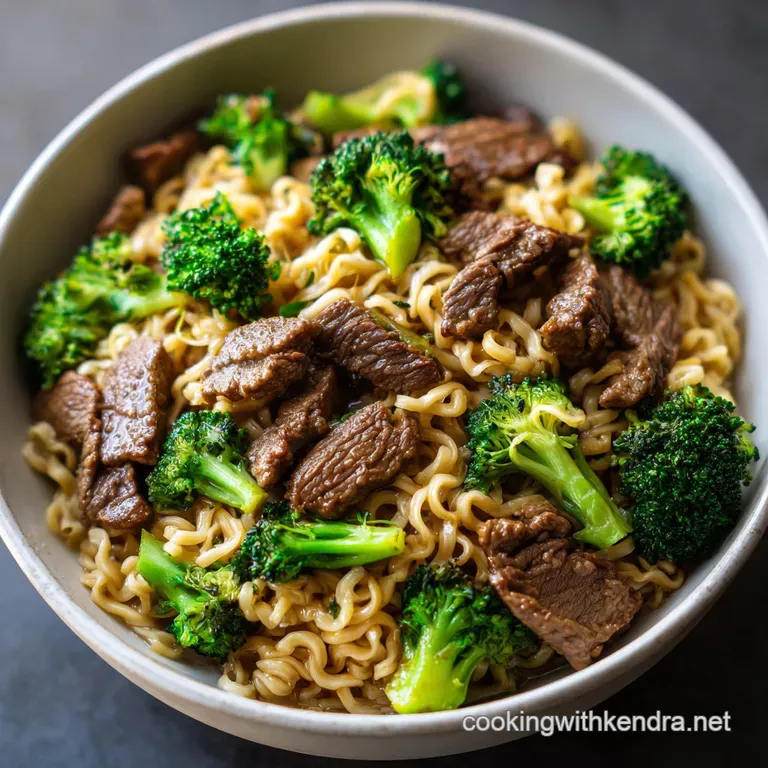
One of the biggest mistakes I see home cooks make with this dish is overcrowding the pan. When you put too much cold meat into a skillet at once, the temperature drops off a cliff. Instead of searing, the meat starts to "leak" its moisture, and you end up with gray, tough beef.
It is better to sear the meat in two batches if your pan isn't huge.
Why Your Beef is Tough
If you sliced the meat with the grain (parallel to the fibers), you are basically eating rubber bands. Always look for the lines and cut perpendicular to them. This shortens the fibers, making the meat "shatter" in your mouth rather than resisting your teeth.
Troubleshooting Guide
| Problem | Root Cause | Solution |
|---|---|---|
| Thin, Watery Sauce | Too much broth, not enough starch | Simmer for 1 extra minute or add a cornstarch slurry |
| Gummy Noodles | Overboiled in the water | Boil for 1 min less; they finish cooking in the sauce |
| Burnt Garlic | Heat was too high during aromatics | Add garlic only after the pan has cooled slightly from the sear |
Common Mistakes Checklist:
- ✓ Pat the flank steak completely dry with paper towels before adding cornstarch.
- ✓ Ensure the pan is actually smoking before the beef hits the oil.
- ✓ Do not overcook the ramen in the water; it should have a "bite."
- ✓ Use the reserved noodle water; the starch is the secret to the glossy finish.
- ✓ Rest the beef for 2 minutes after searing to keep it juicy.
Flavor Adaptations and Ingredient Swaps for Customizing Your Bowl
The beauty of this recipe is its flexibility. If you want a "Mongolian" vibe, double the brown sugar and add a handful of dried red chilies to the oil when you fry the garlic. This creates a much darker, stickier glaze that leans into that sweet and spicy territory we all love.
Decision Shortcut
- If you want Maximum Crunch: Double the broccoli and add sliced water chestnuts.
- If you want More Heat: Increase sriracha to 1 tbsp and add a drizzle of chili crunch at the end.
- If you want Lower Carb: Replace ramen with spiralized zucchini or shirataki noodles.
Scaling this recipe is straightforward, but be careful with the salt. If you are doubling the batch (for 8 people), only increase the soy sauce and salt components by 1.5x initially. You can always add more, but you can't take it out.
For the liquids, reduce the total broth by about 10% to ensure the sauce stays thick and doesn't turn into a soup.
Preserving Texture Through Smart Storage and Reheating Methods
Leftover ramen is notorious for turning into a giant, solid brick in the fridge. This happens because the noodles continue to absorb moisture even after they are cold. To prevent this, store the beef and broccoli in an airtight container for up to 3 days.
Zero Waste Tip: If you have leftover broccoli stems, don't throw them away! Peel the woody outer layer, slice the tender core into matchsticks, and throw them in with the florets. They have a wonderful, water chestnut like crunch.
When reheating, avoid the microwave if possible. Instead, throw the mixture back into a pan with a tablespoon of water or beef broth. The steam will loosen the noodles and revive the glossy sauce without making the beef rubbery.
You can freeze the beef and sauce mixture for up to 2 months, but I recommend boiling fresh noodles when you're ready to eat, as frozen cooked ramen usually turns to mush upon thawing.
Dynamic Plating Levels and Serving Styles for Maximum Impact
Since this is an Asian Fusion dish, the presentation should be dynamic and full of life. We want to see the various textures and colors clearly. Avoid just mashing everything into a bowl; instead, think about how the components can be stacked to create height and visual interest.
Plating Tweak Comparison
| Level | Technique | Garnish | Visual Effect |
|---|---|---|---|
| Simple | Large bowl, mixed evenly | Sliced scallions | Home style comfort |
| Polished | Twirled noodle nest, beef on top | Toasted sesame seeds | Bistro quality |
| Restaurant | Minimalist plate, stacked components | Chili oil & Microgreens | High end Fusion |
Dynamic Presentation Styles
The Simple Approach: Serve it in a deep, wide bowl. Focus on getting a good mix of beef and broccoli in every scoop. Top with a generous amount of green onions sliced on a sharp bias. It’s honest, hearty, and emphasizes the "saucy" nature of the noodles.
The Polished Technique: Use a pair of long tweezers or tongs to twirl the noodles into a tight mound in the center of the plate. Lean the seared beef strips against the side of the noodle mound and tuck the broccoli florets around the base.
Dust the top with white sesame seeds for a clean, professional contrast.
The Restaurant Masterclass: Choose a large, flat plate with a wide rim. Place a smaller portion of noodles in the center. Carefully place 3-4 prime pieces of beef on top, followed by a single, perfectly steamed broccoli floret.
Finish with a precise drizzle of chili oil around the perimeter of the noodles and a tiny pinch of micro cilantro or micro greens. This emphasizes the "Asian Fusion" aesthetic where every ingredient is treated with respect.
If you are serving this for a dinner party, consider pairing it with a side that provides a sharp contrast, such as a crisp cucumber salad or even a small portion of my Traditional Colcannon Recipe if you want to lean into a truly "Fusion" experimental menu.
Culinary Myths Debunked
One common misconception is that you must use a wok to get "Wok Hei" (the breath of the wok). While the literal flame licked flavor is hard to replicate at home, you can achieve a very similar savory char by using a heavy cast iron skillet and letting the meat sit undisturbed for the first 60 seconds.
Movement is the enemy of a good sear; let the heat do its work.
Another myth is that rinsing your ramen noodles after boiling is necessary. In this specific recipe, rinsing is actually a mistake. We want that residual starch on the surface of the noodles to help the beef broth and soy sauce mixture emulsify into a thick glaze.
Rinsing would result in a thin, watery sauce that slides right off the noodles and pools at the bottom of the bowl. Keep it starchy, keep it glossy.
Critical in Sodium
1280 mg of sodium per serving (56% of daily value)
The American Heart Association recommends limiting sodium intake to about 2,300mg per day for overall cardiovascular health.
Tips to Reduce Sodium in Your Beef & Broccoli Ramen
-
Broth Adjustment-25%
The beef broth is a significant sodium contributor. Replace the 1/2 cup of low-sodium beef broth with 1/4 cup low-sodium beef broth and 1/4 cup water. This will dilute the sodium concentration while still providing flavor.
-
Soy Sauce Control-20%
Even low-sodium soy sauce contains sodium. Reduce the amount used throughout the recipe, starting with the marinade. Try using only 3 tablespoons of low-sodium soy sauce instead of 5, and consider adding other flavor enhancers like ginger and garlic to compensate.
-
Oyster Sauce Alternative-20%
Oyster sauce is a major source of sodium. Replace it with a mixture of 1 tablespoon of low-sodium soy sauce and 1 tablespoon of brown sugar or a low-sodium hoisin sauce, which will reduce sodium while maintaining a similar flavor profile. You can also eliminate it entirely for a greater reduction.
-
Noodle Selection-15%
While you've already discarded the flavor packets, instant ramen noodles themselves contain sodium. Opt for fresh or dried noodles (egg noodles, udon, or soba) with no added salt, cooking them separately and adding them to the dish. Be sure to skip the reserved noodle water.
-
Sriracha Substitution-10%
Sriracha adds flavor but also contains sodium. Reduce the amount to 1/2 tsp or replace it with a homemade chili garlic sauce using fresh ingredients to better control the sodium content. Consider using red pepper flakes to boost the spice and flavor
-
Meat Considerations-10%
Ensure the flank steak is fresh and not pre-treated with any sodium solutions. Ask your butcher about sodium content. Consider a different cut of meat that is naturally lower in sodium.
-
Flavor Boost
Enhance the dish's flavor with fresh herbs and spices like cilantro, basil, ginger, garlic, and black pepper. Experiment with different combinations to create a flavorful dish without relying on sodium.
Recipe FAQs
Is marinating the beef in soy sauce before velveting with cornstarch a waste of time?
No, it is essential for flavor depth. The initial soy sauce penetrates the meat fibers before the cornstarch locks in moisture, creating a flavorful crust and preventing the beef from tasting one-note.
How to ensure the final sauce coats the noodles without becoming thin and watery?
Reserve 1/4 cup of the starchy ramen boiling water. This starchy water is the key emulsifier that binds the soy sauce, broth, and oil into a thick, glossy glaze that clings perfectly to the noodles.
Why does my beef turn gray instead of achieving a dark, caramelized crust?
The pan temperature dropped too low during searing. Overcrowding the skillet causes the meat to steam in its own juices rather than browning. You must sear the beef in batches to maintain high heat.
Should I rinse the instant ramen noodles after boiling them for this stir fry?
No, never rinse them for this application. Rinsing removes the surface starch that is necessary for the final sauce to adhere correctly; the starch acts as a thickening agent in the glaze.
How to prevent the beef from becoming tough when slicing for this recipe?
Slice the flank steak thinly and strictly against the grain. Slicing perpendicular to the muscle fibers shortens the tough connective tissues, resulting in a tender bite, similar to the technique used for great cuts in Stuffed Peppers Recipe.
Is it true that oyster sauce can be substituted with hoisin sauce for a similar flavor profile?
Yes, but be mindful of the sugar level. Hoisin is thicker and notably sweeter than oyster sauce; if substituting, reduce the added brown sugar in the main glaze by about one teaspoon to maintain balance.
What is the best way to reheat leftover Beef Broccoli Ramen to restore texture?
Reheat quickly on the stovetop with a splash of liquid. Toss the leftovers in a hot skillet with a tablespoon of broth or water; avoid the microwave, which tends to heat unevenly and soften the crispness.
Beef Broccoli Ramen
Ingredients:
Instructions:
Nutrition Facts:
| Calories | 673 kcal |
|---|---|
| Protein | 35 g |
| Fat | 33 g |
| Carbs | 61 g |
| Fiber | 4 g |
| Sugar | 8 g |
| Sodium | 1280 mg |
