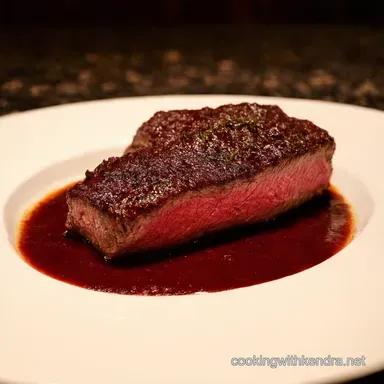
Bone Marrow Bordelaise Sauce with Thyme

- Total55 Mins
- Servings4
- Calories322 kcal
- Time: 15 min active + 40 min cook
- Flavor & Texture: Deeply umami, glossy, and rich
- Perfect for: Special occasion dinners or a high-end steak night
Bone Marrow Bordelaise
An amber sauce that clings to a seared fillet is the mark of a great dinner. Most home cooks struggle with this dish, often ending up with a thin, salty gravy or a greasy puddle of oil on the plate. It happens when the fat separates from the reduction.
This recipe fixes that by using a cold-emulsion technique. Instead of simmering the marrow into the sauce, you whisk it in cold at the end. This keeps the sauce stable and gives it a glossy, professional finish.
You can expect a deep, savory sauce that tastes like a concentrated beef essence. It's rich, but the acidity from the balsamic vinegar keeps it from feeling too heavy on the palate.
Why the Cold Fats Matter
Acid Balance: Using balsamic vinegar in the beef stock provides the tart structure needed to cut through the heavy lipids of the marrow.
Cold Emulsification: Whisking in chilled marrow and butter at the end helps the fats stay emulsified and lowers the risk of separating.
| Option | Effort | Result | Best For |
|---|---|---|---|
| Fresh Marrow | Higher | Deepest flavor, cleaner fat | Special guests |
| Pre-rendered | Lower | Consistent texture | Quick weeknight lux |
What Each Ingredient Does
| Ingredient | Function | Alternative |
|---|---|---|
| Beef Demi-glace | Base & Thickener | Beef stock reduced by 75% (will be thinner) |
| Balsamic Vinegar | Acidity | Red wine vinegar (slightly more pungent) |
Ingredients and Swaps
- 2 tbsp unsalted butter
- 2 medium shallots, finely minced
- 1 cup beef stock with balsamic vinegar
- 1 cup beef demi-glace Why this? Provides the rich brown color and thickness.
- 2 sprigs fresh thyme
- 1 piece dried bay leaf
- 3 oz chilled bone marrow, diced into 1cm cubes Why this? Used to create the creamy emulsion.
- 2 tbsp cold unsalted butter, cubed
- 1/4 tsp kosher salt
- 1/4 tsp cracked black pepper
| Original Ingredient | Substitute | Why It Works |
|---|---|---|
| Fresh Thyme | 1/2 tsp dried thyme | Similar herbal notes. Note: Less aromatic than fresh |
Essential Kitchen Tools
Prepare your equipment. A heavy-bottomed saucepan is recommended to prevent the reduction from scorching. Use a fine-mesh strainer to remove the aromatics, and a whisk is essential for the final emulsion.
How to Make It
Preparing the Aromatics
Melt 2 tablespoons of butter over medium heat in a saucepan. Add the 2 minced shallots and sauté for 3–5 minutes until translucent and fragrant, but not browned.

Reducing the Base
Pour in 1 cup of beef stock with balsamic vinegar, then add 2 sprigs of thyme and 1 piece of bay leaf. Increase the heat to medium-high and simmer until the liquid has reduced by two-thirds, leaving a syrupy consistency.

Concentrating the Flavor
Stir in 1 cup of beef demi-glace. Lower the heat to a simmer and continue to cook until the sauce reaches a coating consistency, leaving a clear trail when a spoon is dragged through it.
Remove the thyme sprigs and bay leaf, then pass the sauce through a fine-mesh strainer into a clean pan for a velvety texture.

Emulsifying the Marrow
Reduce heat to the lowest setting. one by one, whisk in 3 oz of chilled bone marrow cubes and 2 tablespoons of cold butter, stirring gently but constantly until the marrow is just melted and integrated. Remove from heat immediately to prevent the sauce from breaking.
Season with 1/4 teaspoon of kosher salt and 1/4 teaspoon of cracked black pepper.

Fixing Common Sauce Problems
If the sauce appears to be splitting, this is often because the pan became too hot during the final whisking, causing the fat to separate from the water-based reduction.
When the sauce is too salty, avoid using water, as it degrades the consistency. A tiny pinch of sugar or an extra drop of balsamic can neutralize the saltiness without thinning the sauce.
Fixing an Oily Separation
Remove the pan from the heat. Vigorously whisk in a teaspoon of cold beef stock or a small knob of cold butter to restore the emulsion.
Handling Over-Saltiness
Whisk in a small amount of unsalted butter or a drop of balsamic vinegar to offset the salt.
Correcting a Thin Texture
Simmer the base for an extra 5 minutes before adding the marrow to ensure the demi-glace has concentrated enough.
| Problem | Root Cause | Solution |
|---|---|---|
| Greasy surface | Overheated during emulsion | Whisk in cold butter off-heat |
| Too thin | Not reduced enough | Simmer base longer before finishing |
| Bitter taste | Burnt shallots | Start over; sauté shallots slower |
Ways to Tweak the Flavor
For a Roasted bone marrow bordelaise, roast the marrow bones at 400°F for 15 minutes first. Scoop out the roasted marrow and chill it before dicing. This adds a charred, nutty note to the final sauce.
If you're serving this with fish instead of beef, replace the beef stock and demi-glace with a concentrated fish fumet and a squeeze of lemon juice.
Storage and Reheating
Keep the sauce in a glass jar and refrigerate for up to 3 days. Avoid reheating in the microwave, as the intense heat can break the emulsion and leave the sauce oily.
Instead, warm it gently in a small pan over low heat. If it thickens too much, whisk in a tablespoon of beef stock to restore the gloss. For food safety, ensure reheated portions reach 165°F (74°C) according to USDA guidelines on leftovers. When reheating cooked leftovers, check with a food thermometer that the center reaches 165°F (74°C); the appliance temperature and time alone do not confirm this.
This sauce freezes well for up to 1 month. Let it defrost in the refrigerator overnight before warming.
Best Ways to Serve

The most traditional pairing is a beef fillet or a ribeye. The richness of the marrow complements the lean texture of a fillet perfectly.
I like serving it over a mound of garlic mashed potatoes or with some Air Fryer Fries for a more casual, "bistro-style" meal. To keep the presentation clean, spoon the sauce around the meat rather than covering it entirely.
Good to Know
What is Bone Marrow Bordelaise?
It is a rich French reduction sauce made with beef demi-glace and emulsified with bone marrow.
Tip: use chilled marrow to ensure a stable emulsion.
How do you make this sauce?
Simmer beef stock with shallots and herbs, stir in demi-glace, and whisk in chilled marrow and butter over low heat.
Tip: strain the sauce through a fine-mesh sieve for a professional finish.
Does this sauce have a specific flavor?
It tastes deeply savory and rich with a subtle tang from the balsamic vinegar.
Tip: don't brown the shallots too much or the sauce will taste bitter.
Is "bordelaise" pronounced bor-del-AYZ?
Yes, that is the correct general pronunciation for this French term.
Tip: focus on the soft "z" sound at the end.
Can you freeze the leftovers?
This sauce freezes well for up to 1 month.
Tip: thaw it slowly in the refrigerator before reheating.
Where should the sauce be stored?
Keep it in a glass jar chilled for 3 days.
Tip: avoid using plastic containers to keep the flavor pure.
Why did the sauce break?
Intense heat, especially from a microwave, breaks the fat emulsion.
Tip: warm it slowly in a pan and whisk in a bit of beef stock if it thickens too much.
Bone Marrow Bordelaise Sauce