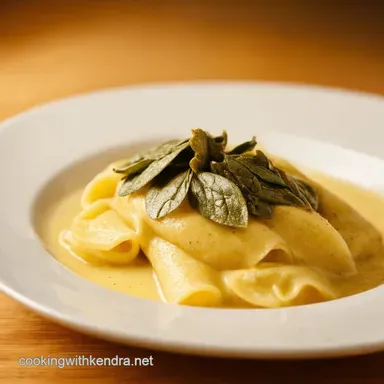
Brown Butter Sage Sauce with Garlic

- Total15 Mins
- Servings4
- Calories182 kcal
- Time: 5 min active + 10 min cooking
- Texture: Rich and glossy with crisp leaves
- Serve with: Pumpkin ravioli or gnocchi
Brown Butter Sage Sauce
Ever wonder why some pasta sauces taste like toasted hazelnuts without actually adding any nuts? It all comes down to the milk solids in the butter.
This brown butter sage sauce creates a deep, savory base that makes a huge difference for a weeknight meal. You only need a few pantry staples and ten minutes on the stove to get a result that feels fancy but fits a tight budget.
It's a versatile addition to any dinner. While it's a classic for pasta, it also works great over flatbread for a quick appetizer.
Why It Works
- Toasted Proteins: Heating the butter browns the milk solids, which creates a nutty flavor. You can learn more in this [brown butter guide](https://cookingwithkendra.net/recipes/liquid-gold-mastering-brown-butter/).
- Fat Infusion: The butter acts as a carrier that pulls the earthy aroma out of the sage.
The Ingredients
The butter is the heart of this sauce. Using unsalted butter is the best move here so you can control the salt levels as the water evaporates and the flavor concentrates.
Fresh sage is a must because dried sage doesn't crisp up the same way and can taste dusty. A single clove of garlic adds a subtle sharpness that cuts through the richness of the fat.
Ingredients
- 1 stick (113g) unsalted butter Why this? Allows precise salt control as butter reduces.
- 1 tablespoon (3g) fresh sage leaves, patted dry Why this? Fresh leaves crisp up and smell aromatic.
- 1/4 teaspoon (1.5g) kosher salt
- 1/8 teaspoon (0.3g) freshly cracked black pepper
- 1 clove (3g) garlic, thinly sliced Why this? Slices brown evenly without burning.
The Cooking Process
Preparing the Ingredients
Pat the 1 tablespoon (3g) fresh sage leaves completely dry using a paper towel. Note: This prevents splattering and ensures the leaves get a shattering crust.
Browning the Butter
Place 1 stick (113g) unsalted butter in a light-colored skillet over medium heat, swirling the pan occasionally. Monitor the butter as it foams and changes color from lemony-yellow to golden-tan, and finally to toasty-brown. Cook until it releases a distinct aroma of toasted hazelnuts.

Crisping the Sage
Immediately add the fresh sage leaves and 1 clove (3g) thinly sliced garlic to the browning butter. Cook for 30 to 60 seconds until the leaves sizzle and become crisp.

Final Seasoning
Remove the skillet from the heat immediately to prevent the butter from burning. Stir in 1/4 teaspoon (1.5g) kosher salt and 1/8 teaspoon (0.3g) black pepper before drizzling over the desired base.
Common Problems and Fixes
If the butter turns black, the heat was too high or the pan was too dark to see the color change. Use a light-colored pan so you can spot the golden-tan transition before it's too late.
If your sage leaves stay soft, they likely had water on them when they hit the fat. Always use a paper towel to get them bone-dry. If the sauce pools at the bottom of your plate, try tossing your cooked pasta directly in the pan with a splash of pasta water to create a glossy emulsion.
Fixing Burnt Butter
The butter crosses from brown to burnt very quickly. Take it off the heat the second you smell that nuttiness.
Stopping Soggy Sage
Water causes the butter to steam rather than fry. Ensure leaves are dry before adding.
Preventing Sauce Pooling
Tossing pasta in the pan helps the sauce cling to the noodles.
| Problem | Fix |
|---|---|
| Bitter, black butter | Use medium heat and a light-colored pan |
| Soggy sage leaves | Pat leaves completely dry with a paper towel |
| Sauce separates/pools | Toss pasta in pan with a bit of starchy water |
Store any extra sauce in a sealed jar for up to 4 days in the fridge. To reuse it, gently warm the sauce in a small saucepan over low heat. Don't let it boil, or the butter will separate and the flavor will turn bitter.
Common Questions

How do you make sage and butter sauce?
Melt 1 stick of unsalted butter over medium heat until it reaches a toasty-brown color, then stir in fresh sage and sliced garlic for 30 to 60 seconds.
Tip: pat the sage leaves completely dry first to prevent splattering.
What does brown butter and sage sauce taste like?
This sauce tastes like toasted hazelnuts with an earthy, savory finish from the sage.
Tip: the nutty aroma is the best indicator that the milk solids have browned perfectly.
Why are the visual cues for browning butter so subtle?
The color shifts rapidly from lemony-yellow to golden-tan and finally to toasty-brown.
Tip: use a light-colored skillet to monitor the color change more accurately.
Can I use dried sage instead of fresh?
You can use dried sage, though it will not crisp up and may taste dusty compared to fresh leaves.
Tip: stick with fresh sage if you want that signature restaurant-style texture.
How can I prevent the butter from burning?
Remove the skillet from the heat immediately once the sage leaves sizzle and become crisp.
Tip: keep the pan swirling occasionally to ensure the butter browns evenly.
Does adding garlic work in this sauce?
Add one thinly sliced clove of garlic along with the sage during the final 30 to 60 seconds of cooking.
Tip: slicing the garlic thinly helps it cook quickly without burning in the hot butter.
Which amount of butter is needed for this recipe?
Use one stick (113g) of unsalted butter to ensure enough sauce for four servings.
Tip: unsalted butter allows you to control the salt levels as the liquid evaporates.
Brown Butter Sage Sauce