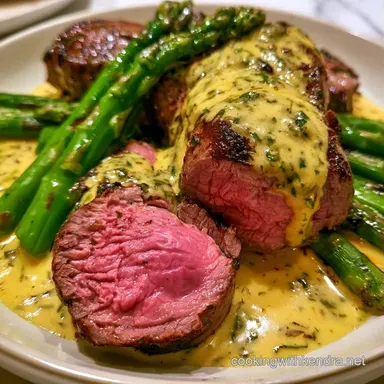
Pan-Seared Chateaubriand with Béarnaise

- Total2 Hrs 15 Mins
- Servings2
- Calories1922 kcal
- Time: 40 min active + 20 min cooking + 75 min resting and temp adjustment
- Texture: Tender, buttery beef with a velvety, thick sauce
- Serve with: Blanched asparagus or garlic mashed potatoes
Chateaubriand with Béarnaise
Most home cooks dread this dish because the sauce splits or the meat comes out with a thick gray band of overcooked beef. This usually happens when the meat is too cold when it hits the pan or the sauce gets too hot on the stove.
This recipe fixes those common slips. Chateaubriand with Béarnaise feels like a luxury steakhouse meal, but it really just comes down to managing your heat and timing.
You can expect a deep, dark crust on the beef and a sauce that holds its shape. It's a bit of a process, but the results are worth the effort.
How It Comes Together
- Room Temp Beef: Letting the meat sit out briefly can take the chill off, but it does not guarantee even cooking; use a thermometer.
- Clarified Butter: Removing the water and milk solids from the butter makes the emulsion more stable.
Gear for This Recipe
You'll need a cast-iron skillet for that heavy sear and a glass or stainless steel bowl for the double boiler. A meat thermometer is non-negotiable here to ensure the beef hits the mark without overshooting.
What You'll Need
While the beef is the main attraction, the sauce provides the intensity.
For the Beef
- 2 lb center-cut beef tenderloin Why this? The most tender part of the loin
- 2 tbsp neutral oil Why this? Handles high temperatures for searing
- 3 tbsp unsalted butter Why this? For basting flavor
- 3 cloves garlic, smashed
- 2 sprigs fresh thyme
- 1 tsp kosher salt
- ½ tsp black pepper
For the Béarnaise Sauce
- 3 large pasteurized egg yolks Why this? The base for the emulsion
- 1 tbsp beef broth Why this? Adds depth and salt
- 1 tbsp fresh lemon juice Why this? Provides necessary acidity
- 1 tbsp minced shallots
- 1 cup unsalted butter, clarified Why this? Stabilizes the sauce
- 2 tbsp fresh tarragon, finely chopped Why this? The classic signature flavor
- 1 tbsp fresh chervil or parsley, chopped
- ¼ tsp salt
For the Asparagus
- 1 lb fresh asparagus
- 1 tbsp unsalted butter
- ½ tsp salt
If tarragon is unavailable, a pinch of anise seed can be used as a substitute; start small and adjust to your taste.
At a Glance
| Original Ingredient | Substitute | Why It Works |
|---|---|---|
| Clarified Butter | Melted Ghee | Similar fat structure. Note: Has a stronger, nuttier flavor |
| Chervil | Flat leaf parsley | Similar mild, fresh profile. Note: Lacks the slight anise note |
| Beef Broth | Mushroom Stock | Adds earthy depth. Note: Keeps the dish savory |
From Prep to Plate
1. Prep the beef
Take the beef tenderloin out of the refrigerator 60 minutes before you start cooking to let it reach room temperature. Use paper towels to pat the meat completely dry. Season every side with 1 tsp kosher salt and ½ tsp black pepper.
2. Sear the meat
Heat 2 tbsp neutral oil in a heavy cast-iron pan on high until it just begins to smoke. Add the beef and brown it for 3–4 minutes on each side until a deep golden brown crust forms.

3. Baste for flavor
Lower the heat to medium. Add 3 tbsp unsalted butter, 3 smashed garlic cloves, and 2 sprigs of fresh thyme. Continuously spoon the bubbling butter over the meat for 2 minutes.
4. Oven finish
Move the skillet into a preheated oven at 350°F (180°C). Roast until the exterior is browned and a meat thermometer reads 145°F (63°C) per USDA safe minimum internal temperatures.
5. Rest the beef
Transfer the beef to a warm plate and allow it to sit for 10–15 minutes so the juices can redistribute.
6. Start the sauce
In a glass bowl, whisk together 3 egg yolks, 1 tbsp beef broth, 1 tbsp fresh lemon juice, and 1 tbsp minced shallots. Set the bowl over a pot of simmering water, making sure the bowl doesn't touch the water.
Note: Using pasteurized eggs can lower the risk of foodborne illness since the yolks stay uncooked.
7. Thicken the base
Stir the mixture constantly until it thickens and doubles in volume.

8. Emulsify the butter
Gradually whisk in 1 cup clarified butter, starting with a few drops and transitioning to a thin, steady stream. Keep whisking until a stable emulsion forms.
9. Finish the sauce
Take the bowl off the heat. Mix in 2 tbsp chopped tarragon, 1 tbsp chopped chervil or parsley, and ¼ tsp salt. Keep the sauce warm in the double boiler until you are ready to serve.
10. Blanch the greens
Blanch 1 lb trimmed asparagus in boiling salted water for 2 minutes, then immediately plunge them into ice water to stop the cooking process.
11. Final sauté
Just before serving, sauté the blanched asparagus in 1 tbsp unsalted butter and ½ tsp salt for 2 minutes until heated through and bright green.

12. Plate the meal
Cut the rested beef into thick medallions. Arrange them on a platter alongside the asparagus and drizzle the Béarnaise sauce over the Chateaubriand.
Avoiding Kitchen Disasters
Fixing Split Sauce
Do not panic if the sauce separates. Whisk 1 teaspoon of warm water in a clean bowl. Slowly whisk the split sauce into the water one spoonful at a time. This usually brings the emulsion back together.
Meat Cooking Too Fast
If the outside is charring but the center is raw, lower the pan heat to medium. Use a meat thermometer to track the rise. If it's still too fast, finish the cooking in the oven at a lower temperature.
Preventing Sauce Curdling
This happens when the eggs overheat. If the mixture looks like scrambled eggs, it's gone. To prevent this, make sure the bowl never touches the simmering water and keep whisking.
Storage & Reheating
Keep any remaining beef refrigerated in an airtight dish for up to 3 days. Warm it gently in a 250°F oven until the center reaches 165°F (74°C), checking with a food thermometer.
The sauce is not freezer-friendly. Store it in a jar in the refrigerator for no more than 2 days. For reheating the sauce for your chateaubriand with béarnaise, use a double boiler to warm it very slowly. Avoid the microwave, as direct heat will break the emulsion and make the sauce oily.
Easy Swaps and Add-Ins
To introduce a subtle heat, stir a dash of cayenne pepper into the Béarnaise. If you prefer an earthier side, substitute the asparagus for sautéed wild mushrooms. These adjustments maintain the soul of the chateaubriand steak with béarnaise sauce while bringing some diversity to the dish.
Myths
Searing doesn't actually keep juices inside the meat. Moisture evaporates whether you brown the exterior or not. The resulting crust adds flavor and texture, rather than acting as a barrier for liquid.
Serving Suggestions

This is a rich meal, so balance it with acidity. A crisp green salad with a sharp vinaigrette works well. For the best experience, serve your chateaubriand with béarnaise on warmed plates. This keeps the beef and the sauce from cooling down too quickly while you eat.
If you're looking for a pan seared chateaubriand method that feels like a feast, serve it with a side of roasted fingerling potatoes.
Very High in Sodium
2283 mg of sodium per serving (99% of daily value)
American Heart Association recommendation: no more than 2,300 mg of sodium per day
Tips to Reduce Sodium
-
Limit Steak Seasoning
Reduce the amount of kosher salt used on the beef tenderloin or replace it with a salt-free seasoning blend.
-
Switch the Broth
Replace the beef broth with a low-sodium or no-sodium beef broth alternative.
-
Season Asparagus Differently
Omit the salt from the asparagus and use lemon zest or extra garlic to provide a bright, savory flavor.
-
Adjust Sauce Salt
Skip the extra salt in the clarified butter sauce, as the beef broth already adds a salty base.
-
Enhance with Fresh Herbs
Increase the quantity of fresh tarragon and chervil to build a more complex flavor profile without relying on sodium.
Questions Readers Ask
What is Chateaubriand?
It is a thick, center-cut piece of beef tenderloin.
Tip: ensure the meat reaches room temperature before searing for even cooking.
How many people does a 2 lb Chateaubriand feed?
This amount typically serves 2 people.
Tip: slice the beef into thick medallions to maintain juiciness.
Is there a difference between chateaubriand and filet mignon?
Chateaubriand is a larger center cut intended for sharing, while filet mignon is a smaller individual steak.
Tip: use a cast-iron skillet to get the dark golden crust required for this cut.
At what temperature should chateaubriand be cooked?
Roast the beef until the internal temperature reaches 145°F (63°C).
Tip: let the meat rest for 10–15 minutes before slicing to let the juices redistribute.
How to ensure a smooth Béarnaise sauce?
Whisk the mixture constantly over simmering water and add the clarified butter drop by drop.
Tip: make sure the glass bowl does not touch the water to avoid overheating the eggs.
Which sauce is traditionally served with this beef?
Béarnaise sauce is the classic pairing for this dish.
Tip: stir in fresh tarragon and chervil at the end for the best aroma.
Where to store the leftovers?
Keep the beef in a container in the refrigerator for 3 days and the sauce in a jar for 2 days.
Tip: warm the sauce slowly in a double boiler rather than using a microwave.
Can the cooked beef be reheated?
Heat it gently in a low oven at 250°F until the center reaches 165°F (74°C), checking with a food thermometer.
Tip: avoid high temperatures during reheating to prevent the meat from becoming tough.
Chateaubriand with Béarnaise for Two