Creamy Chicken Fajita Pasta
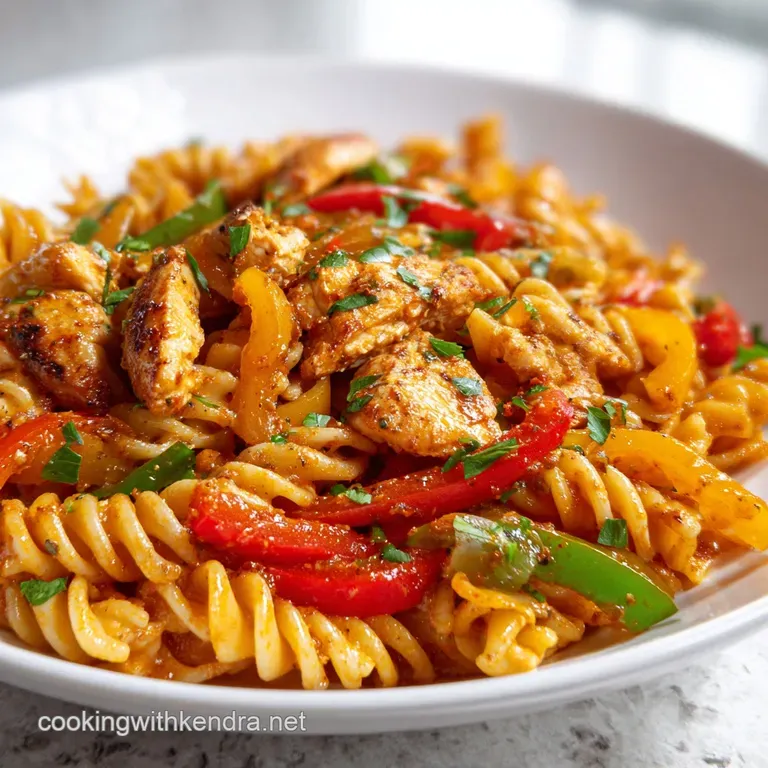
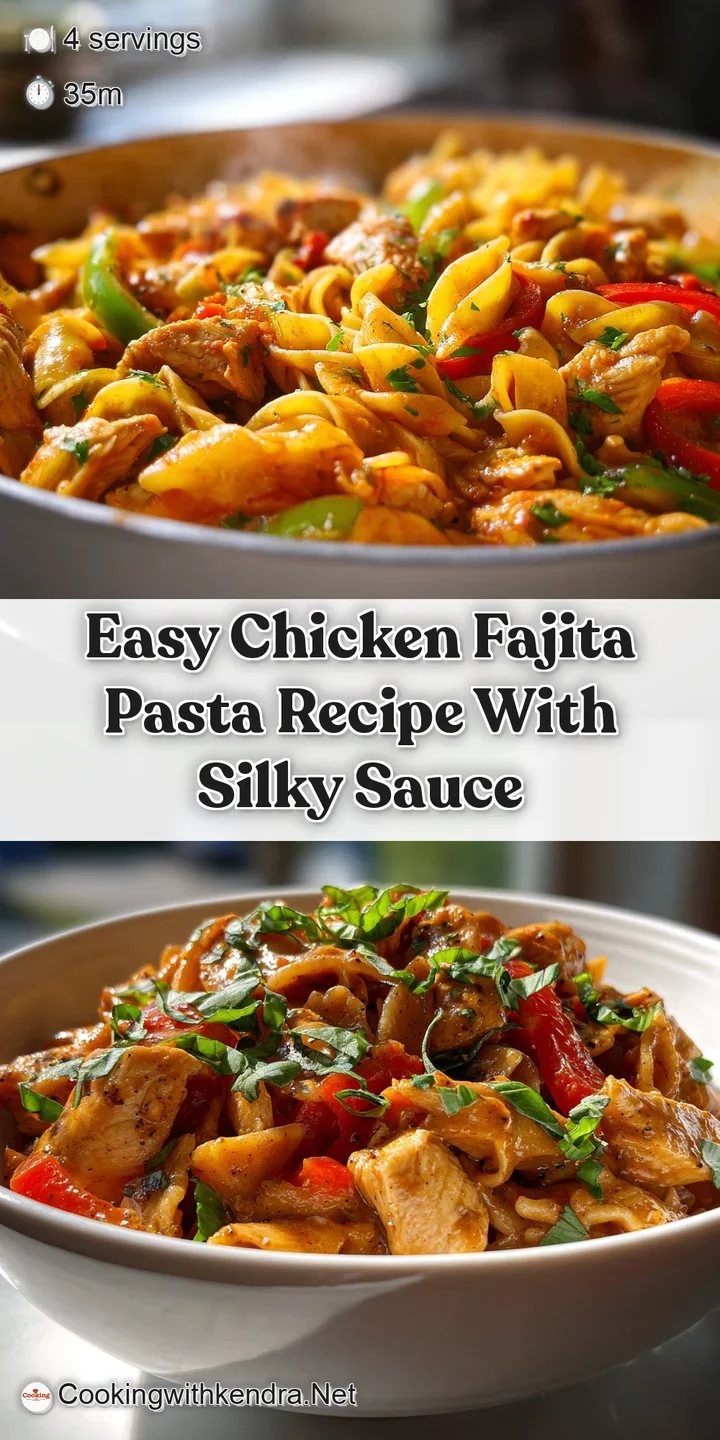
- Time: Active 15 mins, Passive 20 mins, Total 35 mins
- Flavor/Texture Hook: Silky, smoky sauce with snap crisp peppers
- Perfect for: Busy weeknights, family-friendly meal prep, or beginner cooks
- Weeknight Comfort with this Chicken Fajita Pasta
- Performance Data for Your Weeknight Meal
- Component Analysis of the Dish
- Essential Ingredients for Bold Smoky Flavor
- Minimal Tools for a Quick Cleanup
- Simple Steps to a Creamy Finish
- Fixing Common One Pot Pasta Issues
- Adjusting for Different Batch Sizes
- Myths About One Pot Cooking
- Storing and Reheating Your Leftovers
- Side Dishes to Complete the Meal
- High in Sodium
- Recipe FAQs
- 📝 Recipe Card
Weeknight Comfort with this Chicken Fajita Pasta
The first thing you hear is that aggressive sizzle when the thin strips of chicken hit the hot avocado oil. It is a sound that says dinner is actually happening, even though you just walked through the door twenty minutes ago.
I remember one specific Tuesday when the rain was pouring and the kids were "hangry" beyond belief. I was seconds away from ordering expensive delivery, but then I saw the bell peppers in the crisper. This recipe saved my sanity that night, and it has been in the weekly rotation ever since.
We have all dealt with one pot pasta disasters where the noodles turn into a gummy mess or the sauce looks more like soup. I have made those mistakes so you don't have to. The beauty of this specific method is that it relies on the starch from the pasta to thicken the sauce naturally.
You aren't just boiling noodles; you are creating a velvet like coating that clings to every penne tube.
By the time you squeeze that fresh lime juice over the top, the whole kitchen smells like a high end cantina. This is not just a "throw it in a pot" meal. It is a calculated sequence of browning and simmering that results in a smoky, spicy, and creamy bowl of comfort.
It is the kind of dinner that makes everyone at the table go quiet for a few minutes, which, in my house, is the ultimate compliment.
Performance Data for Your Weeknight Meal
The Physics of Starch Bonding: As the pasta simmers directly in the chicken broth, it releases amylose molecules into the liquid. This creates a natural thickening agent that allows the Neufchâtel to fuse into a stable, silky emulsion rather than separating into oil and solids.
- Maillard Reaction: Searing the chicken at high heat first creates a crust of complex sugars and amino acids that flavors the entire sauce later.
- Thermal Carryover: Removing the chicken while the vegetables cook prevents the protein from turning rubbery or dry.
- Acid Balance: The citric acid in the lime juice at the end breaks through the heavy fats of the cheese, brightening the smoky cumin notes.
- low-fat Stability: Neufchâtel has a higher moisture content than standard cream cheese, which helps it melt more smoothly into the starchy pasta water.
| Chicken Thickness | Internal Temp | Rest Time | Visual Cue |
|---|---|---|---|
| 1 cm strips | 74°C (165°F) | 3 minutes | No pink, fibers pull apart easily |
| 2 cm strips | 74°C (165°F) | 5 minutes | Golden brown exterior, opaque center |
| Cubed (2 cm) | 74°C (165°F) | 2 minutes | Firm to the touch, juices run clear |
When you are choosing your chicken, try to keep the slices as uniform as possible. This ensures that every piece hits that safe internal temperature at the exact same moment. If you have some pieces that are twice as thick as others, the thin ones will turn into shoe leather before the thick ones are even cooked through.
It is worth the extra two minutes of focused knife work, trust me on this.
Component Analysis of the Dish
| Ingredient | Science Role | Pro Secret |
|---|---|---|
| Chicken Broth (low sodium) | Primary solvent and flavor base | Use room temperature broth to avoid dropping the pan temp too quickly |
| Neufchâtel Cheese | Emulsifier and fat source | Let it sit on the counter while you prep so it incorporates without lumps |
| Dried Pasta (Penne) | Starch provider and texture | Choose a brand with deep ridges to catch more of the smoky sauce |
| Avocado Oil | High smoke point fat | Heat the oil until it shimmers but does not smoke for the best sear |
Choosing the right pasta shape is actually a bit of a science project in itself. While you could use something smooth like elbow macaroni, the ridges on penne or the spirals of fusilli are designed to grab onto the sauce. If you use a smooth noodle, the sauce just slides off and pools at the bottom of the bowl.
We want every bite to be a perfectly balanced mix of chicken, vegetable, and creamy spice.
Essential Ingredients for Bold Smoky Flavor
- 565g Chicken Breasts: Sliced thin against the grain. Why this? Cutting against the grain breaks the muscle fibers for maximum tenderness.
- Substitute: Chicken thighs (trim the fat first for a richer flavor).
- 225g Dry Penne: The backbone of the meal. Why this? Holds up well to the one pot simmering process without falling apart.
- Substitute: Fusilli or rotini.
- 115g Neufchâtel Cheese: For that signature creamy texture. Why this? Provides the creaminess of full fat cheese with a lighter profile.
- Substitute: Full fat cream cheese or Greek yogurt (add yogurt at the very end off heat).
- 1 Red & 1 Yellow Bell Pepper: For sweetness and crunch. Why this? Yellow and red peppers are riper and sweeter than green ones.
- Substitute: Any color bell pepper or even poblano for extra heat.
- 1 White Onion: For the aromatic base. Why this? White onions have a sharper bite that mellows beautifully when sautéed.
- Substitute: Yellow onion or shallots.
- 600ml Chicken Broth: The cooking liquid. Why this? Low sodium allows you to control the salt level perfectly.
- Substitute: Vegetable broth or even water with a bouillon base.
- Spices (Chili, Paprika, Cumin): The fajita soul. Why this? Smoked paprika specifically adds a grilled flavor without the grill.
- Substitute: Pre packaged fajita seasoning (use about 2 tablespoons).
| Feature | Fresh Peppers | Frozen Pepper Strips |
|---|---|---|
| Texture | Firm, "snap" when bitten | Softer, slightly more tender |
| Prep Time | 5 minutes (slicing) | 0 minutes (pour from bag) |
| Flavor Impact | Bright, crisp, sweet | Milder, more integrated into sauce |
Honestly, don't even bother with pre shredded cheese if you decide to top this with a little extra cheddar at the end. The anti caking agents they use on the bagged stuff will make your sauce grainy. If you want that silky finish, stick to the Neufchâtel and grate any extra cheese yourself from a block.
It makes a massive difference in how the sauce coats the tongue.
Minimal Tools for a Quick Cleanup
You really only need one large, deep skillet or a Dutch oven for this. I personally love using a heavy cast iron skillet because it holds heat like a champ, which is exactly what you need for that initial chicken sear.
If your pan is too thin, the temperature will drop the moment the cold chicken hits it, and instead of searing, you will end up steaming the meat in its own juices. That is how you get gray, sad looking chicken instead of golden, flavorful strips.
Beyond the pan, a good sharp chef's knife is non negotiable. You are doing a fair amount of julienning here with the peppers and onions. A dull knife will slide off the waxy skin of the pepper, which is a recipe for a finger injury.
If you find yourself struggling, try slicing the peppers from the inside (the flesh side) rather than the skin side. It is a little trick that saves your blades and your nerves.
Simple Steps to a Creamy Finish
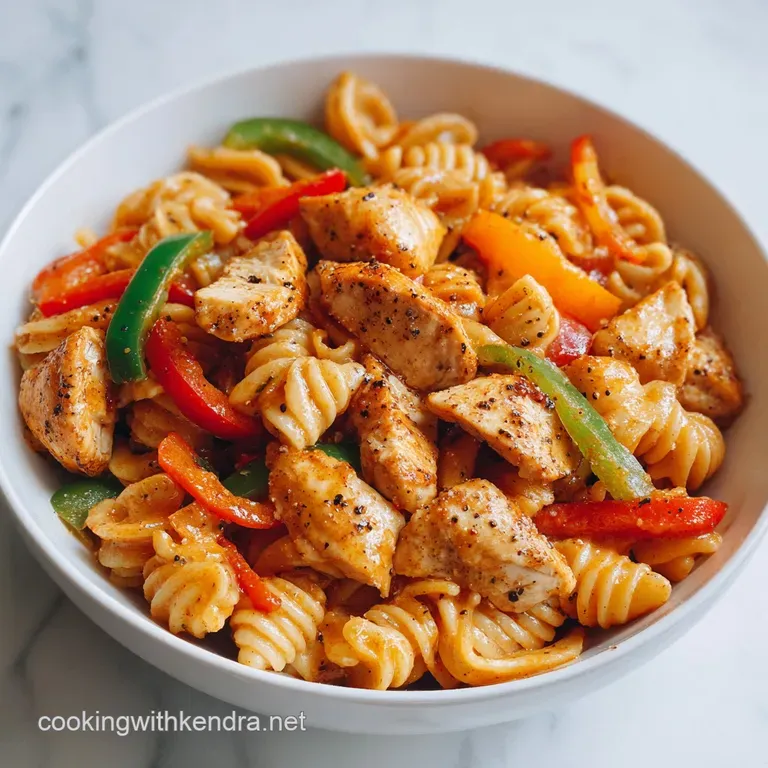
- Prep the aromatics. Slice your onion and peppers into thin, uniform strips. Note: Uniformity ensures they all soften at the same rate.
- Season the protein. Toss the chicken strips with the chili powder, cumin, smoked paprika, garlic powder, onion powder, salt, and cayenne until every piece is fully coated in spice.
- Sear the chicken. Heat avocado oil in your large skillet over medium high heat. Add chicken and cook for 5-6 minutes until golden and charred on the edges. Remove to a plate.
- Sauté the vegetables. In the same pan, add the onions and peppers. Cook for 4 minutes until they are soft but still have a slight bite.
- Deglaze the pan. Pour in the chicken broth, using a wooden spoon to scrape up all the brown bits (the fond) from the bottom. Note: This is where all the deep flavor lives.
- Simmer the pasta. Stir in the dry penne. Bring to a boil, then reduce heat to medium low. Cover and simmer for 12-15 minutes until the pasta is al dente and most liquid is absorbed.
- Incorporate the cream. Stir in the softened Neufchâtel cheese. Stir constantly for 2 minutes until the sauce is completely smooth and velvety.
- Combine and finish. Add the cooked chicken back into the pan. Stir in the fresh lime juice and chopped cilantro.
- Rest the dish. Turn off the heat and let it sit for 3 minutes until the sauce thickens and clings to the pasta.
- Garnish and serve. Plate immediately while the sauce is at its creamiest peak.
Chef's Tip: If you want an even deeper flavor, "bloom" your spices. Instead of just coating the chicken, add an extra pinch of cumin and paprika to the oil for 30 seconds before adding the vegetables. The heat releases the fat soluble flavor compounds for a much more intense aroma.
Fixing Common One Pot Pasta Issues
Why Your Sauce Is Watery
If you finish the cook time and it looks like soup, don't panic. This usually happens if the heat was too low and the liquid didn't evaporate properly, or if the pasta didn't release enough starch. The solution is simple: remove the lid and turn the heat up to medium for 2 or 3 minutes.
The rapid bubbling will reduce the liquid, and once you stir in that Neufchâtel, it will tighten up beautifully.
Why Your Pasta Is Gummy
Gummy pasta is usually the result of overcooking or not stirring enough. In a one pot meal, the starch stays in the pan rather than being drained away. If you let it sit too long, those starches start to bond into a sticky paste. Always check your pasta two minutes before the package says it should be done.
You want it to have a tiny bit of "white" in the center when you bite it, as it will continue to cook in the residual heat.
| Problem | Root Cause | Solution |
|---|---|---|
| Grainy Sauce | Cold cream cheese added too fast | Whisk the cheese with a splash of warm broth before adding to the pan |
| Tough Chicken | Overcooked during initial sear | Only cook chicken until 80% done; it finishes in the simmering sauce |
| Lack of Flavor | Not enough salt or acid | Add an extra squeeze of lime or a pinch of sea salt at the very end |
Common Mistakes Checklist:
- ✓ Pat the chicken completely dry with paper towels before seasoning (this ensures a crust rather than steam).
- ✓ Don't skip the "deglazing" step those brown bits on the pan are concentrated flavor.
- ✓ Ensure the Neufchâtel is truly softened to room temperature so it melts instantly.
- ✓ Use a lid that fits tightly to keep the steam in while the pasta cooks.
- ✓ Don't walk away during the final cheese stirring; it needs constant movement to emulsify.
Adjusting for Different Batch Sizes
If you are cooking for a crowd and want to double this Chicken Pasta Creamy recipe, you will need to watch your pan space. When you double the chicken, do not crowd the pan. Sear it in two separate batches. If you pile it all in at once, the temperature will drop, the meat will release its juices, and you will lose that beautiful Maillard crust. For the liquids, increase the broth to 1.1 liters but keep the spices at about 1.5 times the original amount first, then taste and adjust.
For those cooking for just one or two, you can easily halve the recipe. Use a smaller skillet (about 20-22 cm) to ensure the liquid level is deep enough to cover the pasta. If the pan is too wide, the broth will evaporate before the pasta has a chance to soften.
Reduce the simmer time by about 2 or 3 minutes, but keep a close eye on the texture.
Myths About One Pot Cooking
One of the biggest misconceptions is that one pot pasta is inherently "mushy" or "lesser" than traditional methods. This is simply not true. When you boil pasta in a huge pot of salted water, you are throwing away all that beautiful starch. In a one pot setting, that starch is your best friend.
It creates a "sauce stability" that you just can't get with heavy cream alone.
Another myth is that you can't get a good sear on meat in a one pot dish. The trick is simply timing. By searing the chicken first and removing it, you get the benefit of the browned protein without the risk of overcooking it while the pasta boils. It is all about the sequence of events. It is a bit like the technique we use for a Proper Homemade Chicken recipe — high heat and timing are everything.
Storing and Reheating Your Leftovers
This dish keeps incredibly well in the fridge for up to 4 days. In fact, some people say the flavors meld and improve by day two. However, the pasta will continue to soak up the sauce as it sits. When you go to reheat it, add a tablespoon of water or a splash of milk before microwaving.
This loosens the sauce back up to its original velvety state.
Zero Waste Tip: Don't throw away the cilantro stems! While we usually use the leaves for garnish, the stems actually hold the most concentrated flavor. Finely mince them and throw them in with the onions and peppers at the start of the sauté.
It adds a deep, herbal punch that the leaves alone can't provide. You can also save the "butts" of your onions and the tops of your peppers in a bag in the freezer to make your own vegetable stock later.
Side Dishes to Complete the Meal
Since this is a heavy, creamy dish, I usually like to serve it with something bright and crunchy to cut through the richness. A simple cucumber salad with a vinegar based dressing is a fantastic contrast.
If you want to keep the theme going, a side of charred corn with a sprinkle of cotija cheese and chili lime seasoning works wonders.
If you find yourself craving something a bit more traditional, garlic bread is always a winner. It is perfect for scooping up any leftover sauce that might be lingering at the bottom of the bowl. If you are looking for more inspiration, check out my Chicken Marsala Recipe for another example of how a well balanced sauce can transform a simple piece of protein into a family favorite.
- For more heat
- Add a diced jalapeño with the onions, leaving the seeds in.
- For a lighter version
- Use whole wheat pasta and double the amount of peppers.
- For a shortcut
- Use a rotisserie chicken and add it at the very end with the cheese.
High in Sodium
845 mg mg of sodium per serving (37% % of daily value)
The American Heart Association recommends limiting sodium intake to about 2,300mg per day for overall health.
Tips to Reduce Sodium in This Recipe
-
Low-Sodium Broth-30%
Replace the regular chicken broth with low-sodium or no-salt added chicken broth. This can significantly reduce the overall sodium content.
-
Reduce Neufchâtel Cheese-15%
Using less Neufchâtel cheese or substituting with a lower sodium cheese alternative can help lower sodium. Try using half the amount or a low-sodium ricotta.
-
Control Salt Usage-25%
Eliminate the added sea salt and taste the dish before adding any salt. The chicken broth and other ingredients may already provide enough sodium. You can always add more salt at the end, if needed.
-
Spice It Up!
Enhance flavor with fresh herbs and spices instead of relying on salt. The chili powder, smoked paprika, cumin, garlic powder, onion powder, cayenne pepper, lime juice, and cilantro already add great flavor. Consider adding other sodium free spices, such as oregano, or black pepper.
Recipe FAQs
What goes in chicken fajita pasta?
Chicken, penne pasta, bell peppers, onion, chicken broth, and Neufchâtel cheese are essential. The smoky flavor comes from a heavy blend of chili powder, cumin, and smoked paprika which emulsifies with the cheese and broth to create the sauce.
What kind of pasta is best for fajitas?
Penne or fusilli are the best shapes for this dish. Both shapes have ridges or spirals designed to catch and hold the thick, creamy sauce during the one-pot simmering process.
What toppings are good with chicken fajita pasta?
Fresh cilantro, lime wedges, and maybe a sprinkle of cotija cheese are excellent. You want toppings that add brightness and texture to cut through the creaminess of the Neufchâtel base.
Why is it called "marry me pasta"?
No, this dish is not traditionally called "marry me pasta," though it achieves a similar level of decadence. "Marry Me Pasta" usually refers to a dish featuring sun-dried tomatoes and heavy cream, but this fajita version achieves that same impressive, rich result quickly.
How do I prevent the chicken from becoming rubbery?
Sear the chicken strips over high heat only until 80% cooked, then remove them from the pan immediately. The chicken finishes cooking gently in the residual heat while the pasta simmers, ensuring tenderness, a technique also crucial for success in our The Authentic Pad recipe.
Can I use cream cheese instead of Neufchâtel?
Yes, but you must adjust the amount of broth slightly. Full fat cream cheese has less moisture, so you might need to add an extra quarter cup of broth to maintain the sauce consistency during the simmer.
How do I make the sauce silky smooth instead of grainy?
Ensure the Neufchâtel is fully softened at room temperature before use. Before adding it to the hot pan, whisk the cheese with a small splash of the warm broth to temper it, which prevents the fats from seizing up when introduced to the heat.
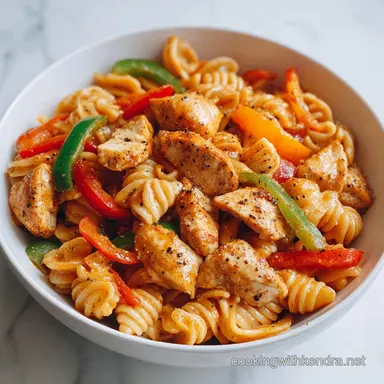
Creamy Chicken Fajita Pasta
Ingredients:
Instructions:
Nutrition Facts:
| Calories | 574 kcal |
|---|---|
| Protein | 53 g |
| Fat | 13 g |
| Carbs | 54 g |
| Fiber | 4 g |
| Sugar | 5 g |
| Sodium | 845 mg |
