Crispy Gochujang Brussels Sprouts | Ultimate Umami Bomb
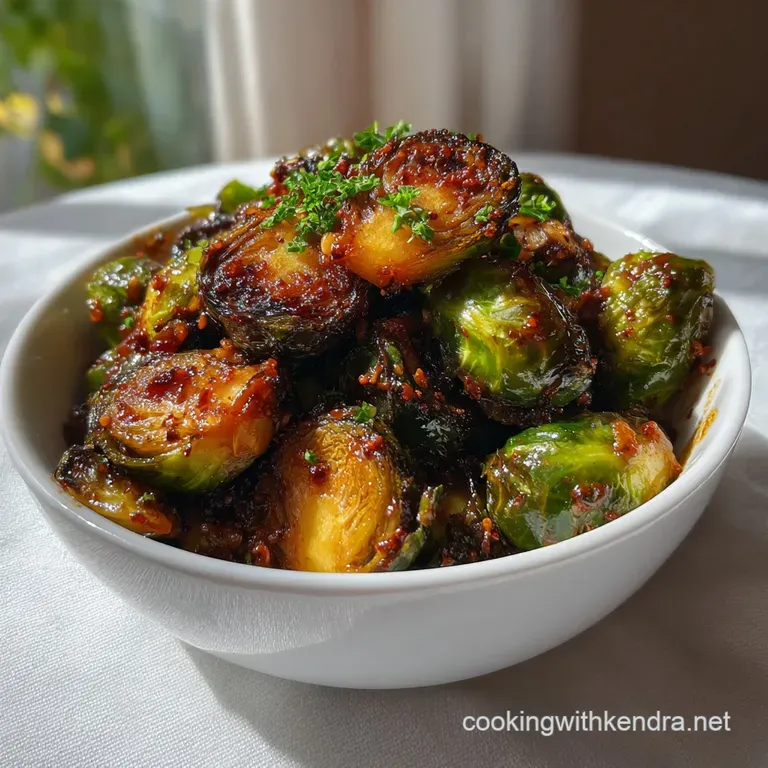
- Effort/Time: 30 minutes total (10 min prep, 20 min cook)
- Flavor Hook: Fermented funk meets sweet honey and charred, nutty caramelization
- Perfect for: Quick-easy-meals, holiday side-dishes, and veggie-forward-appetizers
Why You Should Master the Ultimate Crispy Gochujang Brussels Sprouts
We’ve all been there: you pull a tray of Brussels sprouts out of the oven, hoping for that restaurant style crunch, only to find a pile of gray, sulfurous mush. It’s a technical nightmare.
This happens because the sprouts weren't roasted at a high enough temperature to bypass the steaming phase, or they were overcrowded, trapping moisture against the pan. I ruined at least three batches of Crispy Gochujang Brussels Sprouts before I realized that the secret isn't just the heat it’s the timing of the sugar heavy glaze.
If you add the Gochujang mixture too early, the sugars burn before the sprouts cook through. If you add it too late, the sauce won't emulsify with the roasting fats. This recipe solves that by using a two-stage thermal process.
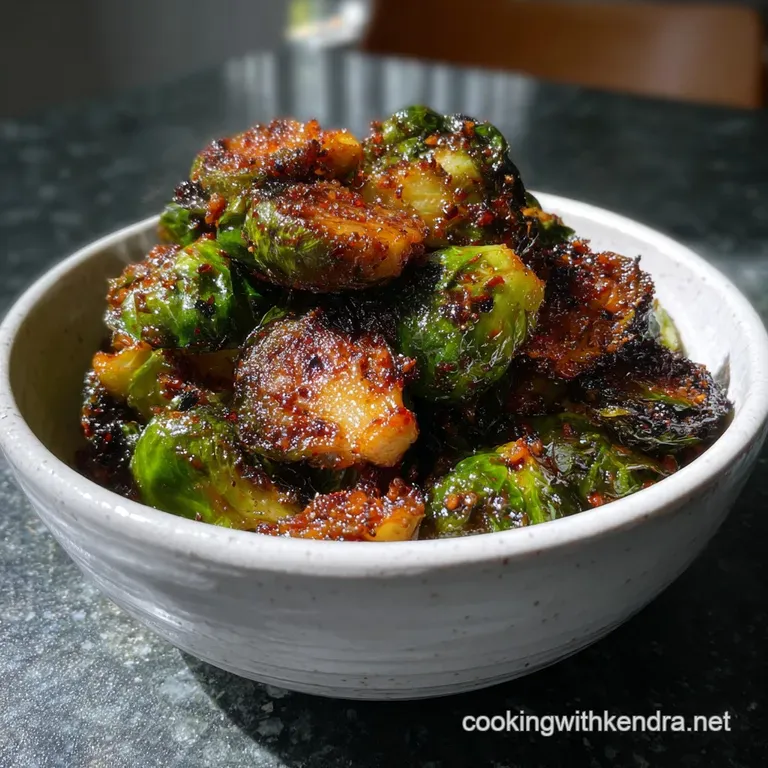
We start with a high intensity dry roast to develop the crust, then finish with a quick glaze to create a velvety, glossy coating. You’ll hear that distinct crackle as the honey lacquered leaves hit the hot metal when making these Crispy Gochujang Brussels Sprouts.
This is about more than just a side dish; it’s about engineering the perfect bite. We’re looking for a mahogany charred exterior and a tender, buttery core when eating Crispy Gochujang Brussels Sprouts. It’s the same focus on texture you’d find in my Potstickers recipe, where the contrast between the soft dough and the crispy base is everything. Let’s crack on and get these sprouts into the oven.
The Science of Texture and Umami Balance
- Hygroscopic Sugar Management: Honey and Gochujang are hygroscopic, meaning they attract water. Adding them at the start of cooking would pull moisture out of the sprouts, creating a soggy environment.
- Maillard Reaction Optimization: By roasting at 425°F, we facilitate the chemical reaction between amino acids and reducing sugars, which creates hundreds of different flavor compounds and that characteristic brown "crunch."
- Glucosinolate Neutralization: High, dry heat quickly deactivates myrosinase enzymes. This prevents the formation of isothiocyanates the compounds responsible for that "stinky" boiled cabbage smell.
- Capsaicin Satiety: The heat from the Gochujang triggers a mild endorphin rush, while the fermented glutamates provide a deep umami that signals protein rich satisfaction to the brain. The resulting flavor profile makes Crispy Gochujang Brussels Sprouts so appealing.
Technical Breakdown of Preparation and Cooking Metrics
| Metric | Value | Technical Note |
|---|---|---|
| Yield | 4 servings | Standard side dish portioning |
| Prep Time | 10 minutes | Focus on consistent halving for even heat distribution |
| Cook Time | 20 minutes | 15 mins dry roast + 5 mins glazed finish |
| Total Time | 30 minutes | Ideal for quick easy meals and busy weeknights |
| Target Temp | 425°F (218°C) | Necessary for rapid moisture evaporation |
The Alchemy of Umami: Selecting Your Elements
Selecting your ingredients for Crispy Gochujang Brussels Sprouts requires an understanding of smoke points and fermentation levels. For instance, using a low-smoke point oil would result in acrid, burnt flavors before the sprouts ever got crispy. Stick to the data below for the best results.
Ingredient Chemistry Breakdown
| Ingredient | Chemical/Physical Role (Science) | The Pro Secret (Why This Matters) |
|---|---|---|
| Brussels Sprouts | Cellulose structure for fiber rich crunch | Halving increases the surface area for the Maillard reaction. |
| Avocado Oil | High smoke point (520°F) thermal carrier | Prevents oil oxidation during over high heat 425°F roasting. |
| Gochujang | Protease activity and fermented glutamates | Acts as an emulsifier for the glaze while providing "deep" umami. |
| Rice Vinegar | pH adjustment and acid cut | Breaks through the heavy fats to brighten the overall flavor profile. |
- 1.5 lbs Brussels sprouts, trimmed and halved. Why this? Smaller pieces ensure the center reaches peak tenderness before the exterior burns.
- 2 tbsp avocado oil. Why this? You need a neutral fat that won't smoke at 425°F, unlike butter or extra virgin olive oil.
- 1/2 tsp kosher salt (Diamond Crystal).
- 1/4 tsp black pepper.
- 2 tbsp Gochujang (Korean chili paste). Why this? The fermented base provides a thicker viscosity than standard hot sauce.
- 1.5 tbsp honey. Why this? Fructose caramelizes at a lower temperature than table sugar, aiding in the "glaze" effect.
- 1 tbsp low-sodium soy sauce.
- 1 tbsp rice vinegar.
- 1 tsp toasted sesame oil.
- 1 clove garlic, finely minced.
- 1 tsp fresh ginger, grated.
- 1 tbsp toasted white sesame seeds.
- 2 stalks scallions, thinly sliced.
Essential Culinary Tools for Maximum Thermal Efficiency
To get truly Crispy Gochujang Brussels Sprouts, you need tools that manage heat effectively. A thin, flimsy cookie sheet will warp and cause uneven cooking.
- Lodge Cast Iron Baking Sheet: Provides high thermal mass to sear the sprouts the moment they touch the surface.
- Microplane Zester: Essential for the garlic and ginger to ensure they integrate into the glaze without leaving chunky, raw bits.
- Metal Spatula (Fish Spatula): Allows you to scrape the caramelized bits off the pan without breaking the delicate sprout leaves.
- Stainless Steel Mixing Bowl: For tossing the sprouts in oil; the metal helps conduct heat if you're prepping near the stove.
Precision Execution for Shatter Crisp Vegetable Texture
- Preheat your oven and the Lodge Cast Iron Baking Sheet to 425°F. Note: A hot pan triggers immediate moisture evaporation.
- Trim the stem ends of the 1.5 lbs Brussels sprouts and slice them in half vertically.
- Toss the sprouts in a bowl with 2 tbsp avocado oil, 1/2 tsp kosher salt, and 1/4 tsp black pepper until every leaf has a glossy sheen.
- Arrange the sprouts cut-side down on the preheated sheet pan in a single layer.
- Roast for 15 minutes until the flat sides are mahogany brown and the outer leaves look translucent and crispy.
- Whisk the 2 tbsp Gochujang, 1.5 tbsp honey, 1 tbsp soy sauce, 1 tbsp rice vinegar, 1 tsp sesame oil, garlic, and ginger in a small bowl.
- Remove the pan from the oven and pour the glaze directly over the roasted sprouts.
- Toss the mixture with a spatula for 30 seconds until the sauce bubbles and creates a velvety, thick coating.
- Return to the oven for 5 minutes until the glaze is tacky and the aroma is nutty and pungent.
- Garnish with 1 tbsp sesame seeds and 2 sliced scallions immediately before the "shatter" texture softens.
Why Your Sprouts Turn Out Soggy or Bitter
If your Crispy Gochujang Brussels Sprouts aren't living up to the name, it's usually a physics issue. When sprouts are crowded, the water they release can't escape as steam. Instead, it collects around the vegetable, leading to starch gelatinization (sogginess) rather than the Maillard reaction. This is a common pitfall in many Healthy Dinner Recipes where heat management is overlooked.
Why Your Brussels Sprouts Aren't Crispy
The most common cause is "pan crowding." If the sprouts are touching, they steam each other. Another factor is the oven temperature; if it's too low, the internal fibers collapse and turn mushy before the outside can brown. You need that aggressive 425°F to flash evaporate surface moisture.
| Problem | Root Cause | The Fix | Pro Protocol |
|---|---|---|---|
| Soggy/Soft | Steam entrapment | Use two pans | Maintain 1 inch of space between each sprout. |
| Burnt Glaze | Sugar carbonization | Add glaze late | Never add honey based glazes at the start of a 20 min roast. |
| Bitter Aftertaste | Sulfur compound release | Increase temperature | High heat deactivates bitter enzymes faster than low heat. |
Flavor Architecture and Dietary Adaptation Strategies
You can adapt this Crispy Gochujang Brussels Sprout Recipe to fit various diets, but remember the "Honest Trade off" rule: changing the fat or sugar will alter the final texture of your Crispy Gochujang Brussels Sprouts.
| Original Ingredient | Substitute | Why It Works |
|---|---|---|
| Honey (1.5 tbsp) | Maple Syrup (1.5 tbsp) | Vegan friendly. Note: Thinner consistency; may require 2 mins extra roasting to thicken. |
| Avocado Oil | Ghee (melted) | Adds a nutty, buttery depth with a high smoke point. |
| Low-Sodium Soy Sauce | Tamari | Makes the dish 100% gluten-free without losing umami. |
| Gochujang | Sriracha + Miso | Note: Use a 1:1 mix if you can't find Gochujang; lacks the same depth of fermentation. |
Gochujang Brussel Sprouts Air Fryer Method If using an air fryer, reduce the temperature to 390°F. Roast the sprouts for 12 minutes, shaking halfway through. Add the glaze and air fry for an additional 3 4 minutes.
The high velocity air creates an even better "shatter" texture on the loose leaves of your Crispy Gochujang Brussels Sprouts.
Maintaining Structural Integrity During Cooling and Storage
Brussels sprouts are best served immediately. As they cool, the moisture from the tender interior migrates to the crispy exterior, leading to "structural softening."
- Fridge: Store in an airtight container for up to 4 days. The glaze will thicken and become more pungent.
- Freezing: Not recommended. The cellular walls of the sprouts will rupture upon thawing, resulting in a mushy mess.
- Reheating: Avoid the microwave at all costs it will turn the glaze into a sticky syrup and the sprouts into mush. Instead, reheat in a 400°F oven or air fryer for 5 minutes to restore the crispiness.
💡 ZERO WASTE PHILOSOPHY Don't discard the loose leaves that fall off while trimming! Transform: Toss them in the oil and roast them on the same pan.
Science: These leaves have a higher surface area-to-volume ratio and will turn into "sprout chips" that add a secondary layer of crunch to the dish, complementing the main batch of Crispy Gochujang Brussels Sprouts.
Enhancing the Flavor Profile with Complementary Pairings
These Korean Style Brussels Sprouts are incredibly versatile. They have a heavy umami profile that pairs well with clean, fatty proteins. I love serving them alongside a 25Minute Crispy PanSeared recipe — the lemon in the salmon cuts right through the spicy Gochujang glaze.
For a full Korean BBQ Brussels Sprouts experience, serve these over fluffy jasmine rice with a side of kimchi. The acidity of the kimchi provides a necessary counterpoint to the honey in the sprouts. If you're looking for a more fusion style meal, they also work surprisingly well as a topping for a Chicken Alfredo Pizza Recipe, where the spice cuts through the heavy cream sauce.
Whatever you do, make sure you serve them hot. The magic of Crispy Asian Brussels Sprouts lies in that fleeting moment where the glaze is tacky and the leaves are still "shatter crisp." Trust me, once you master the thermal timing of this recipe, you'll never go back to basic roasted veggies again.

Recipe FAQs
What is the minimum oven temperature required for crispness?
425°F. This high heat is necessary to immediately flash evaporate surface moisture before the cell walls collapse and steam begins. If you master this high heat application, see how the same principle applies to achieving a superior crust in our How to Prepare Flounder For: My Crispy Lemon Herb Secret!
Should I add the Gochujang glaze before or during roasting?
Add glaze only in the final 5 minutes. The high sugar content in honey will carbonize and burn under prolonged, high heat exposure. Sugar burns quickly when exposed to temperatures above 320°F, leading to bitter compounds.
- Roast sprouts dry for 15 minutes
- Toss with glaze off-heat
- Finish roasting for 5 minutes
Are these sprouts suitable for meal prepping?
No. Eat immediately for best texture. The high moisture content in the interior will migrate to the crispy exterior as the dish cools. This migration softens the cell structure, resulting in a non-crisp texture after refrigeration.
Should I use a baking sheet or a roasting pan?
A thick, heavy baking sheet is superior. Heavy gauge metal maintains stable heat transfer upon loading, creating an immediate sear on the sprout bottoms. A thinner pan loses heat quickly, which initiates the steaming phase instead of crisping.
Can I substitute the avocado oil with olive oil?
Avocado oil for high heat searing. Extra Virgin Olive Oil has a low smoke point around 325°F and will smoke and turn acrid at our 425°F requirement. If you need a lower temperature frying technique, review our guide on Crispy Secrets: How to Make Tempura Batter Like a Pro!
Myth: Using frozen Brussels sprouts works fine.
Myth: Using frozen Brussels sprouts works fine. Reality: Freezing creates ice crystals that rupture cell walls, releasing excess moisture during cooking. This guarantees a soggy result, unlike recipes where dry ingredients are required.
What ingredient makes these vegan friendly?
Maple syrup is the best honey substitute. While honey provides excellent viscosity for the glaze, pure maple syrup contains similar sugars that caramelize effectively. The textural science remains consistent, similar to using maple in our Auntie's Veg Samosa Recipe: Crispy, Classic & Easy!
Crispy Gochujang Sprouts Recipe
Ingredients:
Instructions:
Nutrition Facts:
| Calories | 206 calories |
|---|---|
| Protein | 6.7 g |
| Fat | 9.4 g |
| Carbs | 25.8 g |
| Fiber | 6.9 g |
| Sugar | 8.4 g |
| Sodium | 648 mg |
