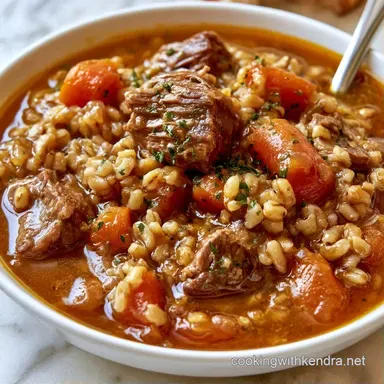
Old Fashioned Dutch Oven Beef Barley Soup
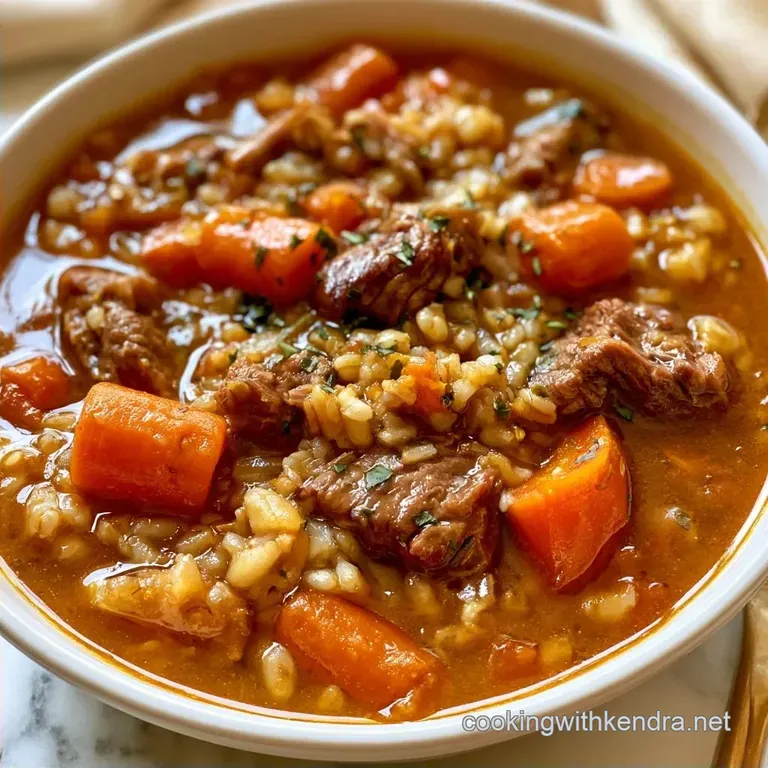
- Time: 15 min active + 60 min simmering
- Flavor/Texture Hook: Rich, mahogany broth with chewy grains and tender beef
- Perfect for: Cold weeknights or meal prep for the family
- Dutch Oven Beef Barley Soup Basics
- What Makes This So Good
- Why These Ingredients Work
- Necessary Gear for the Pot
- Putting the Soup Together
- Handling Common Soup Issues
- Adjusting the Portion Size
- Storing and Freezing Your Soup
- Changing Up the Ingredients
- Best Ways to Serve
- High in Sodium
- Recipe FAQs
- 📝 Recipe Card
The aroma of beef browning in a heavy pot is an instant appetite stimulant. However, many homemade versions fail in two ways: the beef turns out rubbery, or the broth remains thin and flavorless. I recall one winter when I simply dumped all the ingredients into a pot and hoped for a miracle.
I ended up with a pale, watery soup and chunks of beef that were incredibly difficult to chew.
You can easily avoid these mistakes with a heavy pot and a little patience while searing. Developing that deep, caramelized crust on the meat creates the essential flavor profile for the entire dish.
This Dutch Oven Beef Barley Soup transforms simple pantry staples into a bowl of pure comfort. It is a rustic, satisfying meal that actually tastes even better after sitting for a day.
Dutch Oven Beef Barley Soup Basics
Consistency is key here. A Dutch oven is ideal for maintaining steady heat, ensuring the barley swells without the bottom burning. This follows the same principle as my melt in-your mouth oven braised chuck steak: start with intense heat, then finish low and slow.
To get the best sear on the beef, avoid overloading the pot. Overcrowding causes the pan to cool down, which means the meat will steam in its own liquids and turn grey rather than developing a rich, dark crust. Working in batches adds only five minutes to the process, but it makes a huge difference in depth of flavor.
The barley does the heavy lifting in this dish. While simmering, it lets out starches that act as a natural thickener, removing the need for cornstarch or a flour slurry. This creates a silky, opulent texture that beautifully coats every piece of vegetable.
What Makes This So Good
- over High heat Searing: Browning the beef creates complex flavors that infuse the entire broth.
- Barley Starch: The grains break down slightly during the 60 minute cook, thickening the soup naturally.
- Layered Aromatics: Sautéing the vegetables before adding liquid ensures the sweetness of the carrots and onions is fully developed.
Why These Ingredients Work
| Component | Purpose | Substitute Notes |
|---|---|---|
| Beef Chuck | Adds essential fat and collagen for tenderness | Stew meat: A viable option, though chuck offers more depth |
| Pearl Barley | Provides texture and naturally thickens the liquid | Farro: Similar bite, though less thickening power |
| Tomato Paste | Contributes rich color and a hint of acidity | Tomato sauce: Use 3 tbsp, but it lacks the same intensity |
| Beef Broth | Serves as the savory foundation | Bone broth: Offers a richer feel and extra protein |
The Shopping List
- 2 lbs beef chuck, chopped into 1 inch cubes Why this? The higher fat content ensures the meat stays tender while simmering
- 2 tbsp olive oil
- 1 tsp kosher salt
- 1/2 tsp ground black pepper
- 1 large yellow onion, chopped
- 3 medium carrots, sliced into rounds
- 2 stalks of celery, sliced
- 4 garlic cloves, minced
- 2 tbsp tomato paste
- 8 cups beef broth, low sodium
- 3/4 cup pearl barley, rinsed Why this? Pearl barley has a shorter cooking time than hulled varieties
- 2 medium gold potatoes, cubed
- 1 tsp dried thyme
- 1 tsp dried rosemary
- 1 bay leaf
- 1 tbsp Worcestershire sauce
Necessary Gear for the Pot
A 5 to-7 quart Dutch oven is the only essential tool for this recipe. Cast iron is ideal since it distributes heat slowly and evenly. If you lack one, a thick bottomed stockpot is a good substitute, though you may need to stir more frequently to prevent hot spots.
In addition to the pot, you will need a sturdy wooden spoon for scraping the bottom and tongs for flipping the meat. A sharp chef's knife is crucial for cutting the beef and vegetables into uniform sizes so that everything cooks at the same rate.
Putting the Soup Together
Step 1: The Flavor Foundation
Pat the beef cubes dry with paper towels. Season with salt and pepper. Warm olive oil in the Dutch oven over medium high heat. Sear the beef in batches until deeply browned on all sides, then remove and set aside on a plate. Note: Dry meat sears; wet meat steams.
Step 2: Building the Aromatics
Reduce heat to medium. In the same pot, sauté the diced onion, carrots, and celery for 5–7 minutes until softened. Stir in minced garlic and tomato paste, cooking for another 60 seconds.
Step 3: Deglazing the Pot
Pour in the beef broth, using your spoon to loosen the caramelized fond from the bottom. Note: Those bits are concentrated flavor.
Step 4: Combining Ingredients
Stir in the seared beef, pearl barley, cubed potatoes, thyme, rosemary, bay leaf, and Worcestershire sauce.
Step 5: The Simmer
Bring the mixture to a boil, then turn the heat down to low. Cover and cook gently for 45–50 minutes, until the beef is tender and the barley has plumped.
Step 6: Final Adjustments
Remove the bay leaf. Taste the broth. Adjust seasoning with additional salt or pepper. Thin with water or extra broth if it's too thick for your liking.
Handling Common Soup Issues
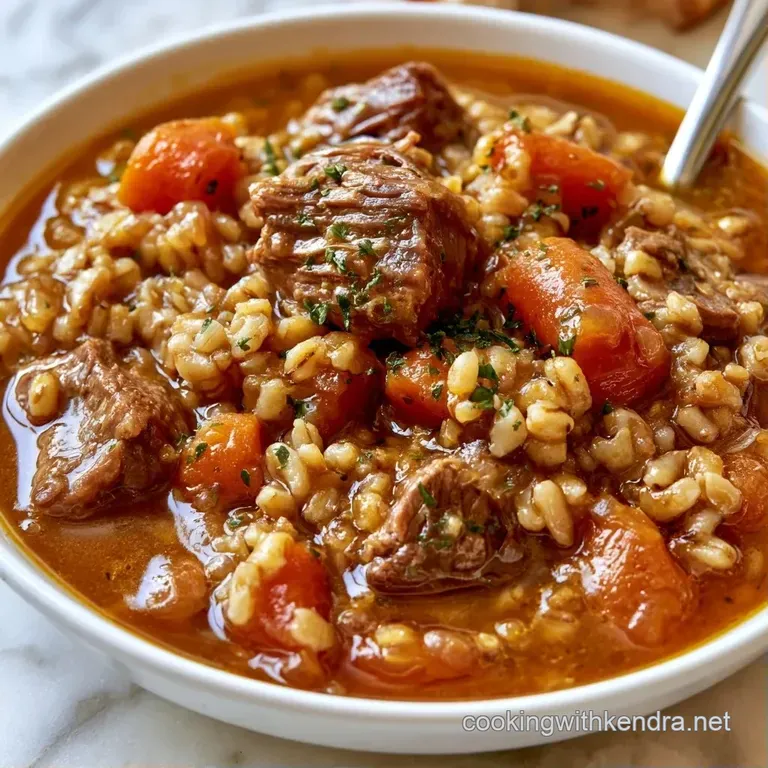
Don't worry if your soup has the consistency of porridge. Barley acts like a sponge, continuing to absorb liquid even after the burner is off. This is especially common if the soup sits overnight.
Another frequent issue is beef that feels rubbery. This occurs when the simmer is too aggressive, causing the muscle fibers to contract. A slow, gentle bubble is the secret to meat that falls apart.
Fixing a Thick Texture
If the barley has soaked up too much moisture, simply stir in a bit of beef broth or water while reheating.
Fixing Tough Meat
Should the beef remain tough, simmer for an additional 15-20 minutes. Cooking low and slow is the only way to break down the connective tissue in a chuck roast.
Fixing a Bland Broth
Stir in a teaspoon of lemon juice or a small amount of apple cider vinegar at the very end. The acidity brightens the savory notes.
| Problem | Fix |
|---|---|
| Soup is too thick | Stir in 1/2 cup beef broth or water |
| Beef is still tough | Simmer for another 15-20 minutes |
| Flavor is flat | Add a squeeze of lemon or more pepper |
Adjusting the Portion Size
If you're cooking for just two people, you can halve the recipe. Use a smaller pot to ensure the liquid doesn't evaporate too quickly. Reduce the simmering time by about 20%, but keep an eye on the beef tenderness.
You'll need to beat one egg if you're adding a binder to a side dish, but for this soup, just cut everything in half.
When doubling the recipe for a crowd, don't double the salt and spices. Start with 1.5x the amount of salt, thyme, and rosemary, then taste at the end. Liquids can be reduced by about 10% when doubling because less moisture evaporates from a larger volume. Work in more batches when searing the beef to keep the pan hot.
Method Comparison
| Feature | Stovetop Method | Oven Method (Braise) |
|---|---|---|
| Heat Control | Direct, fast changes | Steady, surrounding heat |
| Texture | Standard soup consistency | Slightly thicker, stew like |
| Effort | Requires occasional stirring | Set it and forget it |
Decision Shortcut
- For a thicker, stew like consistency: increase barley to 1 cup.
- For leaner meat: trim excess fat from chuck, but add 1 tbsp extra oil for searing.
- For a quicker cook: cut beef and potatoes into 1/2 inch cubes instead of 1 inch.
Storing and Freezing Your Soup
This Dutch Oven Beef Barley Soup is a meal prep dream. It stays fresh in the fridge for 3-4 days when kept in a sealed container. I actually think the flavor peaks on day two because the barley and beef have more time to mingle.
For the freezer, I recommend freezing the soup without the potatoes. Potatoes can get a grainy, mealy texture when frozen and thawed. If you must freeze them, just be aware they won't be the same. Freeze in freezer safe bags or plastic containers for up to 3 months.
To reheat, put the soup back in a pot over medium heat. Since the barley continues to absorb liquid, you'll almost certainly need to add a bit of water or broth to get that soup consistency back.
Zero Waste Tips
Don't toss your veggie scraps. Keep the onion skins and carrot ends in a freezer bag. Once the bag is full, simmer them with water to make a basic vegetable stock for your next meal. If you have leftover beef broth in the carton, freeze it in ice cube trays for quick flavor boosts in other sauces.
Changing Up the Ingredients
If you want a different vibe, try adding some hearty greens. Stir in two handfuls of fresh spinach or chopped kale during the last 5 minutes of cooking. It adds a pop of color and some freshness to the rich broth. For a different protein approach, you can look at a hearty Italian beef stew for inspiration on how to braise meat.
For a zesty twist, add a tablespoon of balsamic vinegar along with the Worcestershire sauce. The sweetness and tang cut through the richness of the beef chuck. If you're avoiding gluten, swap the pearl barley for quinoa or brown rice, though you'll lose that natural thickening effect.
For Extra Heartiness
Add a diced parsnip or a turnip along with the carrots. They add a subtle earthy sweetness that pairs well with the rosemary.
For a Lighter Version
Use a leaner cut of beef and skim the fat off the top of the broth with a spoon before serving.
Best Ways to Serve
This soup is a meal in itself, but it needs a partner. A thick slice of toasted sourdough or a crusty baguette is non negotiable. The bread is perfect for soaking up the last bits of the mahogany broth.
If you want a full spread, pair it with a crisp green salad with a sharp vinaigrette. The acidity of the salad balances the heaviness of the Dutch Oven Beef Barley Soup. Some people like a dollop of sour cream or a sprinkle of fresh parsley on top for a bit of brightness.
The Comfort Spread
Set out a platter of salted butter and warm rolls. For an extra touch, grate some fresh Parmesan over the bowl just before serving. It melts into the barley and adds a salty, nutty finish.
Right then, you've got everything you need to get this going. Trust me on the searing don't rush it. Once that pot starts bubbling and the house smells like a cozy kitchen, you'll know you did it right. Let's crack on.
High in Sodium
1050 mg 1,050 mg of sodium per serving (46% 46% of daily value)
The American Heart Association recommends limiting sodium intake to 2,300 mg per day, and ideally closer to 1,500 mg for adults with hypertension.
Tips to Reduce Sodium
-
Swap the Broth-30%
Replace the low-sodium beef broth with homemade unsalted beef stock or water with a splash of soy sauce for a significant reduction.
-
Cut the Added Salt-25%
Reduce or completely eliminate the 1 tsp of kosher salt, as the broth and Worcestershire sauce already provide ample seasoning.
-
Modify the Sauce-20%
Substitute Worcestershire sauce with a mix of lemon juice, apple cider vinegar, and a pinch of smoked paprika to keep the savory depth.
-
Choose No-Salt Tomato Paste-15%
Ensure you are using no-salt added tomato paste or replace it with a small amount of fresh pureed tomatoes.
-
Enhance Herbs & Spices
Increase the amount of fresh garlic, thyme, and rosemary to boost the flavor profile without adding any sodium.
Recipe FAQs
What cut of meat works best for this soup?
Use beef chuck roast cut into one-inch cubes. This cut breaks down during the simmer, resulting in tender pieces that won't dry out.
Which common mistakes should I avoid when cooking?
Don't crowd the pot when searing the beef. Searing in batches ensures the meat browns deeply instead of steaming in its own juices.
How to boost the depth of flavor in the broth?
Sauté the tomato paste with the aromatics and deglaze the pot thoroughly. This releases the browned bits from the bottom to enrich the base.
Does this version include potatoes?
Yes, it uses cubed gold potatoes for heartiness. They add a natural thickness to the soup as they simmer.
Is it true that pearl barley requires soaking before use?
Surprisingly, no. Rinsing the pearl barley is sufficient before adding it directly to the simmering pot.
What is the best way to keep the soup from becoming too thick?
Stir in a bit of extra beef broth or water before serving. Barley continues to absorb liquid even after the heat is turned off.
Can this be adapted for a slow cooker?
Sear the meat and sauté the vegetables in a pan first before transferring everything to the slow cooker. For other hearty slow cooked meals, see how a similar low-and-slow approach works in our Crock Pot Chili.
Why is searing the beef necessary?
Searing creates a Maillard reaction that adds complex, savory notes to the entire pot. If you enjoyed mastering this browning technique here, see how the same principle works in our Chuck Roast guide.
Dutch Oven Beef Barley Soup