Cream Puffs: Crispy Choux Pastry with Vanilla Cream
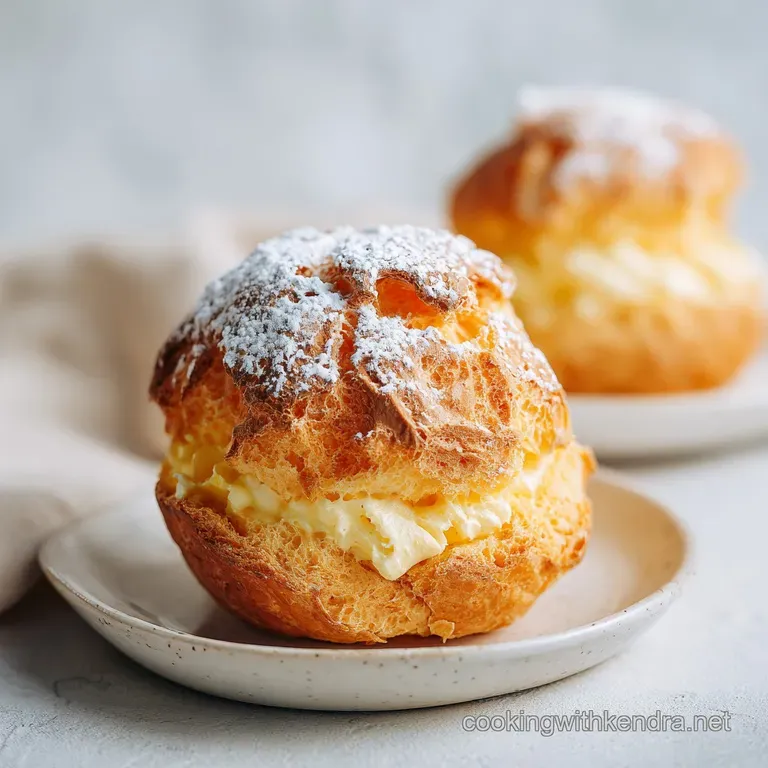
- Time: Active 20 minutes, Passive 30 minutes, Total 50 minutes
- Flavor/Texture Hook: A crisp, buttery exterior with a pillowy, cloud like filling.
- Perfect for: Showing off at Sunday brunch or a fancy holiday dessert spread.
- Achieving Light and Airy Perfection in Your Homemade Cream Puffs
- The Role of High Heat and Steam Expansion
- Component Analysis for Successful Choux Pastry
- Selecting the Best Elements for Your Bake
- Essential Tools for Consistent Pastry Results
- Executing the Classic Choux Pastry Method
- Avoiding Common Pitfalls for Crisp Hollow Centers
- Scaling Your Batch for Every Southern Gathering
- Fresh Versus Shortcut Comparison
- Flavor Infusions and Creative Variations
- Practical Methods for Storing and Keeping Pastries Fresh
- Elegant Presentation and Pairing Suggestions
- Recipe FAQs
- 📝 Recipe Card
Achieving Light and Airy Perfection in Your Homemade Cream Puffs
Have you ever stood in front of your oven door, squinting through the glass, just praying for something to rise? I remember the first time I tried making these. I was terrified. The idea of "choux pastry" sounded like something only a professional chef with a tall hat could pull off.
But then, I heard it that faint, rhythmic sizzle from inside the oven, and I watched as those little mounds of dough inflated like golden balloons. The kitchen filled with this incredible aroma of toasted butter and sweet cream, and suddenly, my humble little apartment felt like a high end French patisserie.
It was a total rush.
You don't need a pastry degree to get that same feeling of victory. This recipe is all about the soul of the ingredients. We’re taking water, butter, flour, and eggs things you probably have in your pantry right now and turning them into something that looks and tastes like a million bucks.
Whether you're making these for a baby shower or just because y'all want a sweet treat on a rainy Tuesday, the process is therapeutic. There’s something so satisfying about the way the dough comes together into a glossy, smooth ball, and even more satisfaction when you finally pipe that velvety cream into the center.
We are going to walk through every little detail together. I’ve made all the mistakes so you don’t have to. I’ve had shells that came out as flat as pancakes and cream that was too runny to hold its shape.
But through those "oops" moments, I learned the tricks that actually work in a real home kitchen. We’re focusing on building flavor in stages: the nutty notes of the cooked dough, the richness of the eggs, and the pure, clean sweetness of the vanilla bean paste.
Let's get y'all ready to bake the most impressive dessert in your repertoire.
The Role of High Heat and Steam Expansion
Maximizing Steam Expansion
The Moisture Blast: Water in the dough turns to steam instantly at 425°F, pushing the pastry walls outward before they set. This creates the signature hollow center without needing any baking powder or yeast.
Mastering the V Drop Consistency
Egg Protein Structure: Eggs provide the structural integrity that holds the "balloon" shape as it inflates. Adding them one-by-one ensures they bond with the flour's starch, creating a stretchy membrane that won't leak air.
Managing Moisture Extraction
The Panade Film: Cooking the flour and water on the stove for exactly 2 minutes removes excess water. This ensures the shells dry out properly in the oven, resulting in a crisp shatter rather than a soggy chew.
| Thickness | Internal Temp | Rest Time | Visual Cue |
|---|---|---|---|
| 2 inch mound | N/A (Internal air) | 5 minutes | Deep golden brown, firm to touch |
| 1 inch (Mini) | N/A (Internal air) | 3 minutes | Light amber, sounds hollow when tapped |
| 3 inch (Large) | N/A (Internal air) | 8 minutes | Dark mahogany, rigid side walls |
When you are aiming for that perfect rise, the initial blast of heat is your best friend. If your oven isn't truly at 425°F when those trays go in, the steam won't have enough "oomph" to lift the heavy dough.
I always tell my friends to let the oven preheat for at least twenty minutes past the "beep" just to be sure the walls are radiating heat. This ensures that the moment the tray slides in, the expansion starts immediately, giving you those tall, proud shells we're after.
Component Analysis for Successful Choux Pastry
| Ingredient | Science Role | Pro Secret |
|---|---|---|
| All Purpose Flour | Provides the gluten framework to trap steam. | Sift it before adding to prevent tiny flour "pearls" in your dough. |
| Large Eggs | Acts as the leavening agent and adds richness. | Always use room temperature eggs so they don't seize the warm butter. |
| Unsalted Butter | Distributes fat for a tender, flaky crumb. | Cube it small so it melts completely before the water reaches a boil. |
| Heavy Cream | Creates the high fat stable foam for the filling. | Keep the bowl and whisk attachment in the freezer for 10 minutes before whipping. |
Making sure your butter is cubed small is a tiny step that makes a massive difference. If you drop a whole stick of butter into boiling water, the water will evaporate too much before the butter finally melts.
By the time you add your flour, your ratios will be all out of whack because you've lost too much liquid to the air. It’s these little southern kitchen habits the "measure twice, cut once" mentality that keep your bakes consistent every single time.
Selecting the Best Elements for Your Bake
- 1 cup water (240ml): Use filtered water if your tap water has a strong mineral taste.
- Substitute: Whole milk for a softer, more browned shell.
- 0.5 cup unsalted butter (113g), cubed: Why this? Controls the salt level perfectly while providing a rich, creamy mouthfeel.
- Substitute: Salted butter (just omit the extra fine sea salt).
- 1 tsp granulated sugar (4g): Helps with the Maillard reaction for a beautiful color.
- Substitute: Honey (adds a floral note but will brown much faster).
- 0.25 tsp fine sea salt (1.5g): Enhances the natural sweetness of the cream.
- Substitute: Table salt (use slightly less as it’s denser).
- 1 cup all purpose flour (125g), sifted: Why this? The perfect protein balance for structure without being too tough.
- Substitute: Bread flour for a sturdier, crunchier shell.
- 4 large eggs (approx. 200g), room temperature: The "engine" that makes the pastry rise.
- Substitute: 5 medium eggs if you can't find large ones.
- 2 cups heavy whipping cream (480ml), cold: Why this? High fat content is required for stiff peaks that hold their shape.
- Substitute: Double cream for an even richer, thicker filling.
- 0.5 cup powdered sugar (60g): Dissolves instantly into the cold cream.
- Substitute: Superfine sugar (provides a slight crunch if not fully dissolved).
- 1 tsp vanilla bean paste or extract (5ml): Why this? Paste adds beautiful black specks and a deep, aromatic flavor.
- Substitute: Scraped seeds from half a vanilla bean.
Essential Tools for Consistent Pastry Results
Having the right gear makes this process feel like a breeze rather than a workout. You definitely want a heavy bottomed saucepan. Thin pots heat up too fast and can scorch your flour before the moisture has a chance to evaporate.
A good wooden spoon is also non negotiable for me; you need that leverage to beat the flour into the water until it forms a smooth, cohesive ball. If you've ever tried using a whisk for that part, y'all know it just gets stuck in the wires and creates a mess.
While you can technically mix the eggs in by hand, a stand mixer with a paddle attachment is a lifesaver. It incorporates the eggs evenly and gets that dough to the perfect "V drop" consistency without giving you an arm cramp. For the piping, I love a large round tip (something like an Ataco 806).
It gives you those clean, smooth mounds that rise evenly. If you don't have a piping bag, a sturdy gallon sized freezer bag with the corner snipped off works in a pinch, though it’s a bit harder to control.
If you find yourself loving the process of making these delicate pastries, you might want to try your hand at some other classics. For a different take on a filled treat, my Cream Cheese Raspberry Pinwheels use a completely different dough style but offer that same satisfying "fancy bakery" vibe. It's always fun to see how different doughs yeasted versus steam leavened behave in the oven.
Executing the Classic Choux Pastry Method
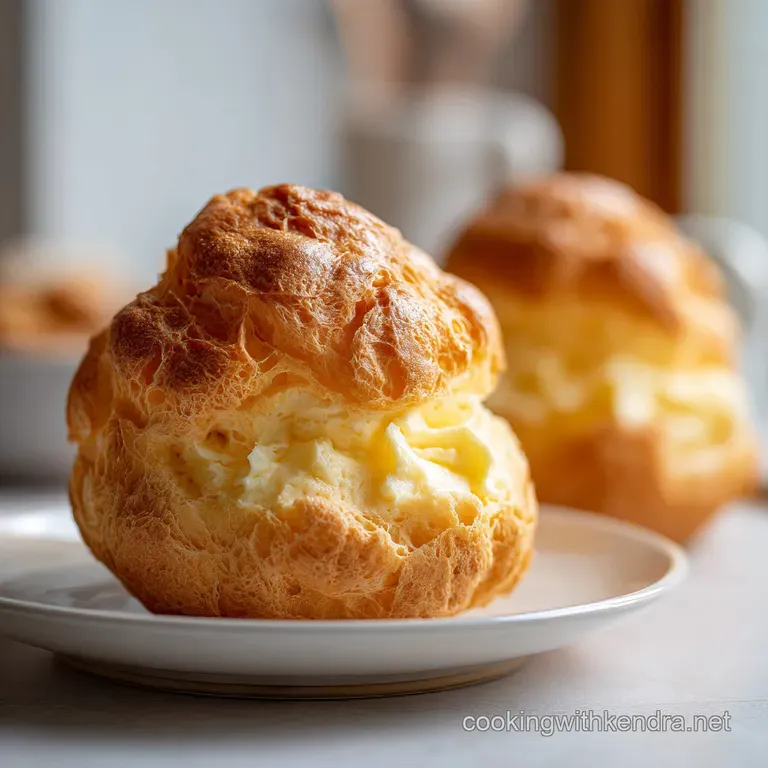
- Combine 1 cup water, 0.5 cup cubed butter, 1 tsp sugar, and 0.25 tsp salt in a heavy bottomed saucepan over medium high heat. Note: Bringing this to a rolling boil ensures the fat is emulsified before the flour hits.
- Add 1 cup sifted flour all at once and stir vigorously with a wooden spoon. Cook 2 minutes until a thin film forms on the bottom of the pan. This is the key to a crisp shell.
- Transfer the hot dough to a stand mixer. Beat on medium for 1 minute until the visible steam clouds stop rising. You don't want to cook the eggs!
- Add 4 large eggs one at a time, beating thoroughly after each. Stop when the dough hangs in a steady triangle from the paddle. This "V drop" is the golden standard.
- Preheat your oven to 425°F (218°C). Line two baking sheets with parchment paper.
- Pipe dough into 2 inch mounds, spacing them 2 inches apart. Use a damp finger to smooth any "tails" so they don't burn.
- Bake for 10 minutes at 425°F. Immediately reduce heat to 375°F and bake for 20 more minutes. Do not open the door!
- Remove from oven and immediately poke a small hole in the side of each shell. Return to the turned off oven for 5 minutes to let the centers dry out.
- Whip 2 cups heavy cream, 0.5 cup powdered sugar, and 1 tsp vanilla bean paste until stiff, velvety peaks form.
- Once shells are completely cool, use a serrated knife to slice the tops or pipe the cream directly into the hollow center.
Avoiding Common Pitfalls for Crisp Hollow Centers
Why Your Pastry Shells Deflated
This is the most heartbreaking thing that can happen in the kitchen. Usually, it’s because the shells were taken out of the oven too early, or the steam inside wasn't allowed to escape.
When that hot steam stays trapped inside a cooling shell, it turns back into water, which softens the structure and causes the whole thing to cave in. That’s why that little "poke and dry" step at the end is so critical.
Why Your Choux Dough Is Runny
If your dough looks more like a cake batter than a thick paste, you might have added too many eggs or didn't cook the flour long enough on the stove. Each egg needs to be fully absorbed before the next one goes in. If you reach that "V drop" consistency after three eggs, stop right there!
You don't always need the full fourth egg. The size of eggs varies, and the humidity in your kitchen can change how much liquid the flour can hold.
| Problem | Root Cause | Solution |
|---|---|---|
| Shells are soggy | Underbaked or not vented | Bake until dark golden; poke a hole immediately to release steam. |
| No hollow center | Water didn't reach a boil | Ensure butter/water is at a rolling boil before adding flour. |
| Shells cracked excessively | Oven too hot or too much air whipped in | Calibrate oven; stop mixer once eggs are just incorporated. |
Common Mistakes Checklist
- ✓ Never open the oven door during the first 20 minutes of baking (the temperature drop will cause a collapse).
- ✓ Always sift your flour; lumps will create weak spots in the pastry walls where steam can leak out.
- ✓ Ensure the butter is fully melted before the water boils to keep your liquid ratios accurate.
- ✓ Let the dough cool slightly before adding eggs so you don't end up with scrambled eggs in your pastry.
- ✓ Use a heavy bottomed pan to prevent the "panade" from scorching during the 2 minute cook time.
Scaling Your Batch for Every Southern Gathering
When you're feeding a crowd at a church potluck or a big family reunion, you might need to double this recipe. Since the dough is based on a specific ratio, doubling it is fairly straightforward. Just remember that a larger volume of dough takes longer to cool down in the mixer before you can add the eggs safely.
I usually suggest working in batches of no more than a double recipe at a time; otherwise, it’s hard to get the wooden spoon through that much thick dough on the stovetop!
| Original Ingredient | Substitute | Why It Works |
|---|---|---|
| Heavy Cream (2 cups) | Full fat Coconut Cream | Similar fat content. Note: Adds a distinct tropical flavor profile. |
| All Purpose Flour (1 cup) | gluten-free Measure for-Measure | Formulated with binders. Note: Shells may be slightly less crisp. |
| Granulated Sugar (1 tsp) | Brown Sugar | Adds a deep molasses undertone. Note: Will cause faster browning in the oven. |
If you decide to make a smaller batch, say for a quiet date night, halving the recipe is easy. When it comes to that fourth egg, just whisk it in a small bowl and use half of it. It’s better to have a tiny bit of leftover egg than to mess up the consistency of your dough.
Even with a half batch, keep those oven temperatures the same the physics of steam doesn't care if you're making six puffs or sixty!
Fresh Versus Shortcut Comparison
| Feature | Homemade Choux | store-bought Shells |
|---|---|---|
| Texture | Shatteringly crisp exterior | Often soft or chewy |
| Flavor | Nutty, buttery, and fresh | Can have a "stale" or preservative taste |
| Cost | Roughly $0.15 per puff | Up to $1.00 per puff |
If you ever find yourself in a savory mood, you can actually use this same pastry technique to make gougères (cheese puffs). In that case, you'd swap the sugar for some black pepper and add a handful of Gruyère cheese. They pair beautifully with a sharp Horseradish Cream Sauce for a holiday appetizer that’ll have everyone asking for the recipe.
Flavor Infusions and Creative Variations
Infusing Flavors into Cream Puff Filling Recipes
While vanilla is the classic choice, don't be afraid to get creative with your heavy cream. You can steep lavender or Earl Grey tea in the cream overnight (then strain it) before whipping for a sophisticated floral note.
Or, for a southern twist, fold in a few tablespoons of lemon curd or some finely crushed toasted pecans. The cream is like a blank canvas just waiting for your personal touch.
Creating Savory Variations
As I mentioned with the gougères, this dough is surprisingly versatile. If you omit the sugar in the shells and the filling, you can stuff these with chicken salad or a herbed goat cheese mousse. It turns a "simple cream puff dessert" into a gourmet lunch option.
Just make sure y'all don't mix up the sweet and savory batches though I suppose a little sugar in a chicken salad puff wouldn't be the worst thing that's ever happened!
- If you want a crunchier top, sprinkle the mounds with pearl sugar before baking.
- If you want a chocolate version, dip the tops of the cooled shells in a warm ganache.
- If you want a fruiter finish, place a fresh raspberry inside each shell before piping in the cream.
Myths about Choux Pastry
One common misconception is that you need a specialized "choux flour." In reality, plain old all purpose flour from the grocery store works perfectly because its moderate protein content allows for both stretch and structure. Another myth is that the eggs must be added while the dough is boiling hot.
This is actually dangerous for the recipe! If the dough is too hot, it will cook the eggs on contact, ruining their ability to act as a leavening agent. A brief 60 second cool down in the mixer is all you need.
Practical Methods for Storing and Keeping Pastries Fresh
If you’re anything like me, you want to get as much done ahead of time as possible. You can bake the shells up to two days in advance and keep them in an airtight container at room temperature.
If they soften up a bit, just pop them back into a 300°F oven for about 5 minutes to crisp them back up. Once they are filled with cream, however, the clock starts ticking.
The moisture from the cream will eventually soften the pastry, so I recommend filling them no more than an hour or two before serving.
For long term storage, these shells are absolute champions in the freezer. You can freeze the empty, baked shells in a freezer bag for up to two months. When you’re ready for a treat, take out as many as you need and crisp them up in the oven straight from the freezer.
It’s like having a secret stash of elegance ready at a moment's notice. For zero waste, if you have leftover cream, it’s delicious on top of morning waffles, and any broken shell pieces can be toasted and used as "croutons" for a dessert panna cotta.
Elegant Presentation and Pairing Suggestions
When it's time to serve, a simple dusting of powdered sugar goes a long way. It hides any little imperfections on the tops of the shells and gives them that classic "snow covered" look. I like to arrange them on a tiered stand or a big wooden board surrounded by fresh berries.
The contrast of the golden pastry against bright red strawberries or deep blue blueberries is just gorgeous.
Pairing these with the right drink can take the experience to the next level. A crisp, cold glass of Prosecco or a dry Champagne cuts through the richness of the cream beautifully.
If you're serving them in the afternoon, a hot cup of Earl Grey tea or a strong, dark roast coffee provides a wonderful bitter balance to the sweet vanilla filling. Whatever you choose, these cream puffs are guaranteed to be the star of the show, proving that with a little steam and a lot of soul, y'all can bake anything.

Recipe FAQs
What is cream puff filling made of?
The filling is a simple mixture of heavy whipping cream, powdered sugar, and vanilla. These ingredients are whipped together until they reach stiff peaks, creating a light and stable center for your shells.
What are common mistakes when making cream puffs?
The most frequent error is opening the oven door during the first 20 minutes of baking. This temperature drop causes the puffs to collapse instantly. Additionally, failing to sift your flour or not properly drying out the dough for two minutes can lead to weak, soggy pastry walls.
What is another name for a creampuff?
They are traditionally known as profiteroles. This French term refers to the same choux pastry dough filled with cream or custard.
How do you keep cream puffs from getting soggy?
Poke a small hole in the side of each shell the moment they exit the oven. This allows trapped steam to escape immediately, ensuring the interior remains crisp rather than softening as it cools.
How to achieve the perfect "V-drop" dough consistency?
Add eggs one at a time, beating thoroughly after each addition. Stop when the dough is glossy and hangs off the paddle in a steady triangle. If you enjoyed mastering the emulsion here, you will find similar attention to texture is critical for success in our other dessert recipes.
Is it true I can bake these entirely at 425°F?
No, this is a common misconception. You must start at 425°F for 10 minutes to create the initial steam rise, but then reduce the heat to 375°F for the remaining 20 minutes to cook the center through without burning the exterior.
How to ensure the dough doesn't scramble the eggs?
Transfer the hot dough to a stand mixer and beat for one minute before adding any eggs. This brief cooling period ensures the mixture is warm but not hot enough to cook the eggs upon contact.
Homemade Cream Puffs
Ingredients:
Instructions:
Nutrition Facts:
| Calories | 143 calories |
|---|---|
| Protein | 2.0 grams |
| Fat | 11.8 grams |
| Carbs | 7.2 grams |
| Fiber | 0.2 grams |
| Sugar | 2.7 grams |
| Sodium | 44 milligrams |
