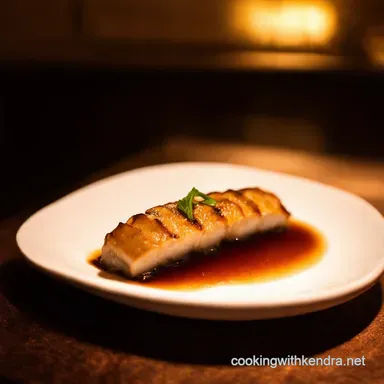
Homemade Eel Sauce in 20 Minutes

- Total20 Mins
- Servings12
- Calories49 kcal
- Time: 5 min active + 15 min cooking
- Texture: Thick and glossy
- Serve with: Unagi or avocado rolls
Easy Homemade Eel Sauce
The thick, sweet glaze used for unagi in Japanese cooking is more than a simple garnish. It reflects a tradition of balancing salt and sugar to cut through the richness of grilled fish, creating a high-gloss, mirrored finish that is as visually appealing as it is flavorful.
This eel sauce achieves that professional restaurant quality using common pantry staples. It is a versatile, salty-sweet syrup that complements much more than just fish.
The finished sauce has a glossy amber hue and a viscosity that pours slowly from a spoon. The process requires about 20 minutes.
Key Technique Breakdown
- Low Simmer: Keeping the heat at a gentle bubble reduces the risk of the sugar burning, which helps keep the color rich instead of charred.
- Cornstarch Slurry: Adding a starch mixture at the end creates a stable thickness that holds well as the sauce cools.
What Each Ingredient Does
| Ingredient | What It Does | Best Swap |
|---|---|---|
| Soy Sauce | Provides salty umami | Tamari |
| Granulated Sugar | Adds sweetness and body | Brown sugar |
| Rice Vinegar Syrup | Balances salt with tang | Rice vinegar + honey |
Pantry Essentials
- ½ cup reduced-sodium soy sauce Why this? Keeps the salt from overpowering the sugar.
- ½ cup granulated sugar Why this? Creates a clean, high-gloss finish.
- ¼ cup rice vinegar syrup Why this? Adds the necessary acidity.
- 1 tbsp cornstarch Why this? Thickens the sauce quickly.
- 2 tbsp water Why this? Dissolves the starch for a smooth mix.
Gear for the Job
You only need a small saucepan and a whisk. A small bowl for the cornstarch slurry also helps keep things tidy.
Step by step Method
Combining the Base
Combine the reduced-sodium soy sauce, granulated sugar, and rice vinegar syrup in a small saucepan. Whisk the mixture over medium heat until the sugar granules have completely dissolved into the liquid.

Managing the Simmer
Lower the heat to medium-low to maintain a gentle bubble. Let the sauce simmer for 8 to 10 minutes. Avoid a rolling boil so the sugar doesn't scorch or bubble over the pan.

Achieving the Gloss
In a small bowl, whisk 1 tbsp cornstarch and 2 tbsp water until smooth. Slowly pour the slurry into the simmering sauce while whisking constantly. Continue to cook for 1 to 2 minutes until the sauce is semi-opaque and coats the back of a spoon.

If Something Goes Wrong
Preventing Burnt Sugar
If you smell a toasted scent or see dark clumps, the heat is too high. Lift the pan off the burner immediately and stir in a tablespoon of water to drop the temperature.
Fixing a Thin Consistency
If the sauce is too watery after 2 minutes of thickening, simmer it for another minute. It will thicken further as it cools to room temperature.
Correcting Over-Thickened Sauce
If the glaze becomes too thick to pour, whisk in a teaspoon of water or soy sauce over low heat. This thins it back to a pourable state.
Storage and Freezing
Store the sauce in a glass jar in the fridge for up to 4 days. It also freezes well. Keep it in a freezer-safe container for up to 3 months. When you're ready to use it, thaw it in the fridge overnight and reheat gently on the stove over low heat.
When reheating cooked leftovers, check with a food thermometer that the center reaches 165°F (74°C); the appliance temperature and time alone do not confirm this.
Plating and Serving

For a home-style look, a simple zig-zag drizzle over the roll works. For something more polished, use a squeeze bottle to place precise dots along the plate. To get that restaurant-style mirror finish, use a pastry brush to lacquer the sauce directly onto the fish.
| Plating Level | Technique | Visual Result |
|---|---|---|
| Simple | Drizzle | Casual |
| Polished | Precision Dots | Clean |
| Restaurant | Pastry Brush | Lacquered |
Alternative Ingredients
| Original Ingredient | Substitute | Why It Works |
|---|---|---|
| Reduced-Sodium Soy | Tamari (labelled gluten-free) | gluten-free. Note: Slightly saltier profile |
| Rice Vinegar Syrup | Rice Vinegar + Honey | Similar acid and sweetness. Note: Adjust honey to taste |
| Granulated Sugar | Brown Sugar | Adds molasses depth. Note: Darker final color |
Before You Start Cooking
Does eel sauce have any fish in it?
No, this recipe contains no fish. It uses soy sauce and rice vinegar syrup to create the signature savory flavor.
Why is it called eel sauce if there is no eel?
It is named after the traditional glaze used for grilled eel. The sweet and salty profile mimics that classic pairing without needing the fish in the sauce.
Why does the sauce stay thin on the heat, and will it thicken once it cools?
Heat keeps the cornstarch active and fluid, which prevents the sauce from setting. It will thicken into a glaze as the temperature drops.
What should I do if the sauce is still too thin after it has cooled?
Reheat the sauce over medium-low heat. Whisk in a small amount of additional cornstarch slurry and simmer for one minute.
How much finished sauce does the recipe yield?
This recipe yields ¾ cup of sauce. This amount provides approximately 12 servings.
Where should I store the sauce, and how long does it keep?
Keep the sauce refrigerated in a glass jar for up to 4 days. Alternatively, store it in a freezer-friendly container for as long as 3 months.
Can I swap the sugar or soy sauce for alternatives such as liquid aminos or monkfruit?
Use tamari (labelled gluten-free) for a gluten-free soy substitute or dark brown sugar for a richer taste. Honey and rice vinegar can also replace the syrup.
Is it possible to make this gluten-free?
Yes, simply swap the reduced-sodium soy sauce for tamari (labelled gluten-free). This maintains the salty profile while removing the gluten.
Eel Sauce in 20 Minutes