Prime Rib Roast Recipe: Low-And-Slow with the Perfect Crust
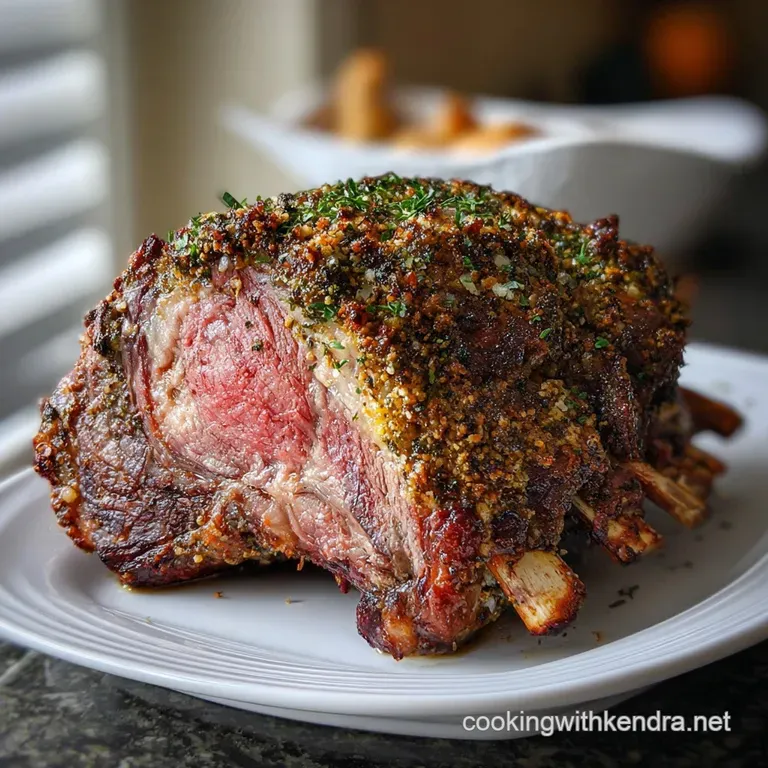
The Culinary Triumph: Mastering the Majestic Prime Rib Roast
When that magnificent, seasoned piece of beef slides into the oven, the resulting aroma is pure nostalgia and celebration. A proper Prime Rib Roast doesn't just promise dinner; it promises an event.
That combination of crunchy herb crust giving way to perfectly crimson, velvet soft meat is honestly what heaven smells like. Trust me, learning to handle this centerpiece changed my entire holiday hosting game!
Many home cooks think the Prime Rib Roast is too expensive or difficult for a weeknight, reserving it only for Christmas or Easter. Absolute nonsense! Because we are using the simple reverse sear method, the active cooking time is surprisingly low, making this intimidating roast achievable even for slightly fancier Sunday dinners.
This technique guarantees success and saves you money by preventing costly overcooking.
This detailed guide breaks down everything I’ve learned and everything I failed at so you can achieve that magazine perfect medium rare, edge-to-edge. We’re going to tackle the science, the seasoning, and the crucial rest that makes this whole Rib Roast absolutely faultless.
Let’s get that oven ready for the best Prime Rib Roast you’ve ever made.
Why the Standing Rib Roast Earns the Crown
This dish, often called a Standing Rib Roast, reigns supreme because of the rich marbling within the meat itself, which renders slowly during cooking, keeping everything impossibly tender.
But our success hinges on the method: the "reverse sear." Most classic rib roast recipe ovens use a blast of high heat followed by low heat, which creates an ugly grey ring just beneath the crust.
Kendra's Crucial Point: We flip that script! We cook the beef low, slow, and evenly until it's almost done, and then blast it with heat right at the end. This is the only way to get a perfect rosy interior without fail.
Essential Planning for a Flawless Result
Making a great Prime Rib Roast is about planning, not panicking. The single most important step isn't cooking; it’s salting and tempering. You need to salt the roast deeply, allowing the salt days to penetrate the meat, drawing moisture out of the surface to ensure a killer crust when the heat hits it.
I also learned the hard way that a chilled roast cooks unevenly. Bring that meat up to room temperature for three hours before it goes anywhere near the oven.
The 'Reverse Sear' Advantage Explained
The reverse sear is foolproof. Think of it like this: by cooking your Prime Rib Roast low (at 250°F / 120°C), you give the heat time to gently move to the centre of the roast without overcooking the edges.
Once the internal temperature is exactly where you want it (minus 10 degrees!), the meat is removed and rested. Then we crank the heat up to make that heavenly crust. Since the meat is already mostly cooked, the brief over high heat blast only affects the very thin exterior layer, resulting in that gorgeous, deep mahogany bark.
Gathering Your Arsenal: Ingredients for a Great Prime Rib
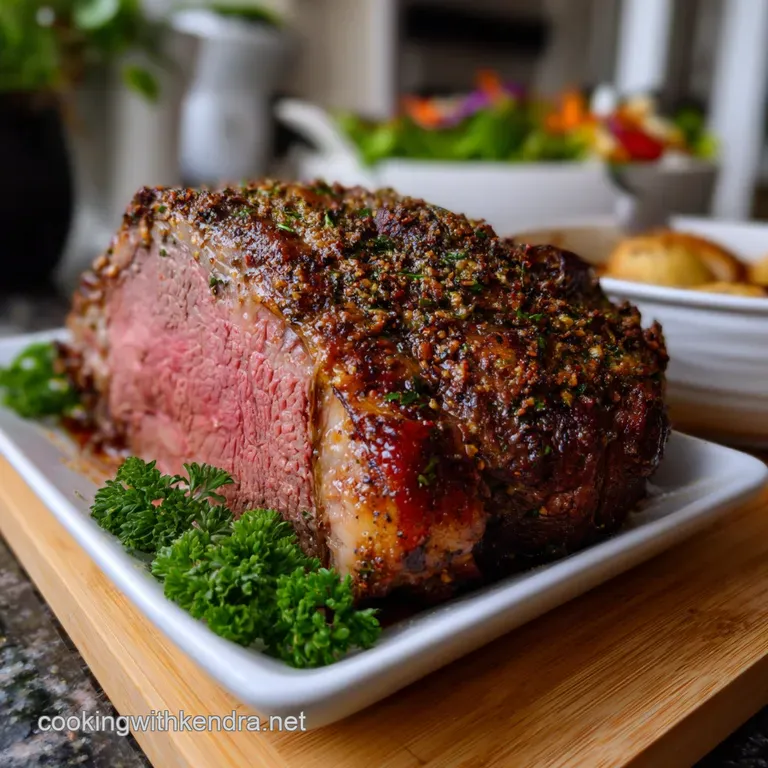
The Rib Roast Selection: Weight and Grade Focus
Always try to buy a bone-in roast. The bones add insulation, leading to a more evenly cooked interior, and they make great stock later! I aim for about 1 lb (500g) per person. When planning your purchase, look for bright red meat with significant, creamy white marbling.
Don't be shy; ask your butcher if they can cut the rib bones off and tie them back on (known as "unfolding" or "bone off, tied"). This provides all the flavour benefits of the bone, but makes carving an absolute dream.
Crafting the Horseradish Mustard Rub
I used to just use salt and pepper, but adding a binding agent like English Mustard absolutely changed the game. It’s spicy, acidic, and holds those fresh herbs and garlic right onto the fat cap. When the fat renders, the mustard creates this deeply complex, slightly crunchy layer that is just addictive.
Don't skip the fresh rosemary and thyme either. Dried won't give you the same bright, piney aroma.
Substitutions for the Herb Mixture
I am a big believer in using what you have in the pantry. This beautiful prime rib roast recipe is adaptable!
| Ingredient | Substitute Immediately With | Notes |
|---|---|---|
| English Mustard | Dijon or 1/2 Horseradish Cream | The heat from mustard is key; Dijon is milder. |
| Fresh Rosemary | 1 tsp Dried Rosemary | Use 1/3 the amount of dried herbs. |
| Olive Oil | Melted Unsalted Butter | Butter adds flavour, but oil will make a slightly crispier bark. |
step-by-step Method: Roasting Your Prime Rib to Perfection
Preparing the Roast: Tempering and Tying
You must begin the day before cooking. Pat the roast dry and rub it generously with coarse salt this is the dry brine. Leave it uncovered in the fridge for 24 hours. The next day, three hours before cooking, pull the Rib Roast out.
It should feel close to room temperature when it hits the oven. This is vital for that beautiful gradient of pink.
The Low-Temperature Roasting Phase
Set your oven to that low and slow temp (250°F/120°C). Slide that gorgeous, seasoned hunk of meat onto a high rack above your roasting pan. I sometimes add carrots and onions below; they catch the drippings and help flavour the jus later. Insert your thermometer immediately and close the door.
This part is mostly waiting. You want that internal temperature to slowly climb. For medium rare, pull the roast when it hits 122°F (50°C).
I once forgot to put the probe in and relied totally on time. The result was a pale, raw center and totally overcooked ends. Never again! The thermometer is your only true friend when cooking a high value item like a Prime Rib Roast.
Achieving the Brilliant Crust: over High heat Finishing
Once the meat hits that lower target temp, take it out and tent loosely with foil. While it rests on the counter, jack your oven up as high as it will go (450 500°F). Don't rush this step; the high heat is the "sear," and it must be aggressive.
Return the roast to the screaming hot oven for 8 to 15 minutes. Listen for the sound of the fat sizzling and watch carefully; you are only looking for a crisp, dark bark.
The Critical Rest: Retaining Juices
When the crust is perfect, remove the roast and tent it again, leaving it to rest for at least 30 minutes, or even 45 minutes for a large three rib cut. Do not cut the meat yet!
During this time, the internal temperature will continue to rise (this is called carry over cooking), achieving your desired final doneness (135°F / 57°C for medium rare). More importantly, the juices, which were driven to the centre, relax and redistribute throughout the roast.
Skipping the rest means serving a dry piece of meat sitting in a puddle of expensive juice.
Storage, Freezing, and Reheating
How to Store Leftovers
Leftover Prime Rib Roast is easily the best kind of leftover, perfect for sandwiches or a next day quick fry. Slice any remaining meat and store it in an airtight container in the fridge for up to four days. If you still have the bones, definitely check out my recipe for Roasted Bone Marrow with Zesty Parsley Salad Recipe ; those bones are pure gold!
Freezing Instructions
A full Prime Rib Roast does not freeze well whole. The texture changes dramatically. However, you can absolutely freeze slices of cooked roast. Wrap individual slices tightly in plastic wrap, and then place them in a freezer safe bag or container, squeezing out all the air.
It will keep well in the freezer for about two months. Use frozen slices for stews or fast cooking applications, as they won't retain the perfect medium rare texture.
Best Reheating Methods
The goal when reheating Prime Rib is to warm it without cooking it further. My favourite method is the "sous vide cheat": Place slices in a sealed food bag with a tablespoon of pan drippings or stock, seal it, and immerse the bag in a pot of very hot (but not boiling) water for 10– 15 minutes until warm through.
This keeps it unbelievably juicy. Alternatively, arrange slices on a baking tray, cover with foil, and warm in a low oven (300°F / 150°C) until just heated through.
Serving Suggestions
What to Serve With This Dish
Since this Rib Roast is so rich and buttery, you need sharp, creamy, and starchy sides to balance the meal. You simply must have Yorkshire Puddings. They soak up the jus like nothing else. I also recommend a creamy horseradish sauce freshly grated is always best, mixed with creme fraiche. For another beautiful reverse sear technique, try my guide on a similar Ribeye Roast: Reverse Seared Perfection with Garlic Herb Crust .
My go-to vegetable pairing is creamed spinach or green beans almondine, adding a welcome bit of colour and freshness. Honestly, nothing beats pulling off the truly majestic main event. Enjoy your incredible Prime Rib Roast —you earned it!
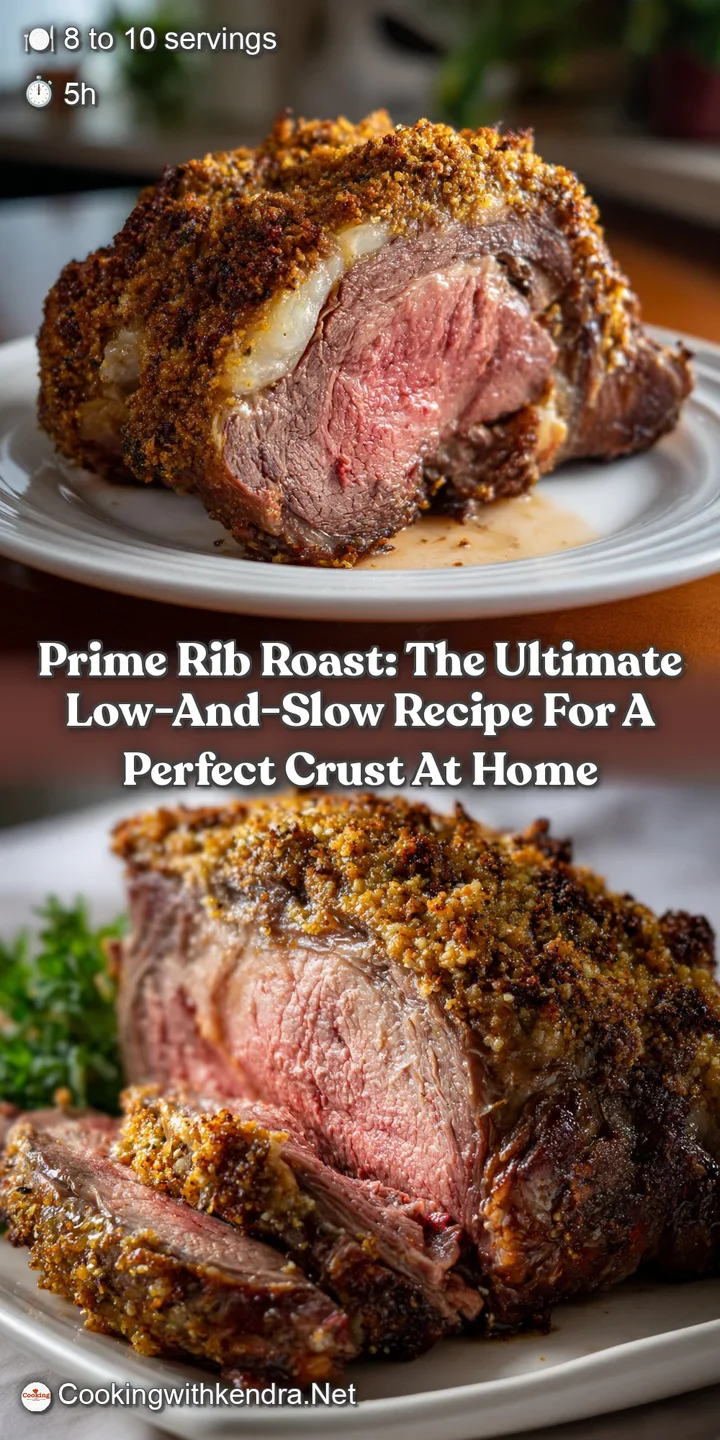
Prime Rib Roast With Herb Crust Recipe
Ingredients:
Instructions:
Nutrition Facts:
| Calories | 1140 kcal |
|---|---|
| Protein | 104.0 g |
| Fat | 80.0 g |
| Carbs | 0.0 g |
