30-Minute Crispy Chicken Parmesan Recipe
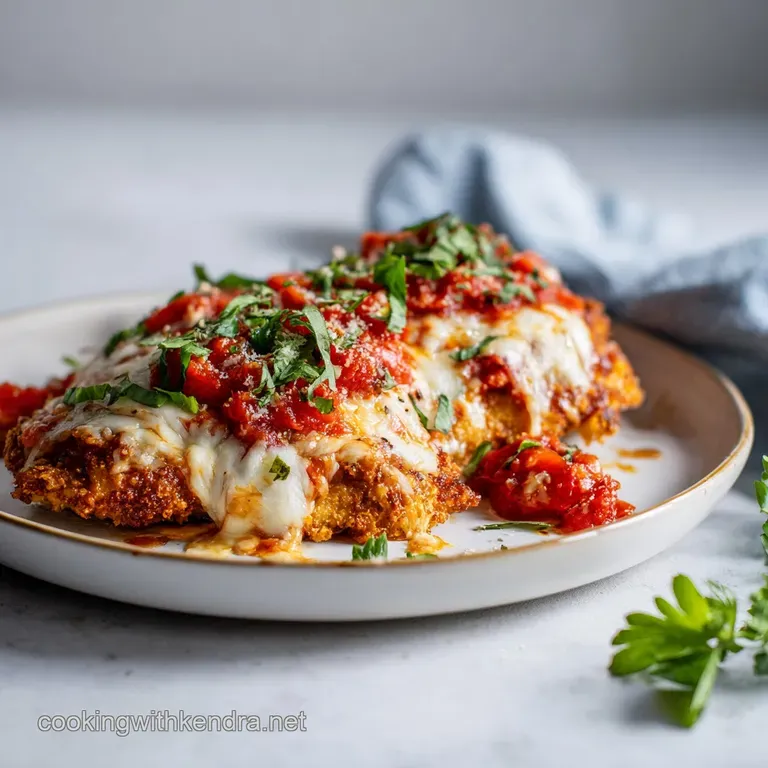
- Time: Active 15 minutes, Passive 15 minutes, Total 30 minutes
- Flavor/Texture Hook: Shattering panko crust and velvety mozzarella
- Perfect for: Busy weeknight family dinners
- Master This Easy Chicken Parmesan Recipe
- Why This Method Wins
- Understanding the Ingredient Chemistry
- The Essential Pantry Elements
- Necessary Tools for Success
- The Step-by-Step Cooking Process
- Fixing Common Textural Issues
- Creative Recipe Twist Ideas
- Scaling for a Crowd
- The Truth About Searing
- Proper Storage and Reheating
- Best Sides for Serving
- High in Sodium
- Chicken Parmesan Recipe FAQs
- 📝 Recipe Card
Master This Easy Chicken Parmesan Recipe
There is a specific sound that defines a successful Tuesday night in my kitchen: the high pitched sizzle of breaded poultry hitting a shimmering layer of oil. I remember the first time I tried making this for my family; I was so rushed I almost skipped the breading entirely.
But once that aroma of toasted garlic and melting Parmesan hit the air, I knew the extra five minutes of prep were worth it. The kitchen filled with a scent that felt like a warm hug, cutting through the stress of a long workday.
We’ve all had those "cardboard" versions of this dish dry meat, soggy breading, and cheese that slides off in one sad sheet. I spent years tweaking the ratios until I found the sweet spot. It isn't about fancy ingredients; it's about how you treat the 1 lb of chicken breasts sitting in your fridge.
This version is fast, budget friendly, and honestly, better than most of the takeout I’ve had lately. Let's get into how we make this magic happen in just half an hour.
Why This Method Wins
- Moisture Retention: The flour coating acts as a physical barrier, preventing the protein fibers from tightening and squeezing out juices during the sear.
- Starch Gelatinization: The egg wash hydrates the flour, creating a "glue" that ensures the crust stays attached to the meat rather than falling off in the pan.
- Thermal Conductivity: Using a neutral oil with a high smoke point allows for rapid browning (Maillard reaction) without burning the delicate dried oregano or garlic powder.
- Structural Integrity: Panko breadcrumbs have a larger surface area than traditional crumbs, allowing for more air pockets which results in a lighter, crispier texture.
| Thickness | Internal Temp | Rest Time | Visual Cue |
|---|---|---|---|
| 0.5 inch | 165°F | 3 minutes | Juices run clear |
| 0.75 inch | 165°F | 5 minutes | Firm to touch |
| 1 inch | 165°F | 5 minutes | No pink center |
The thickness of your chicken is the most important variable here. I always recommend pounding the 2 large boneless, skinless chicken breasts to a uniform 0.5 inch thickness. This ensures the outside doesn't burn before the inside reaches safety.
It also makes the chicken feel more substantial on the plate, giving you those four perfect servings.
Understanding the Ingredient Chemistry
| Ingredient | Science Role | Pro Secret |
|---|---|---|
| Panko crumbs | Textural agent | Don't sub with fine crumbs; panko stays crisp longer under sauce. |
| Low moisture Mozzarella | Fat/Moisture balance | Releases less water than fresh mozzarella, preventing a soggy crust. |
| Large Eggs | Emulsifier/Binder | Adding 1 tbsp water thins the proteins for a more even, thinner coating. |
| Parmesan Cheese | Umami booster | Adds salt and depth that regular breadcrumbs lack. |
Getting the breading right is a game of layers. If you've ever struggled with the coating sliding off like a loose jacket, it's usually a moisture issue. We want the chicken to be as dry as possible before it touches the 0.5 cup of all purpose flour. This creates the first layer of "velcro" for the eggs to hold onto.
The Essential Pantry Elements
This chicken parmesan recipe relies on standard staples you likely already have. If you're missing something, don't panic there are smart swaps that keep the spirit of the dish alive without a trip to the store.
- 2 large boneless, skinless chicken breasts: About 1 lb total. Why this? Lean protein that cooks fast and stays tender when pounded thin.
- 0.5 tsp Kosher salt: For seasoning the meat directly.
- 0.25 tsp Cracked black pepper: Adds a subtle back of-the throat heat.
- 0.5 cup All purpose flour: The essential first coating.
- 2 large eggs: Our primary binder.
- 1 tbsp water: To thin the egg wash.
- 1 cup Panko breadcrumbs: For that signature crunch.
- 0.5 cup Grated Parmesan cheese: Mixed into the crumbs for flavor.
- 1 tsp Dried oregano: Adds that classic Italian aroma.
- 0.5 tsp Garlic powder: Distributes flavor more evenly than fresh garlic in a crust.
- 1.5 cups marinara sauce: Use your favorite jarred brand to save time.
- 1.5 cups shredded low moisture mozzarella cheese: For the perfect melt.
- 0.25 cup fresh basil, chiffonade: For a bright, fresh finish.
- 2 tbsp neutral oil: For searing (avocado or canola work well).
| Original Ingredient | Substitute | Why It Works |
|---|---|---|
| Panko Breadcrumbs | Crushed saltines | Provides a similar salty crunch. Note: Reduce added salt in the recipe. |
| Marinara Sauce | Canned crushed tomatoes | Add a pinch of sugar and oregano. Note: Results in a fresher, less sweet flavor. |
| Mozzarella | Provolone | Similar melting point. Note: Adds a slightly sharper, smokier profile. |
If you are looking for a different vibe later this week, this method of breading is very similar to the technique used in our Creamy Lemon Chicken recipe. It’s a great way to practice your dredging skills while switching up the flavor profile.
Necessary Tools for Success
You don't need a professional kitchen, but a few specific items make this much easier. A heavy bottomed skillet is your best friend here. I prefer a 12 inch cast iron or stainless steel pan because they hold heat better than thin aluminum.
If the pan temperature drops when you add the chicken, the breading will soak up the oil and become greasy rather than crispy.
You'll also need three shallow bowls for your dredging station. Using wide, flat containers (like pie plates) prevents the "clumping" that happens when you try to cram a large piece of chicken into a small bowl.
A pair of tongs is also vital for flipping the chicken without piercing the meat and losing those precious juices.
The step-by-step Cooking Process
Phase 1: Precision Prep
Slice each breast in half horizontally to create four thinner cutlets. Place them between sheets of plastic wrap and pound to 0.5 inch thickness. Season both sides with 0.5 tsp Kosher salt and 0.25 tsp cracked black pepper. Note: Uniform thickness is the secret to even cooking.
Phase 2: Triple Dredge Station
Set up three bowls: one with 0.5 cup flour, one with 2 eggs beaten with 1 tbsp water, and one with a mix of 1 cup panko, 0.5 cup Parmesan, 1 tsp oregano, and 0.5 tsp garlic powder.
Phase 3: The Coating
Dredge each cutlet in flour, shaking off the excess. Dip into the egg wash, then press firmly into the panko mixture. Wait 5 minutes before cooking to allow the crust to set.
Phase 4: Golden Sear
Heat 2 tbsp neutral oil in a large skillet over medium high heat. Add chicken and cook for 3-4 minutes per side until golden brown and firm. Note: Don't crowd the pan; work in batches if needed.
Phase 5: Topping and Assembly
Preheat your broiler. Spread 1.5 cups marinara sauce over the seared chicken. Top evenly with 1.5 cups shredded mozzarella.
Phase 6: over High heat Melt
Place the skillet (if oven safe) or a baking sheet under the broiler for 2-3 minutes until the cheese is bubbly and browned.
Phase 7: Fresh Finish
Remove from the oven and let rest for 3 minutes. Garnish with 0.25 cup fresh basil.
Phase 8: Serve
Plate immediately while the cheese is still molten and the crust is crisp.
Chef's Tip: To ensure a shattering crust, never pour the sauce over the entire piece of chicken. Leave the edges exposed so they maintain their crunch while the center gets that saucy goodness.
Fixing Common Textural Issues
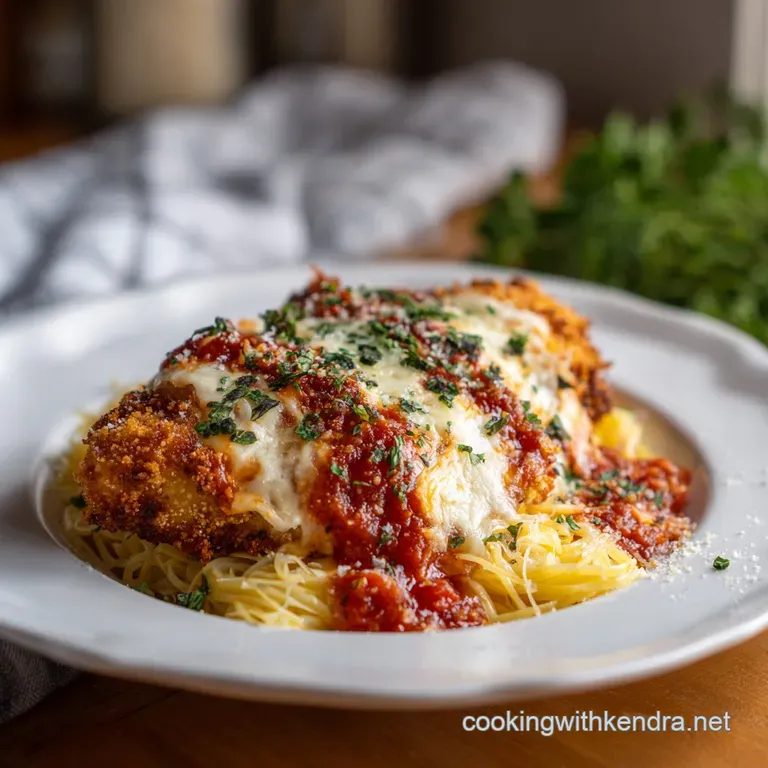
Why Your Breading Slid Off
If your crust detaches from the meat, it’s usually because the chicken was too damp before dredging. The steam created during cooking pushes the breading away. Always pat the meat bone dry with paper towels before hitting the flour.
Avoid Rubbery Texture
Overcooking is the culprit here. Chicken breast becomes stringy and tough once it passes 165°F. Since we finish under the broiler, pull the chicken off the skillet when it hits about 155°F; the carryover heat and the broiler will do the rest of the work.
| Problem | Root Cause | Solution |
|---|---|---|
| Saturated, oily crust | Pan temperature too low | Ensure oil is shimmering before adding chicken. |
| Burned breadcrumbs | Heat too high | Reduce to medium; panko browns faster than regular crumbs. |
| Bland chicken | Seasoning only in breading | Season the raw meat directly with salt and pepper first. |
Common Mistakes Checklist
- ✓ Skip the "set" time: Let breaded chicken sit for 5 minutes before frying to help the coating adhere.
- ✓ Overcrowding: If pieces touch, they steam instead of fry. Cook in two batches.
- ✓ Cold sauce: Use room temperature or slightly warmed marinara to ensure it doesn't cool down the chicken.
- ✓ Forgetting the rest: Let the meat rest for 3 minutes so the juices redistribute.
Creative Recipe Twist Ideas
Spicy Arrabbiata Twist
If you like heat, swap the standard marinara for a spicy arrabbiata sauce. Add a pinch of red pepper flakes into the panko mixture. This pairs beautifully with a cold glass of crisp white wine to cut through the spice.
Lighter Baked Version
For those days when you want to use less oil, you can bake the breaded chicken at 400°F (200°C) for 15-20 minutes. Spritz the panko with a little cooking spray before baking to help it brown. It won't be quite as indulgent as the pan-fried version, but it still hits the spot. If you enjoy this lighter approach, you'll love my Oven Baked Caesar recipe.
Low Carb Alternative
Swap the panko for crushed pork rinds or a mix of almond flour and extra Parmesan. It provides a surprisingly similar crunch without the heavy carb count. Just watch the salt, as pork rinds are already quite seasoned.
Scaling for a Crowd
When you're feeding a larger group, say 8 people, double the ingredients but be careful with the seasonings. You don't necessarily need to double the salt in the breading; 1.5x is usually enough. Work in batches to maintain your pan temperature.
If you are cooking for just two, you can easily halve this recipe. However, I usually recommend making the full batch of breaded chicken and freezing two pieces before they hit the pan. It makes for an incredibly easy "emergency" dinner later in the month. For a similar prep ahead vibe, check out my Chicken Noodle Casserole recipe which is another family favorite that scales beautifully.
| Method | Time | Texture | Best For |
|---|---|---|---|
| Pan Sear/Broil | 15 mins | Extra crispy | The classic experience |
| Air Fryer | 12 mins | Evenly browned | Low oil alternative |
| Oven Only | 20 mins | Softer crust | Large batch cooking |
The Truth About Searing
A common myth is that searing "seals in the juices." Science tells us this isn't true; moisture is lost as protein fibers contract under heat regardless of the crust. However, searing is vital because it creates the Maillard reaction a chemical reaction between amino acids and reducing sugars that gives browned food its distinctive flavor.
Without the sear, the chicken would be grey and unappealing.
Another myth is that you must use fresh mozzarella. While fresh is great for salads, its high water content is the enemy of a crispy chicken parmesan recipe. Low moisture mozzarella is actually the "pro" choice here because it melts predictably and browns beautifully without turning your dinner into a soup.
Proper Storage and Reheating
Storage: Keep leftovers in an airtight container in the fridge for up to 3 days. The crust will naturally soften over time as it absorbs moisture from the sauce.
Freezing: You can freeze the fried chicken (without sauce and cheese) for up to 2 months. Thaw in the fridge overnight before adding toppings and broiling.
Reheating: Avoid the microwave if you want to keep any semblance of a crunch. Reheat in a 350°F (180°C) oven or toaster oven for 10 minutes until the cheese is bubbling again.
Zero Waste Tip: Don't throw away the leftover flour or panko from your dredging bowls. Since they've touched raw meat, you can't save them as is, but you can mix them with a little melted butter and bake them on a separate tray to create "crunchy bits" for a side salad.
Best Sides for Serving
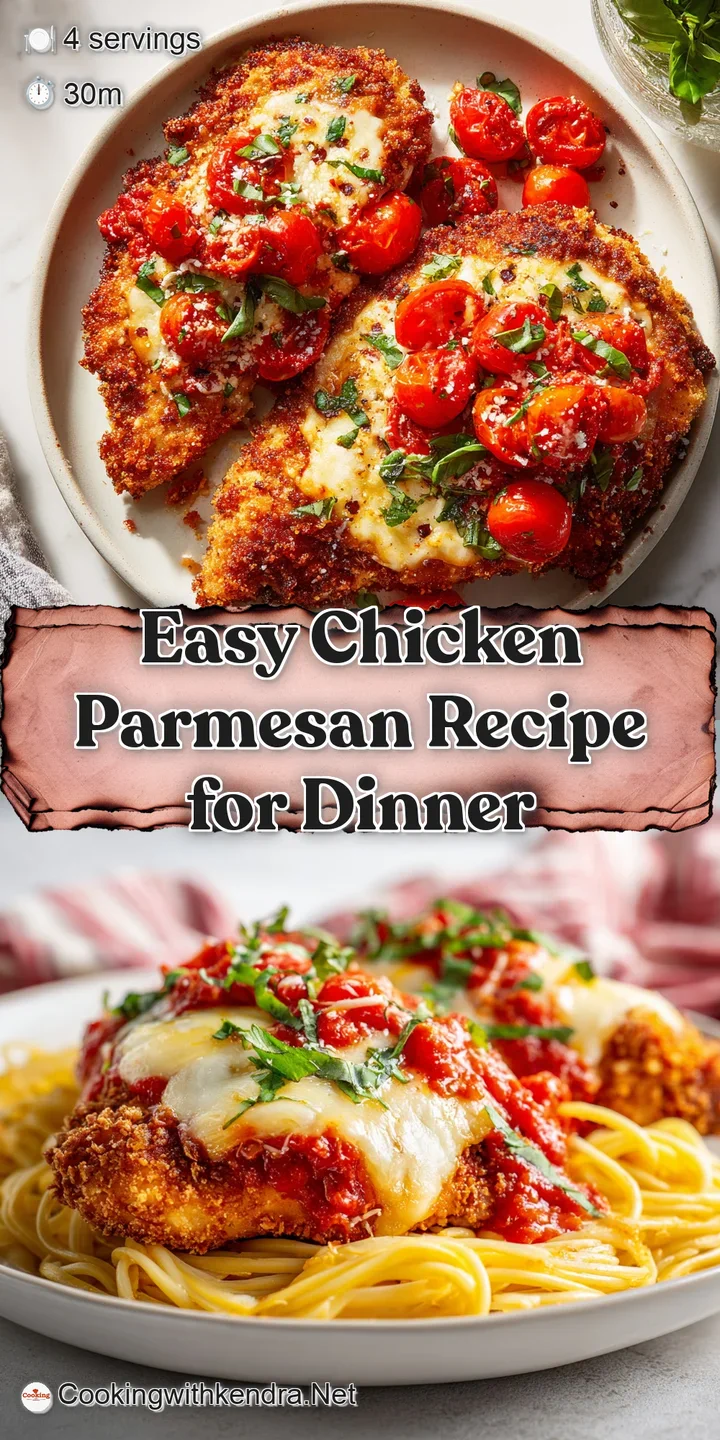
While the classic move is to serve this over a bed of spaghetti, don't feel limited. A simple arugula salad with a heavy squeeze of lemon and a drizzle of olive oil provides a bright contrast to the rich, cheesy chicken. The acidity cuts right through the fried breading.
If you’re looking for something more comforting, this dish pairs perfectly with my Broccoli Casserole recipe. The creamy texture of the casserole complements the crispiness of the chicken beautifully. Garlic bread is, of course, non negotiable for mopping up any leftover marinara sauce on the plate. Trust me, your family will thank you for the extra effort on that one.
High in Sodium
965 mg mg of sodium per serving (42% % of daily value)
The American Heart Association recommends limiting sodium intake to about 2,300mg per day for most adults.
Tips to Reduce Sodium in Your Chicken Parmesan
-
Low-Sodium Marinara-20%
Choose a low-sodium marinara sauce. Many store-bought marinara sauces are high in sodium. Look for options with less than 140mg of sodium per serving, or consider making your own!
-
Reduce/Swap Cheese-15%
Use less mozzarella and Parmesan cheese. These cheeses contribute significantly to the sodium content. Reduce the amount by 25% or substitute with a low-sodium mozzarella cheese.
-
Reduce Added Salt-10%
Reduce the amount of Kosher salt used to 1/4 tsp or eliminate it entirely. Taste the chicken after cooking and add a pinch of salt if needed.
-
Unsalted Panko-5%
Make sure your Panko breadcrumbs are unsalted. Some brands add salt, which increases the sodium content of the dish. If salted, consider using regular breadcrumbs and omitting the kosher salt.
-
Spice It Up!
Enhance the flavor with fresh herbs and spices instead of relying on salt. Experiment with different combinations of herbs to find your favorite flavor profile.
Chicken Parmesan Recipe FAQs
What ingredients do you need for chicken parmesan?
Chicken, breadcrumbs, eggs, flour, Parmesan, mozzarella, and marinara sauce. You need thin chicken cutlets, panko breadcrumbs for the best crunch, low-moisture mozzarella for melting, and your preferred jarred or homemade marinara sauce to keep the prep fast.
What are common mistakes when making chicken parm?
The most common mistake is not drying the chicken before dredging. If the surface is wet, the breading will absorb too much oil or slide off entirely during cooking, resulting in a soggy or detached crust.
When making chicken parmesan, do you put the sauce on first or the cheese?
Always put the sauce down first, then the cheese. Apply a thin layer of sauce to the baking dish or skillet, place the seared chicken on top, and then generously top with mozzarella.
How to make chicken parm better?
Use Panko breadcrumbs mixed with finely grated Parmesan cheese for the crust. This two-part flavor and texture combination ensures a shattering crust that stays crispier longer under the sauce, unlike using standard fine breadcrumbs.
Is it true you must pound the chicken breasts thin for this recipe?
Yes, pounding the chicken to a uniform 0.5 inch thickness is crucial. This ensures the chicken cooks through completely in the short searing time without burning the exterior breading or drying out the meat fibers.
What is the purpose of letting the breaded chicken rest before frying?
Allow the breaded chicken to rest for 5 minutes before cooking to set the crust. This resting period allows the egg wash to hydrate the breadcrumbs fully, essentially gluing the coating to the meat so it doesn't fall off during the sear, similar to how you let doughs rest for improved handling.
Can I use fresh mozzarella instead of low-moisture mozzarella?
No, avoid using fresh mozzarella for this broiled finish. Fresh mozzarella releases too much water when melted, which will steam your crust and prevent it from achieving that signature golden brown texture.
Quick Chicken Parmesan Recipe
Ingredients:
Instructions:
Nutrition Facts:
| Calories | 584 calories |
|---|---|
| Protein | 49.8 g |
| Fat | 27.2 g |
| Carbs | 33.5 g |
| Fiber | 2.8 g |
| Sugar | 5.2 g |
| Sodium | 965 mg |
