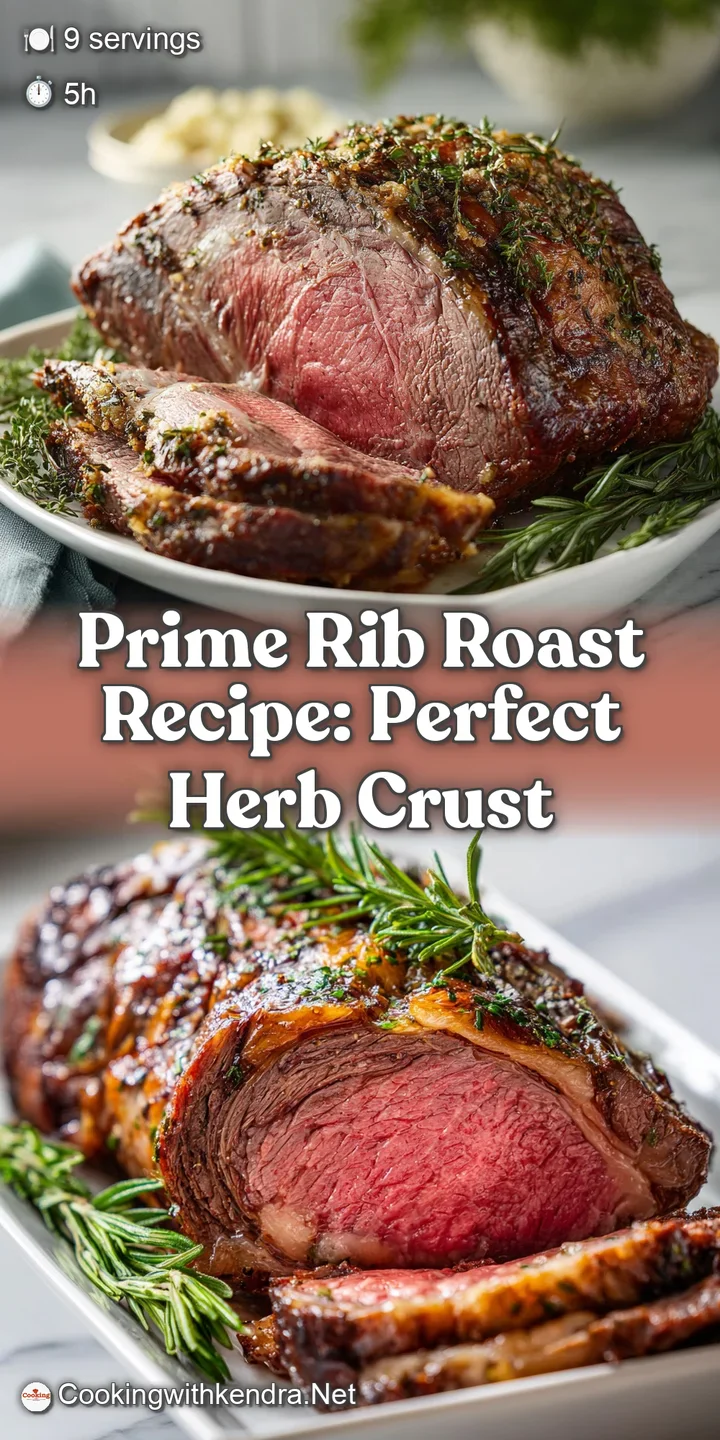
Prime Rib Roast: Herb Crusted Perfection
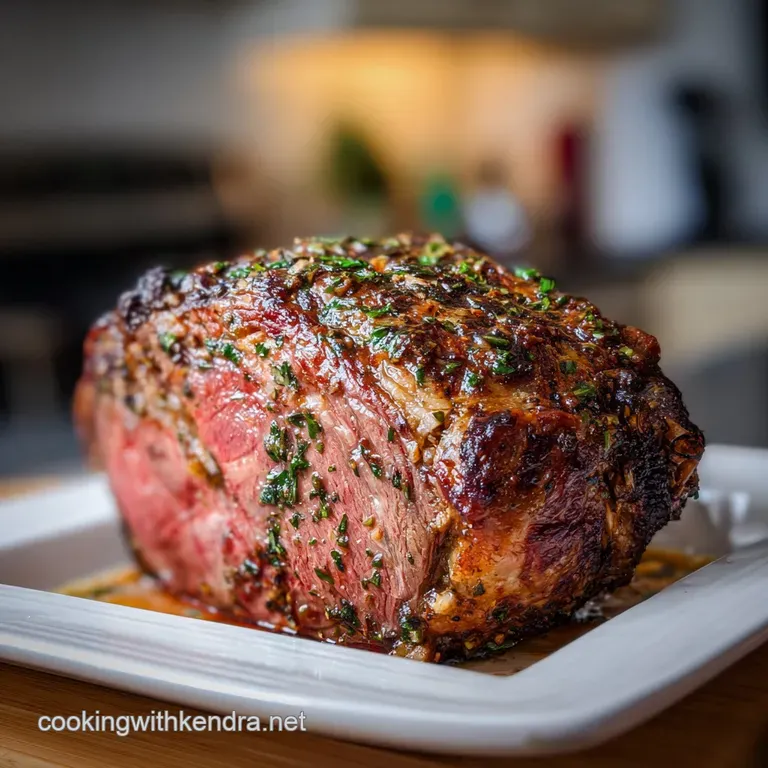
- Time: Active 1 hour, Passive 4 hours, Total 5 hours
- Flavor/Texture Hook: Buttery, herb crusted exterior with a melt in-your mouth tender center
- Perfect for: Holiday centerpieces, milestone celebrations, or a high end family Sunday dinner
- Master Your Perfect Prime Rib Roast
- The Physics of the Crust
- Selecting Your Best Beef Components
- Essential Gear for Your Roast
- Executing the Perfect Beef Roast
- Fixing Common Roasting Mistakes
- Simple Swaps for Your Roast
- Scaling for Large Crowds
- Kitchen Myths Exposed
- Storing and Reheating Your Beef
- Plating Tips for Better Results
- High in Sodium ⚠️
- Recipe FAQs
- 📝 Recipe Card
Master Your Perfect Prime Rib Roast
The first time I tackled a holiday roast, I was terrified. I stood in the butcher shop looking at this massive, expensive hunk of beef, sweating over the thought of overcooking it. I remember the sharp, piney scent of rosemary filling my kitchen and the way my heart raced when the internal thermometer started climbing.
We've all been there, hovering by the oven door, hoping for the best while the family waits at the table.
But here is the thing: you don't need luck, you just need a plan. I've made every mistake, from putting the meat in cold to skipping the rest, and those errors taught me that the "low and slow" method is the only way to go.
Today, we are skipping the guesswork and focusing on the techniques that actually result in a masterpiece.
This recipe is about more than just food, it is about that moment when you slice into the beef and the steam rises, revealing a perfectly even pink center. It's about the crunch of the salt and the deep, savory hit of the garlic butter.
We are going to walk through this together, step-by-step, so you can host with total confidence.
The Physics of the Crust
Thermal Gradients: Slow roasting at a low temperature prevents the exterior fibers from tightening and squeezing out moisture before the center reaches doneness. The final over high heat blast creates the Maillard reaction, yielding a deep brown crust without overcooking the interior.
| Roast Thickness | Target Internal Temp | Total Rest Time | Final Visual Cue |
|---|---|---|---|
| 3 Bone (approx. 5") | 120°F (for Rare) | 30 minutes | Warm, deep pink center |
| 4 Bone (approx. 7") | 130°F (for Medium Rare) | 45 minutes | Bright red pink center |
| XL Roast (8"+) | 135°F (for Medium) | 45 minutes | Light pink, firm center |
Choosing the right size for your crowd is the first hurdle. For an 8 lb standing rib roast, you are looking at a beautiful 3 or 4 bone piece that easily serves nine people. I usually suggest one bone for every two adults if you want leftovers, or one bone per person if your family has serious appetites.
Selecting Your Best Beef Components
When you are buying your Prime Rib Roast, look for heavy marbling, those little white flecks of fat within the red meat. That fat is what renders down to create a velvety texture. I always prefer a bone in roast because the bones act as a natural roasting rack and add a layer of insulation that protects the meat from the direct heat of the pan.
| Ingredient | Science Role | Pro Secret |
|---|---|---|
| Coarse Kosher Salt | Protein Denaturation | Apply 24 hours early to pull moisture out, then back in as a seasoned brine. |
| Unsalted Butter | Fat Emulsification | Softened butter carries fat soluble herb flavors deep into the surface nooks. |
| Beef Bone Broth | Gelatin Base | Use bone broth over standard stock for a richer, more lip smacking mouthfeel in the au jus. |
Chef Tip: If you really want to level up the crust, use a hair dryer on the "cool" setting to blast the surface of the meat for 2 minutes right before you apply the herb butter. This removes every trace of surface moisture for a better sear.
Beyond the meat, your aromatics matter. Fresh rosemary and thyme provide a woody, earthy contrast to the rich fat of the beef. If you find yourself wanting to experiment with the flavor profile, you might enjoy the techniques used in this How to Cook recipe which focuses on a different heat profile.
Essential Gear for Your Roast
You don't need a professional kitchen, but a few tools are non negotiable for a Prime Rib Roast. A heavy duty roasting pan is a must, as it won't warp under high heat or let the juices scorch. I also can't stress enough how important a digital leave in meat thermometer is.
It's the difference between a victory lap and a "we're ordering pizza" night.
- Roasting Pan with Rack: Keeps the meat elevated so hot air can circulate underneath.
- Digital Thermometer: The only way to guarantee the exact internal temperature.
- Butcher's Twine: Essential for tying the meat to the bones if they've been cut away.
- Sharp Carving Knife: A long, thin blade makes clean slices without tearing the muscle fibers.
If you don't have a roasting rack, don't panic. You can make a makeshift one by lining the bottom of your pan with thick slices of onion, celery, and carrots. This not only keeps the meat off the bottom but also seasons the drippings for your au jus.
Executing the Perfect Beef Roast
Preparation and Brining
- Salt the meat. Rub 3 tbsp coarse kosher salt all over the 8 lb standing rib roast. Note: This draws out moisture and seasons the meat deeply.
- Refrigerate uncovered. Place the roast on a rack over a tray in the fridge for 24 hours until the surface looks dark and dry.
- Soften the butter. Mix 0.5 cup unsalted butter with 6 cloves minced garlic, 2 tbsp rosemary, 1 tbsp thyme, and 2 tsp black pepper.
- Temper the beef. Take the roast out of the fridge 2 hours before cooking until it loses its refrigerator chill.
The Roasting Process
- Apply the rub. Slather the herb butter over the entire surface of the roast, including the ends.
- Start low. Roast at 250°F (120°C) until the internal temperature hits 120°F for medium rare. Note: This usually takes 3 to 4 hours.
- Rest the meat. Remove from the oven and tent loosely with foil for 45 minutes until the juices redistribute.
- The final sear. Crank your oven to 500°F (260°C) and put the roast back in for 6 to 10 minutes until the crust is dark and sizzling.
- Prepare the au jus. Simmer 1 minced shallot, 0.5 cup red wine, and 2 cups bone broth in the roasting pan until slightly reduced.
- Carve and serve. Slice against the grain into thick slabs and serve immediately with the warm sauce.
Fixing Common Roasting Mistakes
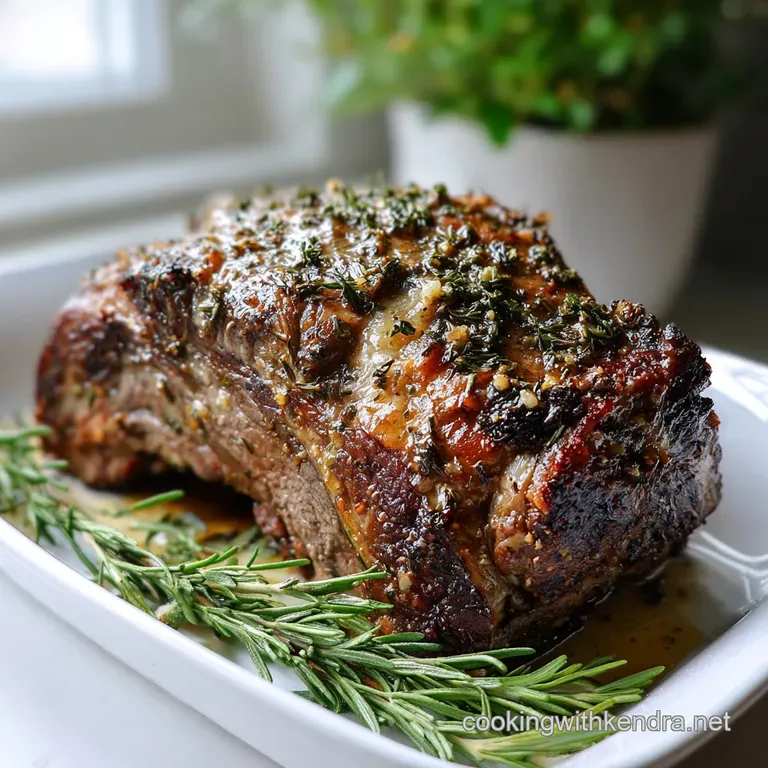
Prevent a Grey Meat Ring
The "grey ring" happens when the outside of the meat cooks much faster than the inside. This is usually caused by roasting at too high a temperature for the entire duration. By switching to the reverse sear method, where we start low and finish high, you ensure the heat penetrates slowly and evenly.
When Beef Finishes Too Early
It happens to the best of us! If your roast hits its target temperature an hour before dinner, don't sweat it. Prime rib is a massive muscle and holds heat remarkably well. Wrap it tightly in heavy duty foil, then a few clean towels, and place it in an empty cooler.
It will stay food safe and hot for up to 2 hours.
| Problem | Root Cause | Solution |
|---|---|---|
| Tough, Chewy Exterior | Skipping the dry brine | Salt early to break down surface proteins. |
| Bitter Au Jus | Scorched pan drippings | Add a splash of water or broth to the pan if it looks too dark. |
| Uneven Slicing | Carving too soon | Rest for at least 30-45 minutes to firm up the muscle fibers. |
Common Mistakes Checklist
- ✓ Never cook a roast straight from the fridge; let it sit out for 2 hours first.
- ✓ Pat the meat bone dry with paper towels if you didn't do a 24 hour dry brine.
- ✓ Don't use a glass baking dish; it can shatter under the over high heat finishing sear.
- ✓ Always pull the meat 5-10 degrees before your final desired temperature.
- ✓ Avoid piercing the meat with a fork; use tongs to keep the juices inside.
Simple Swaps for Your Roast
If you can't find a bone in roast, a boneless prime rib roast recipe works just as well. You will just need to reduce the cooking time by about 20 to 30 minutes since the bones won't be there to insulate the meat. The flavor remains the same, but you lose out on the fun of gnawing on the ribs later!
| Original Ingredient | Substitute | Why It Works |
|---|---|---|
| Dry Red Wine | Pomegranate Juice | Provides similar acidity and tannins. Note: Slightly sweeter than wine. |
| Fresh Rosemary | Dried Rosemary (1 tbsp) | Concentrated flavor. Note: Texture is woodier; mince very finely. |
| Beef Bone Broth | Beef Consommé | Higher gelatin content and clearer finish. |
If you are looking for a side that matches the intensity of this beef, a sharp Horseradish Sauce for recipe is the classic choice. The heat from the horseradish cuts through the fat of the prime rib perfectly.
Scaling for Large Crowds
When you need to feed a massive group, scaling up is relatively easy since the thickness of the roast usually stays the same even if the length increases. For a 16 lb roast (two 8 lb roasts), don't double the cooking time. Instead, increase it by about 20% to account for the extra mass in the oven.
If you are scaling down for an intimate dinner, a 2 bone roast is your best bet. Reduce the salt and butter rub by half, but keep the oven temperatures exactly the same. Smaller roasts can be trickier to hit the perfect temp, so check the thermometer 30 minutes earlier than you think you need to.
If you want X, do Y
- If you want a more smoky flavor, add 1 tsp of smoked paprika to the butter rub.
- If you want a thinner sauce, whisk in an extra 0.5 cup of beef broth at the very end.
- If you want a "Prime" crust on a "Choice" budget, dry age the roast in the fridge for a full 3 days.
Kitchen Myths Exposed
One of the oldest myths in the book is that searing the meat first "seals in the juices." Science has proven this false multiple times. Searing actually creates a surface that allows moisture to escape more easily.
The real reason we sear is for the Maillard reaction, which creates those hundreds of different flavor compounds we associate with roasted meat.
Another common misconception is that you should cook prime rib to 145°F as recommended by some older guidelines. For a Prime Rib Roast, 145°F is medium well, which often results in a dry, grey interior.
For the best experience, pull the meat at 120°F-125°F and let the carryover cooking bring it to a perfect 130°F.
Storing and Reheating Your Beef
Storage: Keep leftover Prime Rib Roast in an airtight container in the fridge for up to 4 days. If you want to freeze it, slice the meat first, wrap each slice tightly in plastic wrap, then place them in a freezer bag for up to 2 months.
Zero Waste: Never throw away the bones! They make the most incredible beef stock you've ever tasted. Simmer the leftover bones with an onion, a carrot, and some peppercorns for 4 hours to create a base for soups or a The Baked Spaghetti recipe if you want a beefy twist. You can also dice up leftover meat for the best breakfast hash of your life.
Plating Tips for Better Results
Presentation is half the battle with a showstopper like this. I like to serve the roast on a large wooden board rather than a ceramic platter. It feels more rustic and "homey," plus it makes carving at the table much easier.
Surround the roast with fresh sprigs of rosemary and thyme to lean into that aromatic experience.
When you carve, make sure you are cutting across the grain. If you have a bone in roast, run your knife along the curve of the bones to remove the entire eye of the meat first, then slice that into thick portions. This ensures every guest gets a piece of that incredible herb crusted exterior.
Finish each plate with a generous spoonful of the red wine au jus right before serving so the meat stays moist and glistening.
High in Sodium ⚠️
1120 mg 1120mg of sodium per serving (49% 49% of daily value)
The American Heart Association recommends limiting sodium intake to no more than 2,300mg per day for most adults.
Tips to Reduce Sodium in Your Rib Roast
-
Low-Sodium Broth-30%
Replace the regular beef bone broth with a low-sodium or no-salt added version. This can significantly reduce the sodium content without sacrificing flavor.
-
Reduce Kosher Salt-25%
Decrease the amount of coarse kosher salt used from 3 tablespoons to 2 tablespoons. You can always add more salt to taste after cooking, but you can't take it away. Consider using a salt grinder instead of pre-ground kosher salt to better control the amount.
-
No-Salt Wine Reduction-10%
Ensure the dry red wine used is a variety with naturally lower sodium content and does not contain any added salt. Sodium is sometimes added in the wine making process.
-
Unsalted Butter
You are already using unsalted butter, which is great! Continue using unsalted butter to avoid adding extra sodium to the roast.
-
Enhance with Herbs
Continue using fresh herbs like rosemary and thyme, and consider adding other aromatic herbs and spices such as oregano, paprika, or garlic powder to boost flavor without adding sodium.
Recipe FAQs
How long do you cook a prime rib roast for?
It depends entirely on the thickness and desired doneness. For an average roast aiming for medium rare, calculate roughly 13 to 15 minutes per pound at 250°F until the internal temperature reaches 120°F. Always use a reliable thermometer rather than relying solely on time.
What is the 500 rule for prime rib?
The 500°F is the final searing temperature, not the primary cooking temperature. The standard method involves slow roasting at a low temperature (around 250°F) until almost done, then blasting the oven up to 500°F for the last 10 minutes to achieve a shatteringly crisp crust via the
Maillard reaction.
What is the secret of cooking a prime rib roast?
The secret is starting the roast cold from a long dry brine, then cooking low and slow. A 24-hour dry brine pulls surface moisture out, which concentrates the beef flavor and sets up a better crust later. If you enjoyed mastering that texture control, see how the same principle of slow heat application works when mastering a technique like in our How to Cook recipe.
Is it better to cook prime rib at 325 or 350?
No, it is better to cook prime rib at a much lower temperature, ideally 250°F. Cooking at 325°F or 350°F allows the outer layers to cook too quickly, resulting in a thick grey ring beneath the crust. The goal is gentle, even heating to ensure edge-to-edge pinkness.
Should I sear my prime rib before roasting it?
No, searing first is counterproductive for a perfectly even internal cook. Searing before the low roast causes the exterior to rapidly cook, guaranteeing a thick grey band of overdone meat just beneath the surface.
The best flavor crust comes from a quick, intense blast of high heat after the roast is nearly done.
How long must prime rib rest after cooking?
Yes, you must rest the roast for a minimum of 30 to 45 minutes. This crucial resting period allows the tightly constricted muscle fibers, which tightened during cooking, to relax and reabsorb the internal juices.
Skipping the rest will cause all the flavorful moisture to run out onto your cutting board.
Can I use beef stock instead of bone broth for the au jus?
No, bone broth is strongly recommended over standard beef stock for the best au jus. Bone broth contains significantly more gelatin, which thickens the sauce naturally as it reduces, providing a richer, more luxurious mouthfeel than stock alone.
Reverse Sear Prime Rib Roast
Ingredients:
Instructions:
Nutrition Facts:
| Calories | 895 calories |
|---|---|
| Protein | 62 g |
| Fat | 67 g |
| Carbs | 3 g |
| Fiber | 0.5 g |
| Sugar | 0.8 g |
| Sodium | 1120 mg |
