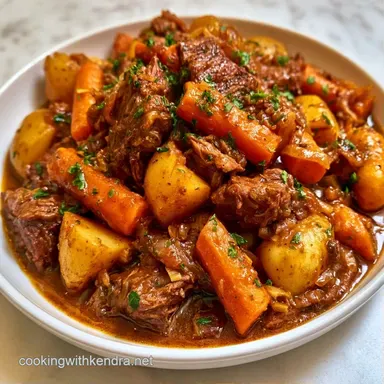
Slow Cooker Beef Potato Stew: Fork-Tender
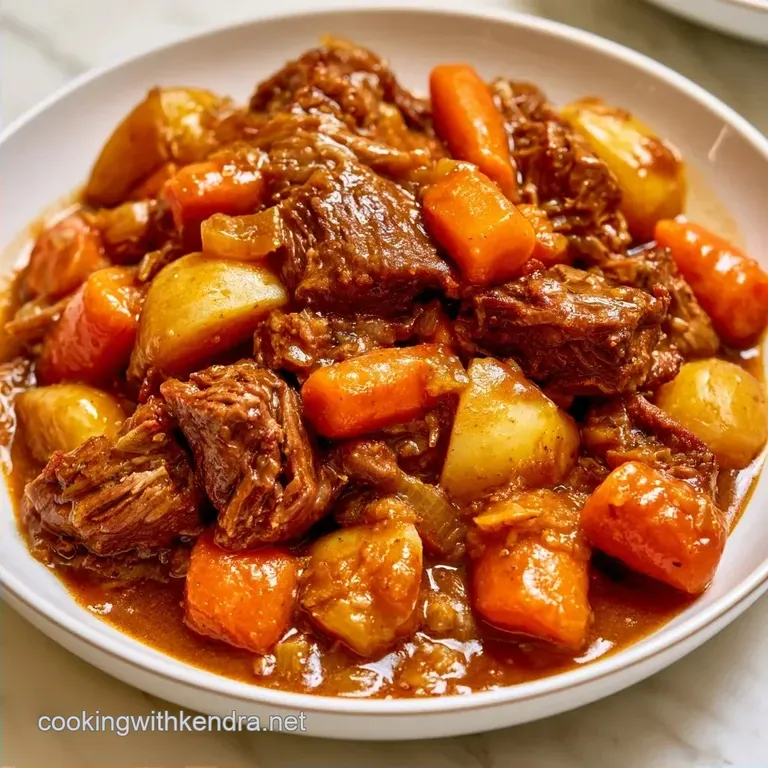
- Time:15 minutes active + 8 hours cooking
- Flavor/Texture Hook: Deep, mahogany-colored gravy with fork-tender beef
- Great for: Hectic weeknights or family meal prep
The scent of red wine and thyme wafting from a slow cooker is the ultimate autumn welcome. I recall a rainy Tuesday in November when the kids came home from school with endless energy. I lacked the stamina to spend hours hovering over a stove, yet I craved a comforting, hearty meal in a bowl.
After tossing in the beef, potatoes, and a quick blend of liquids, I simply let the pot do its work. By evening, the entire home smelled like a gourmet restaurant, and the beef had become perfectly tender. It’s the sort of dinner that brings a sense of calm to a hectic weekday.
You can expect a bold, savory dish where the vegetables remain intact rather than turning to mush. While this Slow Cooker Beef Potato Stew uses budget friendly cuts, the extended cooking time elevates the flavor to something luxurious.
Your family will likely be reaching for a second helping before the first is even gone.
Why This Version Works
Many slow cooker dishes struggle with a "boiled" flavor. Because we skip the initial searing process, we use a few strategic steps to build a deeper taste profile. Dusting the beef in flour and incorporating tomato paste creates a savory base that thickens naturally while cooking.
- Yukon Gold Potatoes
- These maintain their structure during an 8 hour cook, while Russets tend to disintegrate into the sauce.
- Red Wine Acidity
- The wine balances the richness of the beef chuck, bringing a bright note to the entire pot.
- Low and Slow
- A low temperature for 8 hours melts the beef's connective tissue into gelatin, creating a velvety gravy.
The dish gains its luxurious texture from the gradual breakdown of collagen, which turns a tough roast into something truly tender.
| Method | Time | Texture | Best For |
|---|---|---|---|
| Slow Cooker | 8 hours | Very tender, thick gravy | Busy days, meal prep |
| Stovetop | 3 hours | Slightly firmer beef | Quick cravings |
| Oven | 4 hours | Caramelized top layer | Sunday dinners |
Ingredient Role Breakdown
Here is a breakdown of why these ingredients were chosen. Each component plays a key role, from the acidity provided by the wine to the heartiness of the carrots.
| Ingredient | Role | If You Don't Have It |
|---|---|---|
| Beef Chuck | Fat and tenderness | Beef brisket or shoulder |
| Flour | Thickening agent | Cornstarch (use at the end) |
| Red Wine | Depth and acidity | Beef broth + 1 tbsp vinegar |
| Tomato Paste | Umami boost | 2 tbsp tomato sauce |
The Ingredients List
I highly suggest using beef chuck for this. Skip the pre-packaged "stew meat" from the supermarket; it's often a mix of random cuts that cook unevenly. It's much better to buy a whole roast and cube it yourself.
- 900g beef chuck roast, cut into 2.5cm cubes
- 1 tbsp olive oil
- 1 medium yellow onion, diced
- 4 cloves garlic, minced
- 2 tbsp all purpose flour
- 450g Yukon Gold potatoes, cut into 4cm chunks Note: These stay firmer than Russets.
- 4 large carrots, sliced into thick rounds
- 2 stalks celery, sliced
- 1 tsp dried thyme
- 1 tsp dried rosemary
- 2 bay leaves
- 475ml low sodium beef broth
- 120ml dry red wine Tip: This adds a depth of flavor that broth alone can't provide.
- 2 tbsp Worcestershire sauce
- 1 tbsp tomato paste
- 1 tsp salt
- 1/2 tsp black pepper
- 1 tbsp cornstarch
- 2 tbsp cold water
If you're watching your spending, these swaps will keep the core flavors of the dish intact.
| Original Ingredient | Substitute | Why It Works |
|---|---|---|
| Dry Red Wine | Extra Broth + ACV | Provides acidity. Note: Lacks the fruity profile of wine |
| Yukon Gold | Red Potatoes | Holds its structure. Note: Has a slightly waxier texture |
| Beef Chuck | Beef Brisket | High fat content. Note: Different meat grain |
Kitchen Tools Needed
No fancy equipment is required here. A standard 6 quart slow cooker is the main tool. While I generally use a Crock Pot, any brand works perfectly provided it has reliable Low and High settings.
Grab a big bowl for dredging the beef in flour and a separate jug or container for the liquid. I recommend using a whisk to blend the tomato paste into the broth to prevent red clumps from forming in your stew.
Cooking step by step
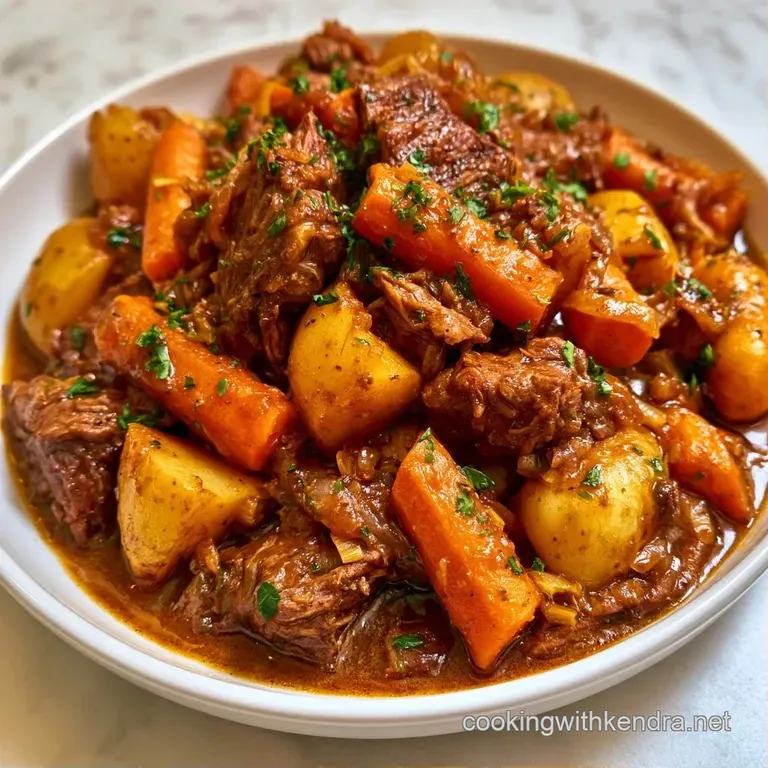
Now let's prepare the meal. Layering the ingredients is key, as it allows the aromatics at the base to season the meat while preventing the vegetables on top from becoming mushy.
- In a bowl, coat the 900g cubed beef chuck with salt, pepper, and 2 tbsp flour. Note: This creates the base for the gravy thickening.
- Place the minced garlic and diced onions at the bottom of the slow cooker.
- Arrange the flour coated beef on top of the aromatics.
- Layer the sliced carrots, celery, and 450g potato chunks over the meat.
- Combine 475ml beef broth, 120ml red wine, Worcestershire sauce, and tomato paste in a jug.
- Pour the combined liquid over the vegetables and beef.
- Nestle the thyme, rosemary, and bay leaves into the liquid.
- Cover and set to Low for 8 hours until the beef yields to a fork with zero resistance.
- 30 minutes before serving, mix 1 tbsp cornstarch with 2 tbsp cold water to form a slurry.
- Stir the slurry into the bubbling stew, cover, and cook on High for the final 30 minutes until the gravy is glossy and thick.
Fixing Common Problems
Even with a simple recipe, things can go sideways. Most of the time, it's just a matter of adjusting the liquid.
Thin Gravy
If your stew looks more like a soup after the cornstarch slurry, don't panic. Just take the lid off and cook on High for another 30 to 45 minutes. This lets the excess water evaporate, which concentrates the flavor and thickens the sauce naturally. If you're still struggling, you can check out my Beef Gravy Recipe for tips on achieving a thicker consistency.
Tough Beef
If the meat is still chewy after 8 hours, it usually means the beef wasn't chuck or the temperature was too low. Give it another hour on Low. Slow cooker beef needs time for the collagen to break down. If you rush it on High, the fibers can sometimes tighten up, making it tougher.
Overcooked Vegetables
This happens if you cut the carrots or potatoes too small. Stick to the 4cm chunks for potatoes. If you find your veg turning to mush, try adding them 2 hours before the end of the cook instead of at the start.
Easy Flavor Twists
Depending on what's in your pantry, you can shift the vibe of this dish. If you want something slightly different, you might like this Crockpot Recipe with Beef and Potatoes for a different take on the classic.
Quick adjustments for your goals:
- Extra thick gravy? → add 1 tbsp extra cornstarch to the slurry
- More acidity? → stir in 1 tsp apple cider vinegar at the end
- Sweeter carrots? → add 1 tsp brown sugar to the broth mix
If you want to swap the meat, brisket works well, but it's a bit leaner, so add an extra tablespoon of olive oil. For a vegetable twist, try adding parsnips or turnips alongside the carrots. They add a peppery, earthy note that fits the autumn mood.
Storage and Freezing
This Slow Cooker Beef Potato Stew actually tastes better the next day. The flavors have more time to mingle, and the gravy often thickens further in the fridge.
Fridge and Freezer Keep the stew in a sealed glass container in the cooler for 3 to 4 days. If you're freezing it, I recommend using freezer safe bags and flattening them out. This helps the stew freeze and thaw faster. It stays good in the freezer for about 3 months.
Reheating Tips Avoid the microwave if you can, as it can make the beef rubbery. Instead, put the stew back in a pot on the stove over medium low heat. Add a splash of beef broth or water if the gravy has become too thick during storage.
Zero Waste Tips Don't toss those onion skins or carrot ends. Put them in a bag in your freezer. Once the bag is full, simmer them with water to make a quick vegetable stock for your next meal.
Best Serving Ideas
Because this is a one pot meal, you don't need much on the side, but a little contrast goes a long way.
The classic pairing is a thick slice of toasted sourdough bread rubbed with a raw garlic clove. It's the best way to soak up every last drop of that silky gravy. I also love serving this with a side of steamed kale or sautéed spinach. The bitterness of the greens cuts through the richness of the beef.
If you're serving a crowd, put the stew in a big ceramic bowl in the center of the table. Sprinkle some fresh parsley on top for a pop of color. It looks rustic and welcoming, and it lets everyone help themselves.
A few things to remember before you start:
Myth: Searing seals in juices. You'll often hear that you must sear meat to "seal in" the juices. In reality, moisture leaves the meat regardless of the crust. The browning just adds flavor. That's why our flour coating method works so well here.
Myth: Slow cookers make meat tough. Some people think the low heat isn't enough to cook the meat. Actually, the opposite is true. High heat can toughen muscle fibers, while a low, steady simmer is what makes beef chuck melt in-your mouth tender.
Recipe FAQs
Can I put potatoes in slow cooker beef stew?
Potatoes are an excellent addition for adding heartiness and natural thickness.
Tip: use 1.5 inch Yukon Gold chunks to keep them intact during the long cook time.
When should you add potatoes to slow cooker stew?
Layer the potato chunks over the beef and vegetables at the start of the process.
Tip: placing them on top prevents them from overcooking and disintegrating.
Is it true that I must brown the meat in a pan first for flavor?
Surprisingly, no. Dusting the beef chuck with flour and slow cooking it creates a rich, savory base.
Tip: ensure every cube is lightly coated in flour to help the gravy thicken.
Does the beef need to be pre-cooked before going into the crockpot?
No, and here's why. A low temperature for 8 hours slowly tenderizes the beef chuck without needing a sear.
Tip: stick to beef chuck roast to ensure the meat doesn't become tough.
How do I thicken the gravy if it's too watery?
Whisk cornstarch with cold water and stir the slurry into the pot 30 minutes before serving.
Tip: switch the slow cooker to High for the final 30 minutes to set the glossy texture.
What is the best way to store the finished stew?
Keep the stew in a sealed glass container in the cooler for 3 to 4 days.
Tip: if you enjoyed mastering the slow simmering technique here, see how the same principle works in this comforting beef barley soup.
Slow Cooker Beef Potato Stew