Baked Chicken Roulade Recipe
- Time: Active 20 minutes, Passive 25 minutes, Total 45 minutes
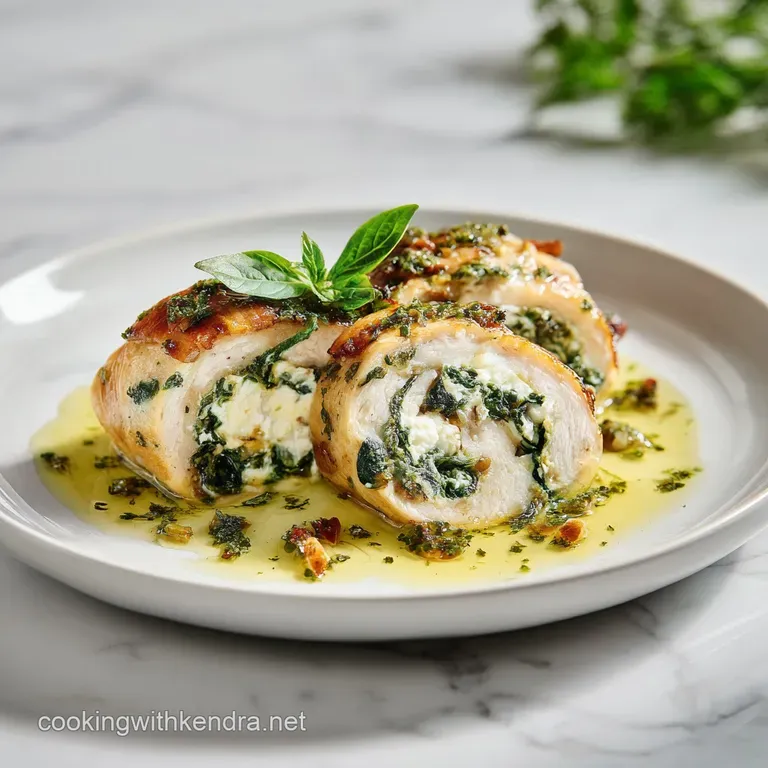
- Flavor/Texture Hook: A golden, shattering crust giving way to a velvety spinach and feta center.
- Perfect for: Impressive weeknight dinners or a stress free Sunday family meal.
- Master the Perfect Chicken Roulade
- Why This Recipe Works for Busy Cooks
- The Science Behind Your Core Ingredients
- Essential Components for a Successful Chicken Roulade
- Simple Tools for a Professional Kitchen Result
- Step-by-Step Guide to Rolling Your Chicken Roulade
- Solving Common Issues with Your Chicken Roulade
- Creative Ways to Customize Your Chicken Roulade
- Preservation Tips for Your Leftover Chicken Roulade
- Best Side Dishes to Serve Your Chicken Roulade
- Recipe FAQs
- 📝 Recipe Card
Master the Perfect Chicken Roulade
The first time I tried to make a stuffed chicken dish, it was a total disaster. I didn't pound the meat enough, so the outside was dry and charred while the inside was still pink and scary. I remember the sizzle of the pan turning into a frantic smoke alarm situation because the filling leaked out and burned instantly.
It was a mess, but it taught me the most important lesson in home cooking: preparation is everything.
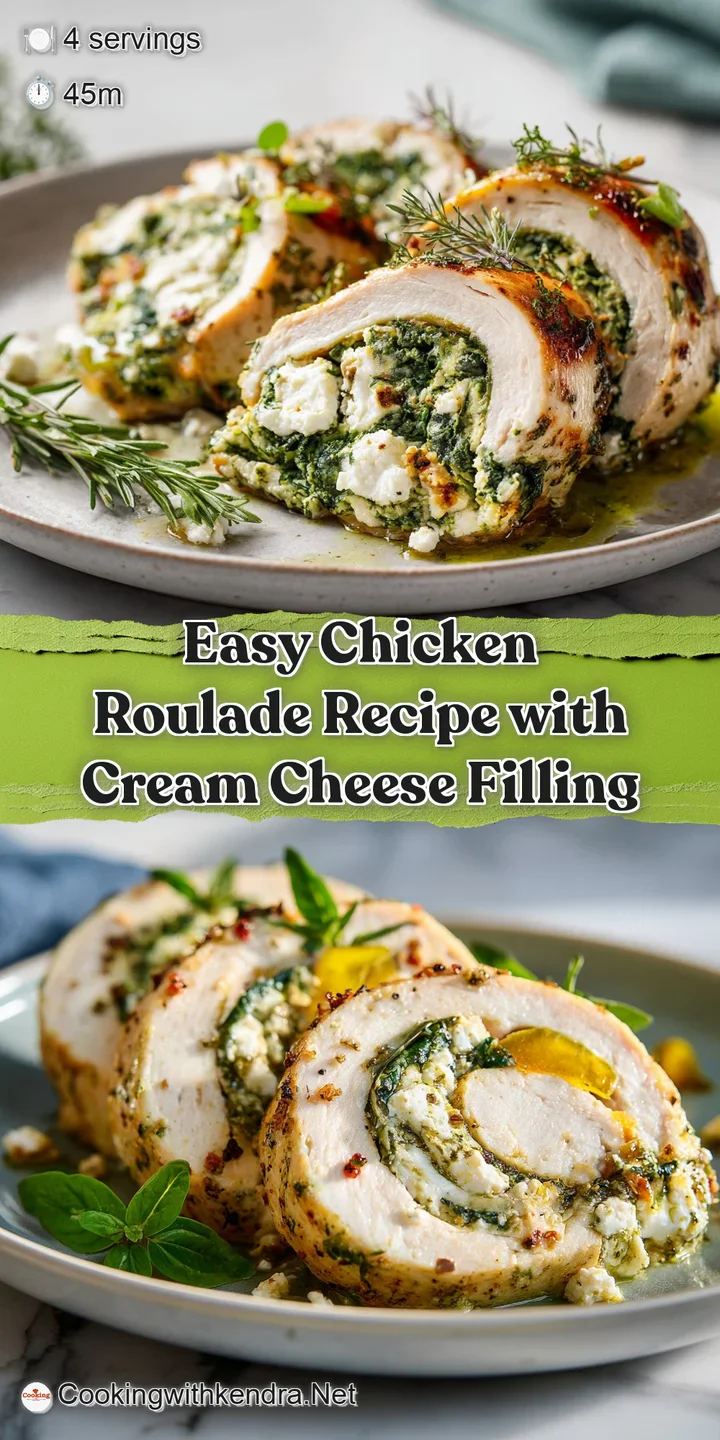
Now, when I make this, the aroma of garlic and smoked paprika fills the kitchen and actually makes my neighbors knock on the door. There’s something so satisfying about slicing into a perfectly rolled piece of meat and seeing that beautiful green spiral of spinach and feta.
It looks like you spent hours in a professional kitchen, but between us, it’s mostly just about a little bit of plastic wrap and some strategic toothpicks.
I’ve streamlined this to be as busy friendly as possible. We aren't doing any fancy trussing with kitchen twine because, honestly, who has time for that on a Tuesday? We’re using minimal tools to get maximum flavor.
You’re going to love how the tang of the feta cuts through the richness of the cream cheese, and how the panko creates a crust that actually stays crispy instead of turning into a soggy layer of sadness. Let's get into the details so you can nail this on your first try.
Why This Recipe Works for Busy Cooks
The Physics of the Spiral
Moisture Insulation: The cream cheese acts as a thermal barrier, slowing down the heat transfer to the center of the chicken so the outer meat doesn't overcook before the middle is safe to eat.
- Structural Integrity: Pounding the chicken to a uniform thickness breaks down tough connective tissues, making the meat tender enough to roll without snapping or cracking.
- The Maillard Boost: Smoked paprika and Parmesan cheese contain natural sugars and proteins that accelerate browning, giving you a deep golden color in just a few minutes.
- Hydration Balance: Finely chopping the fresh spinach ensures it wilts quickly inside the roll, releasing just enough moisture to steam the chicken from the inside out.
- Adhesion Science: Pressing the panko into the olive oil-coated surface creates a mechanical bond that survives the flip in the skillet.
| Chicken Thickness | Internal Temp | Rest Time | Visual Cue |
|---|---|---|---|
| 1/4 inch flat | 165°F (74°C) | 5 minutes | Juices run clear when pierced |
| 1/2 inch (Too thick) | 165°F (74°C) | 8 minutes | Filling may be cooler than meat |
| 1/8 inch (Too thin) | 160°F (71°C) | 3 minutes | Meat may tear during rolling |
If you want a roll that stays together, keep your filling about half an inch away from the edges of the meat. If you want a deeper flavor, let the stuffed rolls sit in the fridge for 15 minutes before cooking to help the proteins "set" their shape.
If you want a cleaner slice, use a serrated knife and wait the full five minutes of resting time before cutting.
The Science Behind Your Core Ingredients
| Ingredient | Science Role | Pro Secret |
|---|---|---|
| Cream Cheese (4 oz) | Fat Based Moisture Barrier | Use full fat versions to prevent the filling from becoming "watery" or grainy. |
| Panko Breadcrumbs (0.5 cup) | Large Surface Area Crunch | Don't sub with fine crumbs; panko's jagged edges catch the oil for a better shatter. |
| Kosher Salt (1 tsp) | Protein Denaturation | Salt helps the meat fibers hold onto water, preventing that "rubbery" texture. |
It's a lot like the technique we use for our Creamy Lemon Chicken recipe, where the coating protects the delicate meat from the direct heat of the pan. The goal is to create a shell that keeps the inside steaming in its own juices while the outside develops that distinct crunch we all crave.
Essential Components for a Successful Chicken Roulade
For the chicken, we are using 1.5 lb boneless skinless chicken breasts. Why this? They provide the largest flat surface area for rolling once pounded thin. If you're out of breasts, you can use chicken thighs, though they are smaller and harder to roll.
The filling is where the magic happens. You'll need 4 oz cream cheese (softened), 2 cups fresh baby spinach (finely chopped), 0.25 cup crumbled feta, 2 cloves of minced garlic, and 0.5 tsp dried oregano.
Why this? Feta doesn't melt completely, providing a nice texture against the creamy base. If you don't like feta, goat cheese is a brilliant substitute that offers a similar tang.
For that signature crust, grab 0.5 cup panko breadcrumbs, 0.25 cup grated Parmesan, and 1 tbsp fresh chopped parsley. You'll also need 1 tsp kosher salt, 0.5 tsp cracked black pepper, and 1 tsp smoked paprika for seasoning. Finally, 2 tbsp extra virgin olive oil will be our cooking fat.
Why this? Olive oil has a high enough smoke point for searing but adds a rich flavor.
Simple Tools for a Professional Kitchen Result
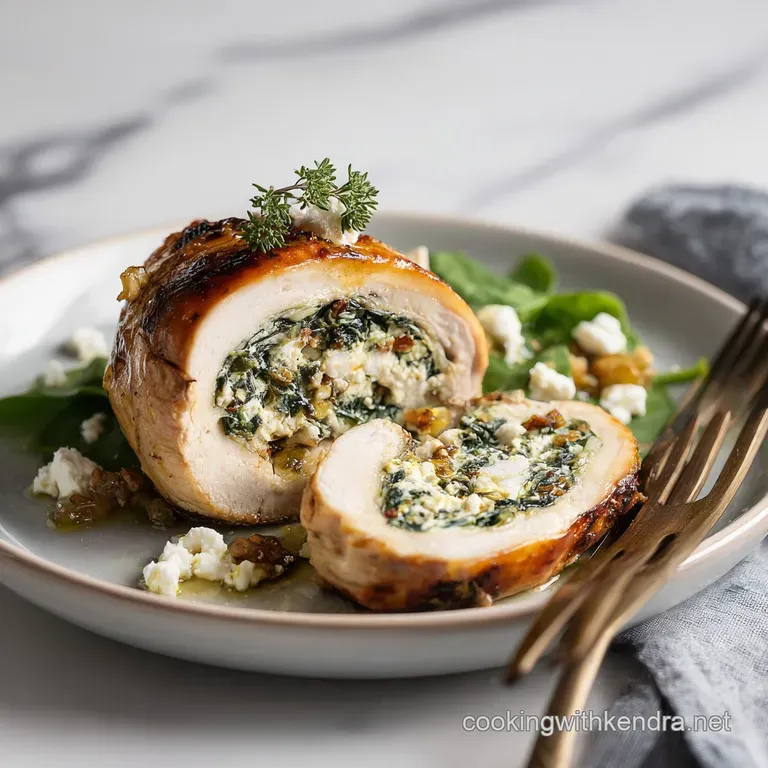
You don't need a drawer full of gadgets for this. A heavy bottomed skillet is your best friend cast iron is great, but a good non stick pan works perfectly too. You'll definitely need a meat mallet, but if you're like me and your kitchen drawers are a black hole, a heavy rolling pin or even the bottom of a sturdy wine bottle works just fine.
Plastic wrap is non negotiable here. It keeps the chicken from splattering everywhere while you're pounding it and helps you get a tight, even roll. Also, keep a handful of toothpicks nearby. They act like little structural engineers to keep your roulade from unfurling the second it hits the hot oil.
step-by-step Guide to Rolling Your Chicken Roulade
1. Prepping the Canvas
Slice the 1.5 lb chicken breasts in half horizontally (butterfly style) but don't cut all the way through. Open them like a book, place them between two sheets of plastic wrap, and pound them with your mallet until they are an even 1/4 inch thick.
Note: Uniform thickness is the only way to ensure the meat cooks at the same rate.
2. Seasoning the Base
Remove the top layer of plastic and sprinkle both sides of the chicken with 1 tsp kosher salt, 0.5 tsp black pepper, and 1 tsp smoked paprika. Wait until the meat looks slightly "wet"—this means the salt is starting to work its magic.
3. Mixing the Interior
In a small bowl, stir together the 4 oz softened cream cheese, 2 cups chopped spinach, 0.25 cup feta, minced garlic, and 0.5 tsp oregano. Mix until the spinach is evenly distributed and the mixture is a pale green color.
4. Engineering the Spiral
Spread about 2-3 tablespoons of the filling onto each chicken breast. Leave a 1/2 inch border around the edges. Roll the chicken tightly starting from the narrowest end, tucking the sides in as you go.
5. Securing the Roll
Insert 2-3 toothpicks into the seam of each roll to hold it together. Note: Aim the toothpicks at an angle so they don't stick out too far and prevent even searing.
6. Preparing the Coating
On a shallow plate, combine the 0.5 cup panko, 0.25 cup Parmesan, and 1 tbsp parsley. Drizzle the chicken rolls with 1 tbsp of olive oil to help the crumbs stick. Press each roll into the breadcrumbs until they are fully submerged and coated.
7. Achieving the Shattering Crust
Heat 1 tbsp olive oil in your skillet over medium heat. Place the rolls seam side down in the pan. Cook for 5-6 minutes without moving them until the bottom is a deep, crusty brown.
8. The Precision Finish
Turn the heat down to medium low. Flip the rolls and cover the pan with a lid. Cook for another 12-15 minutes until the internal temperature reaches 165°F (74°C) and the chicken feels firm to the touch.
9. The Final Rest
Transfer the chicken to a cutting board. Let it rest for 5 minutes before removing the toothpicks and slicing. Note: This allows the cheese to firm up so it doesn't leak out when you cut it.
Solving Common Issues with Your Chicken Roulade
Why Your Filling Leaked Out
If you see a puddle of cheese in your pan, it usually means the roll wasn't tight enough or the edges weren't sealed. When you spread the filling, it's tempting to go right to the edge, but that's a trap.
That half inch border is your "safety zone." Also, make sure your toothpicks are catching both the top layer and the inner fold of the meat.
To Prevent Soggy Breadcrumbs
Soggy crusts usually happen because of steam. If you crowd the pan, the moisture from the chicken has nowhere to go but back into the breadcrumbs. Work in batches if you have to. Another trick is to make sure your pan is truly hot before the chicken goes in you should hear a loud sizzle immediately.
| Problem | Root Cause | Solution |
|---|---|---|
| Meat is dry | Overcooking or skipping the rest | Pull at 160°F; carryover heat hits 165°F while resting. |
| Crust won't stick | Chicken was too wet | Pat the meat dry with paper towels before adding the oil and panko. |
| Raw center | Pounded unevenly | Ensure the thickest part of the breast is flattened to 1/4 inch. |
Common Mistakes Checklist:
- ✓ Did you pound the chicken to a consistent 1/4 inch? (Essential for even cooking)
- ✓ Did you leave a border around the filling? (Prevents messy leaks)
- ✓ Is the pan hot enough to sizzle? (Ensures a crispy crust)
- ✓ Did you let the meat rest for 5 minutes? (Keeps the filling inside)
- ✓ Are the toothpicks counted? (You don't want a surprise in your dinner)
Creative Ways to Customize Your Chicken Roulade
This recipe is incredibly flexible. For a Mediterranean twist, swap the spinach for chopped sun dried tomatoes and kalamata olives. Use a little extra oregano and maybe a splash of lemon juice in the filling. It gives it a bright, punchy flavor that pairs beautifully with a simple side of roasted potatoes.
If you’re looking for a smoky profile, you can wrap the entire chicken roll in a piece of thin cut bacon before coating it in breadcrumbs. Just keep in mind that the bacon will add extra fat, so you might need to drain the pan halfway through cooking.
This is a big hit for family gatherings where you want that "wow" factor without a lot of extra work.
| Original Ingredient | Substitute | Why It Works |
|---|---|---|
| Cream Cheese | Goat Cheese | Similar creamy texture but adds a much sharper, earthy tang. |
| Panko Breadcrumbs | Crushed Pork Rinds | Keeps it keto friendly while maintaining the essential crunch. |
| Spinach | Sautéed Kale | Offers a heartier bite. Note: Must be pre cooked as it's tougher than spinach. |
For a velvety finish, you can make a quick pan sauce once the chicken is done. Remove the chicken, add a splash of white wine or chicken broth to the hot skillet, and scrape up those brown bits. Whisk in a tablespoon of butter, and you’ve got a restaurant quality sauce in about two minutes. This technique is very similar to what we do in our Chicken Stew recipe, where those browned bits (the fond) provide the deep base for the whole dish.
Preservation Tips for Your Leftover Chicken Roulade
If you have leftovers, you're in luck. These rolls actually hold their shape remarkably well. Store them in an airtight container in the fridge for up to 3 days. When you reheat them, I highly recommend using an air fryer or a toaster oven rather than a microwave.
Five minutes at 350°F (180°C) will bring back that "shatter" in the crust that a microwave would turn into a rubbery mess.
For the freezer, you can actually freeze these before they are cooked. Wrap the individual stuffed and breaded rolls tightly in plastic wrap, then foil, and pop them in a freezer bag for up to 2 months. Thaw them overnight in the fridge before cooking as directed.
This is a total life saver for those nights when you're too exhausted to even think about prep.
Zero waste tip: If you have extra filling, don't throw it out! It makes an incredible spread for toast or a topping for a baked potato. If you have extra panko/parm mix, toss it with a little melted butter and keep it in a jar in the fridge it’s a great crunchy topper for mac and cheese or roasted veggies.
Best Side Dishes to Serve Your Chicken Roulade
Since this roulade is quite rich and creamy, I usually like to serve it with something that has a bit of acidity or a light, crisp texture. A simple arugula salad with a lemon vinaigrette is perfect. The peppery bite of the greens cuts right through the feta and cream cheese.
If you want something more substantial, a pile of garlicky green beans or roasted asparagus works wonders. The earthy tones of the vegetables complement the oregano and garlic in the chicken. For a truly comforting meal, you could even serve it alongside a bowl of Chicken and Vegetable Soup recipe to start the meal off right.
Myths About Rolling Chicken
Many people believe you need to use egg wash to get breadcrumbs to stick to chicken. That's a myth! A light coating of olive oil is actually better for roulades because it doesn't create a thick, cakey layer that can peel off when you slice the meat. The oil helps the panko fry directly against the chicken surface.
Another common misconception is that you have to sear the chicken on high heat. If you go too hot, the breadcrumbs will burn before the heat can penetrate the center of the roll. Medium heat is your "sweet spot" it gives you a controlled brown and ensures the meat is cooked through perfectly every time.
Trust me, patience in the pan pays off in the flavor.
Recipe FAQs
What is a chicken roulade?
It is a dish made by flattening chicken breast, filling it, and rolling it into a log shape. The roll is secured, coated in breading, and then cooked until golden brown and the filling is hot. This technique traps moisture, yielding tender meat.
What is the difference between chicken Ballotine and chicken roulade?
Roulade generally uses a boneless cut, while a Ballotine uses a deboned whole limb, like a thigh or leg. A Ballotine maintains the natural shape of the bone cavity it was removed from, whereas a roulade is built from a flattened sheet of meat.
If you want an impressive looking dish, mastering the roll technique here applies to both preparation styles.
What are common roulade baking mistakes?
The most common mistake is inconsistent thickness when pounding the chicken. If the meat isn't uniform, the thin edges overcook before the thicker center reaches a safe temperature. Always use plastic wrap and a mallet to achieve an even 1/4 inch.
What is another name for chicken roulade?
It is frequently called a chicken roll or stuffed chicken breast. When made with dark meat, it is often called a supreme or paupiette, depending on the specific filling and region. For quick weeknight versions, sometimes people refer to them as stuffed chicken cutlets.
How do I ensure the filling doesn't leak out while searing?
Leave a solid one-half inch border around all edges when spreading the filling. You must also roll the meat very tightly and secure the seam with at least two toothpicks inserted at an angle. If you nail the tight rolling technique here, it translates well to stabilizing meat when making things like our Chicken Broccoli Rice recipe.
Can I skip searing the chicken and just bake it?
No, skipping the sear sacrifices essential texture and flavor development. Searing initiates the Maillard reaction, creating the necessary golden, flavorful crust you want on a roulade. Baking alone results in steamed, pale meat with a soft exterior.
What temperature must the chicken reach internally?
The chicken must reach a minimum internal temperature of 165°F (74°C). Because of carryover cooking, pull the rolls from the heat around 160°F and let them rest for five minutes before slicing. This resting period is crucial for juice redistribution and safe consumption.
Stuffed Chicken Roulade Recipe
Ingredients:
Instructions:
Nutrition Facts:
| Calories | 546 kcal |
|---|---|
| Protein | 59.6 g |
| Fat | 26.3 g |
| Carbs | 12.2 g |
| Fiber | 1.1 g |
| Sugar | 2.1 g |
| Sodium | 685 mg |
