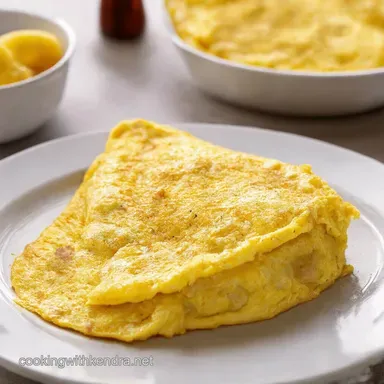
Cloud-Like Fluffy Omelet with Cheese

- Total10 Mins
- Servings1
- Calories433 kcal
- Time: 5 min active + 5 min cooking
- Texture: Airy, light, and velvety
- Serve with: Toasted sourdough or fresh berries
Fluffy Omelet
Saturday mornings are for slowing down. Instead of a rushed scramble, this dish turns basic eggs into something a bit more special. It has a towering height and a delicate feel that makes it feel like a cafe breakfast at home.
You can expect a soft, pillow-like texture that holds its shape on the plate. It's an easy way to make a simple meal feel intentional without spending an hour in the kitchen.
The goal here is to create a stable foam that doesn't collapse when it hits the pan. Once you nail the folding technique, you'll have a consistent, airy result every time.
At a Glance
This recipe uses a method similar to a Japanese fluffy omelette, focusing on air and steam. Instead of flipping the eggs, a lid does the work for you.
Precision Checkpoints:
- Egg whites: Beat until soft peaks curl over.
- Pan thickness: Spread the mixture to exactly 1/2 inch.
- Safety: Internal temperature must hit 160°F.
Ingredients and Swaps
- 3 large eggs, separated
- 1 tbsp (15 g) unsalted butter
- 1/8 tsp (0.75 g) salt
- 1 pinch (0.1 g) cream of tartar
- 1/4 cup (30 g) shredded sharp cheddar cheese
- 1 tbsp (3 g) finely chopped fresh chives
- 1 pinch (0.1 g) cracked black pepper
Large eggs provide the base structure. Separating them allows the whites to hold air while the yolks add richness.
Unsalted butter prevents sticking and offers a nutty flavor. A neutral oil like avocado oil is a suitable dairy-free substitute, though you'll lose some richness. To make the dish fully dairy-free, use a plant-based shredded cheese in place of the cheddar.
Cream of tartar acts as a stabilizer to keep air bubbles from popping. A pinch of lemon juice is a close substitute if you're out of tartar.
Sharp cheddar cheese brings salt and a bold flavor. Swiss or Gruyère are good swaps, though they may melt a bit slower.
Fresh chives cut through the richness of the eggs. Scallions are also a great choice.
Gear for This Recipe
You need an 8-inch non-stick skillet. A smaller pan will make the eggs too thick to cook through, and a larger one will make them too thin to stay fluffy.
A tight-fitting lid is mandatory. It traps steam to cook the top of the eggs without browning the bottom too much.
An electric mixer is the fastest way to get soft peaks, but a whisk works if you have a strong arm. Use a rubber spatula for folding to keep the air bubbles intact.
Step-by-step Instructions
1. Prep the eggs
Separate the eggs, transferring yolks to one bowl and whites to a clean, grease-free mixing bowl. Note: Any trace of fat or yolk in the whites will stop them from peaking.
2. Whip the whites
Mix the cream of tartar and 1/8 tsp (0.75 g) salt into the egg whites. Beat on medium-high with an electric mixer until soft peaks form. The peaks should bend slightly when the whisk is lifted.

3. Fold in yolks
Gently fold the egg yolks into the whipped whites with a rubber spatula. Cut through the center and lift from the bottom to maintain the air bubbles, which make this homemade fluffy omelet so light.
4. Heat the pan
Set an 8-inch non-stick skillet over medium-low heat. Add 1 tbsp (15 g) unsalted butter and swirl until it foams and coats the bottom.
5. Pour and spread
Pour the egg mixture into the center of the pan. Using a spatula, spread it into a consistent layer, roughly 1/2 inch (1.2 cm) thick.
6. Steam the eggs
Cover the pan immediately with a tight-fitting lid. Cook for 3 to 4 minutes. Wait until the edges are set and the top looks matte. Use a thermometer to verify the eggs have hit 160°F (71°C) as per USDA food safety guidelines.

7. Add fillings
Lift the lid and quickly add 1/4 cup (30 g) shredded sharp cheddar cheese and 1 tbsp (3 g) finely chopped fresh chives to one half of the omelet.
8. Fold and set
Slide the spatula under the unfilled side and gently fold it over the cheese. Hold for 30 seconds to allow the residual heat to melt the cheese.

9. Plate and season
Immediately slide the omelet onto a warm plate to prevent it from collapsing. Season with a pinch (0.1 g) of cracked black pepper to finish your fluffy omelet.
Avoiding Kitchen Disasters
To keep your fluffy omelet from failing, watch your heat and your peaks.
Fixing a Flat Egg
If the omelet collapses, the whites were likely over-whipped into stiff peaks. Stiff peaks become brittle and burst when they hit the heat. Stick to soft, curling peaks for a stable lift.
Solving Uneven Cooking
When the bottom is brown but the top is raw, your heat is too high or your lid isn't tight. Lower the flame and ensure the lid seals well to trap the steam needed to cook the top.
When Whites Won't Peak
If the whites stay liquid, there was likely a drop of yolk or grease in the bowl. Start over with a completely clean, dry bowl to ensure the proteins can bond and trap air.
Variations and Substitutions

You can easily tweak your fluffy omelet to fit your mood. For a garden version, fold in sautéed spinach and mushrooms. Just make sure the vegetables are cooked and drained first, or the extra moisture will deflate the eggs.
If you want a more filling meal, serve this with some warm No Yeast Flatbread.
| Original Ingredient | Substitute | Why It Works |
|---|---|---|
| Sharp Cheddar | Feta Cheese | Salty and tangy. Note: Doesn't melt as smoothly |
| Butter | Olive Oil | High smoke point. Note: Lacks the creamy flavor |
| Chives | Parsley | Fresh, herbal note. Note: Milder taste than chives |
Why It Stays Airy
Physical Foam: Beating the whites creates a network of protein that traps air. When this hits the pan, the air expands, pushing the omelet upward.
Steam Oven: The lid turns the skillet into a small oven. This cooks the top surface without needing to flip the eggs, which would crush the air bubbles.
Kitchen Myths
Some believe that adding baking powder is the only way to get height. While some recipes use it, the real lift comes from the mechanical aeration of the whipped whites. Baking powder is a shortcut, but whipped eggs provide a much lighter, more authentic texture.
Recipe FAQs
What's the secret to a fluffy omelette?
Beating the egg whites to soft peaks before gently folding in the yolks.
Tip: use a grease-free mixing bowl to ensure the whites reach their maximum volume.
Can I put heavy cream in my omelette?
Avoid adding heavy cream as it is not used in this specific recipe.
Tip: rely on the whipped egg white method for a lighter texture than cream provides.
Is it better to add milk to omelette?
This version omits milk to maintain a light and airy structure.
Tip: additional liquids can often weigh down the air bubbles in the beaten whites.
Why does the omelet sink or deflate within seconds of being served or topped?
Air bubbles naturally collapse as the eggs cool or under the weight of fillings.
Tip: slide the omelet onto a warm plate immediately to slow the cooling process.
How do you add a filling without cramming it into a folded omelet?
Sprinkle the cheese and chives over one half of the omelet before folding.
Tip: hold the fold for 30 seconds to let residual heat melt the cheese.
Will high heat make the omelet brown too fast?
Excessive heat cooks the exterior too quickly, which can make the eggs tough.
Tip: keep the skillet on medium-low and use a lid to cook the top via steam.
Fluffy Omelet with Cheese