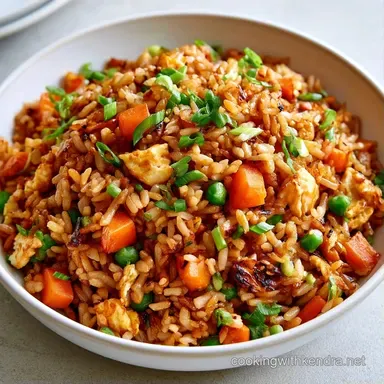
Vegetarian Chinese Fried Rice with Eggs

- Time: 10 min active + 10 min cooking + 24 h resting
- Flavor & Texture: Savory, salty, and charred
- Perfect for: A fast weeknight dinner or meal prep
Ever wonder why restaurant grains stay separate and bouncy, but home versions often turn into a sticky mass? It usually comes down to the moisture level of the rice. When you use fresh rice, the grains are too wet and steam each other in the pan.
This recipe solves that by using chilled rice, which lets you get a real sear. You'll get that distinct, smoky edge and a bright pop of color from the vegetables.
Whether you're craving something fast or prepping for the week, this vegetarian Chinese fried rice delivers that savory, umami-heavy hit without needing a professional kitchen.
Vegetarian Chinese Fried Rice
Cold Rice: Refrigerating the rice dries the surface of each grain. This prevents them from clumping and allows them to fry instead of steam.
High Heat: A hot pan creates charred edges on the rice in minutes. This adds a toasted flavor that you can't get with low heat.
Sauce Timing: Adding the liquid at the end prevents the rice from absorbing too much moisture. It keeps the texture firm and the colors vibrant.
| Rice Choice | Prep Method | Texture | Best For |
|---|---|---|---|
| Overnight Rice | Chilled 24 hours | Distinct, firm grains | Restaurant-style results |
| Fresh Rice | Spread on tray, frozen 15 mins | Soft, slightly sticky | Last-minute cravings |
The Essential Ingredients
Soy sauce creates the primary salty and savory foundation, while the toasted sesame oil brings a characteristic nuttiness. White pepper introduces a gentle, earthy warmth, offering a different profile than the biting sharpness of black pepper.
For texture and color, carrots and peas add vibrant hues and a hint of sweetness. The eggs provide a creamy richness that offsets the crispness of the charred rice.
The Lineup
- 3 cups (450g) cooked long-grain white rice, chilled overnight Why this? Ensures grains stay separate
- 2 large eggs, lightly beaten
- 2 tbsp (30ml) vegetable oil
- 1 medium carrot, finely diced
- 1/2 cup (75g) frozen peas, thawed
- 3 cloves garlic, minced
- 1 tsp (5g) fresh ginger, grated
- 3 scallions, sliced
- 2 tbsp (30ml) reduced-sodium soy sauce Why this? Keeps salt in check
- 1 tsp (5ml) toasted sesame oil Why this? For that signature nutty scent
- 1/2 tsp (2g) granulated sugar
- 1/4 tsp (1g) white pepper
Cooking Steps
Phase 1: The Setup
- In a small bowl, combine the soy sauce, sesame oil, sugar, and white pepper, whisking until the sugar has completely dissolved.
- Use your fingers or a fork to lightly break up any clumps in the cold rice so the grains are separate.

Phase 2: The Searing Process
- Warm 1 tbsp (15ml) of vegetable oil in a wok or wide pan over medium-high heat. Add the beaten eggs and scramble quickly until just set but still soft; remove them from the pan and set aside.

- Pour in the remaining 1 tbsp (15ml) of vegetable oil. Sauté the diced carrots and the white parts of the scallions for 2 minutes until the carrots begin to soften.
- Stir in the minced garlic and grated ginger, cooking for 30 seconds until fragrant.
- Add the thawed peas and stir-fry for an additional 60 seconds.
Phase 3: The Final Toss
- Increase the heat to high. Toss in the chilled rice and stir-fry for 3-4 minutes, pressing the grains against the hot surface until you see charred edges.
- Pour the whisked sauce over the rice and stir-fry rapidly for 2 minutes until the rice is evenly glossy amber.

- Fold the cooked eggs and the green scallion tops back into the pan. Toss for another 30 seconds and remove from the heat immediately.
If Something Goes Wrong
Fixing Mushy Rice
This happens when the rice is too wet or the pan isn't hot enough. Next time, ensure the rice is chilled for 24 hours. If it's already mushy, stop adding liquid and crank the heat to evaporate excess moisture.
Solving Clumpy Grains
Clumping occurs if you don't break up the cold rice before it hits the pan. Use your fingers to separate the grains while they are still cold. Once they're in the pan, use a folding motion with your spatula rather than stirring.
Preventing Steamed Veggies
If your vegetables are soft and pale instead of seared, you've likely crowded the pan. Cook the carrots and scallions in a wider pan or in two small batches. This keeps the temperature high so they sizzle instead of boiling in their own juice.
| Original Ingredient | Substitute | Why It Works |
|---|---|---|
| Fresh Ginger | 1/4 tsp Ginger Powder | Similar heat. Note: Less punchy than fresh |
| Soy Sauce | Tamari (labelled gluten-free) | gluten-free alternative. Note: Slightly richer taste |
| Vegetable Oil | Grapeseed Oil | High smoke point. Note: Neutral flavor |
Kitchen Myths

A carbon-steel wok isn't necessary for this recipe. A heavy non-stick skillet is a great alternative for home-sized batches. The real secrets are maintaining the right temperature and using dry rice, rather than the shape of the pan.
Storage and Leftovers
Store the leftovers in a sealed container; they will last up to 4 days in the fridge. This meal is also freezer-friendly, so feel free to divide it into portions for storage up to 3 months.
For reheating, try to avoid the microwave to keep the grains from turning rubbery. Instead, place a portion in a hot skillet with a teaspoon of oil or water, stir-frying over medium-high heat for 3 minutes to revive that charred texture until the rice is steaming hot throughout (165°F/74°C in the centre).
Variations and Swaps
Vegan-Friendly Version
Replace the eggs with 1/2 cup of crumbled extra-firm tofu. Sauté the tofu with a pinch of turmeric for color and a dash of soy sauce before setting it aside. This keeps the protein and texture without the animal products.
Gluten-free Adaptation
Swap the soy sauce for Tamari (labelled gluten-free) or coconut aminos. Start with 1 tbsp and taste as you go, as these can have different salt concentrations. For this gluten-free version, also use products labelled gluten-free for all soy sauces.
If you enjoy these savory Asian flavors, you might like a Pad Thai recipe for another high-heat meal.
Common Questions
Can this be made as Indo-Chinese fried rice?
Yes, this recipe follows a similar profile to Indo-Chinese styles. It uses soy sauce and ginger to create that savory, restaurant-style taste.
How to achieve a restaurant-style char?
Increase the heat to high before adding the rice. Press the grains against the hot surface of the wok for 3-4 minutes to create charred edges.
What goes into the vegetarian sauce?
The sauce consists of soy sauce, sesame oil, sugar, and white pepper. These ingredients are whisked together until the sugar is fully dissolved.
Is a rice cooker suitable for this recipe?
You can use one, but the rice won't develop the same charred edges as a wok. The texture will be softer and less distinct.
Why is chilled rice necessary?
Cold rice has less surface moisture, which prevents the grains from clumping. This ensures the rice fries properly instead of steaming.
Should I store leftovers in the fridge?
Keep the finished dish in a sealed tub in the refrigerator for up to 4 days. You can also freeze portions for up to 3 months.
Could I use fresh rice instead of chilled?
Freshly cooked rice is too moist and will likely become mushy. Chilling the rice overnight ensures the grains remain individual during frying.
Do the eggs need to be added at the end?
Yes, fold them back in during the final 30 seconds of cooking. This prevents the eggs from overcooking and becoming rubbery.
Vegetarian Chinese Fried Rice with Eggs