The Best Chicken Pasta Creamy: Starch Emulsion Magic
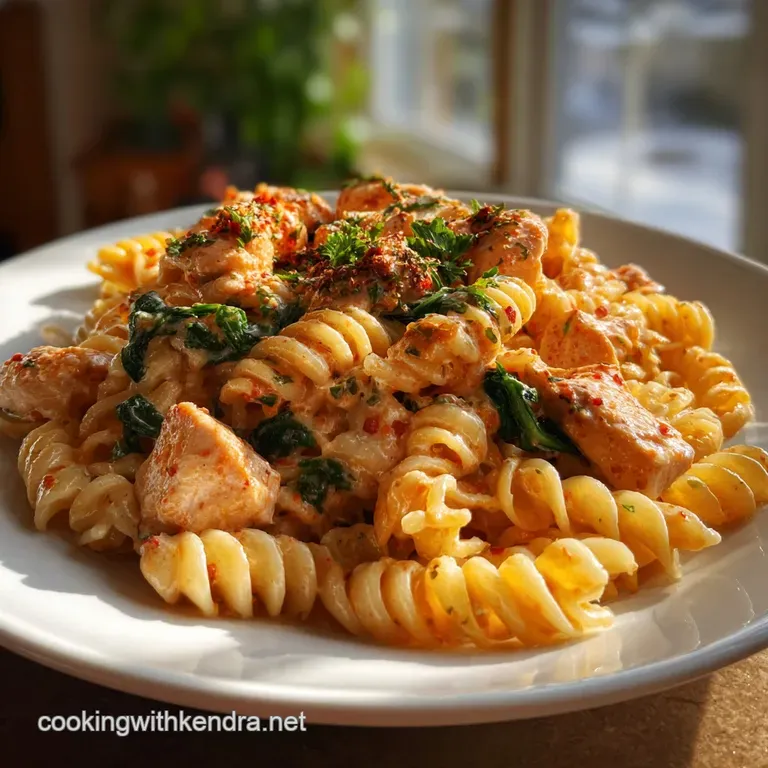
- Effort/Time: 35 minutes total (15 mins prep / 20 mins cook).
- Flavor Hook: Sizzled smoked paprika and garlic-infused heavy cream.
- Perfect for: Weeknight-warriors and quick-turnaround dinner parties.
- The Ultimate Creamy Chicken Pasta: A Restaurant-Quality Weeknight Meal
- Why This Chicken Pasta Creamy Recipe Works
- Essential Ingredients and Smart Substitutions
- The Science Behind 1.1 lbs Chicken Breast
- The Science Behind 1.5 cups Heavy Cream
- The Science Behind 1/2 cup Reserved Pasta Water
- How to Make Chicken Pasta Creamy Step-by-Step
- Expert Tips and Common Mistakes to Avoid
- Common Myths
- Storage, Reheating, and Freezing Guidelines
- Perfect Serving Suggestions and Side Pairings
- Recipe FAQs
- 📝 Recipe Card
The Ultimate Creamy Chicken Pasta: A Restaurant Quality Weeknight Meal
Sizzle. That’s the sound of 1.1 lbs chicken breast hitting a shimmering Lodge Cast Iron Skillet. If you've ever struggled with a chicken pasta creamy sauce that ends up watery at the bottom of the bowl, you're not alone.
I used to produce "pasta soup" until I realized the secret isn't more cream it's physics. We are building a stable emulsion that clings to every ridge of your 12 oz dry penne.
We’ve all had those dry, cardboard textured chicken pieces that ruin a good chicken pasta creamy recipe. The fix is simpler than you think: high heat and specific timing. By the time we add the 4 cloves fresh garlic, your kitchen will smell like a high end bistro.
This isn't just a meal; it's a technical execution of heat management and starch utilization.
The chicken pasta creamy outcome depends entirely on how you handle the 1.5 cups heavy cream and 1 cup freshly grated Parmesan cheese. If you toss them in too fast or too cold, the sauce breaks.
I'll show you how to maintain the molecular bond between the fats and liquids for a result that’s consistently velvety. Let's get into the mechanics of why this works.
Why This Chicken Pasta Creamy Recipe Works
Yes, a successful chicken pasta creamy recipe works by creating a stable emulsion where fat droplets are suspended in a starch fortified liquid, preventing the sauce from separating or becoming oily.
- Maillard Reaction: Searing the chicken at high heat creates melanoidins, which provide the savory "umami" base for the entire creamy chicken pasta sauce.
- Starch Suspension: Using 1/2 cup reserved pasta water introduces amylose and amylopectin, which act as "bridges" between the water based cream and the fat-based cheese.
- Casein Stability: Keeping the heat medium low when adding the 1 cup freshly grated Parmesan cheese prevents the proteins from clumping into rubbery strands.
What Makes This Recipe Special?
This version of chicken pasta creamy stands out because it avoids the heavy, muted flavors of a flour based roux. Instead, we rely on the reduction of 1.5 cups heavy cream to concentrate flavor.
This method allows the 1 tsp smoked paprika to provide a subtle, earthy counterpoint to the richness of the dairy. It’s a cleaner, more vibrant profile than your standard "white sauce" pasta.
Balancing Texture and Richness
The contrast between the "snap" of al dente 12 oz dry penne and the velvety coating of the sauce is essential. We achieve this by slightly undercooking the pasta in the water and finishing it in the skillet.
This allows the pasta to absorb the creamy chicken pasta sauce internally rather than just being coated by it.
The Secret to a Velvety Emulsified Sauce
If you want to master chicken pasta creamy, you must respect the emulsification process. When you whisk the 1/2 cup reserved pasta water into the 2 tbsp unsalted butter and cream, you are creating a microscopic web.
This web holds the fat from the 1 cup freshly grated Parmesan cheese in place, ensuring the sauce doesn't "leak" oil onto the plate.
Pan-Searing for Maximum Chicken Flavor
We use 1.1 lbs chicken breast sliced into bite sized strips for maximum surface area. This maximizes the sear. When the 1 tbsp olive oil reaches its smoke point, the chicken undergoes protein denaturation, locking in juices while developing a golden crust.
This crust then deglazes into the cream, flavoring the chicken pasta creamy from within.
Essential Ingredients and Smart Substitutions
The best chicken pasta creamy requires high fat dairy and hard cheeses to ensure the sauce has enough "body" to coat the 12 oz dry penne or fettuccine without breaking.
Selecting the Best Pasta Shapes
For this chicken pasta creamy recipe, I recommend Barilla Penne Rigate. The ridges (rigate) act as "sauce traps." If you prefer a longer noodle, De Cecco Fettuccine offers enough surface area for the creamy chicken pasta sauce to cling to.
Avoid smooth pastas like macaroni, as the sauce will simply slide off.
Choosing Quality Protein and Dairy
Use 1.1 lbs chicken breast for a lean, clean flavor profile. For the dairy, Horizon Organic Heavy Cream is a top-tier choice because its consistent fat content (at least 36%) ensures a stable reduction.
Cheap creams often have additives that can cause the chicken pasta creamy to grain up when heated.
Pantry Staples and Flavor Enhancers
Diamond Crystal Kosher Salt and freshly cracked black pepper are your best friends here. The 1 tsp smoked paprika adds a layer of complexity that sets this chicken pasta creamy apart from a standard Alfredo.
Don't skip the 2 tbsp fresh parsley—the chlorophyll provides a necessary "cut" through the heavy fats.
dairy-free or gluten-free Alternatives
If you're modifying this chicken pasta creamy, remember that swaps change the chemistry. Cottage Cheese Alfredo: High Protein Creamy Sauce is a great high protein alternative if you want to swap the heavy cream.
| Original Ingredient | Substitute | Why It Works |
|---|---|---|
| Heavy Cream (1.5 cups) | Full fat Coconut Milk | High fat content maintains creaminess, though it adds a nutty note. |
| Penne (12 oz) | Jovial gluten-free Penne | Brown rice starch mimics the thickening power of wheat pasta water. |
| Parmesan (1 cup) | Nutritional Yeast (1/2 cup) | Provides umami and "cheesy" flavor without the dairy proteins. |
| Butter (2 tbsp) | Avocado Oil | High smoke point, though you lose the milky solids for flavor. |
The Science Behind 1.1 lbs Chicken Breast
- What It Does
- Provides the primary protein structure and savory base for the chicken pasta creamy.
- The Chemistry
- Through protein denaturation, the coiled proteins in the chicken unfold and bond together when heat is applied, trapping moisture.
- Why This Matters
- Slicing the chicken into strips increases the surface area for the Maillard reaction, creating more flavor compounds per bite.
The Science Behind 1.5 cups Heavy Cream
- What It Does
- Acts as the continuous phase of the sauce's emulsion, providing a rich mouthfeel.
- The Chemistry
- Heavy cream is an oil-in-water emulsion stabilized by milk proteins (casein) that prevent fat globules from merging.
- Why This Matters
- Reducing the cream evaporates water, concentrating the fats and proteins to create a naturally thick creamy chicken pasta sauce.
The Science Behind 1/2 cup Reserved Pasta Water

- What It Does
- Acts as a binder and "glue" for the sauce.
- The Chemistry
- During boiling, pasta releases amylopectin starch, which creates a cloudy, viscous liquid.
- Why This Matters
- This starch acts as an emulsifier, preventing the fat in the 1 cup freshly grated Parmesan cheese from separating from the cream.
How to Make Chicken Pasta Creamy step-by-step
To make chicken pasta creamy, you must sear the chicken first to develop flavor, then build the sauce in the same pan to capture the fond (brown bits), finishing by tossing the pasta with reserved starchy water to bind the emulsion.
Preparing and Searing the Golden Chicken
- Season the 1.1 lbs chicken breast strips with 1 tsp smoked paprika, salt, and black pepper. Note: Smoked paprika contains oil-soluble flavor compounds that bloom when they hit the hot fat.
- Heat1 tbsp olive oil in a Lodge Cast Iron Skillet over medium high heat. Note: High thermal mass in cast iron ensures the pan temperature doesn't drop when the meat is added.
- Sear the chicken for 5 7 minutes until golden brown and cooked through, then remove and set aside. Note: The "fond" or brown bits left in the pan are concentrated umami packets.
Mastering the Garlic Cream Sauce Base
- Boil the 12 oz dry penne in salted water until 2 minutes shy of al dente. Note: This ensures the pasta finishes cooking in the sauce, absorbing flavor.
- Melt2 tbsp unsalted butter in the same skillet, then add 4 cloves fresh garlic, minced. Note: Sautéing garlic in butter softens its harsh sulfur compounds.
- Pour in 1.5 cups heavy cream and simmer for 3 5 minutes until slightly thickened. Note: Reduction increases the viscosity through water evaporation.
Combining Noodles and Sauce for the Perfect Coat
- Whisk in 1 cup freshly grated Parmesan cheese until melted. Note: Grating your own cheese from a wedge ensures it melts smoothly without anti clumping starches.
- Add the 1/2 cup reserved pasta water to the sauce. Note: The starch in the water creates a permanent bond between the pasta and the fat.
- Toss the pasta and chicken back into the skillet, coating thoroughly. Note: Agitating the pasta in the sauce helps the starch and fat emulsify further.
- Garnish with 2 tbsp fresh parsley. Note: Fresh herbs provide an aromatic finish that lightens the heavy dairy notes.
Expert Tips and Common Mistakes to Avoid
| Problem | Why It Happens | The Fix | Pro Protocol |
|---|---|---|---|
| Sauce is grainy | Pre-shredded cheese was used | Use a Microplane to grate fresh Parmesan. | Use a digital thermometer to ensure the sauce stays below 180°F. |
| Dry chicken | Overcooking past 165°F | Remove chicken at 160°F; carryover heat finishes it. | Use Instant Read Thermometer for precision. |
| Sauce "breaks" | Adding cold cream to a boiling pan | Temper the cream or bring it to room temp first. | Whisk vigorously while adding cream in a steady stream. |
Common Myths
Myth: Adding oil to pasta water prevents the chicken pasta creamy sauce from sticking. Truth: Oil actually prevents the sauce from clinging to the pasta by creating a slick barrier. Use plenty of salt instead.
Myth: You must rinse pasta after boiling. Truth: Rinsing removes the essential starch needed to emulsify your creamy chicken pasta sauce. Never rinse.
Myth: Heavy cream and half and half are interchangeable in a chicken pasta creamy recipe. Truth: Half and half has a lower fat content and is much more likely to curdle or break when boiled with acidic ingredients like garlic or pepper.
Storage, Reheating, and Freezing Guidelines
Storage: Store leftovers in an airtight container in the fridge for up to 3 days. The chicken pasta creamy will thicken significantly as it cools because the fats solidify.
Freezing: I don't recommend freezing cream based sauces. The emulsion often breaks during the thawing process, resulting in a grainy texture. If you must, freeze for no more than 1 month.
Reheating: This is where most people fail. Do NOT microwave on high. Place the chicken pasta creamy in a small saucepan. Add a splash of milk or a tablespoon of water. Heat on low, stirring constantly, to re-emulsify the sauce as the fats melt.
Perfect Serving Suggestions and Side Pairings
How to Prevent Your Cream Sauce from Breaking
To keep your chicken pasta creamy smooth, never let the sauce reach a rolling boil after the cheese is added. High heat causes the proteins in the 1 cup freshly grated Parmesan cheese to tighten and squeeze out the fat, leading to an oily mess. If you're looking for a different flavor profile, you might enjoy my Chicken Tomato Sauce Recipe: Rich, Slow Simmered Comfort Sugo which uses acidity to balance the richness.
The Importance of Reserving Pasta Water
Think of pasta water as "liquid gold." It contains the starch that has washed off the 12 oz dry penne. When you add that 1/2 cup reserved pasta water to your creamy chicken pasta sauce, you are essentially creating a bridge.
Without it, the sauce will just sit on top of the noodles rather than becoming one with them.
Reheating Leftovers Without Losing Texture
If you're in a rush, you can use the microwave, but do it at 50% power. This prevents the edges of the chicken pasta creamy from overheating and breaking before the center is warm. For a better experience, try a double boiler method.
Best Side Dishes and Wine Pairings
This chicken pasta creamy is rich, so it needs acidity for balance. A crisp arugula salad with a lemon vinaigrette is the ultimate pairing. For wine, choose a high acidity white like a Dry Riesling or an Unoaked Chardonnay.
The acidity cuts through the 1.5 cups heavy cream and cleanses the palate between bites. If you have leftovers, they make a great base for a creamy chicken pasta bake the next day just top with mozzarella and broil until bubbly.
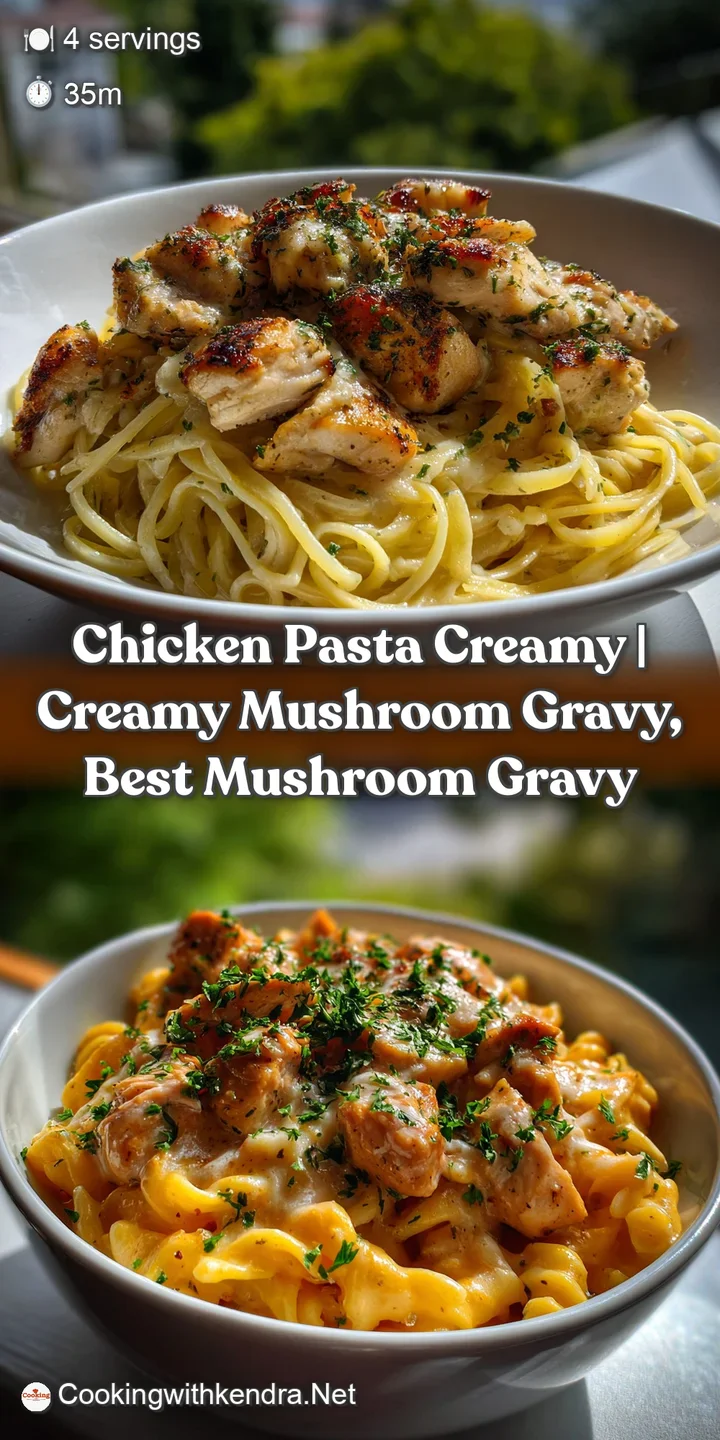
Whether you're making this as a chicken pasta creamy mushroom variation (just add sautéed cremini!) or keeping it classic, the physics remain the same. This chicken pasta creamy is the ultimate comfort food that relies on technique rather than luck.
Trust the starch, watch your heat, and enjoy that restaurant quality silkiness at home.
Recipe FAQs
What is the key to achieving a velvety sauce without flour?
Pasta water starch emulsion. The retained, cloudy liquid from boiling pasta is high in starch, which acts as the natural emulsifier. Slowly incorporating this liquid binds the fat (cream) and water content seamlessly.
Should I use dry pasta or fresh pasta?
Dry pasta yields better starch retention. Dry semolina pasta releases more surface starch into the boil water, crucial for the emulsion. Fresh pasta often requires additional thickening steps.
How do I prevent the cream sauce from breaking or becoming grainy?
Heat management prevents protein denaturation. High, direct heat causes the casein proteins in the cream and dairy products to curdle, destroying the smooth texture. Lower the temperature before integrating cheese or final additions.
- Finish cooking off the burner
- Temper dairy additions slowly
- Use full fat heavy cream
Is smoked paprika necessary for the flavor profile?
Yes, it provides the core depth. While you can use sweet paprika, smoked paprika creates the necessary Maillard crust flavor contrast against the richness of the cream. For a tomato based alternative, review the slow simmered sauce approach in the Italian Pasta Sauce Recipe: The Best Ever Slow Simmered Sugo.
Can I substitute heavy cream with milk alternatives?
Myth: You can substitute heavy cream 1:1 with skim milk. Skim milk lacks the necessary fat content (18%+ in heavy cream) required to stabilize the emulsion against water dilution. You will achieve a thin, soup like consistency rather than a thick sauce.
Is searing the chicken aggressively mandatory?
Comparison: Sear aggressively versus gentle sauté. Aggressive searing maximizes the flavorful brown fond development on the chicken exterior, which deglazes into the sauce base. Gentle sautéing results in paler chicken and a less complex background flavor profile.
What is the best method for chilling leftovers?
Cool rapidly before refrigerating. Transfer the pasta to shallow, wide containers to speed up cooling time. This minimizes bacterial growth risks associated with the "danger zone" (40°F 140°F) common in creamy dishes.
Velvety Chicken Pasta Recipe

Ingredients:
Instructions:
Nutrition Facts:
| Calories | 995 calories |
|---|---|
| Protein | 59.5 g |
| Fat | 52.4 g |
| Carbs | 67.1 g |
| Fiber | 2.5 g |
| Sugar | 2.5 g |
| Sodium | 810 mg |
