Classic French Duck Confit with Shatteringly Crispy Skin
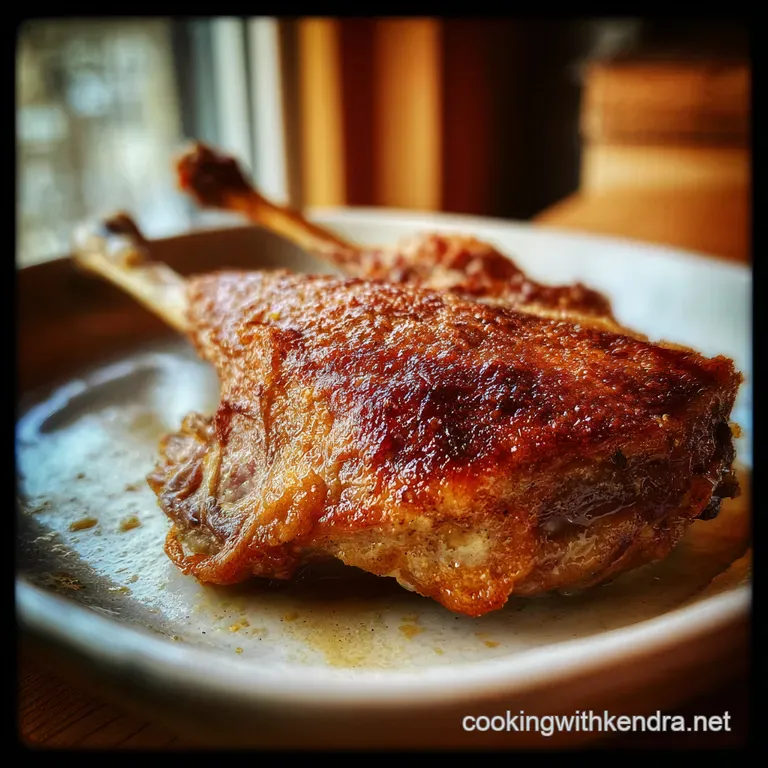
- Managed Magic: Slow-Cooked Duck Confit with Crisped Skin
- 1. Why You Need This in Your Life
- 2. What Even Is Confit?
- 3. The Payoff and Preservation
- Getting Started: Essential Tools and Ingredients
- The Gear and Groceries for Managed Magic
- The Cure: Precision Curing Time Management
- The Fat: Essential Duck Fat Handling Guide
- Equipment: Temperature Control Cooking Method
- Culinary Workflow Oversight: Mastering the Low and Slow Confit
- Serving Up the Spectacular: The Classical Gascony Cuisine Preparation
- Holding the Gold: Essential Duck Fat Handling Guide and Storage
- Mix It Up! Variations and Dietary Nods
- A Quick Nutrition Natter
- Frequently Asked Questions
- 📝 Recipe Card
Managed Magic: Slow Cooked Duck Confit with Crisped Skin
1. Why You Need This in Your Life
Ever bitten into something so tender it makes you close your eyes and groan with pleasure? That's the exact vibe we're going for today with classic Duck Confit.
It might sound like something only a fancy French chef can pull off, but honestly, once you learn how the whole process is properly managed , it’s all about patience.
This dish is the perfect example of a truly brilliant Temperature control cooking method .
I used to think confit was only for snooty restaurants. My first try was a disaster I got the temperature wrong and ended up with dry, salty leather! That catastrophe showed me that the secret isn't fancy ingredients; it’s the intense focus on Mastering low oven temperature calibration .
It taught me the importance of total Culinary workflow oversight from start to finish.
2. What Even Is Confit?
This technique is pure Classical Gascony cuisine preparation , born hundreds of years ago as a way to preserve meat before we had fridges.
It’s preservation magic, not just cooking. We are using a Monitored slow cooking technique here, where the duck legs are gently poached in fat over several hours.
Despite the long timeline, the active work is surprisingly minimal, making it deceptively easy once you nail the Precision curing time management .
We are making four glorious legs today. The difficulty is medium not because of tricky knife skills, but because you need commitment to the process.
3. The Payoff and Preservation
Duck fat gets a bad rap, but here’s a fun fact: it contains more monounsaturated fat (the good kind, like in olive oil) than butter or lard.
So while this is rich, it’s not the devil! Learning the Essential duck fat handling guide means you get a lifetime supply of the best fat for roasting potatoes.
Seriously, don't throw it out!
This recipe is perfect for those big moments, like a special birthday or a show stopping Sunday roast. It gives you maximum flavour payoff with minimum last minute stress.
Plus, the ability for Long term confit preservation strategy means you can make this weeks ahead of time and just reheat it before achieving the ultimate goal: Ensuring crispy duck skin results .
Forget the fuss of a Sous vide comparison for confit ; the traditional oven method is simple, reliable, and gives you that perfect richness every time.
Getting Started: Essential Tools and Ingredients
The Gear and Groceries for Managed Magic
Right, let's talk shop. This beautiful French dish might sound super complicated, like something you only see on MasterChef , but honestly, it’s just Classical Gascony cuisine preparation that requires decent Culinary workflow oversight .
The key isn't complex technique; it’s patience and having the right stuff. We need to focus on what lets us control this process perfectly.
The Cure: Precision Curing Time Management
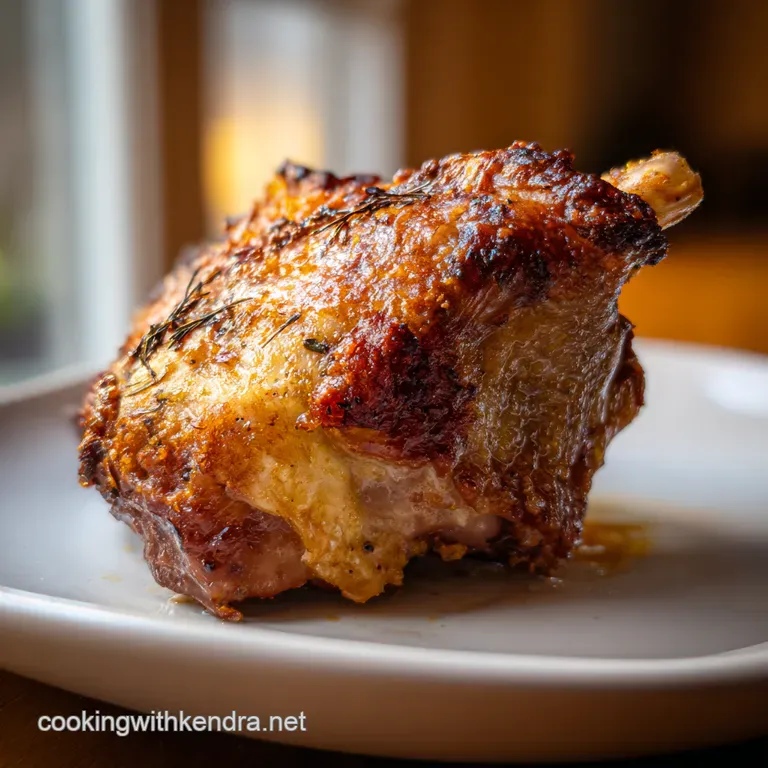
First up, the duck. You need four big, meaty duck legs. That's about 800g (1.7 lbs) total. They are the vehicle for flavour.
For the cure, precision counts. Use 100g (½ cup) of coarse sea salt. Mix that with crushed black peppercorns, fresh thyme leaves, and crumbled bay.
This salt mixture needs Precision curing time management . If you leave it on too long say over 24 hours your duck turns into a salt lick.
Trust me, I learned that the hard way when I first tried this in my 20s. Disaster!
The Fat: Essential Duck Fat Handling Guide
This is the non-negotiable part. You need the fat. Seriously, get 1 kg (35 oz) of rendered duck fat. This is your insulator, your cooking medium, and your Long term confit preservation strategy .
This is the core of the Essential duck fat handling guide . If you can't find pure duck fat, you can use goose fat, but avoid vegetable oils.
It won’t taste right, and the texture will be completely wrong.
Equipment: Temperature Control Cooking Method
You absolutely must have the right tools. We aren't doing a Sous vide comparison for confit today; we are going traditional. But traditional still requires modern accuracy!
The oven dial lies. Fact. You need a reliable Digital Meat Thermometer . This is critical for Mastering low oven temperature calibration .
Without it, you can't guarantee the exact Temperature control cooking method needed. The internal fat temperature must be carefully managed between 85° C and 90° C ( 185° F and 195° F) .
We also need a deep baking dish. It should be small enough so the legs fit snugly, but deep enough so that they are totally submerged in that liquid gold fat.
Submergence is key to the Monitored slow cooking technique and Ensuring crispy duck skin results later. No shortcuts on the equipment here, okay? Safety first!
Culinary Workflow Oversight: Mastering the Low and Slow Confit
Honestly, making duck confit isn’t complicated. It’s just about patience. Think of it like a beautiful, buttery experiment in precision curing time management .
It's all about planning your culinary workflow oversight so nothing gets rushed.
Prep Steps: Getting Your Ducks in a Row
The secret to amazing confit is dryness. I learned this the hard way, making slightly rubbery duck until I finally nailed this step.
After the 12 to 24 hour cure is complete, you must rinse off that excess salt. Then, pat the duck legs absolutely dry.
I mean, hospital grade dry. This is essential for making sure crispy duck skin results later on.
Next, we handle the fat. This requires serious attention to the essential duck fat handling guide . Gently melt the solid fat first.
You don’t want hot fat hitting cold duck, you know? Just liquid. The biggest mistake I managed to make early on was trying to rush the fat melting process.
Slow and steady wins this race, every time.
step-by-step: The Low and Slow Management
This is where the magic of Classical Gascony cuisine preparation comes to life. It’s a dedicated temperature control cooking method .
- Arrange those dried, beautiful duck legs snugly into your baking dish.
- Pour the gently melted fat over them until they are completely submerged. Total burial is key.
- Preheat your oven to a very low temperature: 120° C ( 250° F) .
- Verify that temperature! Seriously, use a thermometer. My oven lied to me for months. This is crucial for mastering low oven temperature calibration .
- Slide the dish in. You are now beginning your monitored slow cooking technique .
- Bake for 3.5 to 4 hours . The fat should barely shimmer, never bubble wildly. If it's bubbling, the heat is too high!
- Check for doneness: The meat should be shrinking from the ankle bone. It should feel like it’s ready to collapse like butter melting!
Pro Tips: Avoiding My Mistakes
Want to skip my early confit failures? Listen up.
First, let’s talk preservation. For a fantastic long term confit preservation strategy , strain that remaining fat. Put the cooked legs back in a clean jar, cover them completely with the strained, cooled fat, and refrigerate.
They'll last for weeks a true French delicacy waiting for you.
Second, the thermometer is non-negotiable. I promise you. If you don't keep that fat bath between 85° C and 90° C ( 185° F and 195° F) , the meat will toughen up.
Don't be fooled by your oven dial; verify the heat. Think of it as the analogue version of a Sous vide comparison for confit we are holding a perfect temperature, just using rendered fat instead of water.
That precision is everything.
Finally, for the ultimate crispy payoff, when you finish the duck, sear it skin side down in a hot pan before you put it under the grill.
That initial sear releases the residual fat and gives you that incredible shatter. It is the perfect end to four hours of waiting!
Serving Up the Spectacular: The Classical Gascony Cuisine Preparation
Honestly, after all that effort and the strict precision curing time management , you deserve a gorgeous plate. Duck confit is rich.
I mean, really rich. Think of it like a beautiful, fatty, luxurious hug. To balance it out, you need sharp contrast.
That’s the absolute secret of Classical Gascony cuisine preparation . Serve this with Pommes Sarladaises (potatoes roasted in the reserved fat pure gold!) and a big pile of sharp, mustardy frisée salad.
The acidity from the vinaigrette cuts right through the richness beautifully. Remember, the goal is making sure crispy duck skin results , so always plate it skin side up so it doesn't steam and go soggy.
I learned that the hard way at my first dinner party; soggy confit skin is a proper tragedy!
Holding the Gold: Essential Duck Fat Handling Guide and Storage
Okay, let's talk about how long you can keep this magnificent creation. The beauty of confit is that it’s inherently preserved by the fat.
That fat is truly magic! If you’ve managed to keep the legs fully submerged in the strained fat, they can happily sit in the fridge for up to three weeks .
It’s an ancient and brilliant long term confit preservation strategy . To freeze them, ensure they are totally cooled first. Just pop the fat-covered legs into a strong, airtight container.
When you need one, scrape off the solidified fat, and then reheat either oven baked or pan-fried until piping hot.
Mix It Up! Variations and Dietary Nods
Sometimes you need a switch-up, you know? For a vegetarian take, the technique works brilliantly for whole root vegetables, like carrots or parsnips.
You swap the duck fat for a quality olive oil, and follow the same low-and-slow temperature control cooking method . It sounds bonkers, but it’s utterly amazing.
I even tried a sous vide comparison for confit once it was foolproof on the tenderness, but honestly, the traditional oven method gives a slightly richer flavour profile.
If you are swapping ingredients seasonally, try adding some star anise or orange peel to the fat bath in winter for a fragrant lift.
A Quick Nutrition Natter
Right, let’s quickly address the elephant in the room: duck fat. Yes, this dish is fatty, but it's not all doom and gloom! Duck fat is actually surprisingly high in monounsaturated fats the same good stuff you find in olives.
It is considered healthier than something like beef tallow or straight butter. Plus, because the meat is so incredibly rich and packed with protein, you naturally feel full quickly.
It truly is a case where careful culinary workflow oversight leads to a deeply satisfying, flavour packed meal. After all that mastering low oven temperature calibration , you deserve the payoff!

Frequently Asked Questions
Why is the temperature so critical, and how do I ensure my managed confit technique is safe?
Precision is absolutely key in this recipe you are aiming for a slow, gentle poach in fat, not a fry. If the fat gets too hot (above 95°C/200°F), the meat will toughen up and dry out, much like overcooking a Sunday roast.
Using a reliable digital meat thermometer to verify the fat bath temperature is non-negotiable for safety and achieving that desired melt-in-the-mouth texture.
This seems like a lot of effort; can I make Confit ahead of time, and how long does it keep?
Absolutely, this is the perfect Sunday project to enjoy later! Confit is fundamentally a preservation method, meaning it stores wonderfully. If the cooked duck legs are fully submerged in their clarified fat and kept chilled in an airtight container, they can last safely in the fridge for up to three weeks a real lifesaver for last minute gourmet meals.
My duck skin wasn't shatteringly crisp! What's gone wrong, and how do I fix it?
Ah, the cardinal sin of confit! The main culprit here is moisture, which acts as the arch nemesis of crispiness. Ensure the legs are bone dry before curing and again before the final crisping stage to eliminate any surface water.
For the finish, don't be shy: sear them vigorously on the stovetop first, then give them a quick, high heat blast under the grill or broiler until the skin achieves a deep, satisfying golden crunch.
I don't have enough duck fat. Is it really essential, or can I use a different oil?
While you can substitute some of the volume (up to 50%) with goose fat or high-quality lard, pure duck fat is essential for the traditional richness and silky texture. It’s naturally low-melting and holds flavour beautifully, which is vital for the confit method.
Remember, you can clarify and strain the leftover fat after cooking, making it reusable "liquid gold" for incredible roast potatoes.
I've heard confit can be too salty. How important is it to rinse the cure properly?
Rinsing is hugely important; skipping this step is a recipe for disaster and will result in meat that tastes like it came straight from a salt mine. The salt cure’s job is finished after the 12 24 hour period, having drawn out moisture and imparted flavour.
A quick, thorough rinse under cold water, followed by meticulous drying, ensures you remove the excess surface salt without losing the deep herbal notes absorbed during the resting time.
Classic French Duck Confit With Shatteringly Cri
Ingredients:
Instructions:
Nutrition Facts:
| Calories | 500 kcal |
|---|---|
| Protein | 37 g |
| Fat | 40 g |
| Carbs | 0.5 g |
