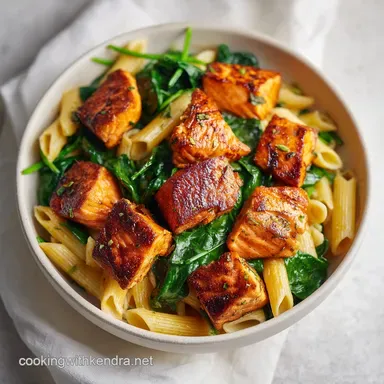
Salmon Spinach Pasta: Healthy and Velvety
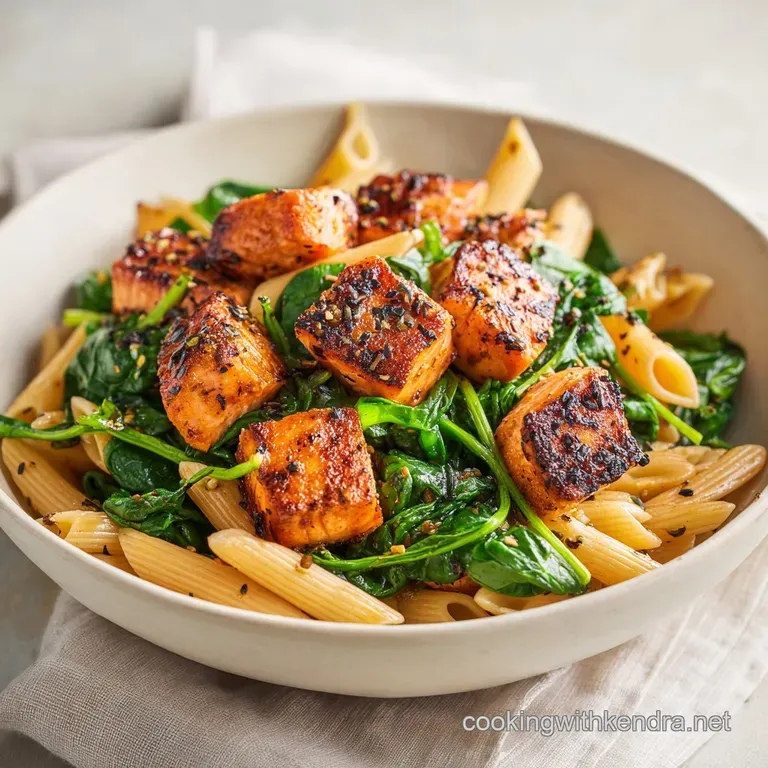
- Time:15 minutes prep + 20 minutes cook = 35 minutes total
- Flavor/Texture Hook: Velvety lemon butter sauce with golden brown salmon chunks
- Perfect for: Fast weeknight dinners and healthy meal prep
- Try This Delicious Healthy Salmon Spinach Pasta Recipe
- The Quick Recipe Specs
- The Magic of the Sauce
- Selecting the Best Ingredients
- Essential Kitchen Gear
- The Step-by-Step Process
- Solving Common Cooking Problems
- Swapping for Different Tastes
- Fresh Storage and Waste
- Great Side Dish Pairings
- Recipe FAQs
- 📝 Recipe Card
Try This Delicious Healthy Salmon Spinach Pasta Recipe
The sharp sizzle of salmon hitting a hot skillet is, for me, the sound of a Tuesday night winning. I remember the first time I tried to make a "healthy" seafood pasta, and it was a disaster - the salmon was overcooked into rubbery pebbles, and the spinach had turned into a sad, grey sludge.
I had tried to follow a fancy recipe that insisted on a complex cream reduction, but for a home cook with a ticking clock, it just didn't work.
That's when I realized the magic isn't in the cream, but in the pasta water. By blending a bit of that starchy liquid with butter and parmesan, you get a sauce that clings to every ridge of the penne without the heaviness. This Delicious Healthy Salmon Spinach Pasta Recipe is the result of those early kitchen fails.
It's a nod to Mediterranean flavors, where fresh fish and greens take center stage, but tweaked for a busy family schedule.
You can expect a dish that feels like a treat but won't leave you feeling sluggish. We're talking about chunky, seared salmon and a sauce that's bright, zesty, and silky. It's a one pan finish that makes clean up a breeze, and the whole grain pasta adds a nutty depth that pairs brilliantly with the lemon.
Right then, let's get into it.
The Quick Recipe Specs
Before we crack on, let's talk about the flow. This meal follows a "parallel prep" logic. While your pasta water is coming to a boil, you'll be prepping the fish. This ensures everything hits the plate at the same temperature.
The timing here is tight, so have your garlic minced and your lemon zested before the pasta goes in the pot. If you're cooking for a crowd, the biggest bottleneck is the skillet size. Don't try to sear all the salmon at once if your pan is small, or you'll end up steaming the fish instead of searing it.
For those who love planning, here is the execution flow. First, the pasta boil, then the salmon sear, followed by the sauce build, and finally the fold. It's a linear process that keeps the kitchen calm.
| Thickness | Internal Temp | Rest Time | Visual Cue |
|---|---|---|---|
| 2 inch chunk | 145°C (63°C) | 2 mins | Golden crust, opaque center |
The Magic of the Sauce
I've always been curious about why some restaurant pastas are so glossy while home versions look dry. The secret isn't more butter - it's the starch.
Starch Binding: Pasta water contains released starches that act as a bridge between the fat (butter/oil) and the liquid (lemon juice). This creates a stable emulsion that coats the noodles.
Citrus Brightening: The acid in the lemon juice breaks down the heavy fats of the salmon and butter, making the flavor feel light rather than greasy.
Residual Heat: Using the heat of the pasta to wilt the spinach prevents the greens from overcooking. It keeps them vibrant and slightly crisp.
Protein Searing: Searing the salmon separately ensures a crust forms, which prevents the fish from breaking apart when you toss it with the penne.
| Ingredient | Science Role | Pro Secret |
|---|---|---|
| Whole Grain Penne | Texture Base | The rougher surface grabs the sauce better than smooth pasta |
| Reserved Pasta Water | Emulsifier | Always scoop this out before draining; it's "liquid gold" |
| Parmesan Cheese | Thickener | Adds salt and body to the emulsion through protein bonding |
| Lemon Juice | Acid Balance | Cuts through the salmon's richness to refresh the palate |
Selecting the Best Ingredients
When it comes to this recipe, the quality of your salmon makes or breaks the dish. I prefer skinless fillets cut into uniform chunks so they cook evenly. If the pieces vary too much in size, some will be dry while others are raw.
For the pasta, whole grain penne is my go to because it doesn't get mushy as quickly as white pasta. This is crucial since we toss it in a hot pan at the end. If you can't find whole grain, a high-quality durum wheat penne works too.
Why this? Whole grain adds fiber and a nutty flavor that complements the salmon.
Ingredients List:
- 1.2 lbs skinless salmon fillets, cut into 2 inch chunksWhy this? Uniform size ensures even searing
- 2 tbsp extra virgin olive oilWhy this? High smoke point for searing
- 1/2 tsp kosher saltWhy this? Pure salt without additives for clean flavor
- 1/4 tsp cracked black pepperWhy this? Freshly cracked adds a woody heat
- 12 oz whole grain penneWhy this? Holds sauce better than smooth noodles
- 3 cloves garlic, mincedWhy this? Aromatic base for the sauce
- 2 tbsp unsalted butterWhy this? Adds a velvety finish to the emulsion
- 1 cup reserved pasta waterWhy this? Essential for the sauce thickness
- 1 large lemon, zested and juicedWhy this? Brightens the heavy fats
- 1/2 cup freshly grated Parmesan cheeseWhy this? Natural salty thickener
- 5 oz fresh baby spinach, packedWhy this? Wilts quickly and adds color
- 1/4 cup fresh parsley, choppedWhy this? Fresh herbaceous finish
| Original Ingredient | Substitute | Why It Works |
|---|---|---|
| Whole Grain Penne | Chickpea Pasta | Higher protein. Note: Cooks faster, can become mushy if overboiled |
| Salmon | Trout Fillets | Similar fat content and flake. Note: Slightly milder flavor |
| Parmesan Cheese | Pecorino Romano | Stronger, saltier tang. Note: Reduce added salt in the recipe |
| Baby Spinach | Kale (chopped) | Heartier texture. Note: Needs 2-3 mins more to soften |
Essential Kitchen Gear
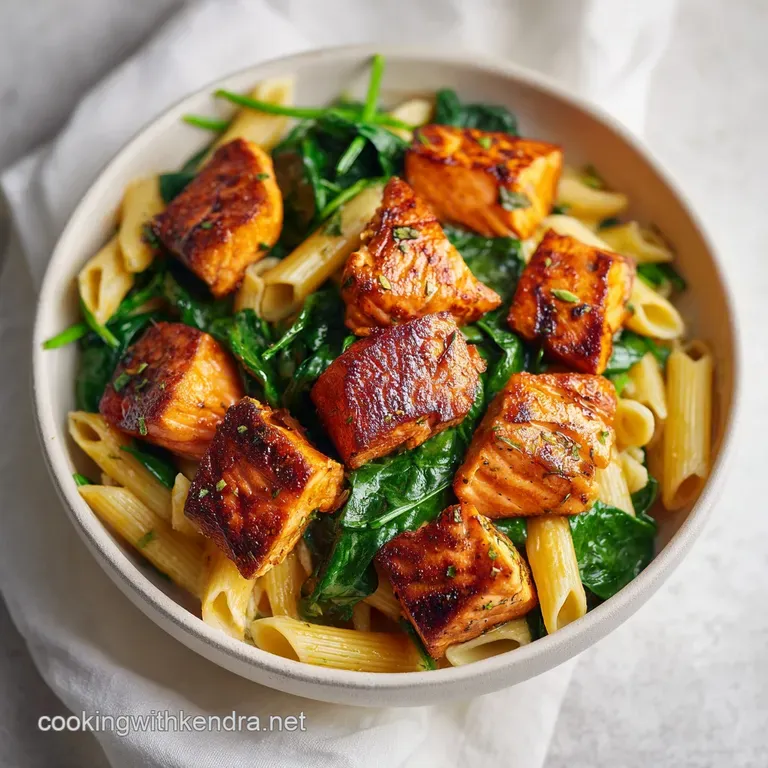
You don't need a professional kitchen for this, but a few specific tools make it easier. A large pot for the pasta is obvious, but the skillet is where the real work happens.
I highly recommend a wide stainless steel or cast iron skillet. Non stick is okay, but you won't get that same golden brown crust on the salmon. The wider the pan, the more room the salmon has to breathe, which prevents them from steaming in their own juices.
A microplane or a fine grater for the lemon zest and Parmesan is also a lifesaver. You want the cheese to be a fine powder so it melts instantly into the sauce rather than leaving clumps of unmelted cheese.
The step-by-step Process
Let's crack on with the actual cooking. Trust me on this - don't skip the drying of the salmon. Water is the enemy of a good sear.
The Pasta Foundation
- Bring a large pot of salted water to a boil. Cook the 12 oz whole grain penne according to package directions until al dente. Note: Al dente is key because the pasta will cook more in the sauce later.
- Reserve 1 cup of the pasta water before draining. Note: This is the secret to the velvety texture.
The Salmon Sear
- Pat the 1.2 lbs salmon chunks dry with a paper towel and season with 1/2 tsp salt and 1/4 tsp pepper. Note: Dry fish sears; wet fish steams.
- Heat 2 tbsp olive oil in a skillet over medium high heat. Sear salmon for 3-4 minutes per side until golden brown and crisp, then remove and set aside on a plate.
The Glossy Sauce
- Reduce skillet heat to medium. Add 2 tbsp butter and 3 cloves minced garlic, sautéing for 1 minute until fragrant and bubbling.
- Stir in the juice of 1 large lemon and 1/2 cup of the reserved pasta water; simmer for 2 minutes. Note: This reduces the liquid slightly and concentrates the flavor.
The Final Fold
- Turn heat to low. Add the cooked penne and 1/2 cup grated Parmesan, tossing until the sauce is glossy and coats the pasta.
- Fold in 5 oz baby spinach and 1/4 cup chopped parsley, stirring for 30 seconds until spinach just begins to wilt.
- Gently fold the seared salmon chunks back into the pan and serve immediately.
Solving Common Cooking Problems
Even with a plan, things happen. Maybe your sauce is too thin, or your salmon is sticking. It's all fixable.
The Sauce Texture
If your sauce looks more like a soup than a glaze, you likely didn't reduce the lemon water mixture enough or your pasta was too wet. Give it another minute on medium heat before adding the cheese.
The Salmon Stick
Salmon sticking usually happens because the pan wasn't hot enough or you tried to flip the fish too early. When salmon develops a proper crust, it naturally releases from the pan.
The Spinach Wilt
If your spinach is turning into a dark, watery mass, you've left it in the heat too long. Remember, the residual heat of the pasta is enough to wilt baby spinach.
| Problem | Root Cause | Solution |
|---|---|---|
| Sauce is too thin | Not enough reduction or too much water | Simmer 2 mins longer or add more Parmesan |
| Salmon is dry | Overcooked during searing | Reduce sear time by 1 min per side |
| Clumpy cheese | Cheese was pre shredded (has starch) | Use freshly grated Parmesan for a smooth melt |
- ✓ Pat salmon completely dry before searing to ensure a crust.
- ✓ Don't overcrowd the skillet - work in batches if necessary.
- ✓ Use a timer for the pasta to avoid overcooking.
- ✓ Keep the heat on low when adding the cheese to prevent it from separating.
- ✓ Stir the spinach in at the very last second.
Swapping for Different Tastes
This recipe is a great base, but you can easily pivot it. If you're looking for a different fish, trout is a fantastic substitute. For those who prefer a more specialized cut, you might check out a Pan Seared Norwegian Salmon for a richer, butterier profile.
If you're watching your carbs, you can swap the penne for a vegetable alternative. I've found that Roasted Spaghetti Squash works brilliantly here, though you'll want to skip the pasta water and use a splash of vegetable broth instead.
For a dairy-free version, omit the butter and Parmesan. Use a tablespoon of nutritional yeast and a bit more olive oil to get that savory, cheesy depth. It's not exactly the same, but it's surprisingly satisfying.
Fresh Storage and Waste
If you have leftovers, store them in an airtight container in the fridge for up to 3 days. When reheating, add a teaspoon of water or a squeeze of lemon juice to loosen the sauce, as the pasta will absorb the moisture while sitting.
I don't recommend freezing this dish. The salmon's texture changes significantly when frozen and thawed in a sauce, often becoming mushy.
To keep things zero waste, don't toss your lemon scraps. You can freeze the leftover zest or use the lemon rinds to infuse vinegar for a homemade cleaning solution. The parsley stems, which are often thrown away, can be tossed into a veggie stock for extra flavor.
Great Side Dish Pairings
Since this is a hearty meal, you want sides that provide a fresh contrast. A simple arugula salad with a light balsamic glaze works well because the peppery greens cut through the richness of the salmon.
Alternatively, roasted asparagus or sautéed broccolini provides a nice crunch that complements the soft texture of the pasta. If you're feeling fancy, a slice of toasted sourdough rubbed with a raw garlic clove is the perfect way to mop up any remaining lemon butter sauce from the plate.
Recipe FAQs
Can I use white pasta instead of whole grain penne?
Yes, white pasta works perfectly. It will be slightly softer and less nutty than the whole grain version, but the lemon butter flavors remain the same.
How to keep the salmon chunks from breaking apart?
Pat them completely dry with paper towels before searing. This ensures a proper golden brown crust forms, which keeps the pieces intact when folding them back into the pasta.
Is it true I need heavy cream to get a velvety sauce?
No, this is a common misconception. Emulsifying reserved pasta water with butter and Parmesan creates a silky texture without the heaviness. If you enjoyed mastering this emulsion, see how a similar principle creates our silky smooth French sauce.
How to avoid overcooking the baby spinach?
Fold the spinach in at the very end. Stir for only 30 seconds until it just begins to wilt to maintain its bright green color and nutrients.
Can I use frozen salmon for this recipe?
Yes, but thaw it completely first. Pat the thawed chunks dry to prevent the sauce from becoming watery and to ensure a proper sear in the olive oil.
How to fix a sauce that feels too dry?
Stir in more of the reserved pasta water. Add it one tablespoon at a time while tossing the pasta until the sauce reaches a glossy, creamy consistency.
How long does this salmon pasta stay fresh in the fridge?
Store it in an airtight container for up to 3 days. Reheat gently on the stove with a splash of water to loosen the sauce and prevent the salmon from drying out.
Healthy Salmon Spinach Pasta