Liver Sausage Liverwurst: Traditional Velvety Spread
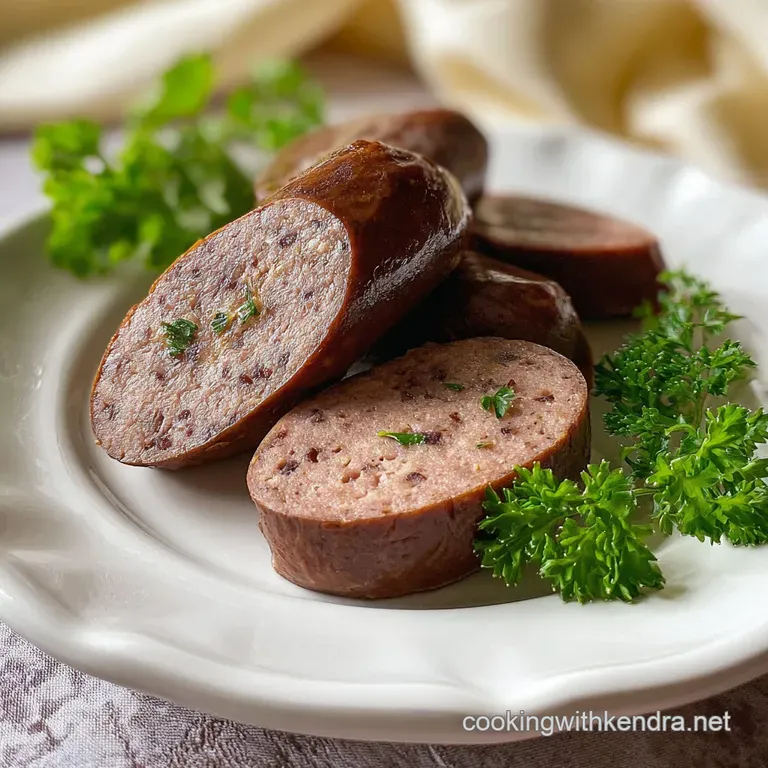
- Time: Active 20 minutes, Passive 45 minutes, Total 1 hour 5 mins
- Flavor/Texture Hook: Silky smooth with a warm, peppery finish
- Perfect for: Weekend brunch, charcuterie boards, or busy weeknight snacks
- Crafting the Best Liver Sausage Liverwurst
- Science of the Velvet Texture
- Component Analysis for Perfect Spread
- Ingredients and Smart Substitutes
- Required Kitchen Tools
- Step-by-Step Production Guide
- Troubleshooting Your Spread
- Variations and Budget Swaps
- Storage and Waste Tips
- Serving and Presentation Ideas
- Kitchen Myths Debunked
- Recipe FAQs
- 📝 Recipe Card
Crafting the Best Liver Sausage Liverwurst
The smell of yellow onions sautéing in a bit of lard is enough to bring anyone into the kitchen, but when you add the sweet, woody scent of ground mace and dried marjoram, it's a total game changer. I remember the first time I tried making this at home, I was terrified it would taste like a bag of pennies.
We've all had that dry, metallic liverwurst that makes you reach for a gallon of water, right?
Honestly, the secret isn't some fancy ingredient, it's just about treating the liver with a bit of respect. When you get that velvety texture just right, it spreads on a piece of crusty rye bread like room temperature butter.
It's the ultimate comfort food for a quiet Saturday morning or a quick protein packed snack for the kids after school.
We're going to use simple, budget friendly cuts like pork fat back or fatty belly. These often go for pennies at the butcher compared to a loin or shoulder. By the time we're done, you'll have a rich, savory spread that tastes like a high end delicatessen specialty but costs less than a fancy coffee.
Let's get into how we make this magic happen without any of the bitterness.
Science of the Velvet Texture
Fat Emulsification: High fat content from the pork back acts as a buffer, coating liver proteins to prevent a grainy, dry mouthfeel.
Thermal Stabilization: Keeping the internal temperature at 160°F ensures the proteins set without squeezing out all the moisture and fat.
Aromatic Infusion: Sautéing onions first breaks down harsh sulfur compounds into sweet sugars that mask the liver's natural iron heavy flavor.
| Thickness | Internal Temp | Rest Time | Visual Cue |
|---|---|---|---|
| 2 inch roll | 160°F | 20 mins | Firm to touch, not bouncy |
| 1 inch roll | 160°F | 10 mins | Pale pink turns to creamy beige |
| 3 inch loaf | 160°F | 30 mins | Fat begins to clarify on top |
If you're looking for other ways to use up savory ingredients, this Sausage Hashbrown recipe is a fantastic way to feed a crowd on a budget.
Component Analysis for Perfect Spread
| Ingredient | Science Role | Pro Secret |
|---|---|---|
| Pork Liver | Protein Binder | Soak in milk for 30 minutes to pull out excess bitterness. |
| Pork Fat Back | Emulsion Base | Keep it near frozen before grinding to prevent the fat from melting prematurely. |
| Ground Mace | Flavor Bridge | Mace is the outer shell of nutmeg, offering a softer, more floral aroma. |
Ingredients and Smart Substitutes
- 500g pork liver: The star of the show. Why this? Provides the base structure and deep savory depth.
- Substitute: Calf liver for a milder, sweeter flavor profile.
- 500g pork fat back or fatty pork belly: Essential for spreadability. Why this? High fat to meat ratio ensures a silky emulsion.
- Substitute: Heavy cream (200ml) + leaner pork, though it will be less firm.
- 150g yellow onion: Finely diced and sautéed. Why this? Adds sweetness and moisture to the grind.
- Substitute: Shallots for a more sophisticated, garlicky undertone.
- 18g sea salt: The primary seasoning.
- Substitute: Kosher salt (use 22g as it is less dense than sea salt).
- 3g white pepper: Sharp, clean heat.
- Substitute: Black pepper, though it will add dark flecks to the mix.
- 2g ground mace: Traditional German spice.
- Substitute: Nutmeg, but use slightly less as it is more intense.
- 2g dried marjoram: Earthy and floral.
- Substitute: Oregano, but only half the amount as it's much stronger.
- 1g ground allspice: Warmth and complexity.
- Substitute: Ground cloves (just a pinch).
- 1g ginger powder: Cuts through the richness.
- Substitute: Fresh grated ginger (1 teaspoon).
Required Kitchen Tools
Two Essential Tools
You really need a meat grinder (like a KitchenAid attachment) with a fine plate. If you don't have one, a high powered food processor can work in a pinch, but you have to be careful not to overheat the meat. The second tool is a digital thermometer.
This isn't a "guess and check" kind of recipe; hitting 160°F exactly is the difference between silky and rubbery.
The Cooking Vessel
A wide, shallow pot or a Dutch oven is best for poaching the sausages. You want enough room for them to float freely without crowding. If you choose to bake the mixture as a pâté instead, a standard 9x5 loaf pan nestled inside a larger roasting pan for a water bath is your best friend.
step-by-step Production Guide
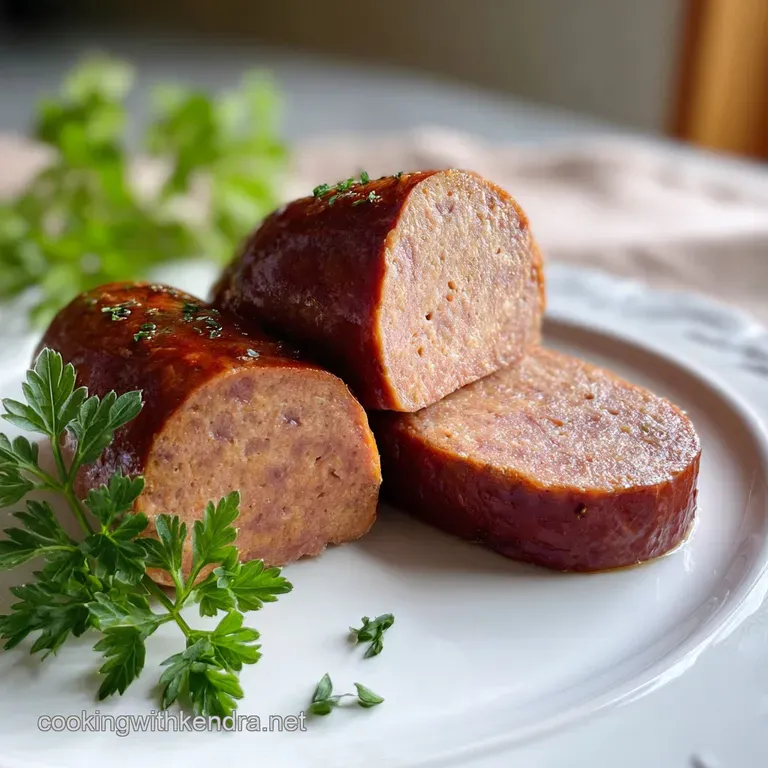
- Sauté onions. Cook the 150g yellow onion in a teaspoon of lard until translucent and golden. Note: Raw onions will ferment and spoil the sausage quickly.
- Prep the meat. Dice the 500g pork liver and 500g fat back into 1 inch cubes.
- Chill everything. Place the meat, fat, and grinder parts in the freezer for 20 minutes. Note: Keeping things cold prevents the fat from "smearing."
- First grind. Pass the chilled meat and fat through the coarse plate of your grinder.
- Mix spices. Fold in the 18g sea salt, 3g white pepper, 2g mace, 2g marjoram, 1g allspice, and 1g ginger powder.
- Second grind. Pass the mixture through the fine plate (3mm) until a pasty consistency forms.
- Emulsify. Put the mixture in a food processor and pulse with the sautéed onions until velvety and pale.
- Stuff or wrap. Pipe into casings or roll tightly in triple layered plastic wrap to form 2 inch logs.
- Gentle poach. Submerge in 175°F water (not boiling!) for 45 minutes until internal temp hits 160°F.
- Cold shock. Immediately plunge the sausages into an ice bath until completely chilled through.
Chef's Tip: If you want an even deeper flavor, add 2 tablespoons of brandy to the food processor during the emulsification stage. It acts as a preservative and adds a beautiful aromatic lift.
Troubleshooting Your Spread
Why is my liverwurst grainy?
This usually happens if the meat got too warm during the grinding process or if the poach water was boiling. When the fat melts out of the protein matrix before it sets, you lose that "velvety" feel. Always chill your equipment and keep the water at a simmer, never a rolling boil.
The flavor is too metallic.
Liver can be aggressive if it isn't fresh or if it wasn't cleaned properly. Removing all the silver skin and veins is crucial. Also, if you find the taste too strong, soaking the raw liver in whole milk for 30 minutes before grinding can neutralize those heavy iron notes.
| Problem | Root Cause | Solution |
|---|---|---|
| Fat separation | Mixture got too hot | Add 2 ice cubes to the food processor during blending. |
| Gray color | Oxidation | Ensure the plastic wrap is airtight; add a touch of Vitamin C powder. |
| Crumbly texture | Not enough fat | Use the full 500g fat back; do not substitute with lean meat. |
Common Mistakes Checklist
- ✓ Freeze grinder parts for 30 minutes before starting (prevents fat smearing).
- ✓ Never let the poaching water reach a boil (prevents "breaking" the emulsion).
- ✓ Sauté onions until they lose all their crunch (prevents spoilage).
- ✓ Use a digital thermometer to hit exactly 160°F.
- ✓ Use an ice bath immediately after cooking to "lock" the texture.
Variations and Budget Swaps
If you're on a tight budget, look for "pork trim" at the butcher. It's often much cheaper than pork belly and usually has the 50/50 fat to meat ratio we're looking for. For a different flavor profile, you can try a "Quick Beef Liverwurst" by using beef liver and beef suet, though the flavor will be significantly more intense and the fat might feel "waxy" on the roof of your mouth.
If you enjoy making your own meat products, you might also like this Sausage Balls recipe which uses cream cheese for a similar moist, savory result.
| Premium | Budget | Flavor Impact | Savings |
|---|---|---|---|
| Pork Belly | Fat Back | Higher fat, less meat | Save $4-6 |
| Calf Liver | Pork Liver | Stronger flavor | Save $3-5 |
| Fresh Herbs | Dried Marjoram | Slightly less bright | Save $2 |
Storage and Waste Tips
Keep your liver sausage in the fridge for no more than 5 days. Because we aren't using heavy nitrates or preservatives like the commercial stuff, it won't last forever. You can freeze it for up to 3 months, but be aware that the texture might become slightly more "watery" once thawed.
I recommend freezing it in small, single use portions.
For zero waste, don't throw away those onion skins! Save them in a bag in the freezer for your next batch of bone broth. Any leftover pork fat scraps can be rendered down into lard, which is the absolute best medium for frying eggs or roasting potatoes.
Serving and Presentation Ideas
The Classic German Board
Serve thick slices of the chilled liverwurst on a wooden board with spicy brown mustard, pickled red onions, and a pile of cornichons. The acidity from the pickles is essential to cut through the 22.4g of fat per serving. It's a heavy dish, so it needs those bright, sharp notes to balance the palate.
The Modern Mousse Style
If you want to get fancy, whip the chilled liverwurst with a little bit of softened butter and pipe it onto toasted baguette rounds. Top with a single slice of cornichon or a sprig of fresh dill. It looks like a million bucks but uses the same humble ingredients we started with.
Kitchen Myths Debunked
"You have to boil the sausage to make it safe." This is a recipe for disaster. Boiling will cause the fat to separate from the meat, leaving you with a dry, gray lump of protein floating in a pool of grease.
Gentle poaching at 175°F is all you need to reach a safe internal temperature of 160°F.
"Pink liverwurst means it's raw." Not necessarily. The pink color in commercial liverwurst usually comes from pink curing salt (sodium nitrite). Our homemade version will be more of a creamy beige or tan because we aren't using those additives.
As long as your thermometer reads 160°F, it is perfectly safe to eat.
Recipe FAQs
Is liver sausage the same thing as liverwurst?
Yes, generally. "Liverwurst" is the German term for liver sausage, and the terms are often used interchangeably in English speaking countries. However, regional variations can exist in ingredients and preparation methods.
Why don't people eat liverwurst anymore?
This is a common misconception. While perhaps not as mainstream as it once was, liverwurst remains popular, especially in German speaking regions and among those who appreciate traditional charcuterie. Its rich flavor and unique texture are still highly valued for specific culinary uses.
What's the difference between Braunschweiger and liver sausage?
Braunschweiger is a type of liver sausage. Typically, Braunschweiger is smoked and often has a smoother, finer texture and a slightly milder flavor compared to some other types of liverwurst, which can vary widely in their coarseness and spice profiles.
Is liverwurst healthy or unhealthy?
It can be both, depending on preparation and portion size. Liverwurst is nutrient dense, offering high levels of iron, vitamin A, and B vitamins due to the liver content. However, it's also typically high in fat and sodium, so moderation is key.
How do I make liverwurst smoother?
Grind the mixture twice and emulsify thoroughly. After the initial grind, pass the mixture through the fine plate of your grinder again, and then process it in a food processor until it becomes very smooth and pale. This technique is crucial for achieving that classic velvety texture.
Can I use different types of liver for liverwurst?
Yes, but it will change the flavor. Pork liver is traditional for its balance of flavor and texture. Calf liver offers a milder, sweeter taste, while beef liver results in a more intense, iron rich flavor. If you enjoyed mastering the fat emulsification here, you can apply similar principles to other meat preparations like in our Proper Comfort The Ultimate Sausage and Pepperoni Pizza Pasta Bake.
What's the best way to serve liverwurst?
Serve it chilled with classic accompaniments. Traditionally, liverwurst is enjoyed spread on rye bread with strong mustard and pickles. It's also excellent on a charcuterie board or used as a base for pâtés. For a quick and flavorful meal, consider a dish like our Smokies Dinner Recipe: Sausage, Apple Thyme One-Pan Tray Bake which offers a different, but equally delicious, way to enjoy sausage.
Liver Sausage Liverwurst
Ingredients:
Instructions:
Nutrition Facts:
| Calories | 243 kcal |
|---|---|
| Protein | 7.7 g |
| Fat | 22.4 g |
| Carbs | 1.6 g |
| Fiber | 0.2 g |
| Sugar | 0.6 g |
| Sodium | 443 mg |
