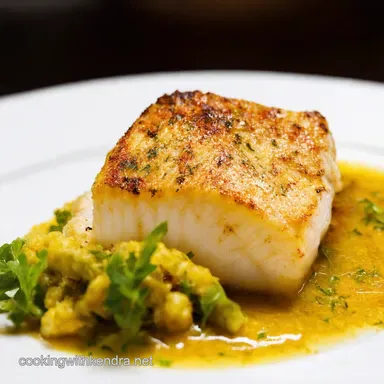
Pan-Seared Chilean Sea Bass with Butter

- Total37 Mins
- Servings2 fillets
- Calories638 kcal
- Time: 10 min active + 15 min resting at room temperature + 12 min cooking
- Texture: Flaky and buttery center with a crisp exterior
- Serve with: Sautéed spinach or lemon-herb rice
Pan-Seared Chilean Sea Bass
Few things are more disappointing than an expensive fillet that turns out rubbery and pale. This often occurs when the fish is too moist or the pan lacks sufficient heat, causing the meat to steam instead of browning.
The solution is straightforward: ensure total dryness and use high heat. This chilean sea bass recipe employs a specific sear-to-baste method to create a deep, savory crust while keeping the inside moist.
You can look forward to a velvety white fish that flakes effortlessly. Thanks to a higher oil content than cod or tilapia, this fish manages high heat well and stays juicy even if overcooked by a minute.
Key Numbers for Success
To get this right, keep these three precision checkpoints in mind. First, let your fillets sit at room temperature for 15 minutes before they hit the pan. Second, sear the first side for exactly 4 to 6 minutes without touching them. Finally, pull the fish off the heat the moment a thermometer hits 145°F.
Why the Method Works
- Natural Fats: This fish is naturally oily, which prevents it from sticking and keeps the interior lush under high heat.
- The Butter Baste: Finishing the cook by spooning foaming butter over the fillets ensures the center cooks evenly without drying out the edges.
The Ingredient Deep Dive
| Ingredient | What It Does | Best Swap |
|---|---|---|
| Avocado Oil | High smoke point for searing | Grapeseed oil |
| Unsalted Butter | Adds richness and helps browning | Ghee |
| Vegetable Stock | Builds the base of the pan sauce | Chicken stock |
| Lemon Juice | Cuts through the richness of the fish | Lime juice |
Ingredients & Substitutes
- 2 (6 oz / 170g) chilean sea bass fillets
- 1 tsp kosher salt
- 1/2 tsp cracked black pepper
- 2 tbsp avocado oil Why this? High smoke point prevents burning at high heat.
- 3 tbsp unsalted butter
- 3 cloves garlic, smashed
- 1/4 cup vegetable stock
- 1 tbsp fresh lemon juice
- 1 tbsp fresh parsley, chopped
Essential Kitchen Tools
Choose a cast iron or stainless steel skillet (12 inches). These materials retain heat better than non-stick cookware, which is essential for achieving a deep golden crust. A digital meat thermometer is also necessary to prevent overcooking.
The Cooking Process
Execution Timeline
- Prep (10 mins): Temper fish and pat completely dry.
- Sear (6 mins): High-heat crust development.
- Finish (6 mins): Butter baste and pan sauce.
1. Prepare the fillets
Remove the chilean sea bass fillets from the refrigerator 15 minutes before cooking. Use paper towels to pat the fillets completely dry on all sides. Note: Moisture on the surface creates steam, which kills your sear. Season both sides generously with 1 tsp kosher salt and 1/2 tsp cracked black pepper.

2. Get the crust
Place your skillet over medium-high heat and add 2 tbsp avocado oil. Heat until the oil is shimmering and just starting to smoke. Place fillets in the pan, skin-side down first if they have skin. Press gently with a spatula for 10 seconds to ensure full contact.
Sear for 4–6 minutes without moving them until a deep golden-brown crust forms.

3. Finish the cook
Carefully flip the fillets. Immediately add 3 tbsp unsalted butter and 3 cloves smashed garlic to the pan. Tilt the pan and use a large spoon to continuously pour the foaming garlic butter over the fish for 3–5 minutes until the internal temperature reaches 145°F (63°C).
USDA guidance puts the safe internal temperature for fish at 145°F. Remove the fish and let it rest on a plate.
4. Make the sauce
While the pan is still hot, pour in 1/4 cup vegetable stock and 1 tbsp fresh lemon juice. Stir rapidly, scraping up the browned bits. Simmer for 1–2 minutes until slightly reduced, then stir in 1 tbsp chopped fresh parsley. Pour the sauce over the fillets.

Quick Fixes
If your fish is sticking, you probably flipped it too early. The fish will naturally release from the pan once the crust has properly formed. If the butter burns, your pan is too hot, so lower the heat slightly before adding the butter.
Managing the Texture
| Problem | Root Cause | Solution |
|---|---|---|
| Fish is sticking | Pan not hot enough or flipped too soon | Wait for the "release" and ensure oil is shimmering |
| Rubbery texture | Overcooked past 145°F | Use a thermometer and pull fish 2 degrees early |
| Pale exterior | Surface moisture or low heat | Pat fillets bone-dry and use a stainless steel pan |
Swaps and Variations
I like to switch up the sauce depending on what's in the fridge. For a different vibe, you can swap the vegetable stock for a splash of coconut milk and a pinch of curry powder.
| Original Style | Swap | Result |
|---|---|---|
| Lemon-Garlic | Caper and Lemon | Briny, salty punch |
| Garlic Butter | Soy and Ginger | Savory, Asian-inspired glaze |
| Vegetable Stock | Coconut Milk | Richer, creamier consistency |
Cooking Style Comparison
| Method | Speed | Result |
|---|---|---|
| Pan-Sear | Very Fast | Maximum crust, buttery finish |
| Oven-Roast | Slower | More uniform cook, less crust |
Storage and Reheating
Store leftover chilean sea bass in a sealed container in the refrigerator for up to 2 days.
Don't use a microwave to reheat it, as that makes the fish rubbery. Instead, place the fillet in a pan over medium-low heat with a teaspoon of butter for 2–3 minutes per side, just until it's warmed through.
Best Side Pairings

Since the fish is rich, I prefer sides that bring some acidity or freshness. Sautéed spinach with a squeeze of lemon or a crisp cucumber salad works great. For something heartier, try a wild rice blend or roasted asparagus.
High in Sodium
1120 mg of sodium per serving (49% of daily value)
American Heart Association recommendation: no more than 2,300 mg of sodium per day
Tips to Reduce Sodium
-
Reduce Added Salt
Significantly reduce or eliminate the kosher salt used to season the sea bass fillets.
-
Switch Your Stock
Replace the vegetable stock with a low-sodium or no-salt-added version to reduce hidden sodium.
-
Increase Acidity
Add an extra squeeze of fresh lemon juice to brighten the flavors, which helps compensate for less salt.
-
Amplify Aromatics
Use more smashed garlic to build a deeper, savory base for the sauce without needing extra sodium.
-
Leverage Fresh Herbs
Increase the amount of fresh parsley or add other fresh herbs like dill to enhance the natural taste of the fish.
Common Questions
What kind of fish is Chilean sea bass really?
It is actually Patagonian toothfish. The name was changed for marketing purposes to make it more appealing to consumers.
Does Patagonian toothfish have a distinct taste?
Yes, it has a rich, buttery flavor. The high oil content creates a melt-in-your-mouth texture.
Is it better to bake or pan fry sea bass?
Pan frying creates a deep golden-brown crust that contrasts with the tender interior. Baking is an alternative method that provides a more uniform, gentle cook.
How do I avoid overcooking the fish?
Use a meat thermometer to check the internal temperature. Remove the fillets from the pan as soon as they reach 145°F (63°C).
Can I substitute another fish if Chilean sea bass is not available locally?
Yes, halibut or black cod are excellent alternatives. These options offer a similarly firm yet flaky texture.
Why should I avoid the microwave for reheating?
Microwaves make the fish rubbery. Reheat fillets in a pan over medium-low heat with a teaspoon of butter for 2–3 minutes per side.
Pan-Seared Chilean Sea Bass