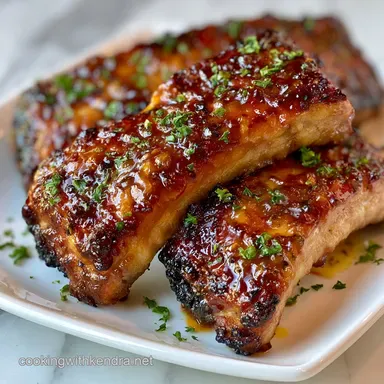
Oven Baked Ribs: Tender and Caramelized
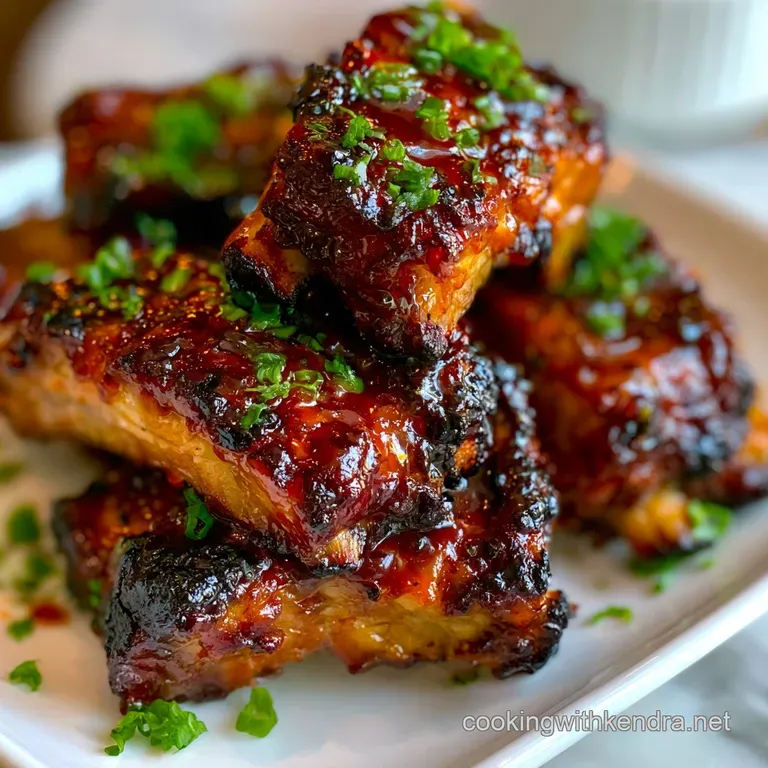
- Time: 15 min active + 185 min baking = Total 200 min
- Flavor/Texture Hook: Sticky, caramelized glaze with a tender, shreddable interior
- Perfect for: Sunday family dinners or impressing guests without spending all day outside
- The Secret to Oven Baked Ribs
- Texture and Flavor Secrets
- The Flavor Component Map
- Essential Pantry List
- Kitchen Gear Needed
- Step by Step Method
- Fixing Common Rib Issues
- Taste Variations and Swaps
- Making the Batch Bigger
- Rib Cooking Myths
- Storage and Scrap Tips
- The Perfect Side Pairings
- High in Sodium
- Recipe FAQs
- 📝 Recipe Card
The Secret to Oven Baked Ribs
That first sound is the one that gets me, the aggressive sizzle of the BBQ glaze hitting the hot ribs under the broiler. Then comes the smell, a heady mix of toasted brown sugar, smoked paprika, and that deep, savory pork aroma that fills every single corner of the house.
It's the kind of scent that makes everyone in the room suddenly very hungry, even if they just ate lunch.
I remember the first time I tried making these. I completely skipped removing the membrane, that thin, silvery skin on the back of the ribs. I thought, "It's just a little skin, it'll cook away," but I was wrong. My ribs were tender, but they had this weird, chewy leather texture that just wouldn't go away.
It was a lesson learned the hard way, and now, peeling that membrane is the first thing I do.
This recipe is all about the contrast, which is why it works so well. You've got the deep, rich saltiness of the dry rub playing against the bright, tangy zing of the apple cider vinegar in the glaze.
The result is a dish that feels like it took twelve hours on a pit, but it actually just lived in your oven while you relaxed on the couch.
Texture and Flavor Secrets
The real magic here isn't about heat, but about patience. We're essentially creating a mini sauna inside a foil pouch. This traps all the natural juices and forces them back into the meat, ensuring the ribs stay velvety rather than drying out into pork jerky. If you're looking for a spicy kick to go with this, a bit of homemade hot sauce on the side really cuts through the richness.
Collagen Breakdown: Low heat slowly turns tough collagen into silky gelatin, which is what gives you that "melt in your mouth" feel.
The Steam Room: Heavy duty foil prevents evaporation, keeping the meat bathed in its own fats and juices.
Sugar Caramelization: High heat at the very end transforms the glaze into a sticky, shattered glass crust.
The Binder Effect: Yellow mustard doesn't add a "mustard taste" but creates a tacky surface so the rub actually sticks to the meat instead of sliding off.
Flavor Map:
- Base: Savory, salty, smoky
- Middle: Sweet, caramelized, rich
- Finish: Tangy, bright, charred
| Method | Total Time | Texture | Best For |
|---|---|---|---|
| Oven Foil Pouch | 3 hours 20 mins | Velvety and tender | Consistent results, easy cleanup |
| Wood Smoker | 6-8 hours | Barky and smoky | Weekend projects, outdoor flavor |
| Slow Cooker | 8 hours | Very soft, shreddable | Set and forget convenience |
The Flavor Component Map
I've spent a lot of time figuring out which ingredients actually do the heavy lifting here. It's not just about piling on spices, but about how they interact with the pork fat.
| Ingredient | Science Role | Pro Secret |
|---|---|---|
| Brown Sugar | Caramelization | Use dark brown sugar for a deeper, molasses like flavor |
| Smoked Paprika | Aroma/Color | Gives that "outdoor grill" taste without a real grill |
| Yellow Mustard | Binder | It completely disappears during cooking, leaving only the rub |
| Apple Cider Vinegar | Acid Balance | Cuts through the heavy fat to wake up your taste buds |
Essential Pantry List
Right then, let's look at what you need. I've listed these exactly as I use them. Trust me on the mustard, it's a game changer for the crust.
- 2 racks (approx. 3.5 lbs) baby back pork ribs Why this? Leaner than spare ribs, cooks faster
- 1/4 cup yellow mustard Why this? The perfect tacky binder
- 1/2 cup brown sugar, packed Why this? Creates the sticky crust
- 2 tbsp smoked paprika Why this? Adds the essential woody aroma
- 1 tbsp garlic powder Why this? Deep, savory base note
- 1 tbsp onion powder Why this? Adds a subtle sweetness
- 1 tsp salt Why this? Enhances all other flavors
- 1 tsp black pepper Why this? Adds a gentle woody heat
- 1/2 tsp cayenne pepper Why this? A tiny bit of back of-throat zing
- 1 cup BBQ sauce Why this? The final flavor coat
- 1 tbsp apple cider vinegar Why this? Brightens the heavy sauce
- 1 tbsp honey Why this? Adds a glossy, mirror like finish
| Original Ingredient | Substitute | Why It Works |
|---|---|---|
| Brown Sugar | Maple Sugar | Similar sweetness. Note: Adds a distinct maple woody note |
| Yellow Mustard | Dijon Mustard | Still acts as a binder. Note: Slightly more pungent flavor |
| Honey | Agave Nectar | Similar viscosity. Note: More neutral taste than honey |
| Baby Back Ribs | St Louis Style | Fattier meat. Note: Requires about 30-60 mins extra bake time |
Kitchen Gear Needed
You don't need a fancy kitchen to pull this off. A basic oven and some foil are your best friends here.
- Large baking sheet (to catch any leaks)
- Heavy duty aluminum foil (standard foil is too thin and can rip)
- Basting brush (silicone is easiest to clean)
- Meat thermometer (to check for that perfect tenderness)
- Large mixing bowl (for the dry rub)
Step by step Method
Let's crack on with the actual cooking. Take your time with the foil wrap, as that's where the magic happens.
- Flip the ribs bone side up and peel away the thin, silvery membrane from the back of the ribs. Note: Use a paper towel for grip to get a good hold on the edge
- Slather a thin layer of yellow mustard over the ribs to act as a binder for the rub. Note: Don't overdo it, you just need a light coat
- Combine brown sugar, smoked paprika, garlic powder, onion powder, salt, black pepper, and cayenne pepper; generously coat the ribs with the rub, pressing it into the meat.
- Lay out two large sheets of heavy duty aluminum foil, place the ribs bone side down, and fold the foil to create a tight, airtight seal. Note: If air escapes, the ribs will dry out
- Place the foil pouches on a baking sheet and bake at 275°F (135°C) for 3 hours, until the meat has retracted about 1/4 inch from the ends of the bones.
- Carefully remove the ribs from the foil and discard the excess liquid. Note: Be careful, the steam is incredibly hot
- Mix BBQ sauce, apple cider vinegar, and honey, then brush the mixture generously over the ribs.
- Set oven to broil (High) and place ribs back in for 3–5 minutes until the glaze is caramelized and charred.
Chef's Note: For an even deeper flavor, let the ribs rest in the foil for 15 minutes after taking them out of the oven, before you apply the glaze. This lets the juices redistribute so the meat stays velvety.
Fixing Common Rib Issues
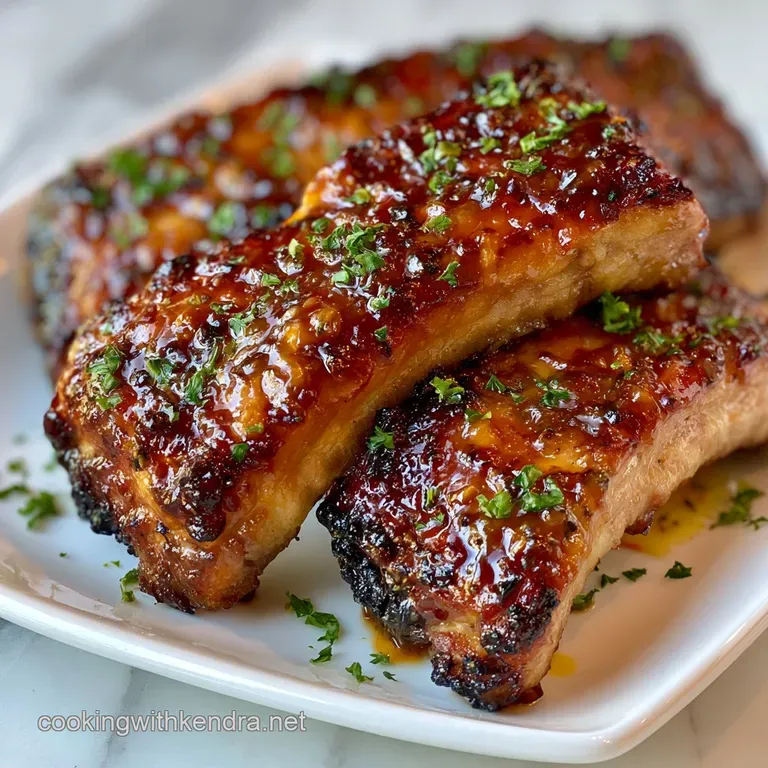
Even for experienced cooks, ribs can be finicky. Usually, it comes down to the seal of the foil or the temperature of the oven.
The Meat is Still "Tough"
This usually means the collagen hasn't fully melted. If you pull them out too early, you'll have a chewiness that no amount of sauce can fix. Give them another 30 minutes in the foil.
The Sauce is Burning/Bitter
Since the glaze has honey and sugar, it can go from "caramelized" to "burnt" in about 30 seconds under the broiler. Keep your eyes on them and pull them out the moment you see bubbles turning dark brown.
Ribs are Dry/Stringy
This happens when the foil seal isn't airtight or the oven is too hot, causing the moisture to evaporate. Always use heavy duty foil and double check your oven temp.
| Problem | Root Cause | Solution |
|---|---|---|
| Rub falling off | Not enough binder | Use a bit more mustard next time |
| Glaze won't stick | Meat too wet | Pat ribs dry before brushing on sauce |
| Meat sticks to bone | Under cooked | Bake for an extra 30 mins at 275°F |
Common Mistakes Checklist:
- ✓ Did you remove the silvery membrane? (Critical for texture)
- ✓ Is the foil seal airtight? (Prevents drying out)
- ✓ Did you use a baking sheet? (Avoids oven fires from leaks)
- ✓ Are you watching the broiler? (Prevents burnt sugar)
- ✓ Did you let the meat retract from the bone? (The ultimate doneness cue)
Taste Variations and Swaps
Once you've mastered the basic Oven Baked Ribs, you can start playing with the flavor profiles. The method stays the same, but the rub and glaze change everything.
Hoisin Sticky Ribs Swap the BBQ sauce for a mix of hoisin, soy sauce, and a splash of sesame oil. Use ginger powder in the rub instead of onion powder for a bright, Asian inspired twist.
Spicy Chipotle Rub Add two tablespoons of chipotle powder to the dry rub and replace the honey in the glaze with maple syrup. This creates a smoky, spicy sweet contrast that's absolutely irresistible.
Honey Maple Glaze For a more "forest" flavor, use a 50/50 split of honey and maple syrup in the final glaze. This works beautifully if you're serving the ribs with roasted root vegetables.
Sugar-free Rub If you're avoiding sugar, swap the brown sugar for a granulated sugar substitute. Note that the ribs won't "char" as easily under the broiler, so you might need an extra minute of heat.
Making the Batch Bigger
When you're cooking for a crowd, you can't just multiply everything linearly. If you're doing 4 racks instead of 2, you'll need to make a few adjustments.
For the rub, I usually only increase the salt and cayenne to about 1.5x instead of 2x. Spices can become overwhelming when scaled up too much. As for the liquids, you can reduce the BBQ sauce by about 10% because the ribs will release more natural juices in a crowded pan.
If you're using two separate baking sheets, rotate them halfway through the 3 hours. Most ovens have hot spots, and you don't want one rack to be velvety while the other is overcooked.
If you have to increase the temperature to 300°F (150°C) to fit more in, be aware that you might need to check them 30 minutes earlier.
| Quantity | Pan Setup | Time Adjustment | Rub Scaling |
|---|---|---|---|
| 1 Rack | Small Sheet | Reduce time by 20% | Standard |
| 2 Racks | Large Sheet | No change | Standard |
| 4 Racks | 2 Large Sheets | Add 15-30 mins | 1.5x Salt/Spices |
Rib Cooking Myths
There's a lot of noise about ribs, especially on the internet. Let's clear a few things up so you don't stress over unnecessary rules.
The Mustard Myth Many people think adding yellow mustard makes the ribs taste like a hot dog. It doesn't. The vinegar in the mustard helps tenderize the surface, and the flavor evaporates completely during the 3 hour bake. It's purely a tool for the rub.
The over High heat Fallacy Some believe that cranking the heat to 400°F (200°C) will make ribs cook "faster" and stay juicy. In reality, high heat tightens the muscle fibers and makes the meat tough. Low and slow is the only way to get that specific texture.
The "Seal in Juices" Lie You'll hear people say that searing meat first "seals" the juices inside. This isn't true. Moisture loss happens regardless of searing. We sear (or broil) at the end for the flavor and the crust, not to keep the meat moist.
Storage and Scrap Tips
Don't let any part of this meal go to waste. Pork ribs provide some of the best kitchen scraps for future meals.
Storing the Meat Leftover ribs stay great in the fridge for 3-4 days. Store them in an airtight container to prevent them from picking up fridge smells. When you're ready to eat them, avoid the microwave if you can.
Instead, put them in a 300°F (150°C) oven for 10 minutes wrapped in foil to keep them from drying out.
Freezing Guidelines You can freeze cooked ribs for up to 3 months. Wrap them tightly in foil and then place them in a freezer bag. Thaw them in the fridge overnight before reheating in the oven.
Zero Waste Hacks Save the bones! If you have rib tips or bones left over, throw them in a pot with some water, carrots, and celery. Simmer them for a few hours to create a rich pork stock. This stock is a fantastic base for a hearty soup or a pan sauce for other meats.
The Perfect Side Pairings
Since Oven Baked Ribs are so rich and sticky, you need sides that provide a bit of balance. I love something with a bit of acidity or a clean, neutral starch.
A big bowl of perfect stovetop rice is a great way to soak up the extra BBQ sauce. If you want something fresher, a vinegar based coleslaw or a crisp cucumber salad works wonders to cut through the fat of the pork.
For those who have a sweet tooth, I always suggest a dessert that's equally comforting. A slice of pecan cake with a butter sauce provides a wonderful contrast to the savory, smoky ribs. The combination of the salt from the dinner and the sweetness of the dessert is the ultimate Southern comfort experience.
High in Sodium
1065 mg 1,065 mg of sodium per serving (46% 46% of daily value)
The American Heart Association recommends limiting sodium intake to 2,300 mg per day, or ideally 1,500 mg for most adults, to reduce the risk of high blood pressure.
Tips to Reduce Sodium
-
Swap the BBQ Sauce-25%
Replace the standard BBQ sauce with a low-sodium version or make a homemade version using tomato paste and maple syrup to significantly cut salt.
-
Eliminate Added Salt-20%
Completely omit the 1 tsp of salt; the mustard and BBQ sauce already provide enough sodium to season the ribs.
-
Lower-Sodium Mustard-15%
Use a low-sodium yellow mustard or replace a portion of the mustard with extra apple cider vinegar for a similar tang.
-
Boost Aromatics
Increase the smoked paprika or add fresh minced garlic to enhance the savory profile without adding any extra sodium.
Recipe FAQs
Should I bake ribs at 275 or 300?
Bake at 275°F. This lower temperature breaks down the connective tissue slowly, ensuring the meat is tender and pulls away from the bone easily.
How long should you bake ribs at 350 degrees?
Avoid using 350°F for the main cook. High heat toughens the pork; stick to 275°F for 3 hours to achieve a tender, competition-style result.
Can diabetics eat country style pork ribs?
Yes, but monitor the glaze. While the pork is fine, the brown sugar and honey in the rub and sauce add significant sugar content.
How do we cook ribs in the oven?
Wrap seasoned ribs in heavy-duty aluminum foil. Bake the pouches at 275°F for 3 hours, then brush with glaze and broil on high for 3–5 minutes.
Is it true I can leave the silvery membrane on the ribs?
No, this is a common misconception. Removing the membrane is necessary because it is too tough to chew and prevents your seasoning rub from penetrating the meat.
Can I skip the yellow mustard binder?
Yes, but your rub will not adhere as well. Mustard acts as a glue for the spices and its flavor disappears completely during the long baking process.
What is the best way to tell if the ribs are done?
Check for meat retraction. The ribs are finished when the meat has pulled back about 1/4 inch from the ends of the bones. These pair perfectly with a side of cheesy potato casserole.
Oven Baked Ribs with Yellow Mustard