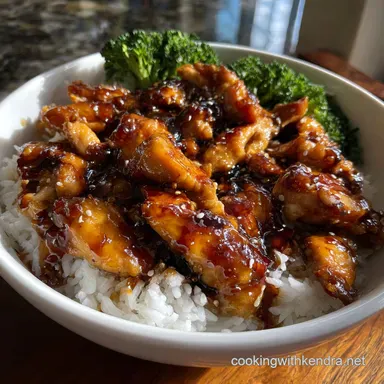
Sticky Teriyaki Chicken Rice Bowl

- Total30 Mins
- Servings4
- Calories820 kcal
- Duration: 10 minutes prep + 20 minutes on the stove
- Taste & Texture: Sticky and savory with fluffy rice
- Ideal for: Weeknight dinners or meal prep
Teriyaki Chicken Rice Bowl
Teriyaki comes from the Japanese words "teri" (luster) and "yaki" (grilled). Traditionally, this meant brushing a sweet soy glaze over fish or meat while grilling it over charcoal. It's all about that glossy, mirror-like finish that makes the food look as good as it tastes.
This version brings those traditional flavors into a modern, one-bowl format. You get the punch of fresh ginger and garlic balanced by the tang of apple cider vinegar.
It's a heavy hitter for a Tuesday night because it hits every taste bud. You've got the salt from the soy, the sweetness from the honey, and the brightness from the steamed broccoli.
Quick Specs
The timing here is tight. You start the rice first, then use that simmering window to prep your sauce and sear the chicken. Everything finishes at the same time.
Since this is a bowl meal, visual contrast matters. The deep brown of the chicken against the bright green broccoli and white jasmine rice makes it look like a professional Asian Fusion dish.
Why This Works
The timing is the real trick here. By using the 15 minutes the rice spends on the stove to handle the sauce and the sear, the whole process stays under 30 minutes.
High-Heat Searing: Searing the chicken in shimmering oil before adding the glaze creates deep flavor. This browning process ensures the meat doesn't just boil in the sauce, which would leave it gray and bland.
Reduction Timing: Stirring the sauce over medium heat allows the water to evaporate. This concentrates the sugars in the honey, turning a thin liquid into a sticky syrup that clings to the chicken.
| Rice Base | Texture | Best For |
|---|---|---|
| Jasmine | Fluffy and aromatic | Traditional feel |
| Brown | Nutty and chewy | Extra fiber |
| Cauliflower | Grainy and light | Low-carb needs |
What Ingredients Do
- 1/2 cup low-sodium soy sauce
- 1/4 cup apple cider vinegar
- 1/4 cup honey
- 1 tbsp minced fresh ginger
- 3 minced garlic cloves
- 1 tsp toasted sesame oil
- 1½ lbs boneless, skinless chicken breasts, diced into 1-inch pieces
- 2 cups dry jasmine rice
- 2 tbsp neutral oil
- 2 cups steamed broccoli florets
Many of these items are common pantry staples, but the addition of fresh aromatics is what elevates the sauce from simple to vibrant.
| Ingredient | Role | If You Don't Have It |
|---|---|---|
| Soy Sauce | Savory base and color | Tamari or Coconut Aminos |
| Honey | Sweetness and body | Brown sugar or Maple syrup |
| AC Vinegar | Tang and balance | Rice vinegar or Lime juice |
| Fresh Ginger | Zesty heat | 1/4 tsp ginger powder |
The Gear
Reach for a wok or a large non-stick skillet for this step. A broad cooking surface ensures the chicken sears properly without crowding, preventing the meat from steaming in its own juices.
To prepare the rice, a standard pot with a snug cover is ideal, although a rice cooker is a convenient option. You can use a fork or a basic whisk to blend the glaze until smooth.
How to Cook It
1. The Foundation: Rice and Sauce
Start by boiling 3 cups of water in a medium saucepan. Stir in 2 cups of jasmine rice, cover with a lid, and let it simmer on low for 15 minutes. Note: Avoid lifting the lid to ensure the steam stays inside for perfectly fluffy rice.
While the rice cooks, combine the reduced-sodium soy sauce, apple cider vinegar, honey, minced ginger, minced garlic, and toasted sesame oil in a medium mixing bowl, whisking until smooth.

2. The High-Heat Sear
Place 2 tbsp of neutral oil in a wok or large non-stick pan and heat over medium-high. Once the oil is hot, arrange the chicken cubes in a single layer with enough space between pieces.
Let the meat sear undisturbed for 3-4 minutes until a golden brown crust develops and the meat hits an internal temperature of 165°F (74°C). According to USDA guidelines, 165°F is the safe minimum internal temperature.

3. The Glazing Phase
Lower the heat to medium and pour the prepared glaze over the seared chicken.
Keep stirring for 5-7 minutes while the sauce bubbles and thickens until it reaches a thick, glossy syrup that clings to the chicken.

4. The Final Assembly
Scoop the cooked rice into four bowls. Add a serving of the glazed chicken and some steamed broccoli florets to each. Finish with a garnish of sliced green onions and toasted sesame seeds.
Quick Fixes
Fixing a Thin Sauce
If your sauce is still watery after 7 minutes, your pan might be too small or your heat too low. Increase the heat to medium-high for 2 minutes while stirring rapidly. This speeds up evaporation and thickens the glaze quickly.
Avoiding Dry Chicken
Overcooking the chicken during the sear or the reduction phase leads to rubbery meat. Stick to the 3-4 minute sear and don't let the sauce reduce until it's completely dry. Stop once the sauce is a syrup, not a paste.
Fixing Clumped Rice
Rice clumps when it's stirred too much during the simmering phase. If it happens, let the rice sit for 5 minutes after the heat is off, then gently fluff it with a fork to separate the grains without smashing them.
Swaps and Twists
If you want a different flavor profile, you can swap the honey for maple syrup to get a woodier sweetness. For those who like things spicy, adding a teaspoon of sriracha or red pepper flakes to the glaze works well.
You can also change the veg. While broccoli is the standard, snap peas or sautéed bok choy provide a similar crunch. If you're craving a different style of meal, a homemade stir fry sauce is a great way to pivot.
For a teriyaki chicken rice bowl that feels lighter, swap the jasmine rice for quinoa or cauliflower rice. Just be mindful that cauliflower rice doesn't absorb the sauce the same way, so you might want a little extra glaze on top.
| Original Ingredient | Budget Substitute | Impact |
|---|---|---|
| Fresh Ginger | Ginger Powder | Slightly less zing, more concentrated |
| Fresh Garlic | Garlic Powder | Milder flavor, more uniform |
| Honey | Brown Sugar | Similar sweetness, less floral note |
Storage and Leftovers
Keep any remaining Teriyaki Chicken Rice Bowls in glass containers in the refrigerator, where they remain good for 4 days. I recommend keeping the sesame seeds and fresh green onions in separate containers to ensure they keep their crunch and color.
When reheating, try to avoid the microwave, as it can make the rice tough and the chicken rubbery. Instead, warm the chicken and rice in a skillet on medium heat, adding a tablespoon of water, until steaming hot throughout and the chicken reaches 165°F (74°C) inside.
This helps loosen the thick glaze and restores moisture to the protein. When reheating cooked leftovers, check with a food thermometer that the centre reaches 165°F (74°C); the appliance temperature and time alone do not confirm this.
To minimize waste, make use of your broccoli stems. Just peel away the woody exterior, slice the soft inner core into thin rounds, and steam them alongside the florets.
What to Serve With

Since the bowl is already quite filling, keep the sides light. A chilled cucumber salad with rice vinegar and a pinch of sugar cuts through the richness of the honey glaze.
If you want more protein, a soft-boiled egg with a jammy yolk adds a rich, creamy element to the bowl. For a bit of heat, a side of pickled ginger or a drizzle of chili oil adds a nice kick.
Very High in Sodium
1795 mg of sodium per serving (78% of daily value)
The American Heart Association recommends a daily sodium limit of no more than 2,300 mg for most adults to maintain heart health.
Ways to Lower the Sodium
-
Swap Soy Sauce
Replace the reduced-sodium soy sauce with coconut aminos, which provides a similar savory flavor with significantly less sodium.
-
Dilute the Sauce
Mix the soy sauce with water or a splash of unsalted vegetable stock to reduce the concentration of salt in the marinade.
-
Boost Aromatics
Double the amount of fresh ginger and garlic to enhance the natural depth of flavor, allowing you to use less sauce overall.
-
Unsalted Rice
Ensure the jasmine rice is cooked in plain water rather than adding salt to the cooking pot.
-
Add Zesty Brightness
Incorporate fresh lime juice or lemon zest and fresh herbs to provide a punch of flavor without adding any sodium.
Good to Know
Is this teriyaki chicken rice bowl healthy?
Yes, it uses reduced-sodium soy sauce and fresh broccoli. It provides lean protein and vegetables, but at 1795 mg of sodium per serving it is very high in sodium.
How can I get the chicken crispy?
Sear the chicken cubes in a single layer without moving them for 3-4 minutes. This allows a golden-brown crust to develop before adding the glaze.
Can this be made in under an hour?
Yes, the total time is only 30 minutes. You can simmer the rice and prepare the glaze simultaneously to save time.
Does this follow a traditional Japanese style?
It uses classic flavors like soy sauce, ginger, and honey for a teriyaki profile. The addition of jasmine rice and steamed broccoli creates a complete meal.
Where do I store the leftovers?
Place them in glass containers in the fridge. They stay good for up to 4 days.
Why must the cooked rice be cooled quickly?
Refrigerating the rice within 1 hour prevents harmful bacteria from growing. Reheat it only once until it is steaming hot. When reheating cooked leftovers, check with a food thermometer that the centre reaches 165°F (74°C); the appliance temperature and time alone do not confirm this.
What is the best way to reheat the meal?
Heat the chicken and rice in a skillet over medium heat with a tablespoon of water. This prevents the meat from becoming rubbery and restores the glaze.
Could I include additional vegetables?
Yes, you can add the optional shredded carrots. This increases the color and texture of the bowl.
Teriyaki Chicken Rice Bowl in 30 Minutes