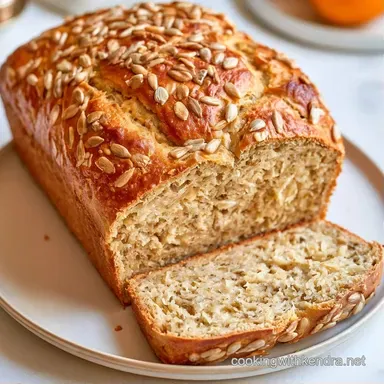
Authentic Homemade Ezekiel Bread

- Time: 45 min active + 35 min bake + 115 min rising
- Flavor & Texture: Nutty, dense crumb with a mahogany crust
- Perfect for: Nutrient dense meal prep or a hearty breakfast toast
Homemade Ezekiel Bread from Scratch
Many home bakers think you need industrial grain mills or a week of waiting to make a traditional loaf. You don't need that, because a high-speed blender can handle sprouted grains and legumes just fine. It gives you that rustic, gritty texture without the fancy equipment.
Making ezekiel bread is about the contrast between the heavy, earthy grains and the lift from the yeast. It's not like a white loaf, so don't expect it to be airy. Instead, you get a substantial bread that feels like real food.
This version is great for anyone who wants a nutrient-packed slice that doesn't taste like cardboard. It's salty, slightly sweet from a touch of maple syrup, and has a satisfying chew.
What Makes the Texture Work
- Sprouted Grains: Sprouting breaks down the starches, making the bread easier to digest and giving it a softer crumb than raw whole grain.
- Mixed Legumes: Lentils and chickpeas add density and a rich, savory depth that offsets the sweetness of the syrup.
| Method | Time | Texture | Best For |
|---|---|---|---|
| Freshly Milled | 3 hours 15 mins | Rustic, gritty | Nutty flavor |
| store-bought Mix | 2 hours 30 mins | Consistent, finer | Quick prep |
The Ingredient Breakdown
| Component | Purpose | Substitute Notes |
|---|---|---|
| Sprouted Wheat/Spelt | Structure & Protein | Use sprouted rye for a tangier taste |
| Sprouted Legumes | Complete Protein | Use more lentils for a softer crumb |
| Maple Syrup | Yeast Food | Honey works, but adds a floral note |
| Olive Oil | Tenderness | Avocado oil is a neutral alternative |
What You'll Need
- 100 g sprouted hard red wheat
- 100 g sprouted spelt
- 50 g sprouted barley
- 50 g sprouted millet
- 50 g sprouted lentils
- 50 g sprouted chickpeas
- 360 ml warm water Why this? 105-115°F wakes up the yeast without killing it
- 7 g active dry yeast
- 15 g maple syrup Why this? Feeds the yeast for a better rise
- 6 g sea salt
- 28 g olive oil Why this? Keeps the crumb from getting too dry
Recipe Specs
This loaf is a powerhouse of nutrition. It yields about 12 slices. Keep in mind that sprouted grains absorb water differently than standard flour, so the dough will feel heavier and more "tacky" than you might be used to.
Equipment Needed

You'll need a high-speed blender to mill the grains. A large mixing bowl and a 9x5 inch loaf pan are essential. I like using a digital scale for the grains, as grams are far more accurate than cups for this kind of dense bake.
Bringing It Together
Phase 1: Milling
Combine 100g sprouted hard red wheat, 100g sprouted spelt, 50g sprouted barley, 50g sprouted millet, 50g sprouted lentils, and 50g sprouted chickpeas in a high-speed blender. Use short pulses until a coarse flour consistency is reached.
Chef Tip: Avoid over-blending; excessive heat can trigger the oils in the grains, altering the taste.
Phase 2: Yeast Activation
Mix 360ml warm water (105-115°F) and 15g maple syrup in a small bowl. Add 7g active dry yeast on top, give it a light stir, and allow to rest for 5-10 minutes until a frothy, bubbling layer forms.
Phase 3: Mixing
Stir together the ground grains and 6g sea salt in a large bowl. Incorporate the yeast liquid and 28g olive oil, mixing until the dough is shaggy. Move the dough to a lightly floured countertop and knead for 8-10 minutes until the texture is elastic and springs back when pressed.
Phase 4: The Bake
Transfer the dough to an oiled bowl, drape a damp cloth over it, and leave in a warm area for 60-90 minutes, or until the volume has doubled. Carefully deflate the dough, form it into a log, and set it in a greased 9x5 inch loaf pan. Let it proof for another 30 minutes.
Heat the oven to 350°F (180°C). Bake for 35 minutes until the crust reaches a deep mahogany hue and the base sounds hollow when tapped.
Common Problems and Fixes
If the Loaf Stays Flat
If the dough doesn't grow, your water was likely too hot and killed the yeast. The secret is using a thermometer to keep the liquid under 120°F. If it's already dead, you can't save the dough, but you can start over with cooler water.
Fixing Sticky Dough
Because of the sprouted legumes, this dough is stickier than white bread. Don't keep adding flour, or the loaf will become a brick. Use a bench scraper or lightly oil your hands to handle it.
| Problem | Fix |
|---|---|
| No rise after 90 mins | Check water temp; ensure yeast is fresh |
| Heavy, gummy center | Bake 5 mins longer; check internal temp |
| Too sticky to knead | Use oil on hands instead of extra flour |
Storage and Freshness
Store this loaf in a breathable linen bag or a container for up to 3 days at room temperature. If you live in a humid area, keep it wrapped in foil in the fridge for up to 7 days to slow mold growth.
This bread freezes brilliantly. Slice the loaf first, then freeze with parchment paper between each slice for up to 3 months. Toast slices directly from the freezer for a crisp, nutty exterior and a soft center.
Serving Suggestions
I like this toasted with a thick layer of salted butter or smashed avocado. Because the flavor is so earthy, it stands up well to strong toppings like sharp cheddar or a spicy pepper jam.
Customizing Your Loaf
To add some crunch or sweetness, try folding in sunflower seeds or dried cranberries while mixing. If you prefer a lighter, airier loaf, you might enjoy this easy focaccia recipe for a change of pace.
Creating a gluten-free alternative requires a total overhaul of the recipe. Because wheat and spelt provide the primary structure, substituting them with gluten-free flours changes the process entirely. This loaf contains gluten from wheat, spelt and barley, so it is not safe for people managing Celiac Disease and Gluten Sensitivity.
For the bread machine method, simply place the salt and milled grains in first, then add the oil, syrup, water, and yeast on top. Select the "Whole Wheat" setting.
Your Questions, Answered
Is Ezekiel bread really healthy?
It provides a complete protein source by combining various sprouted grains and legumes.
Tip: sprout your own grains to ensure maximum nutrient availability.
What ingredients are used in this recipe?
This loaf uses sprouted wheat, spelt, barley, millet, lentils, chickpeas, yeast, maple syrup, salt, and olive oil.
Tip: use a high-speed blender to get the coarsest flour-like texture.
Does it follow biblical guidelines?
The grain blend is based on the ingredients mentioned in the Book of Ezekiel.
Tip: keep the grain and legume weights as listed (300 g grains to 100 g legumes).
Why is this healthier than regular bread?
Sprouting grains breaks down phytic acid and makes nutrients easier for the body to absorb.
Tip: if you enjoyed working with high-protein grains here, see how we handle hearty textures in our pumpkin bread.
How should I store the loaf?
Keep it in a breathable linen bag for up to 3 days at room temperature.
Tip: if your kitchen is humid, wrap the loaf in foil and refrigerate for up to 7 days.
Can I freeze the slices?
Yes, you can store sliced bread with parchment paper between them for up to 3 months.
Tip: toast slices directly from the freezer for the best crunch.
Ezekiel Bread with Sprouted Grains