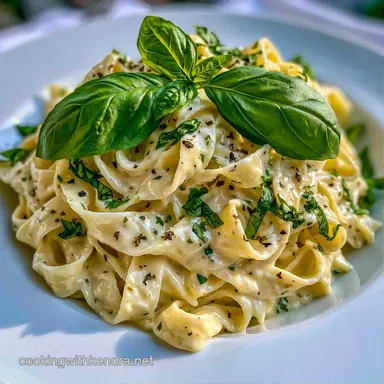
Failure-Proof Creamy Basil Alfredo Pasta
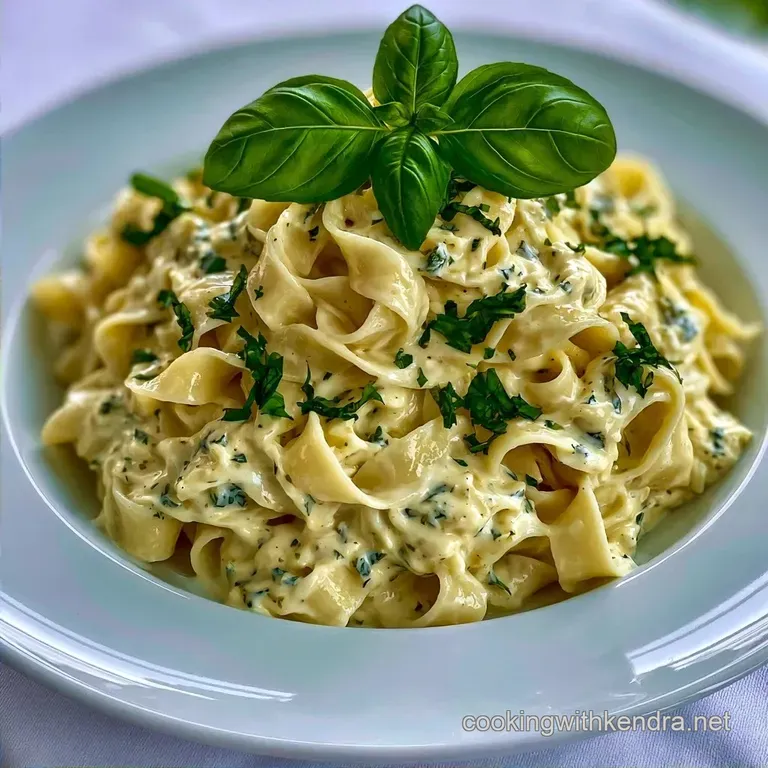
- Time: 10 min prep + 15 min cook
- Flavor/Texture Hook: Rich, glossy sauce with a fresh peppery basil finish
- Perfect for: Busy weeknights or a comforting family dinner
The aroma of garlic hitting melted butter is usually how my favorite nights in the kitchen begin. There is something about that particular sizzle that signals dinner is finally happening.
For a long time, I struggled with Alfredo because my sauce always turned out too thin or, worse, broke into a greasy mess that looked like a failed science project.
I used to believe the issue was my pan, but the real culprit was the temperature. Everything clicked once I stopped letting the cream boil aggressively and started whisking in the cheese slowly. This Creamy Basil Alfredo Pasta is the product of those "aha!" moments.
You can expect a dish that feels elegant but relies on simple ingredients. It's a filling meal that avoids pre-made jars, and the fresh basil adds a brightness that balances the decadence of the cream and Parmesan.
Why the Sauce Stays Smooth
- Low Heat Incorporation: Adding Parmesan to simmering cream rather than boiling it keeps the proteins from clumping.
- Starchy Water: Using the reserved pasta water creates a bridge between the fat in the butter and the liquid in the cream, helping the sauce cling to the noodles.
If you're looking for a higher protein version, you might like my Cottage Cheese Alfredo which swaps some heavy cream for a blended cheese base.
| Goal | What to change |
|---|---|
| Lighter Sauce | Use 1 cup cream, 1 cup skim milk |
| More Garlic | Double the cloves, sauté 30 seconds longer |
| Zestier Flavor | Add 1 tsp lemon zest at the end |
Recipe Specs
This meal comes together in about 25 minutes total. The active work is minimal since the pasta boils while you build the sauce. It serves four people and provides a very filling portion.
The chicken is pan seared separately to get a good brown crust, which adds a nice contrast to the smooth sauce. Trust me, don't boil the chicken in the sauce, or you'll lose that savory flavor.
The Right Ingredients
The hero here is the fresh basil. I use a chiffonade cut, which just means slicing the leaves into thin ribbons. Dried basil doesn't have the same punch and can sometimes taste a bit like old oregano, so stick to fresh if you can.
For the Pasta Base 1 lb (450g) Fettuccine or Linguine Why this? Flat noodles hold heavy sauces better 4 qt (3.8L) Water 2 tbsp (30g) Salt Why this? Seasons the pasta from the inside
For the Creamy Basil Alfredo Sauce 1/2 cup (115g) Unsalted butter Why this? Provides the rich, classic base 3 cloves (15g) Garlic, minced 2 cups (480ml) Heavy cream Why this? High fat prevents the sauce from breaking 1 1/2 cups (150g)
Freshly grated Parmesan cheese Why this? Pre shredded has cornstarch and won't melt smoothly 1/2 cup (20g) Fresh basil leaves, chiffonade 1/2 tsp (3g) Black pepper 1/4 tsp (1.5g) Ground nutmeg Why this? Tiny bit of warmth that enhances the cheese
For the Protein 1 lb (450g) Boneless skinless chicken breast, cubed and pan seared
Substitutions
| Original Ingredient | Substitute | Why It Works |
|---|---|---|
| Heavy Cream | Half and half | Lighter feel. Note: Sauce will be thinner and less stable |
| Parmesan | Pecorino Romano | Saltier, sharper tang. Note: Reduce added salt in pasta water |
| Fettuccine | Penne or Rigatoni | Easier for kids to eat. Note: Sauce fills the tubes |
Necessary Kitchen Gear
You only need basic equipment for this. The main requirements are a large pot for the pasta and a wide skillet for the sauce. I suggest using stainless steel or cast iron because they distribute heat evenly.
A whisk is essential for the cheese phase; using a spoon may leave you with clumps of Parmesan. A microplane grater also helps by turning the cheese into a fine powder that melts almost instantly.
Making the Pasta
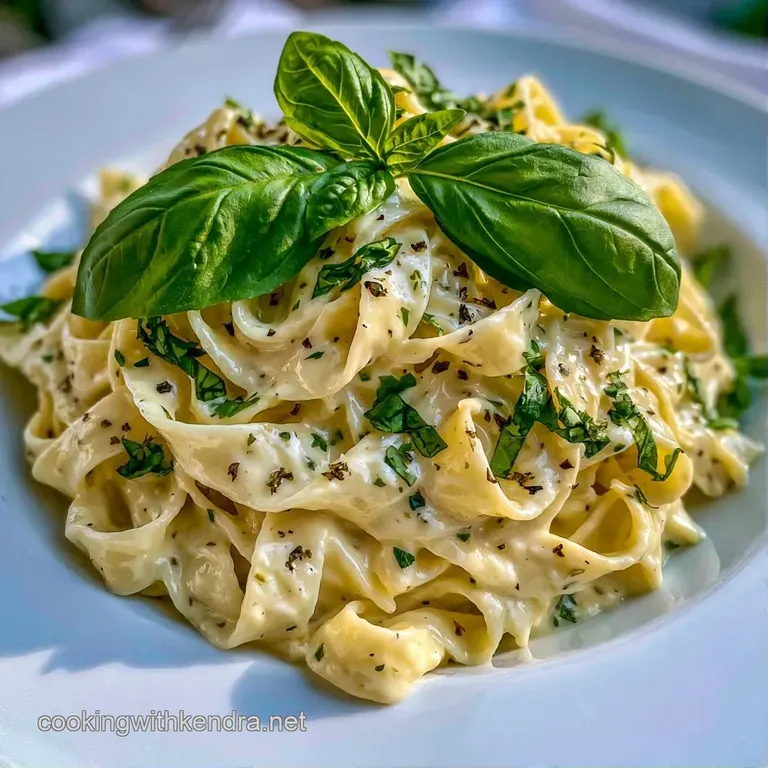
Phase 1: The Pasta Foundation
- Start by getting a big pot of salted water boiling vigorously.
- Drop in the pasta and cook for 1-2 minutes shorter than the package suggests until al dente.
- Set aside 1 cup (240ml) of the salty cooking liquid before you drain the pot. Note: This acts as a safeguard if your sauce becomes too dense.
Phase 2: Building the Creamy Base
- Place butter in a pan over medium heat and melt until it starts foaming.
- Stir in the garlic and cook for 1 minute until it smells aromatic but hasn't browned.
- Pour in the heavy cream and maintain a light simmer for 3-5 minutes until the texture thickens slightly. Note: Avoid a rolling boil to prevent the cream from breaking.
Phase 3: The Final Emulsion and Infusion
- Lower the heat. Gradually beat in the grated Parmesan, adding it handful by handful until the mixture is glossy and smooth.
- Mix in the nutmeg and black pepper.
- Combine the seared chicken and cooked pasta into the pan.
- Toss everything together, stirring in small amounts of the saved pasta water until the sauce achieves a velvety coating that clings to the noodles.
- Take the pan off the heat and stir in the basil ribbons.
Chef's Note: I once stirred in the basil while the sauce was boiling, and it turned a dull brown almost instantly. To maintain that vibrant green hue, always fold the herbs in after removing the pan from the heat.
Fixing Common Sauce Issues
If your sauce looks like it's separating, don't panic. This usually happens when the heat is too high, causing the fat to split from the liquid. The fastest fix is to pull the pan off the burner and whisk in a splash of that reserved pasta water.
When the sauce is too thick, it's often because the pasta absorbed the moisture too quickly. Just add more pasta water, one tablespoon at a time, and toss. You want it to coat the noodles, not drown them.
If the Sauce Separates
The oils will pool on top. This is a temperature issue. Lower the heat and add a tiny bit of cream or water to re bind the sauce.
If the Sauce is Too Thick
The noodles will look dry. Use the reserved pasta water to loosen it up.
If the Basil Turns Dark
This happens from overcooking. Ensure the heat is off before adding the leaves.
| Problem | Root Cause | Solution |
|---|---|---|
| Grainy Texture | Cheese added to boiling liquid | Lower heat and whisk in a splash of cream |
| Sauce too thin | Not simmered long enough | Simmer cream for 2 more minutes before adding cheese |
| Bland flavor | Not enough salt/pepper | Add a pinch of salt or extra black pepper at the end |
Best Sides to Serve
Since this Creamy Basil Alfredo Pasta is quite indulgent, I recommend pairing it with something bright or crunchy. A zesty arugula salad with a lemon dressing balances the heavy cream and refreshes the palate.
Garlic bread is the traditional go-to, but roasted asparagus or steamed broccoli are wonderful lighter alternatives. The florets are perfect for soaking up any leftover sauce.
If you're short on time and want a similar flavor profile without the pasta, my Basil Chicken Cream Sauce is a fantastic option to serve over grilled vegetables or rice.
Storage and Reheating
Store any remaining portions in an airtight container for 3 days. Note that the noodles tend to absorb the sauce during refrigeration, meaning the dish will appear thicker when you retrieve it.
When reheating, avoid high microwave settings to prevent the sauce from splitting. Instead, transfer the pasta to a pan over low heat. Stir in a bit of water or milk and toss gently until the sauce loosens and regains its shine.
To minimize waste, save your basil stems rather than discarding them. Finely mince these and add them to a pesto or a vegetable soup. Additionally, the starchy pasta water can be used to thicken a pan sauce or a risotto.
Easy Flavor Swaps
If you want a different protein, shrimp is a natural fit. Just sauté the shrimp for 2 minutes per side and add them at the same time as the chicken. Salmon also works well if you flake it in at the very end.
For those who want a bit of a kick, a pinch of red pepper flakes added with the garlic gives the sauce a subtle heat. It doesn't overpower the basil but adds a nice layer of complexity.
If you're watching your budget, you can use a mix of Parmesan and a mild white cheddar. You'll lose some of the authentic sharpness, but the sauce remains creamy and satisfying for the family.
Recipe FAQs
What is the secret to a creamy Alfredo?
Stir in the reserved starchy pasta water. Adding this liquid one tablespoon at a time develops a silky emulsion that perfectly coats the noodles. You can apply this same technique to our quick tortellini sauce.
Is basil good in Alfredo pasta?
Yes, it provides a fresh contrast. The peppery notes of the fresh leaves cut through the richness of the heavy cream and Parmesan.
Is it true that Alfredo sauce is healthy for high cholesterol?
That is actually a myth. The significant saturated fat content found in butter and heavy cream can increase cholesterol levels.
Should I cut basil before adding to pasta?
Yes, use a chiffonade cut. Slicing the leaves into thin ribbons ensures the herb is evenly distributed and looks professional.
How to prevent the sauce from breaking when reheating?
Gently warm in a pan over low heat. Stir in a splash of water and toss carefully until the sauce loosens and regains its gloss.
Why should I cook pasta slightly under the package directions?
To maintain an al dente texture. Since the noodles finish cooking in the simmering sauce, undercooking them prevents the pasta from becoming mushy.
Creamy Basil Alfredo Pasta