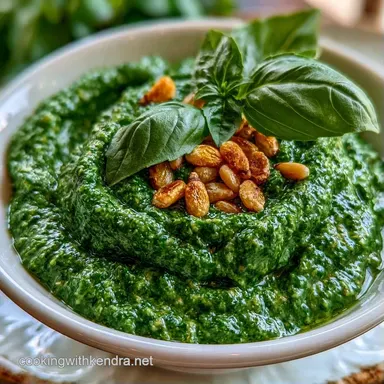
Creamy Vegan Basil Pesto in 5 Minutes
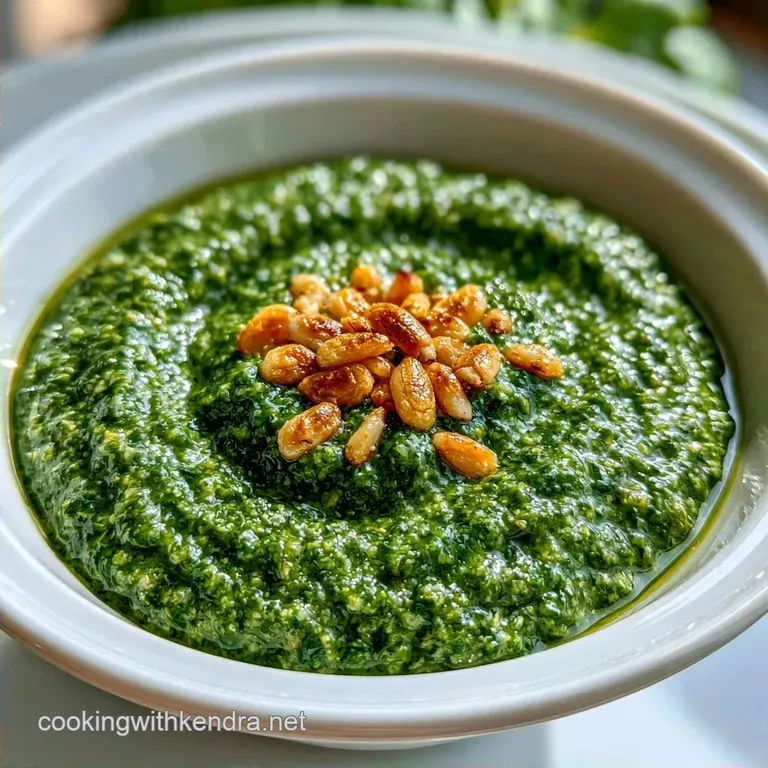
- Time: 5 min active
- Flavor/Texture Hook: Zesty and creamy
- Perfect for: Quick weeknight pasta or sandwich spreads
The smell of fresh basil hitting a blade is one of those scents that immediately transports you to a sunny terrace in Liguria. Pesto started as a way for coastal Italians to use up their garden herbs, blending them with local nuts and oil. It's all about that raw, punchy energy of the ingredients.
Making Vegan Basil Pesto feels like a bit of a puzzle at first. You want that salty, funky depth of parmesan, but you don't want to sacrifice the vibrant green color or the fresh bite.
I've found that the right balance of acidity and nutritional yeast creates a result that satisfies even the most stubborn cheese lovers. This version stays bright and bold, rather than tasting like oily greens.
Fresh and Creamy Vegan Basil Pesto
Cold Processing: Using short pulses prevents the blades from overheating, which stops the basil from oxidizing and turning brown.
Nutty Depth: Nutritional yeast introduces a savory, salty element that captures the fermented essence of aged cheese.
Here is how this approach compares to the traditional method.
| Approach | Prep Time | Texture | Best For |
|---|---|---|---|
| Fast (Processor) | 5 mins | Smooth | Pasta & Sandwiches |
| Classic (Mortar) | 20 mins | Chunky | Gourmet Toasts |
While a food processor is much faster, using a mortar and pestle gives you finer control over the consistency. Since few of us have 20 minutes to spare on a busy weekday, the processor is the most practical option.
The Building Blocks
The oil you select is vital for this Vegan Basil Pesto. I recommend a high-quality extra virgin olive oil to avoid an unwanted metallic taste.
| Ingredient | Purpose | Best Alternative |
|---|---|---|
| Fresh Basil | Core aromatic foundation | Baby spinach (more subtle) |
| Pine Nuts | Earthy flavor and creamy fat | Walnuts or Cashews |
| Nutritional Yeast | Savory, "cheesy" umami | Miso paste (salty/funky) |
| Lemon Juice | Brightens taste and locks in color | Apple cider vinegar |
When measuring the greens, be sure to pack the leaves. If using basil from a store, pat the leaves dry with paper towels; too much water can cause the emulsion to split.
The Full List:
- 2 cups (50g) packed fresh basil leavesKey: The foundation of the flavor.
- 3 cloves (9g) garlic, peeledKey: Gives a sharp, savory punch.
- 1/3 cup (45g) pine nutsKey: For traditional richness.
- 3 tbsp (12g) nutritional yeastKey: The vegan cheese equivalent.
- 1/3 cup (80ml) extra virgin olive oilKey: Ties the ingredients together.
- 1 tbsp (15ml) fresh lemon juiceKey: Cuts through the richness.
- 1/2 tsp (3g) sea saltKey: Heightens the herbal notes.
- 1/4 tsp (1g) black pepperKey: Adds a hint of warmth.
Recipe Specs
Believe me, this comes together incredibly fast. Since it's all about blending, there is no actual cooking involved.
- Prep time: 5 minutes
- Cook time: 0 minutes
- Total time: 5 minutes
- Yield: 4 servings
Chef Note: Should the pine nuts seem too "raw", toast them in a skillet over medium heat for 2 minutes until fragrant. This adds a lovely layer of warmth to the overall flavor.
Equipment Needed
A food processor is the typical choice for this recipe, though basic tools will suffice. High-speed blenders also work, provided you stop before the mixture turns into a smoothie.
- Food processor (or small blender)
- Measuring cups and spoons
- Rubber spatula for scraping the sides
Step-by-step Instructions
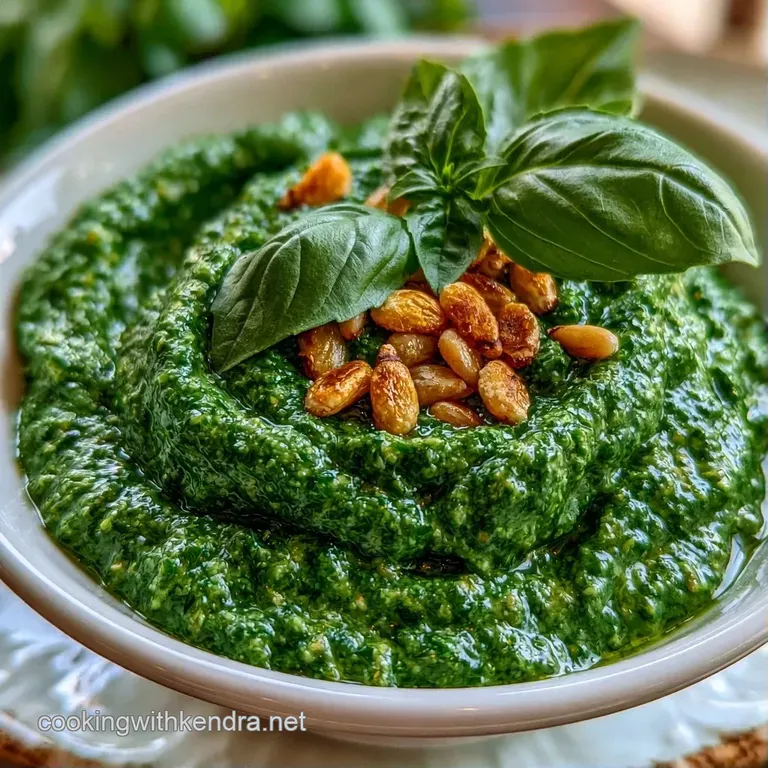
Prepare your Vegan Basil Pesto in these stages to ensure the garlic flavor remains balanced and doesn't overpower the herbs.
Phase 1: The Dry Pulse
Combine the pine nuts, nutritional yeast, and garlic in the food processor. Pulse 5–7 times until the mixture resembles coarse sand. Note: This prevents you from finding an unexpected piece of raw garlic in your pasta.
Phase 2: Adding the Greens
Add the lemon juice, salt, pepper, and fresh basil leaves. Pulse in 2-second intervals until the basil is finely chopped but has not yet turned into a puree.
Phase 3: Emulsifying the Sauce
With the processor set to low, gradually pour in the extra virgin olive oil. Continue blending only until the sauce achieves a creamy, uniform consistency. Stop as soon as it is smooth to prevent the leaves from overheating.
What Can Go Wrong
Even a simple recipe can act up. The most common issue with Vegan Basil Pesto is the color changing from emerald to a dull olive green. This usually happens because the basil oxidized.
The Pesto Turned Brown
This happens when the basil is exposed to too much air or the blades generate too much heat. To fix this, stir in a tiny bit more lemon juice to brighten the hue.
The Texture is Too Thin
If the sauce feels watery, you likely had too much moisture on the basil leaves. Stir in an extra tablespoon of nutritional yeast or a few more pine nuts to thicken it up.
The Flavor is Too Sharp
Too much raw garlic can sometimes bite. Balance this by adding a pinch of sugar or a bit more olive oil to mellow out the intensity.
| Problem | Root Cause | Solution |
|---|---|---|
| Brown color | Oxidation/Over processing | Add lemon juice; store with oil on top |
| Watery consistency | Wet basil leaves | Add more nutritional yeast or nuts |
| Overpowering garlic | Too much garlic/Long blending | Stir in more olive oil or salt |
Adjusting the Batch Size
Scaling the Vegan Basil Pesto is pretty straightforward since there's no baking involved.
Scaling Down (Half Batch): Use half of every ingredient. Since the volume is smaller, you might need to stop pulsing sooner. Use a smaller processor if you have one, otherwise, you'll spend too much time scraping the sides with a spatula.
Scaling Up (Double or Triple): Work in batches. If you crowd the processor, the basil at the bottom turns into a paste while the top stays chunky. Increase the salt and pepper to 1.5x instead of 2x first, then taste and adjust.
Decision Shortcut:
- Extra tang? → fold in 1 tsp lemon zest
- Nut free? → use toasted sunflower seeds
- More salt? → add 1/8 tsp sea salt
Storage Guidelines
Keep your Vegan Basil Pesto in a glass jar. To stop the top from browning, pour a thin layer of olive oil over the surface to seal out the oxygen.
Keep it in the cooler for 4 to 5 days. For longer storage, spoon the pesto into ice cube trays and freeze. Once frozen, pop the cubes into a freezer bag. They stay fresh for 3 months and are great for adding a burst of flavor to a quick soup.
If you have leftover basil stems, don't toss them. Throw them into a vegetable stock or blend them into a green smoothie.
Perfect Complements
This sauce is incredibly versatile. For a classic meal, toss it with trofie or linguine. If you want something a bit different, this pairs well with a slow simmered pasta sauce for a "pink" pesto effect.
You can also use it as a spread for grilled sourdough or a dip for raw crudités. For a little extra luxury, swirl a spoonful into a bowl of warm quinoa or farro.
Make It Your Own
You can easily tweak the Vegan Basil Pesto flavor to suit your mood. If you find pine nuts too expensive, walnuts provide a similar earthy richness.
For a Nut Free Version
Swap the pine nuts for toasted pumpkin seeds (pepitas). They keep the color green and add a nice, nutty crunch. This makes a great Vegan Basil Pesto without pine nuts for school lunches or parties.
For an Oil Free Option
Replace the olive oil with a splash of water or a tablespoon of tahini. The tahini makes the sauce feel luscious and thick, though it adds a slight sesame flavor.
The Super Green Twist
Add a handful of fresh spinach or baby kale to the processor during Phase 2. This deepens the color and adds a boost of nutrients without changing the taste too much. This version is a bit more silky than the traditional one.
If you enjoy this, you might also like a tomato basil sauce for those days when you want something more hearty.
Right then, that's it! Just blend, toss, and eat. Enjoy your Vegan Basil Pesto.
Recipe FAQs
How to make this vegan pesto quickly?
Pulse pine nuts, garlic, and nutritional yeast first. Add the basil and lemon juice, then slowly drizzle in olive oil to achieve a creamy consistency in five minutes.
What makes traditional pesto non-vegan?
Dairy-based cheeses like Parmesan or Pecorino. This recipe replaces those with nutritional yeast to maintain a savory, salty flavor profile without animal products.
Is it true that pesto is unsuitable for diabetics?
Not true. The healthy monounsaturated fats from olive oil and pine nuts provide steady energy and generally do not cause blood sugar spikes.
Which foods pair best with this sauce?
Spoon it over pasta, grilled vegetables, or toasted sourdough. If you enjoy the aromatic balance here, see how we build deep flavors in our tomato sauce.
Does blending all ingredients together produce the best results?
Surprisingly, no. Pulsing the harder nuts and garlic first prevents the basil from over-processing, ensuring the sauce stays textured rather than turning into a smooth puree.
Vegan Basil Pesto in 5 Minutes