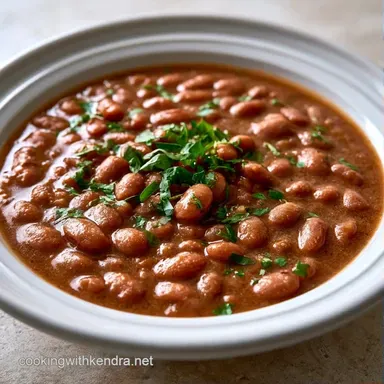
Frijoles De Olla Recipe: Slow-Simmered
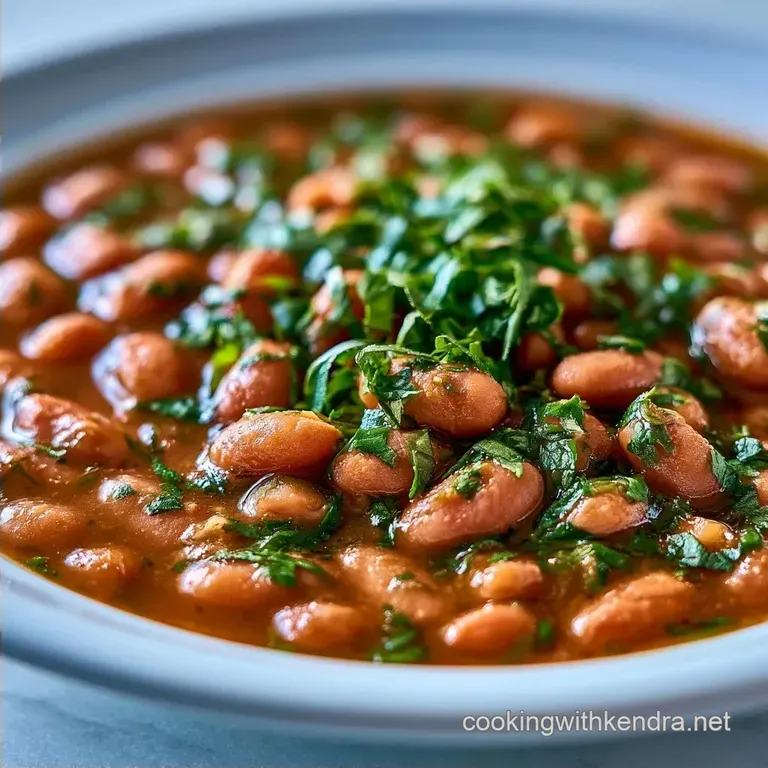
- Time: 10 min active + 150 min cooking
- Flavor/Texture Hook: Earthy, creamy beans in a thick, savory broth
- Perfect for: Family meal prep, traditional side dish, cozy winter dinner
For many, the aroma of pinto beans simmering with epazote evokes memories of home. More than just a side, these beans are a cornerstone of Mexican cuisine, traditionally slow cooked in a clay "olla" to create a comforting, earthy foundation for the table. This recipe is a celebration of patience and heritage.
All you really need is a heavy bottomed pot and a little time. By avoiding canned shortcuts, this Frijoles de Olla recipe achieves the authentic, starch thickened consistency found in traditional households.
The goal is a bean that remains intact yet feels buttery and tender. The resulting broth is savory and concentrated, serving as a versatile base for various dishes throughout the week.
Authentic Frijoles de Olla Recipe
Here are some helpful adjustments. Although this is a slower approach, the flavor is significantly better than the metallic taste of canned beans. Believe me, the extra time is worth it.
| Goal | What to change |
|---|---|
| Thicker broth | Simmer 20 mins longer without a lid |
| Less earthy | Omit the epazote sprig |
| Faster cook | Use a pressure cooker for 40 mins |
Whether you prefer a traditional clay pot or a modern Dutch oven, the secret is keeping a gentle simmer. If the temperature is too high, the beans can break apart, leaving you with a mushy consistency instead of individual, tender legumes.
Gathering Your Bean Essentials
Keep it simple. The beauty of this dish is that a few humble ingredients create a deep flavor. I've found that using a white onion provides a cleaner taste than red, which can sometimes be too sharp for a long simmer.
Why These Ingredients Work
| Ingredient | Role | If You Don't Have It |
|---|---|---|
| Pinto Beans | The main body and starch source | Black beans or kidney beans |
| Epazote | Adds a distinct, citrusy, medicinal note | Fresh cilantro or oregano |
| Garlic | Provides a savory, pungent base | Garlic powder (use 1/2 tsp) |
| White Onion | Adds sweetness and depth to the broth | Yellow onion |
I usually grab a bag of dried beans from a local market because they tend to be fresher. Fresh beans absorb water more evenly and cook more consistently than ones that have sat on a shelf for years.
The Full List
- 1 lb dried pinto beans, sorted and rinsed Why this? Traditional choice for a creamy texture
- 10 cups water
- 1 tbsp vegetable oil Why this? Prevents foaming during the boil
- 1/2 white onion, peeled and halved
- 4 cloves garlic, smashed
- 1 sprig fresh epazote
- 1.5 tsp kosher salt
If you can't find epazote, it's worth a trip to a Mexican grocery store. It's the one ingredient that really defines the taste of a traditional Frijoles de Olla Recipe. If you're totally stuck, cilantro is a decent backup, though it won't have that same specific "soul."
| Original Ingredient | Substitute | Why It Works |
|---|---|---|
| Epazote | Cilantro | Similar fresh profile. Note: Lacks the distinct medicinal depth |
| Vegetable Oil | Lard | More traditional. Note: Adds a richer, porky flavor |
| Pinto Beans | Black Beans | Similar cooking time. Note: Results in a darker, earthier broth |
Equipment for the Pot
You don't need professional gear here, but a heavy bottom is important. A thin pot can cause the beans to scorch at the bottom, which ruins the whole batch with a burnt taste.
- Heavy bottomed Dutch oven or clay olla: This distributes heat evenly. I prefer an enamel coated cast iron pot for easy cleanup.
- Colander: For rinsing the beans thoroughly.
- Large spoon: For stirring and checking for doneness.
If you're using a pressure cooker, just make sure you don't fill it past the halfway mark. Beans expand and foam up, and you don't want a bean flavored volcano in your kitchen.
Steps for Slow Simmering
The flow here is simple: prep, boil, simmer, and then finish with the flavor. Let's crack on.
- Spread the dried beans on a flat surface. Remove any small stones or shriveled beans, then rinse them thoroughly under cold running water in a colander until the water runs clear.
- Place the beans, 10 cups of water, the halved onion, and smashed garlic into your pot.
- Add 1 tbsp vegetable oil. Note: This stops the beans from bubbling over the top of the pot.
- Bring the mixture to a rolling boil over high heat.
- Immediately reduce the heat to a low simmer.
- Cover partially with a lid and cook gently. Maintain a steady, slow bubble for about 2 hours. If using a pressure cooker, set to High Pressure for 40 minutes with a natural release.
- Check the beans. They are ready when one bean squishes easily between two fingers without any resistance.
- Stir in 1.5 tsp kosher salt and the fresh epazote sprig.
- Continue simmering for another 15-20 minutes until the salt penetrates the core and the broth smells fragrant.
Don't rush the salt. Adding it too early can sometimes toughen the skins of the beans, which means they'll take even longer to soften. Just wait until they're almost done.
The Trick to Better Beans
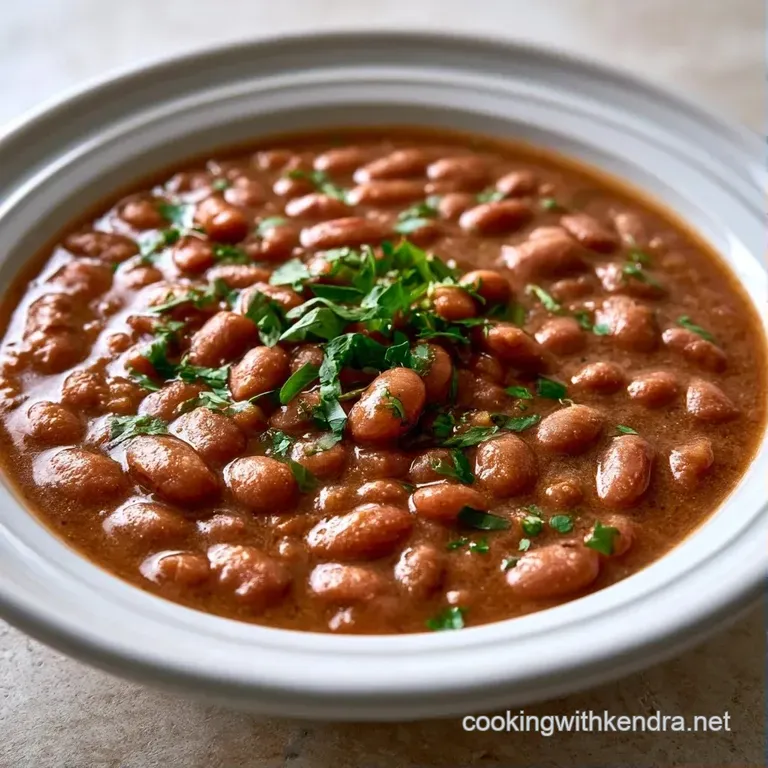
Most people think you just throw everything in and hope for the best, but there's a reason for the sequence. This Frijoles de Olla Recipe relies on the natural starches released during the slow cook.
- Late Salting: Adding salt at the end ensures the skins soften fully before the sodium tightens them.
- Starch Release: Slow simmering allows the beans to naturally thicken the water into a velvety broth.
When you cook legumes slowly, you're allowing the complex sugars to break down, which usually makes them easier on the stomach. If you're interested in other ways to handle legumes, you can check out my guide on [cooking dry pinto beans](https://cookingwithkendra.net/recipes/cooking dry-pinto beans/) for a basic approach.
The oil is another small but important detail. Beans produce a protein called saponin, which creates that thick foam. The oil breaks the surface tension, so you don't have to stand over the pot every two minutes to prevent a boil over.
Solving Common Bean Issues
Even a straightforward Frijoles de Olla recipe can present a few hurdles. Most often, the culprit is either the age of the beans or the temperature of your pot.
Addressing Hard Bean Skins
If the beans remain firm after three hours of cooking, you may be dealing with "old" legumes. Over time, some dried beans simply lose their capacity to soften. To help break down the pectin in the skins, try adding a pinch of baking soda.
Thicken a Watery Broth
If the liquid remains thin rather than creamy, it may be because the simmer was too intense or the beans were too fresh. To resolve this, mash half a cup of beans into a paste and stir it back into the pot.
Neutralizing Bitter Tastes
Bitterness typically occurs if the garlic was scorched at the beginning or if the epazote was too heavy handed. You can balance the flavor with a small pinch of sugar or a squeeze of lime juice.
| Problem | Fix |
|---|---|
| Beans stay hard | Add a pinch of baking soda and simmer longer |
| Broth is too watery | Mash a few beans and stir them back in |
| Bitter flavor | Add a squeeze of lime or a pinch of sugar |
Keeping Beans Fresh
The flavor profile improves overnight, making these even more delicious the following day. I suggest preparing a large quantity since they work well in many different meals throughout the week.
Fridge: Keep in an airtight container for 4-5 days. Note that the liquid will thicken quite a bit while chilling, taking on a gel-like consistency.
Freezer: These stay fresh in the freezer for 3 months. I suggest using freezer safe bags and dividing them into 2-cup servings, leaving a bit of space at the top for expansion.
Zero Waste: Avoid wasting the bean liquid. This broth is incredibly valuable; try using it to start a soup or as a replacement for water when cooking rice to add a rich, savory depth to your sides.
Ways to Change Flavor
The classic recipe is wonderful as is, but feel free to customize it to your liking. I frequently adapt the ingredients based on what I have on hand.
For a Smoky Twist
Mix in a diced chipotle pepper in adobo for some spicy, smoky heat. This is a fantastic option when serving the beans as a main course alongside rice.
Making it Heartier
Include a smoked ham hock or several slices of thick cut bacon when you begin simmering. As the fat renders, it creates a wonderfully rich broth.
Substituting Black Beans
This same technique works perfectly for black beans, yielding a darker, earthier flavor profile. If you enjoy this version, consider turning your leftovers into Crockpot Refried Beans later on.
The Best Way to Serve
Frijoles de Olla are meant to be uncomplicated. An elaborate presentation isn't necessary for this dish to stand out.
The traditional approach is to serve them in a bowl with some chopped raw onion and a few sprigs of fresh cilantro. A squeeze of lime just before eating balances the richness and brings out those earthy tones.
For a satisfying meal, serve these alongside warm corn tortillas, a portion of Mexican rice, and avocado slices. They also work perfectly as a foundation for Huevos Rancheros; simply warm a ladle of beans in a pan, crack an egg over them, and you've got a breakfast that will keep you sated until dinner.
A quick tip on reheating: Use a small saucepan on the stove rather than a microwave. Add a bit of water or chicken broth to thin the liquid, then heat slowly over medium low until it bubbles. This prevents the beans from drying out and preserves the creamy consistency.
Recipe FAQs
What kind of beans are best for frijoles de olla?
Dried pinto beans are the gold standard. They provide the creamy texture and earthy flavor essential for this traditional dish.
How long do you cook frijoles de la olla for?
Simmer for approximately 150 minutes. The beans usually reach tenderness around the 2-hour mark before the final seasoning phase.
How to cook a pot of pinto beans?
Boil beans with onion and garlic, then simmer gently. Once tender, stir in kosher salt and epazote for the final 15 20 minutes of cooking.
Is it true that bacon or salt pork is required for a pot of pinto beans?
Actually, no. This recipe relies on vegetable oil, onion, and garlic to build a clean, authentic flavor profile without cured meats.
Which sides complement frijoles de la olla?
Warm tortillas, rice, or pickled onions work best. This hearty dish also pairs well with homemade flatbread.
Frijoles De Olla Recipe