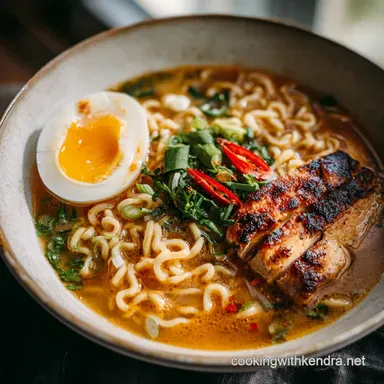
Homemade Ramen with Clear Chicken Broth

- Total5 Hrs 8 Mins
- Servings4
- Calories587 kcal
- Time: 20 min active + 48 min cooking + 4 h resting
- Texture: Chewy al dente noodles with a rich, savory broth
- Serve with: Steamed bok choy or a side of pickled ginger
Easy-to-Make Homemade Ramen
The most frustrating part of preparing this at home is often the noodles becoming overcooked or the broth tasting underwhelming. When noodles linger in hot liquid, they lose their characteristic chew, and a lack of a concentrated base often results in a shallow flavor profile.
This technique addresses both problems. By using a seasoning concentrate called tare and pulling the noodles off the heat early, you ensure a snappy texture and punchy flavor.
The finished bowl achieves a professional aesthetic. The dark golden chicken skin contrasted with bright greens and a vivid orange yolk makes for a stunning presentation.
Why the Texture Works
- Separating the Salt: Keeping the soy-based tare separate from the broth prevents the liquid from becoming bitter or overly reduced during the simmer.
- The Noodle Window: Cooking noodles for 30 to 60 seconds less than the package says lets the hot broth finish the job without overcooking them.
| Method | Time | Texture | Best For |
|---|---|---|---|
| Quick Simmer | 45 mins | Clear and light | Weeknight dinners |
| Traditional | 24+ hours | Thick and creamy | Special occasions |
The Flavor Foundations
| Ingredient | What It Does | Best Swap |
|---|---|---|
| Soy Sauce | Provides salt and umami | Tamari (for gluten-free) |
| Apple Cider Vinegar | Cuts through the fat | Rice vinegar (milder) |
| Fresh Ginger | Adds a sharp, spicy note | Ground ginger (use 1/3 amount) |
| Chicken Thighs | Adds richness and protein | Firm tofu (for vegetarians) |
Ingredients
For the Broth
- 8 cups low-sodium chicken stock
- 2 inches fresh ginger, sliced
- 4 cloves garlic, smashed
- 1 medium yellow onion, quartered
- 2 stalks green onion, chopped
- 1 tsp sea salt
For the Tare
- 1/2 cup reduced-sodium soy sauce
- 2 tbsp apple cider vinegar
- 1 tbsp brown sugar
- 1 tsp grated fresh ginger
- 1/2 tsp garlic powder
The Main Components
- 1½ lbs boneless, skin-on chicken thighs Why this? Skin-on thighs stay juicy and brown better.
- 1 tbsp neutral oil
- 1 tsp salt
- 1/2 tsp black pepper
- 4 large eggs
- 12 oz fresh ramen noodles Why this? Fresh noodles have a better chew than dried.
- 4 sheets toasted nori, cut into squares
- 2 stalks green onion, thinly sliced
- 1 cup bean sprouts
Necessary Kitchen Gear
No fancy equipment is required here. You'll mainly need a heavy skillet for the chicken and a large stockpot for the broth. To achieve a crystal-clear, professional broth, a fine mesh strainer is essential. When preparing the eggs, using a safety pin or thumbtack can keep the shells from cracking while they simmer.
Bringing the Bowl Together
Simmering the Golden Broth
- In a large pot, stir together 8 cups low-sodium chicken stock, 2 inches sliced ginger, 4 smashed garlic cloves, 1 quartered yellow onion, 2 chopped green onion stalks, and 1 tsp sea salt.
- Set the pot over medium heat until it reaches a soft simmer. Maintain a temperature of roughly 190°F (88°C) for 30 minutes, ensuring it does not reach a rolling boil. Note: Boiling too hard makes the broth cloudy.
- Use a fine mesh strainer to filter the broth, tossing out the solids and returning the clear liquid to the pot.

Crafting the Umami Tare
- Using a small saucepan, blend 1/2 cup reduced-sodium soy sauce, 2 tbsp apple cider vinegar, 1 tbsp brown sugar, 1 tsp grated fresh ginger, and 1/2 tsp garlic powder.
- Simmer this mixture over medium-low heat for 5 minutes until the sugar dissolves and the liquid thickens slightly, then take it off the heat.

Perfecting the Nitamago
- Get a pot of water boiling. Pierce 4 large eggs at the bottom with a thumbtack, carefully slide them in, and simmer for exactly 6 minutes and 30 seconds.
- Place the eggs in an ice bath for 10 minutes. Peel and then soak them in a fridge-chilled mix of 1/2 cup Tare and 1/2 cup water for at least 4 hours. Note: Use pasteurized eggs to lower the risk since the yolks stay soft.
Searing the Chicken Thighs
- Dry 1½ lbs boneless, skin-on chicken thighs with paper towels and season with 1 tsp salt and 1/2 tsp black pepper.
- Warm a skillet over medium-high heat with 1 tbsp neutral oil. Sear the chicken skin-side down for 6–8 minutes until dark golden and crisp.
- Flip the pieces and cook for an additional 5–7 minutes to achieve an internal temperature of 165°F (74°C). Let the meat rest for 5 minutes before cutting into thick strips.

Assembling the Bowl
- Distribute the leftover Tare evenly across four deep bowls.
- Boil 12 oz fresh ramen noodles as directed on the package, but pull them out 30–60 seconds early to keep them al dente.

- Pour the hot broth into each bowl, whisking it into the Tare.
- Carefully add the noodles and garnish with sliced chicken, a halved marinated egg, nori squares, sliced green onions, and 1 cup bean sprouts.
Avoiding Common Pitfalls
If your broth looks foamy, you likely let it boil. A rolling boil emulsifies the fats and proteins, which kills the clarity. You can fix this by skimming the foam with a spoon or straining the liquid through a coffee filter.
When the noodles turn out mushy, it is usually because they spent too much time in the pot. Remember that they continue to cook once they hit the hot broth.
Fixing a Cloudy Broth
The heat was too high during the simmer. Use a lower flame to keep the liquid just below a boil.
Solving Mushy Noodles
The noodles boiled too long. Pull them 60 seconds before the package says.
Correcting Salty Tare
The soy sauce concentration is too high. Dilute the tare with a splash of water or unsalted stock.
| Problem | Root Cause | Solution |
|---|---|---|
| Cloudy broth | Rolling boil | Keep temp at 190°F |
| Mushy noodles | Overcooking | Remove 60 seconds early |
| Bland soup | Too little tare | Add 1 extra tbsp of tare per bowl |
Customizing Your Bowl
To change the flavor profile, you can swap the tare. A creamy miso twist works well if you whisk 2 tbsp of white miso paste into the soy base. For those who like heat, adding a dollop of spicy garlic chili oil on top of the finished bowl adds a punchy red accent.
If you want something faster, you can use a Soy Sauce Noodles recipe for the base and just add the seared chicken.
For a vegetarian version, swap the chicken thighs for pan-seared tofu and use a kombu-based vegetable stock.
Freshness and Storage
Store the broth in the refrigerator for up to 4 days, or freeze it for as long as 3 months. Because of its high salt content, the tare will last in the fridge for up to 4 days.
Enjoy the marinated eggs within 48 hours. Beyond that, the salt begins to cure the yolk, resulting in a gummy texture.
To reheat, gently warm the broth on the stovetop over medium heat. Per USDA FSIS guidelines on reheating, ensure leftovers hit 165°F (74°C). Avoid microwaving the noodles; instead, boil a fresh batch and add them to your hot soup.
Plating for Visual Impact

Visuals are everything with this dish. To get that high-contrast look, add your color accents in a specific order. Start with the pale yellow noodles and rich broth, then add the amber chicken.
Add the bright green sliced onions and white bean sprouts last so they stay crisp and vivid. Finally, place the halved egg on top to show off the silky orange center. The dark green nori squares should be tucked into the side of the bowl, partially submerged, to maintain their shape.
Critical in Sodium
3512 mg of sodium per serving (153% of daily value)
American Heart Association recommendation: no more than 2,300 mg of sodium per day
Tips to Reduce Sodium
-
Swap the Soy Sauce
Replace the reduced-sodium soy sauce with coconut aminos, which provides a similar savory flavor with significantly less sodium.
-
Use Unsalted Stock
Switch from low-sodium chicken stock to completely unsalted homemade or store-bought broth to eliminate hidden sodium.
-
Eliminate Added Salt
Remove both the sea salt and the additional salt used to season the chicken thighs entirely.
-
Check Your Noodles
Choose lower-sodium ramen noodles (check the label) and rinse them thoroughly before adding them to the bowl.
-
Amplify Fresh Aromatics
Double the amount of fresh ginger, garlic, and green onions to create a bold flavor profile that reduces the need for salt.
Common Questions
What makes a really good ramen?
High-quality ramen depends on the balance between a concentrated seasoning base and al dente noodles.
Tip: Use a separate tare to keep the flavors sharp and the broth clean.
Can I adapt this technique for instant noodles?
You can use the homemade tare and broth to elevate store-bought noodles.
Tip: Discard the flavor packet that comes with the instant noodles to avoid excessive sodium.
Why do the noodles turn mushy or taste bitter?
Overcooking noodles in boiling water destroys their structure and releases excess starch.
Tip: Remove noodles from the pot 30 to 60 seconds before the package instructions suggest.
How do I keep the broth clear?
Maintain a gentle simmer around 190°F (88°C) and avoid reaching a rolling boil.
Tip: Strain the liquid through a fine mesh strainer to remove all solids.
Do high altitudes affect how the soft-boiled eggs cook?
Higher altitudes lower the boiling point of water, which often requires longer cooking times for the same doneness.
Tip: Test one egg first to calibrate the exact timing for your elevation.
Does filtered spring water change the broth flavor?
Filtered water removes chlorine and minerals that can interfere with the delicate taste of the ginger and garlic.
Tip: Using purified water helps the natural umami of the soy sauce stand out.
Homemade Ramen