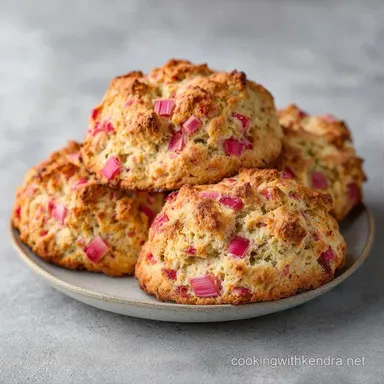
Rhubarb Buttermilk Scones: Tender and Flaky
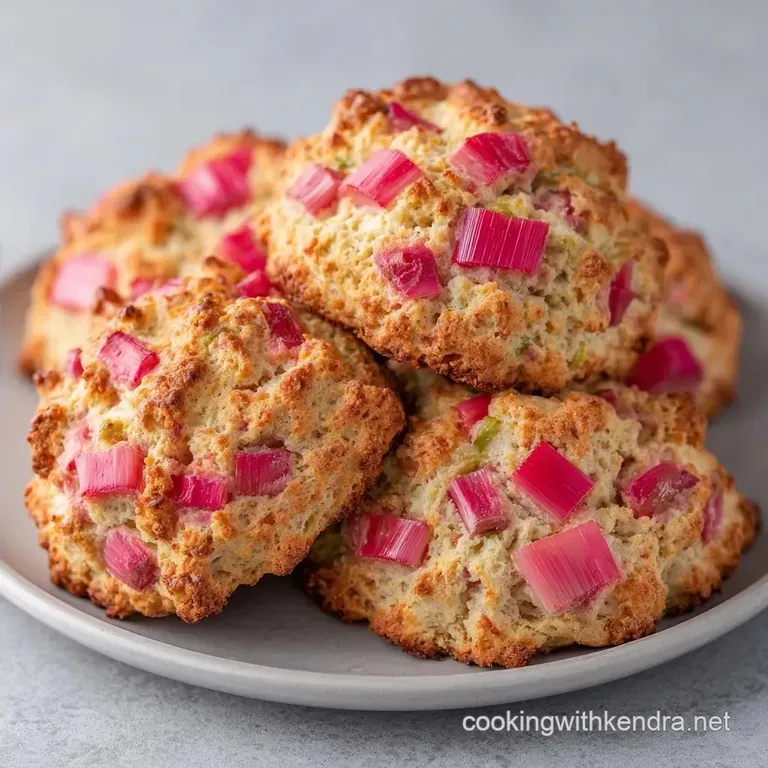
- Time: 10 min active + 20 min baking
- Flavor/Texture Hook: Shatteringly crisp edges with a velvety, tart center
- Perfect for: Lazy Sunday brunches or a bright spring treat
The smell of tart rhubarb roasting in a hot oven is one of those scents that just feels like spring has actually arrived. But let's be real, most home baked scones end up as dense, dry hockey pucks that require a gallon of coffee just to swallow.
I've been there, staring at a tray of beige, heavy lumps that had zero lift and even less flavor.
The real culprit is usually over handling the dough or using butter that's too soft. When the butter melts before it hits the oven, you lose those little steam pockets that create the flake. These Rhubarb Buttermilk Scones solve that by using a specific cold fat method and the acidity of buttermilk to keep things light.
You can expect a scone that has a deep mahogany gold crust and a center that's almost custard like where the rhubarb has broken down. It's a balance of sharp and sweet that doesn't feel too heavy. Trust me, once you get the temperature of your ingredients right, you'll never go back to the store-bought versions.
Rhubarb Buttermilk Scones
The magic of this recipe is in the contrast. You get that crunch from the turbinado sugar on top, followed by a tender, buttery crumb, and then a hit of bright, acidic rhubarb. It's not just a sweet pastry, it's a conversation between the richness of the dairy and the sharpness of the garden.
For those who love a bit of a challenge, the key here is "shaggy." You aren't looking for a smooth ball of dough like you would for a cake. If it looks a bit messy and barely held together, you're doing it exactly right.
This is what allows the Rhubarb Buttermilk Scones to rise upward instead of spreading out into a flat pancake.
If you've ever tried my Pumpkin Scones recipe, you know I'm big on texture. While those are a bit more cake like, these are designed to be flakier and more rustic. They feel like something you'd find at a tiny bakery in a coastal town, where the butter is high-quality and the fruit is picked from the backyard.
The Secret To The Lift
Instead of a textbook, here is what's actually happening in your bowl. It's all about managing moisture and temperature to get that specific bakery style height.
- Acidic Activation: The lactic acid in the buttermilk reacts with the baking powder to create immediate bubbles. This gives the scones an initial push upward before the heat takes over.
- Steam Pockets: Small chunks of cold butter melt rapidly in a 400°F oven. As the water in the butter turns to steam, it pushes the flour apart, creating those distinct, flaky layers.
- Moisture Control: Finely dicing the rhubarb prevents large "wet spots" in the dough. This ensures the fruit is distributed evenly without making the batter soupy.
- Gluten Inhibition: By folding the dough only until it's "shaggy," we prevent too much gluten from developing. Less gluten means a tender bite rather than a chewy, bread like texture.
| Method | Prep Time | Texture | Best For |
|---|---|---|---|
| Fresh Rhubarb | 10 mins | Tart & Juicy | Spring brunch |
| Frozen Rhubarb | 15 mins | Softer & Sweeter | Winter cravings |
| Canned Compote | 5 mins | Jammy & Dense | Quick snacking |
Component Analysis
Understanding why each ingredient is there helps you avoid mistakes. If you swap something out, you need to know what you're losing.
| Ingredient | Science Role | Pro Secret |
|---|---|---|
| Cold Butter | Structure/Flake | Keep it in the fridge until the second you need it |
| Buttermilk | Tenderizer/Lift | Use full fat for a more velvety crumb |
| Rhubarb | Flavor/Moisture | Dice into 1/4 inch pieces for the best distribution |
| Turbinado Sugar | Texture/Color | Adds a "crunch" factor that granulated sugar can't match |
Essential Ingredients
Here is everything you need to get these Rhubarb Buttermilk Scones on the table. I recommend measuring your flour by spooning it into the cup rather than scooping, which prevents packing it down.
- 2 cups all purpose flour Why this? Standard protein level for a balanced chew
- 1/3 cup granulated sugar Why this? Sweetens the dough without ruining the rise
- 1 tablespoon baking powder Why this? Provides the primary lift
- 1/2 teaspoon salt Why this? Balances the tartness of the fruit
- 1/2 cup unsalted butter, cold and cubed Why this? Creates the flaky layers
- 1 cup fresh rhubarb, finely diced Why this? Adds brightness and moisture
- 3/4 cup cold buttermilk Why this? Adds tang and tenderizes the crumb
- 1 teaspoon vanilla extract Why this? Rounds out the sharpness of the rhubarb
- 1 tablespoon cold buttermilk (for brushing)
- 2 tablespoons coarse turbinado sugar (for topping)
Ingredient Swaps
| Original Ingredient | Substitute | Why It Works |
|---|---|---|
| Buttermilk (3/4 cup) | Greek Yogurt + Milk (1:1) | Similar acidity. Note: Result is slightly denser |
| All Purpose Flour | Pastry Flour | Lower protein. Note: Makes a more fragile scone |
| Fresh Rhubarb | Frozen Rhubarb (thawed/squeezed) | Similar flavor. Note: Must remove excess water |
Step-by-step Instructions
Right then, let's get into the actual making of these. Remember, the goal is to work quickly so the butter stays cold. If your kitchen is roasting hot, I even suggest popping the flour bowl in the fridge for 10 minutes first.
Phase 1: Preparing the Dry Base
- Whisk together the flour, sugar, baking powder, and salt in a large bowl. Note: This ensures the baking powder isn't clumped in one spot, preventing "holes" in your scones.
Phase 2: Cutting in the Butter
- Add the cold, cubed butter to the flour. Use a pastry cutter or a fork to work the butter into the flour until the mixture resembles coarse crumbs. Ensure some pea sized lumps remain, as these are what create the flakes. For a similar technique, you can look at my pie crust method for getting that perfect fat to flour ratio.
Phase 3: Folding in the Wet Ingredients
- Gently stir in the buttermilk, vanilla, and diced rhubarb. Use a spatula to fold the mixture only until a shaggy dough forms. Note: Stop the moment you don't see any more dry flour streaks.
- Turn the dough onto a floured surface. Using your hands, gently pat it into a circle about 1 inch thick. Avoid kneading the dough, or you'll end up with a tough scone.
Phase 4: Shaping and Baking
- Use a sharp knife to cut the circle into 8 equal wedges.
- Place the wedges on a parchment lined baking sheet. Brush the tops with the extra tablespoon of buttermilk and sprinkle generously with turbinado sugar.
- Bake at 400°F (200°C) for 18-22 minutes. Bake until the edges are a deep mahogany gold and the tops feel set to the touch.
Chef's Tip: To get a professional "vertical" rise, don't twist the knife when cutting the wedges. Press straight down. Twisting seals the edges of the dough, which prevents the scone from expanding upward.
How to Fix Common Problems
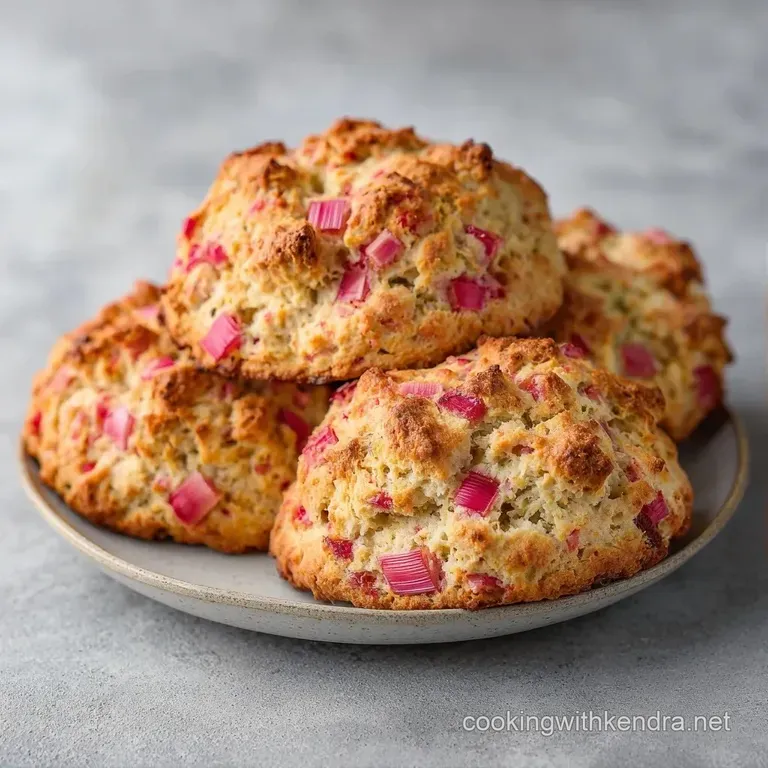
Even the best of us have a bad batch. Usually, scone issues come down to temperature or over mixing.
Troubleshooting Common Issues
| Issue | Solution |
|---|---|
| Why Your Scones Are Flat | If your scones aren't rising, your baking powder might be expired, or your butter was too warm. When the butter melts before it hits the oven, the dough spreads instead of lifting. |
| Why Your Scones Are Tough | Toughness comes from over working the dough. If you knead the dough like bread, you develop too much gluten. The goal is a "shaggy" mess, not a smooth ball. |
| Why Your Scones Are Soggy | Soggy bottoms usually happen if the rhubarb was too wet or if the oven wasn't fully preheated. Using parchment paper helps, but the high heat of 400°F (200°C) is what seals the bottom. |
Common Mistakes Checklist:
- ✓ Butter is ice cold (not room temp)
- ✓ Flour is spooned, not packed
- ✓ Rhubarb is finely diced, not chunky
- ✓ Dough is handled minimally
- ✓ Oven is fully preheated to 200°C
Adjusting the Batch Size
You don't always need 8 scones. Here is how to scale the Rhubarb Buttermilk Scones without ruining the chemistry.
Scaling Down (Half Batch): For 4 scones, cut all ingredients in half. Since you can't easily half an egg (though this recipe doesn't use one), just be careful with the buttermilk. Use 6 tablespoons instead of 3/4 cup. Use a smaller baking sheet to keep the heat concentrated.
Scaling Up (Double Batch): When doubling, I highly suggest working in two separate bowls. If you put too much dough in one bowl, you'll have to mix it longer to get the flour incorporated, which leads to over mixing.
Lower your oven temp by about 10°C (approx 25°F) if you are baking two sheets at once to ensure the air circulates properly.
The "Single Scone" Hack: If you just want one, it's easier to make a small batch of 4 and freeze the rest. Scaling to a single scone often leads to measurement errors with the baking powder.
Common Baking Misconceptions
There are a few things people always tell you about scones that aren't actually true.
Myth: You must use a food processor for the butter. While it's faster, a food processor can actually over work the flour if you aren't careful. A fork or pastry cutter gives you much better control over the size of the butter lumps.
Myth: Chilling the shaped scones is mandatory. Some recipes say you must freeze the cut wedges for 30 minutes. While it helps a little, if your ingredients were cold to begin with, you can go straight into the oven. The difference in height is negligible.
Myth: Rhubarb needs to be pre cooked. Never pre cook your rhubarb for these. The moisture released during the bake is what creates those little pockets of jammy goodness. Pre cooking just makes the dough soggy.
Storage Guidelines
Rhubarb Buttermilk Scones are best eaten warm, but they keep surprisingly well if you do it right.
Fridge Storage: Keep them in an airtight container for up to 3 days. They will lose some of that initial "shatter" on the crust, but the inside stays tender.
Freezer Storage: These freeze beautifully. Wrap each scone individually in plastic wrap and place them in a freezer bag for up to 2 months. I actually prefer freezing them before they are baked.
Just pop the frozen wedge straight into the oven and add 3-5 minutes to the bake time.
Zero Waste Tips: Don't throw away the rhubarb leaves wait, actually, do! Rhubarb leaves are toxic. But the stems that are too thin to dice? Simmer them with a bit of sugar and water to make a quick rhubarb syrup for pancakes.
If you have leftover buttermilk, use it as a marinade for chicken; the acid tenderizes the meat perfectly.
Pairing Ideas
Since these Rhubarb Buttermilk Scones are tart and buttery, you want pairings that complement the acidity.
- The Classic: A dollop of salted butter and a drizzle of honey. The salt cuts through the sweetness of the honey and highlights the rhubarb.
- The English Tea: A strong Earl Grey tea. The bergamot notes in the tea dance perfectly with the tartness of the fruit.
- The Savory Contrast: A side of sharp cheddar cheese. I know it sounds weird, but the savory saltiness of the cheese against the tart scone is incredible.
- The Sweet Treat: A homemade lemon curd. The citrus reinforces the brightness of the rhubarb and adds a velvety texture.
Recipe FAQs
Do these scones have eggs in them?
No, they do not. This recipe relies on the reaction between buttermilk and baking powder to create lift and tenderness.
How to bake these Rhubarb Buttermilk Scones?
Bake at 400°F (200°C) for 18-22 minutes. Remove them from the oven once the edges reach a deep mahogany gold and the tops feel set.
Are scones more sweet or savory?
They can be either. While these rhubarb scones are sweet and tart, the same fundamental dough technique is used for savory cheese scones.
What are scones best eaten with?
Pair them with clotted cream or salted butter. A hot cup of tea or coffee perfectly balances the bright acidity of the fresh rhubarb.
What is the ideal temperature for serving scones?
Serve them warm. This preserves the soft interior and ensures the turbinado sugar crust has the best texture.
How are these scones made to ensure a tender crumb?
Fold the dough only until a shaggy mixture forms. Over mixing develops too much gluten and makes the pastry tough. If you enjoyed mastering this texture control here, see how the same principle works in our strawberry pie crust.
Why did my scones turn out flat or tough?
Check your butter temperature and mixing time. Warm butter causes the dough to spread instead of lifting, while over working the dough leads to a tough, bread like texture.
Rhubarb Buttermilk Scones