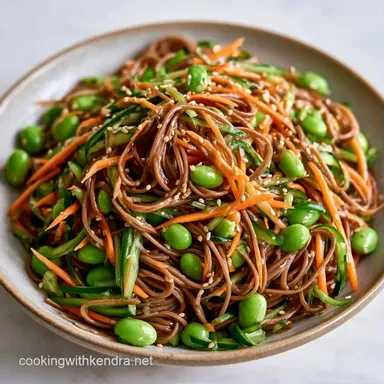
Cold Soba Noodle Salad: Japanese Style
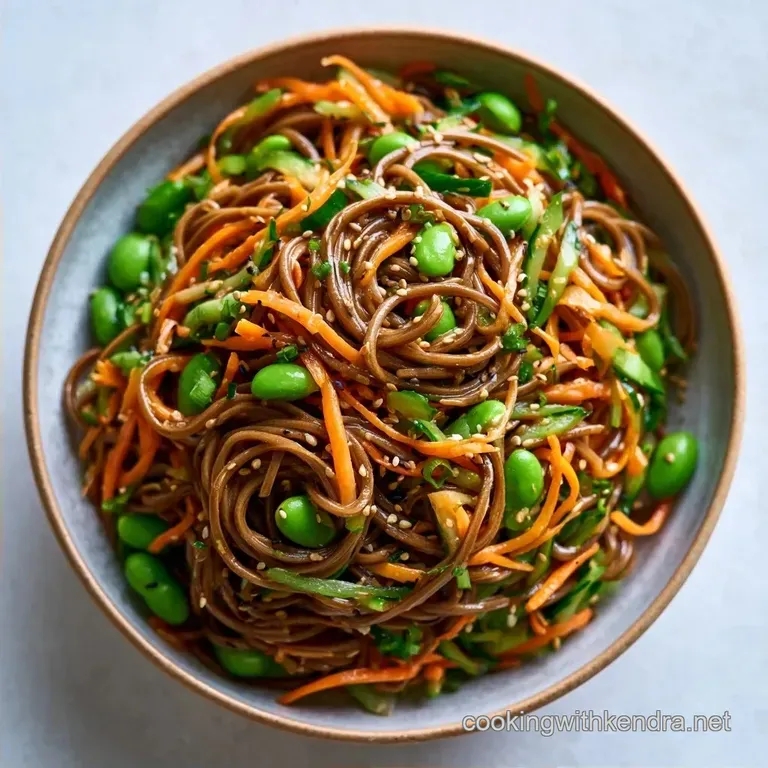
- Time: 10 min active + 10 min cook = Total 20 minutes
- Flavor/Texture Hook: Velvety dressing with a shatter crisp vegetable crunch
- Perfect for: Summer potlucks, meal prep, or a fast weeknight dinner
The sound of the water hitting the colander is where this whole thing starts. I remember the first time I tried making this, I thought I could just boil the noodles and toss them in the dressing while they were still warm. I ended up with a gummy, starchy mass that looked more like wallpaper paste than a meal.
It was a total mess, and the dressing just slid right off the clumps.
That's when I realized the secret isn't in the sauce, it's in the "shock." The process of scrubbing the noodles under ice cold water is what transforms them from a sticky heap into those distinct, silky strands. Once I figured that out, the Cold Soba Noodle Salad became my go to for every single summer gathering.
You can expect a dish that feels dynamic and fresh. We're talking about vibrant colors, a hit of ginger heat, and a dressing that clings to every single noodle without making it soggy. It's a balance of nutty, salty, and sweet that hits every part of your palate.
Quick Cold Soba Noodle Salad
Right then, let's get into the "why" before we start chopping. This isn't just about throwing things in a bowl; it's about managing textures. The goal is to have the noodles stay slippery and the vegetables stay snappy.
Why This Recipe Works
Starch Removal: Rinsing noodles under cold water washes away surface starch, preventing the "glue" effect that makes noodles clump.
Cold Shock: Dropping the temperature immediately stops the cooking process, ensuring the noodles keep a firm, al dente bite.
Honey Emulsion: The honey acts as a binder between the oil and vinegar, creating a glossy coating that doesn't separate.
Texture Contrast: Pairing the soft, earthy soba with julienned raw vegetables creates a sensory experience that feels light but satisfying.
Prep Method Comparison
Since many of you like to add a protein like chicken to this, I've found the prep method changes the whole vibe of the salad.
| Method | Time | Texture | Best For |
|---|---|---|---|
| Stovetop Sear | 10 mins | Charred/Crispy | Bold, smoky flavor |
| Oven Roast | 25 mins | Tender/Juicy | Large batches/Meal prep |
Component Analysis
| Ingredient | Science Role | Pro Secret |
|---|---|---|
| Soba Noodles | Base Structure | Scrub them with your hands during the rinse |
| Rice Vinegar | Acid Balance | Use unseasoned vinegar to control the sugar |
| Toasted Sesame Oil | Aromatic Fat | Add at the very end to keep the scent strong |
| Fresh Ginger | Pungent Note | Grate it on a microplane for a seamless texture |
Essential Recipe Specs
Before you dive in, let's look at the numbers. This recipe is designed for a small group or a few days of lunches.
- Yield: 4 servings
- Prep Time: 10 minutes
- Cook Time: 10 minutes
- Total Time: 20 minutes
- Nutrition: 345 kcal | 14g Protein | 8g Fat | 56g Carbs | 5.5g Fiber
Chef's Note: If you're using 100% buckwheat noodles, watch the pot closely. They break down much faster than the buckwheat wheat blends and can turn into mush in seconds.
Gather Your Ingredients
For the noodles and veg: - 8 oz (225g) Soba noodles Why this? Earthy flavor and nutty aroma - 1 cup (150g) Cucumber, julienned Why this? High water content for freshness - 1 cup (130g) Carrots, shredded or julienned Why this?
Natural sweetness and snap - 1 cup (150g) Shelled edamame, steamed Why this? Plant based protein and color - 3 stalks (45g) Green onions, thinly sliced Why this? Sharp, fresh finish - 2 tbsp (15g) Toasted sesame seeds Why
This? Nutty crunch
For the Soba Noodle Salad Sesame Dressing: - 3 tbsp (45ml) Soy sauce Why this? Savory umami base - 2 tbsp (30ml) Rice vinegar Why this? Bright, mild acidity - 1 tbsp (15ml) Toasted sesame oil Why this? Deep, roasted aroma -
1 tbsp (21g) Honey Why this? Balances salt and binds oil - 1 tsp (5g) Fresh ginger, grated Why this? Zesty, warm heat - 1 clove (3g) Garlic, minced Why this? Pungent depth
Substitution Options
| Original Ingredient | Substitute | Why It Works |
|---|---|---|
| Honey (1 tbsp) | Maple Syrup (1 tbsp) | Similar viscosity. Note: Slightly more woody flavor |
| Soba Noodles (8 oz) | Brown Rice Noodles (8 oz) | gluten-free alternative. Note: Less earthy, more neutral |
| Rice Vinegar (2 tbsp) | Apple Cider Vinegar (2 tbsp) | Similar acidity. Note: Slightly fruitier profile |
The Right Gear
You don't need a professional kitchen, but a few tools make this way faster. I use a large pot for the noodles and a wide mixing bowl so I can toss everything without spilling. A microplane or a fine grater is essential for the ginger, otherwise, you get those annoying little chunks of raw ginger.
For the vegetables, a mandoline or a sharp chef's knife is the way to go. You want "matchsticks," not chunks. The more uniform the cuts, the better the dressing distributes. If you're feeling fancy, a mason jar is the best tool for the dressing because you can shake it vigorously to get that glossy emulsion.
Step by step Guide
- Bring a large pot of water to a rolling boil. Add the soba noodles and cook according to the package instructions (usually 4-6 minutes). Note: Don't overcook or they'll snap during the rinse.
- Immediately drain the noodles into a colander and rinse them under cold running water. Scrub them gently with your hands until the water runs clear and the noodles feel cold to the touch.
- Slice the cucumbers and carrots into thin matchsticks (julienne) and slice the green onions on a bias. Note: Cutting on a bias looks more professional on the plate.
- In a small bowl or mason jar, combine the soy sauce, rice vinegar, sesame oil, honey, grated ginger, and minced garlic.
- Whisk vigorously or shake until the honey is fully dissolved and the dressing looks uniform and glossy.
- Place the chilled noodles in a large mixing bowl.
- Add the cucumbers, carrots, edamame, and green onions to the noodles.
- Pour the sesame ginger dressing over the mixture and toss until evenly coated.
- Garnish with toasted sesame seeds before serving.
Fixing Common Issues
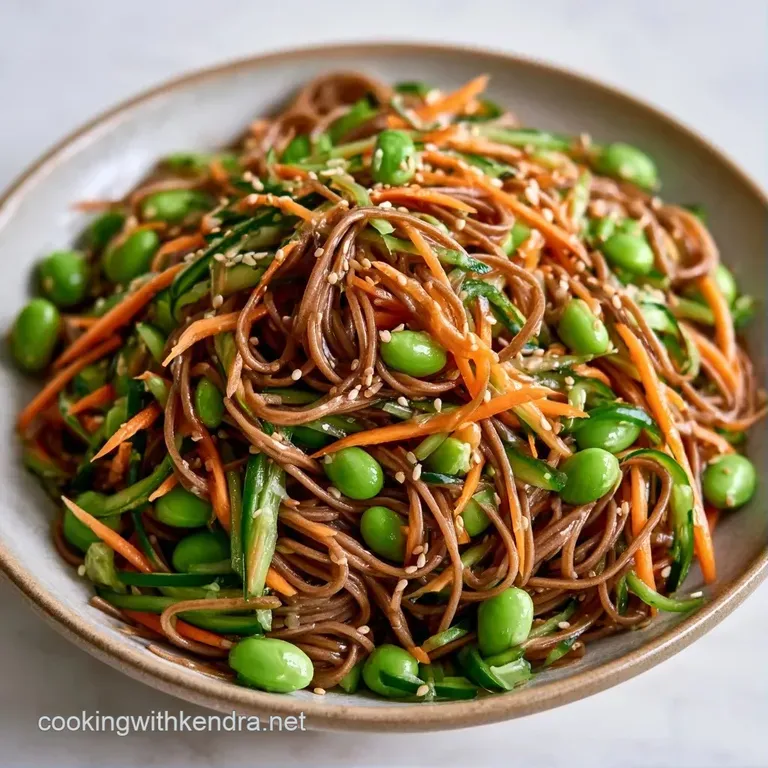
The most common complaint I hear is about the texture. If your noodles feel like they're sticking together, you probably didn't rinse them long enough. You want them to feel almost "slippery" before they hit the bowl.
Troubleshooting Common Issues
| Issue | Solution |
|---|---|
| Why Your Noodles Are Sticky | This usually happens when the surface starch isn't fully removed. If you skip the scrubbing phase, the starch creates a film that traps the noodles together. |
| Why the Dressing Is Watery | If your cucumbers are too juicy, they can dilute the sauce. I recommend seeding the cucumbers with a spoon before julienning them. |
| Why the Flavor Is Flat | If it tastes "missing something," it's usually a lack of acid. A tiny extra squeeze of rice vinegar often wakes the whole dish up. |
Mistakes to Avoid Checklist:
- ✓ Don't add the dressing to hot noodles.
- ✓ Don't overcook the soba; aim for al dente.
- ✓ Don't use pre shredded carrots if you want maximum snap.
- ✓ Don't skip the toasted sesame seeds; they add a critical layer of flavor.
Ways To Customize
Once you've nailed the base, you can really play with this. If you want a more filling meal, this Cold Soba Noodle Salad with Chicken is a winner. Just sear some breast strips in a pan and slice them thin.
For a vegan version, a Cold Soba Noodle Salad with Tofu works perfectly - just use extra firm tofu, cube it, and pan fry until golden.
If you're craving something different, you could try a Cold Soba Noodle Salad Peanut Sauce. To do this, simply whisk in 2 tbsp of creamy peanut butter and a splash of warm water to the existing dressing recipe. It makes the dish feel more like a Thai inspired salad.
For those who love heat, add a teaspoon of sriracha or some chili garlic oil. If you're looking for other quick noodle ideas, my soy sauce noodles are a great hot alternative for colder nights.
Storage And Waste Tips
This salad stays fresh in the fridge for about 3-4 days. However, the noodles will absorb some of the dressing over time. I recommend keeping the dressing in a separate jar and tossing it just before you eat.
If you've already mixed it, add a teaspoon of water or extra vinegar when reheating or serving to loosen things up.
You cannot freeze this salad because the fresh vegetables will lose their structure and turn into mush. It's strictly a fridge or fresh made dish.
To keep things zero waste, don't throw away your carrot tops! You can blend them with some olive oil, garlic, and lemon to make a vibrant green pesto. Also, if you have leftover cucumber peels, quick pickle them in a bit of rice vinegar and sugar for a tangy garnish on other meals.
Best Side Pairings
This dish is quite balanced, but it pairs beautifully with something light and steamed. Some stovetop rice on the side can make it a more substantial meal, though usually, the noodles are enough.
For a full spread, I love serving this alongside steamed gyoza or a simple miso soup. If you're hosting a party, keep the salad in a large glass bowl to show off the colors of the edamame and carrots.
Plating Levels
Since visual appeal is everything, here is how to present this depending on the vibe.
| Level | Style | Plating Tweak |
|---|---|---|
| Simple | Family Style | Large bowl, tossed casually, sesame seeds on top |
| Polished | Dinner Party | Use a ring mold for noodles, arrange veg in a circle |
| Restaurant | Gourmet | Vertical noodle stack, microgreens, sesame seed dust |
Decision Shortcut:
- If you want a light lunch → Keep it veg only with extra cucumbers.
- If you want a full dinner → Add seared chicken or tofu.
- If you're meal prepping → Store dressing and noodles separately.
High in Sodium
920 mg 920 mg of sodium per serving (40% 40% of daily value)
The American Heart Association recommends a daily limit of no more than 2,300mg of sodium to reduce the risk of high blood pressure and heart disease.
Tips to Reduce Sodium
-
Swap for Low-Sodium Soy Sauce-30%
Replace regular soy sauce with low-sodium soy sauce or coconut aminos to significantly cut the salt content of the dressing.
-
Add Fresh Citrus-20%
Incorporate a squeeze of fresh lime or lemon juice; the acidity mimics the 'bite' of salt, allowing you to use less soy sauce.
-
Choose Salt Free Soba-10%
Check the ingredient label on your soba noodles and select a sodium free or low-sodium brand to lower the base sodium.
-
Use Unsalted Edamame-10%
Ensure the edamame is steamed from frozen (unsalted) rather than using canned versions which are often stored in brine.
-
Boost Aromatics
Double the amount of fresh ginger and minced garlic to add bold, pungent flavors that distract the palate from the reduction in salt.
Recipe FAQs
Can soba noodles be served cold?
Yes, they are traditionally served chilled. This makes them ideal for refreshing salads, especially when rinsed under cold water to remove excess starch.
What do soba noodles taste like?
They have a distinct earthy, nutty flavor. Because they are made from buckwheat, they are more savory and complex than standard wheat noodles.
What is the best way to cook soba noodles?
Boil in a large pot for 4 6 minutes, then rinse immediately. Gently scrub the noodles under cold running water until the water runs clear to prevent them from becoming sticky.
What to put in a soba noodle salad?
Combine noodles with julienned cucumbers, carrots, steamed edamame, and sliced green onions. Toss these with a dressing made from soy sauce, rice vinegar, sesame oil, honey, ginger, and garlic.
What's the difference between soba and udon noodles?
Soba are thin and made from buckwheat, while udon are thick and made from wheat. Soba offers a nutty taste, whereas udon is mild and chewy.
What's the difference between soba and yakisoba noodles?
Soba are buckwheat noodles usually served cold, while yakisoba are wheat noodles typically stir fried. Yakisoba is specifically designed to hold up to high heat and heavy sauces.
What are some other easy Asian noodle dishes to make at home?
Try making a quick stir fry or a savory soup. If you enjoy mastering noodle textures here, see how the same boiling principles work in our homemade ramen.
Cold Soba Noodle Salad